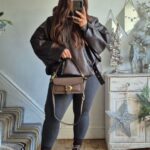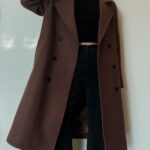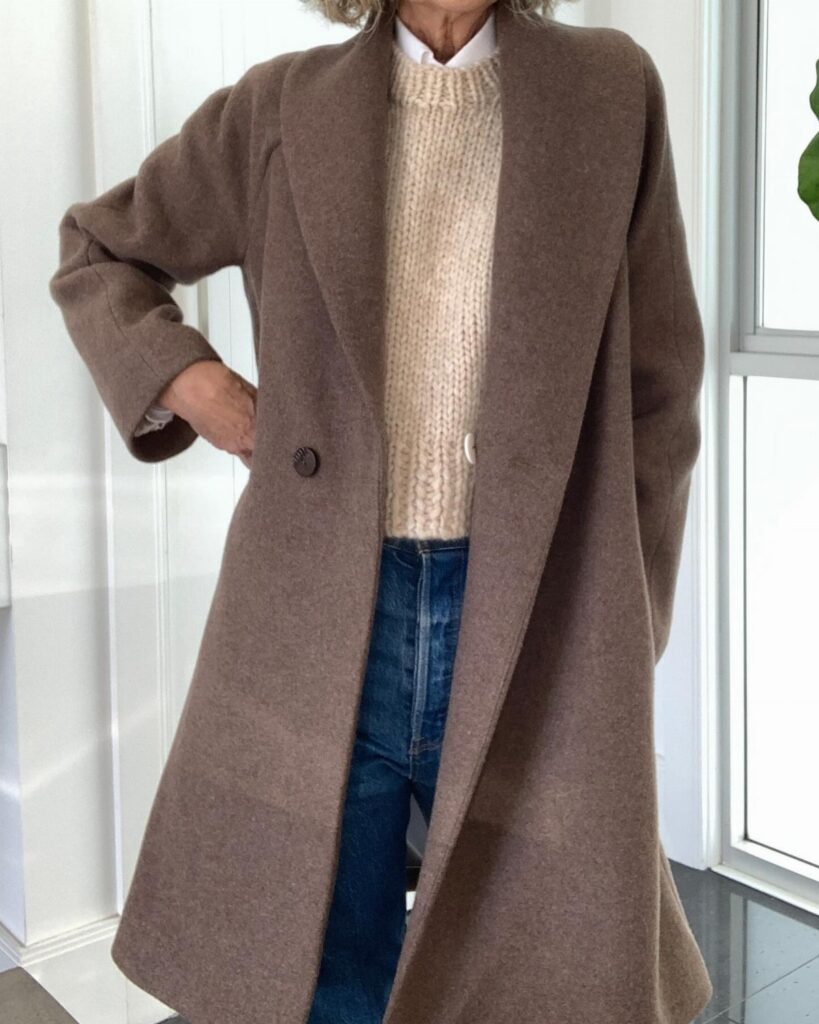
The three coats that earned a spot on this list cover the full range: a heavy double-cloth built for real windbreaks, a handmade pure wool that moves with you, and an oversized charcoal grey piece that lands somewhere in between.
The handmade piece closes at chest level with a single visible button and hangs open below, so what you layer underneath becomes the silhouette.
1. Heavy Wool Coat
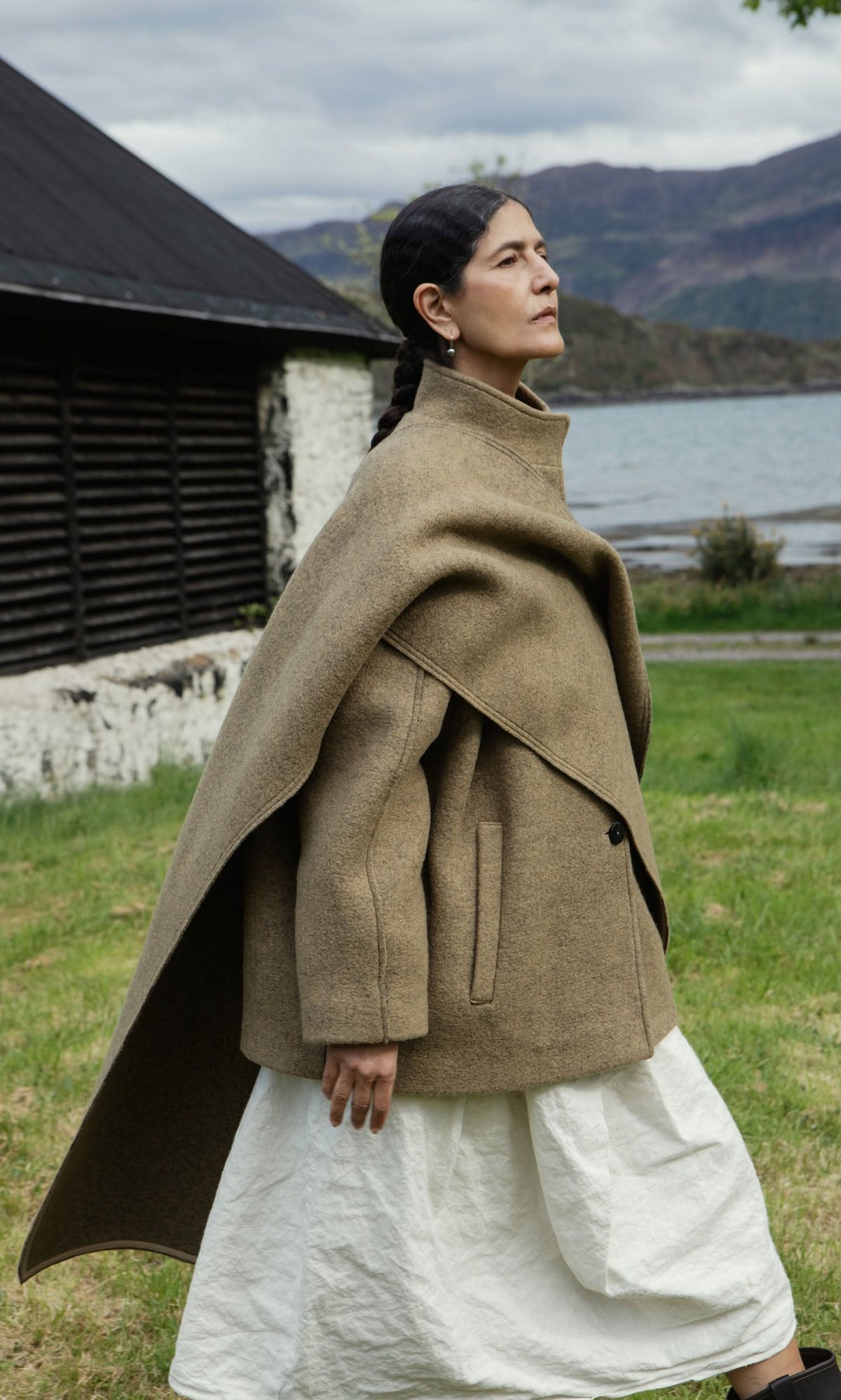
A heavy wool coat built around a high funnel neck reads differently from standard lapels: the collar does the framing, so scarves become optional and the line stays clean from throat to hem.
Raglan sleeves help here; they drop the shoulder seam and let you layer a thin knit underneath without the coat pulling across the back.
Large buttons matter more than you’d think on a coat this weight. Black against taupe gives enough contrast to find them with cold fingers, and their scale balances the volume of the fabric.
Check that the button shanks are sewn through to a backing, not just the face cloth; a heavy coat puts real torque on fastenings over time.
This cut suits someone who walks to work or waits on transit platforms.
The funnel neck replaces a popped collar that would gape, and the raglan ease means you can drive in it without the coat riding up to your ears.
What you trade away is a sharp shoulder line for evening; this is a day coat, not a dinner one.
2. Handmade Pure Wool Coat
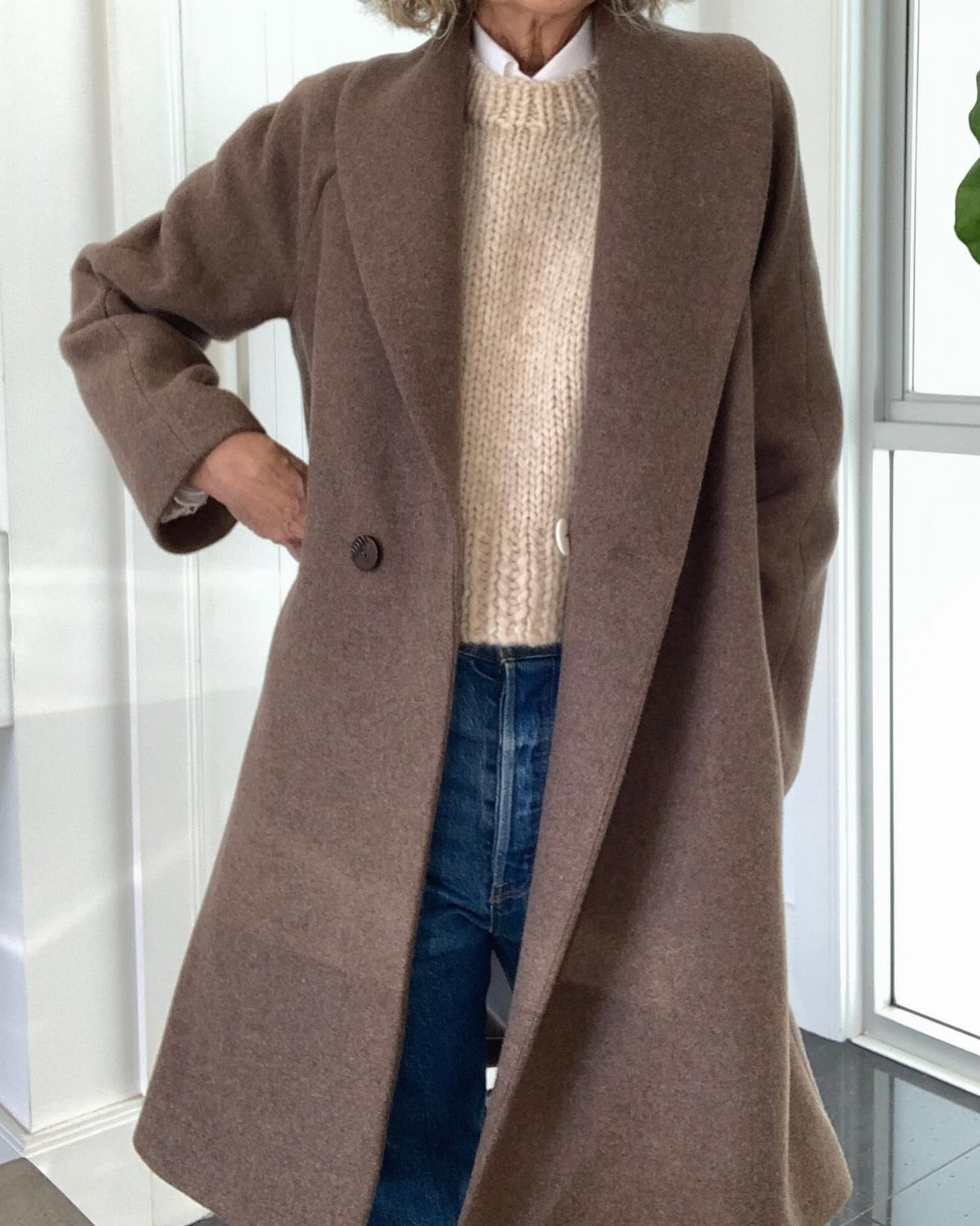
An unlined pure wool coat sounds wrong until you wear one. Without the slip layer, the wool sits closer to your clothes, moves when you move, and sheds the boxy stiffness that makes lined coats feel like wearing furniture.
Taupe runs warm, almost greige, which lets it sit with black, navy, or denim without picking sides.
Handmade construction shows in the seams: flat-felled or hand-overcast edges that let the fabric edge be the finish, not hidden under lining tape.
The single visible button and wide lapels keep the front simple; the coat closes at chest level and hangs open below, so the silhouette depends on what you wear underneath.
A chunky cream knit fills that space without looking piled on.
XS sizing here does not mean shrunken. It means the proportions are drafted for a smaller frame rather than graded down from a medium, so the lapels and pocket placement land where they should.
If you are between sizes, the clean silhouette rewards sizing for your shoulders and letting the length fall where it may; hem adjustment is easier than shoulder reconstruction.
3. Oversized Charcoal Grey Wool Coat
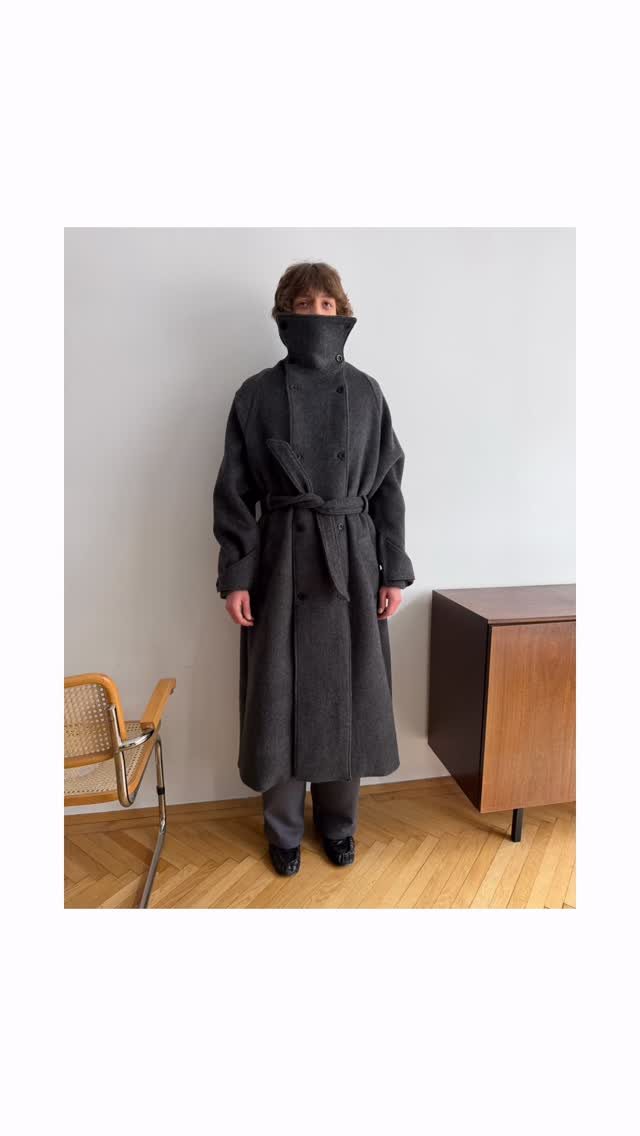
Charcoal grey merino wool at this weight has a matte, almost felted surface that does not shout.
The stand collar rises to cover the mouth, which looks dramatic in still images but functions as a windbreak on real streets; belt it loose and the collar frames the face, belt it tight and you have a tube of warmth with no gaps.
The relaxed silhouette needs length to work. A short oversized coat balloons; a long one drapes.
The belt is not decorative: it gathers the volume at the waist so the coat does not wear you. Check that the belt carriers are bar-tacked, since they take tension every time you cinch.
This coat trades structure for comfort. The stand collar replaces notched lapels, so it will never read as blazer-adjacent; it is for commutes, not client dinners.
Merino at this density is warm with a light layer beneath, though once the temperature drops hard you will want to add weight, not just a scarf.
The 100% wool content means dry clean only; budget for that twice a season if you wear it daily.
Frequently Asked Questions
Are Norwegian wool coats worth it?
A heavy Norwegian wool coat earns its keep if you walk to work or wait on transit platforms through cold months.
The funnel neck replaces a scarf, raglan sleeves let you layer and drive without the coat riding up, and large buttons sewn through to backing hold up under real torque over time.
You trade the structured shoulder you’d want after dark; this is daylight clothing made to work, not perform.
What is special about Norwegian wool?
Norwegian wool in a coat’s weight carries a muted, nearly felted face that keeps quiet, and merino packed this tight holds heat with just a thin layer underneath.
How the fiber is built lets an unlined coat hang nearer your body, follow your movement, and skip the rigid bulk that turns lined coats into something like upholstery you wear.