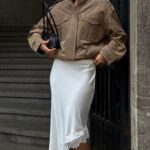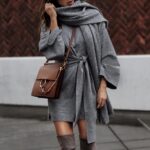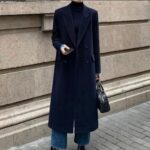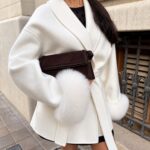
These five ideas range from a $200 boot investment to pieces you probably already own, and the right one depends on whether your winter problem is heat, proportions, or just looking finished when you do not feel it.
1. Animal Print

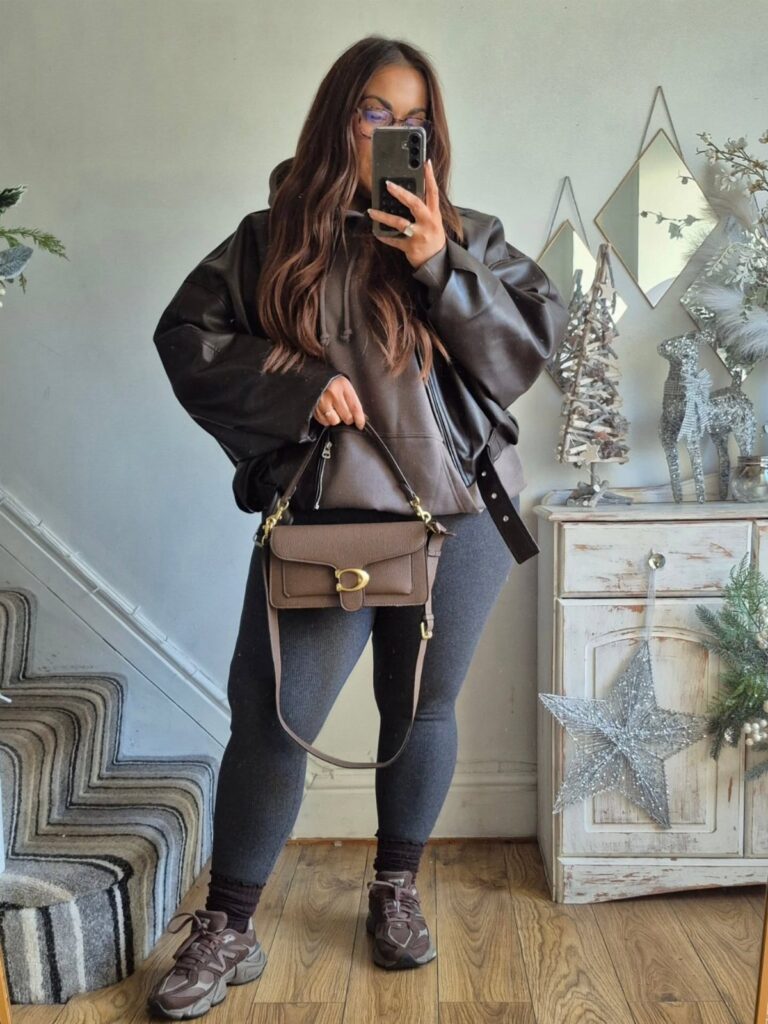
Animal print works in winter because it reads as texture from a distance and pattern up close, which solves the problem of looking finished without piling on layers.
An oversized cut in a sweater or coat keeps the print from feeling costume-y; pair it with black trousers or wide-leg pants that ground the shape. A maroon-and-black leopard print warms up the usual palette for cold months.
I’d reach for this when the rest of the outfit is simple: one print, clean bottom, done. For a bolder move, a red accent underneath the collar or at the lip pulls the look toward evening.
2. Burgundy Color

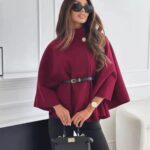
Burgundy carries winter weight without the heaviness of black, and it photographs well against gray skies and bare trees.
A satin skirt with a knit cardigan shows how to wear burgundy head-to-toe without matching-fabric monotony; the sheen against matte texture matters more than identical cloth.
The maker of that set wears a size 22 or XL, which matters because the cut, not the shade, determines whether tonal burgundy flatters.
A coat in this color over jeans works for everyday; the full set suits an occasion where you want to look considered. Check that your burgundy pieces share undertone: blue-based with blue-based, brown-based with brown-based, or the effect goes muddy.
3. Tonal Outfits
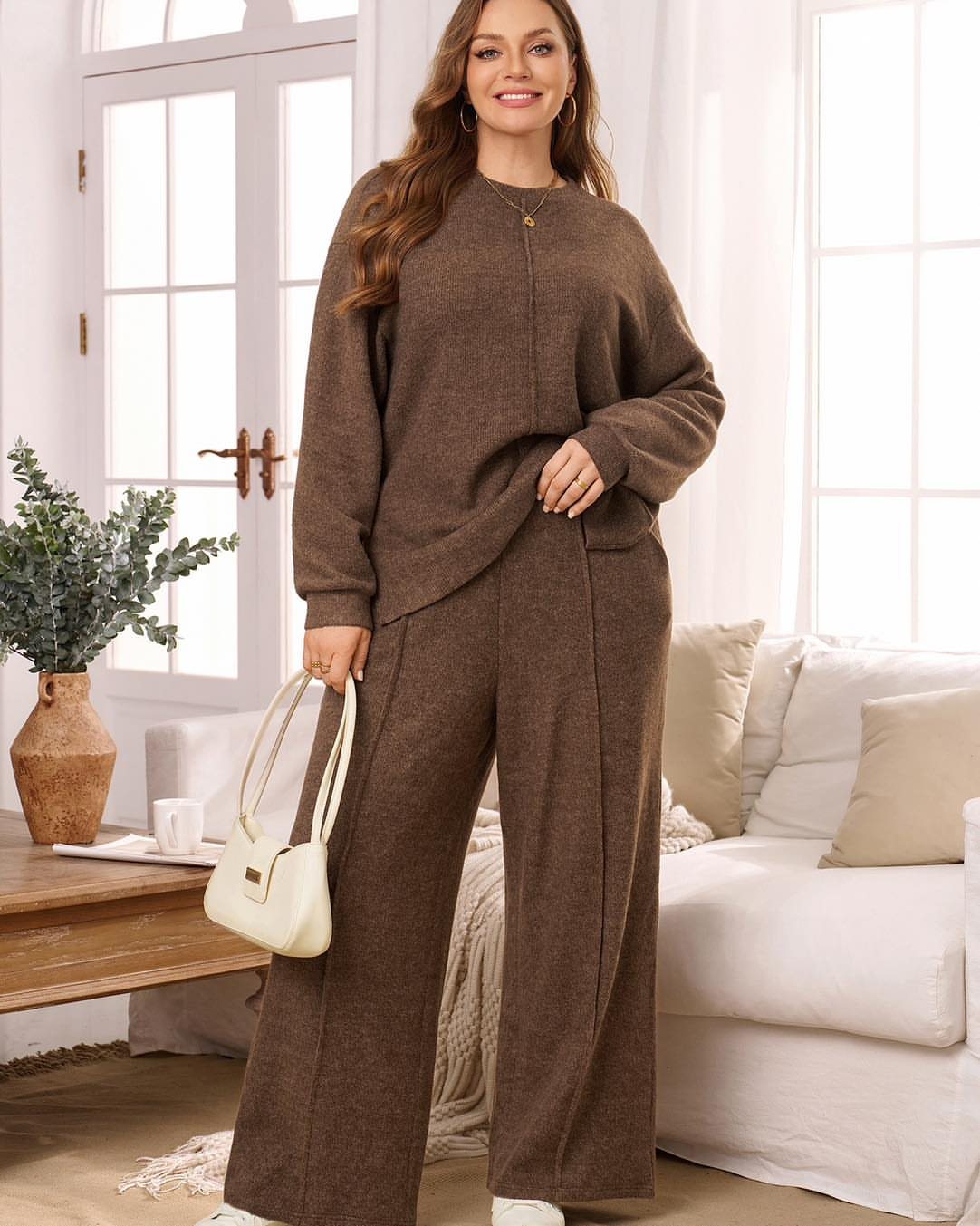
Tonal dressing in brown, cream, or camel builds a long line without requiring exact matching, which is useful when plus-size proportions read better with uninterrupted color.
A mid-brown sweater with wide-leg trousers in the same warmth keeps the eye calm; a cream bag breaks it just enough to add movement. Soft neutrals work best for this: oatmeal, taupe, stone.
The cleaner the color family, the more intentional the outfit looks. I’d avoid true white in a tonal scheme; it jumps forward and chops the silhouette.
Check your pieces in daylight before committing; indoor lighting flatters combinations that outside light reveals as clashes.
4. Statement Knitwear

Statement knitwear means texture and color that do the outfit’s heavy lifting, so the rest can stay simple. Textured knits that hold their shape add warmth without the bulk that distorts a silhouette.
I look for ribbing, cable, or colorwork that sits flat at the shoulder and doesn’t stretch at the hem after a few wears.
This is the piece to spend on if you wear knits daily: cost-per-wear drops fast, and cheap ones pill or sag by February. The vest shape suits anyone who runs warm indoors; a full sweater version works for cold offices.
5. Knee-High Boots
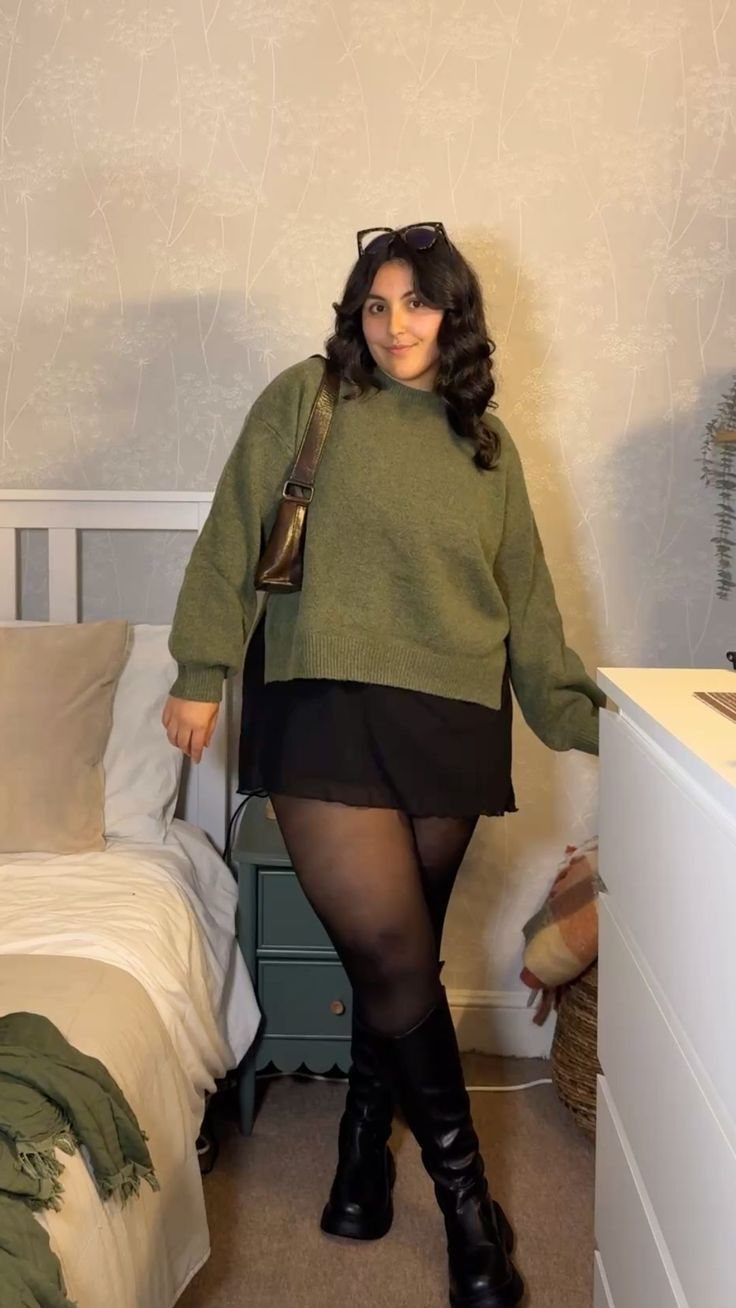
Knee-high boots close the gap between skirt hem and sidewalk, which matters more in winter than any other season.
A chunky sole balances the proportions of a short skirt with thick tights; a slimmer boot pairs better with a longer sweater dress or a narrow trouser tucked in.
Black boots earn their keep through versatility, and waiting for end-of-season markdowns stretches the budget further.
Spend here, save on the skirt: a $200 boot worn daily for three months costs less per wear than three cheaper pairs that scuff or lose shape.
An olive sweater with a black mini is one formula; swap the skirt for a sweater dress in the same boots and the look shifts from going out to going to work.
Smart Shopping Strategies
January clearance and August pre-season sales are the two reliable moments when last season’s winter pieces drop to half price or lower, and the stock still has enough size range that you are choosing rather than settling.
Coats and boots are worth the higher price; they carry an outfit and wear daily for months, so cost-per-wear drops fast.
One coat at $200 that you actually wear daily through January and February costs less each time you put it on than three cheaper coats that hang in the closet because the cut is wrong or the fill is thin.
Layering pieces, trend colors, and accessories are where to cut back, since they rotate faster and show wear sooner. The mix of high and low only works if the cheaper pieces don’t fight the investment ones in texture or finish.
Fit and Comfort
Tailored or semi-fitted pieces do the most work for a plus-size winter wardrobe because they follow the body without clinging or adding volume that isn’t there.
A coat that nips at the waist or a sweater with a defined shoulder line keeps the silhouette intentional; too loose reads as hiding, too tight reads as squeezing. The seam placement matters more than the size on the tag.
Check that the shoulder sits at your actual shoulder, not halfway down the arm, and that the hem doesn’t pull across the hips when you button it.
Fabric with some structure, wool or a firm knit, holds a shape that softer blends lose after a few hours of wear.
Emotional Well-Being
Cold weather already narrows what you can wear; fighting your clothes on top of that drains energy fast.
Fit sets the tone: a garment that follows your shape without pinching lets you move without adjusting, which reads as confidence even if you don’t feel it yet. Fabric feel matters separately from warmth.
Merino wool, cotton blends, and soft knits sit against skin without the itch that cheap synthetics bring; irritation you can’t scratch in a meeting wears on mood all day. Color works as a tool, not a rule.
Dark colors read as serious or safe, but a burgundy sweater or an olive coat adds the warmth that gray skies subtract. Clothing earns its place when it takes a decision out of your morning instead of putting one in.
Frequently Asked Questions
How to dress in winter for a chubby girl?
Layering with quality materials and stylish outerwear keeps the silhouette clean.
Textured knits that keep their structure at the shoulder, tonal brown or camel from head to toe, and one animal print piece with black trousers: that is my formula for looking put-together without adding bulk.
Knee-high boots bridge the space between hem and sidewalk, a gap that feels wider once the temperature drops.
How to not look frumpy when overweight?
Tailored pieces and structure matter more than hiding under fabric. An oversized sweater or coat needs a print or texture that does the visual lifting, balanced by a clean bottom that anchors the whole shape.
True white in a tonal outfit snaps forward and breaks the line; oatmeal or taupe lets the eye travel in one calm sweep.
What clothes look flattering on people with big bellies?
Structured layers and high-quality fabrics that fit well at the shoulder and hem prevent the sag that distorts shape.
Ribbing, cable, or colorwork knits that lie flat against the body are where I put my money, since cheap versions pill or sag halfway through the season.
Wide-leg trousers matched in weight to the top keep the eye moving up and down, and a burgundy coat over jeans reads as everyday without the visual weight of all-black.