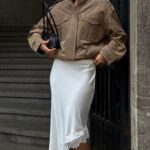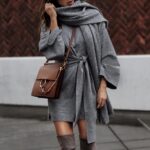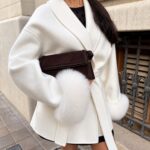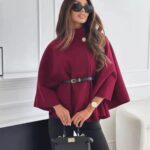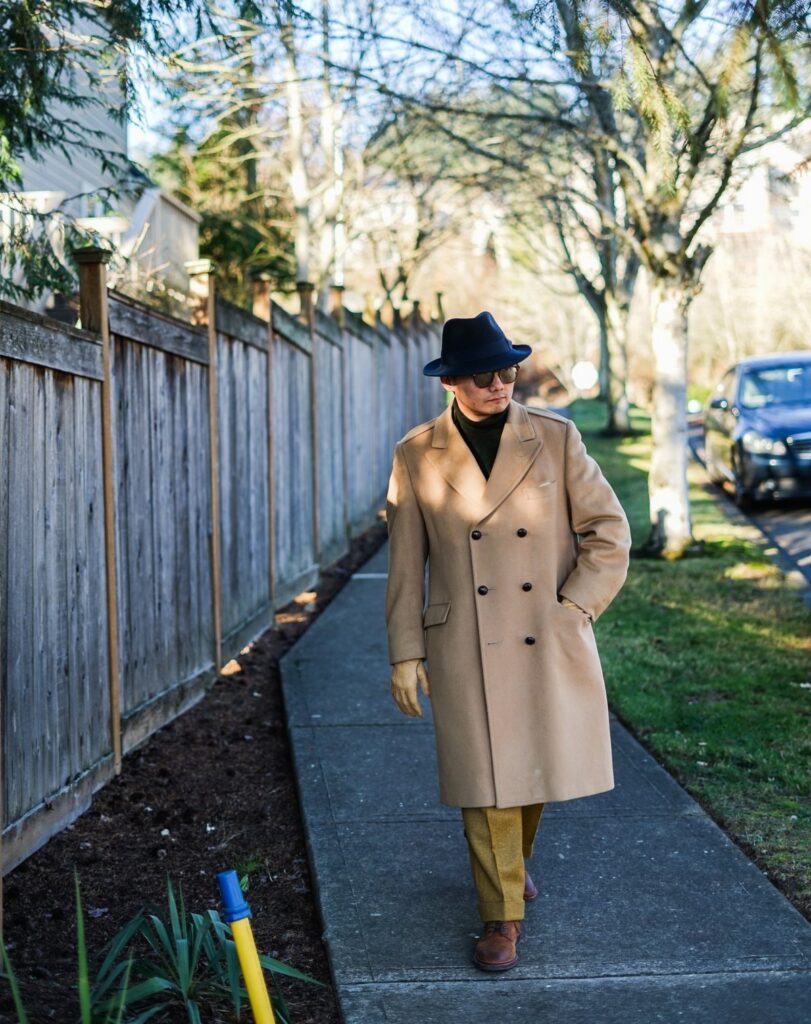
A proper British Warm carries the same DNA whether you buy it from a military supplier or a modern brand: a double-breasted camel coat in heavy wool, cut straight through the body with a belted back and a length that hits mid-thigh.
Which version belongs in your closet depends on whether you want the full parade-ground look or a cleaner civilian cut you can wear to the office without looking like you’re in costume.
The detail to check first is the Melton wool itself: 100% wool is the weight that justifies the price and the bulk that fills half a suitcase.
1. Characteristics of the British Warm
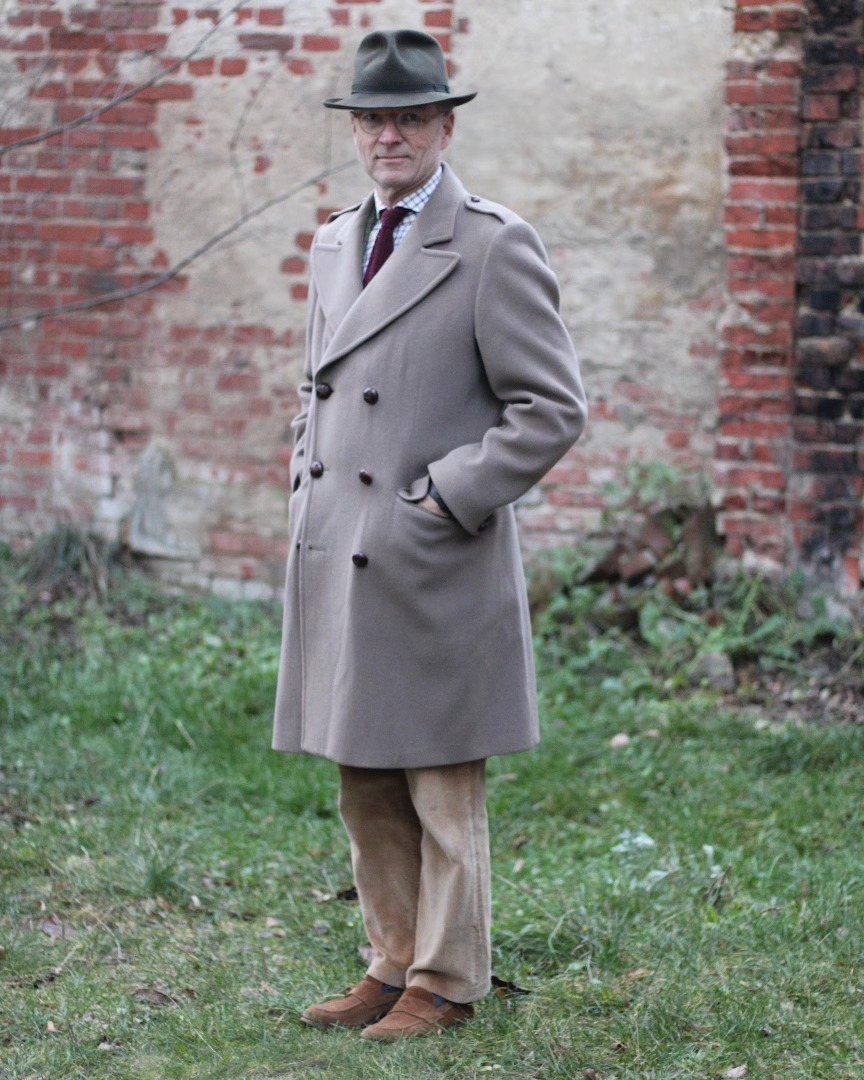
A British Warm is built from heavy Melton wool, double-breasted and taupe in color, with peak lapels and leather buttons that sit differently than the brass military originals.
Epaulettes stay on most versions, though they are decorative now rather than functional.
The cut falls just above the knee, shaped slightly at the waist so it does not hang like a tent.
For a woman buying one today, the weight matters most: this is a coat for January wind, not for layering under a car seat.
Check that the Melton is 100% wool; blends with cashmere or cavalry twill exist, but they sacrifice the durability that makes this coat worth the price.
It suits anyone who walks to work or waits on train platforms and wants one serious coat rather than three mediocre ones. Bulk is the downside: pack it for a trip and it fills half a suitcase.
The British Warm first appeared around 1914 as a military greatcoat for British officers.
2. Military Features
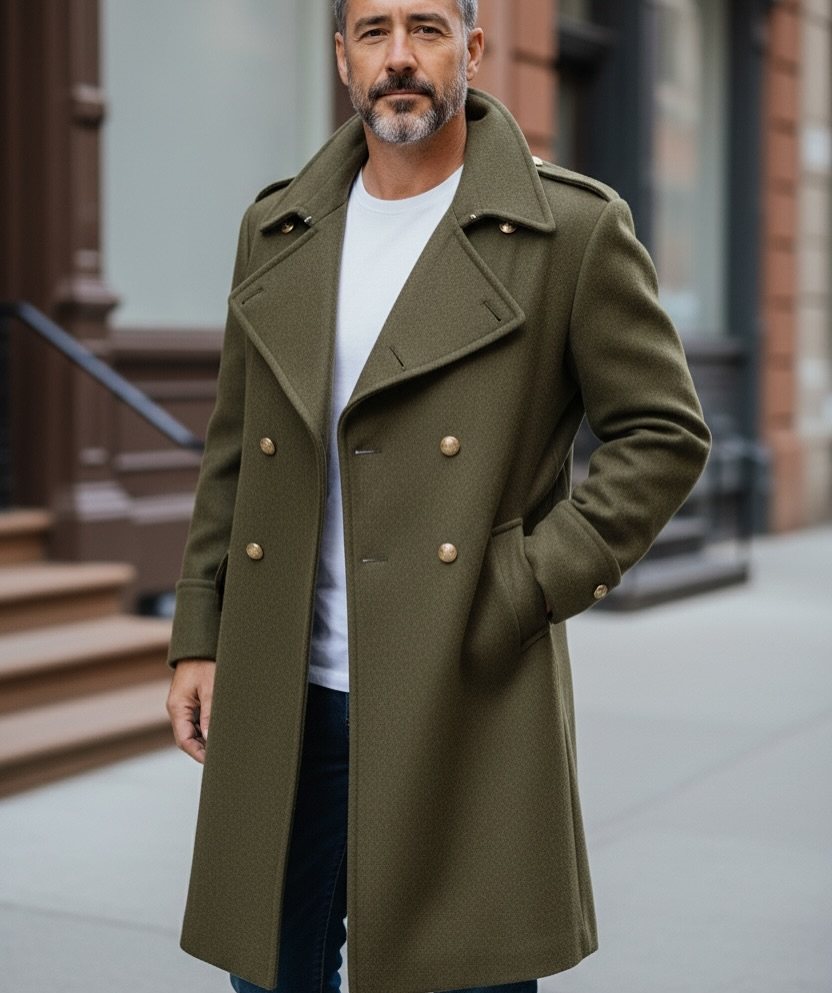
The military British Warm carried six metal regimental buttons, three of them always fastened, with peaked lapels and epaulettes from an era when rank still sat on the cuff.
The back had a single vent, two flap pockets, and a breast pocket; a small opening above the left pocket let an officer carry his sword without the coat riding up.
That length, ending just above the knee, was deliberate: it showed the jodhpurs and field boots beneath. The belted back appeared on early versions and later disappeared.
For a civilian buyer today, the brass buttons and epaulettes signal heritage, though the sword opening is long gone.
A military reproduction runs stricter in cut and heavier in hand; wear it if you want the coat to read as costume or statement. Otherwise, the civilian adaptations handle modern life better.
The extra button under the collar, however, is worth seeking out: it lets you fasten to the throat when the wind turns.
3. Civilian Adaptations

After the war, officers wore their greatcoats in plain clothes, and civilians copied the shape. The adaptations that stuck: woven leather buttons replaced metal regimental ones, the sword opening disappeared, and epaulettes sometimes vanished too.
Length often dropped below the knee for warmth, though officers sometimes wore theirs longer even in service.
A civilian British Warm today is the practical choice. The leather buttons age better than brass, and the longer cut suits anyone who rides a bike or walks blocks in cold rain.
Flap pockets on the breast, when they appear, are a rare civilian addition; most stop at the two side flaps.
Check whether the epaulettes are stitched on or functional. Functional ones let you attach gloves or a bag strap; stitched ones are pure ornament.
For a woman building a wardrobe around pieces that work, the civilian version trades military exactness for versatility, and that trade is usually the right one.
Durability and Warmth
Melton cloth starts in Melton Mowbray, Leicestershire, a town that gave its name to the fabric back in 1823.
The weave is tight, heavily milled, and starts at 34 oz; that weight is what blocks wind and holds shape through years of wear.
Crombie, the Scottish company, switched to wartime production in 1914 and made roughly one in ten greatcoats for British officers. The name "British Warm" comes from that period, and "Crombie Fleece" still refers to the same dense Melton cloth today.
The short raised nap gives a dull, fleece-like surface that does not shine under office lights. Check the label before you buy.
A genuine British Warm in real Melton is scarce on the new market; authentic Crombie Fleece is scarcer still. If you locate one, the price reflects the cloth: expect to pay for decades of service, not a single season.
Styling Tips
A navy felt hat, in the style Mayser still makes, completes the look without drifting toward costume. Grounded textures underneath keep the look balanced, nothing that fights the taupe wool for attention.
Jodhpur trousers and field boots still work, though the modern equivalent is a straight-leg wool pant and a lug-sole boot that grips ice. The epaulettes and peak lapels already speak; the rest of the outfit should stay quiet.
Avoid thin fabrics that read as office-only; the coat’s weight needs something with body to balance it.
J. Press and Brooks Brothers have carried British Warms seasonally, though stock is unpredictable. Custom remains the safer route if your size or proportions sit outside standard ranges.
The Royal Logistic Corps still lists this coat as an allowance for officers promoted to full colonel, purchased at private expense; that origin is why the silhouette carries authority, and why it still suits anyone who wants one commanding piece rather than a rotation of forgettable coats.
Frequently Asked Questions
What is a classic British overcoat?
Heavy Melton wool, double-breasted front, peak lapels, leather buttons: those four details together are what separates a British Warm from every other coat on the rack.
Officers wore it first, with epaulettes still attached and the hem cut to end just above the knee so the jodhpurs and field boots stayed visible underneath.
The civilian versions that followed traded brass regimental buttons for woven leather ones and sometimes dropped the sword opening and epaulettes entirely.
What are British coats called?
British coats can mean several styles, but the British Warm is the one that carries the name most directly. It is a heavy wool overcoat with military roots, double-breasted and usually taupe, distinguished by its Melton cloth and peaked lapels.
After the war, officers wore theirs in civilian life, and the shape spread as a practical winter coat for anyone who wanted serious warmth without multiple layers of lesser coats.
What is the warmest coat in the world?
The British Warm is not the warmest coat on earth, but it is warmer than most civilian overcoats because of its 100% wool Melton cloth and the weight of that fabric.
The heavy weave blocks wind and holds body heat without the bulk of down or fur, and the length, falling to the knee or just below, covers more of the body than a standard jacket.
For a woman walking to work in January or waiting on a train platform, it is the coat I would pick when I need one serious layer rather than three mediocre ones.