The thirteen sweater winter outfits below range from a single belted cardigan to a full matching knit set, and the right one depends on whether your day demands blending in or being remembered.
A bright orange turtleneck anchors the whole look when the rest of your closet feels tired, while a Fair Isle pattern in muted rust and sage works only for weekends where standing out is the point.
1. Cardigan

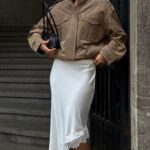
A boxy cardigan in a clean cream knit works as the middle layer that pulls an outfit together without trying too hard.
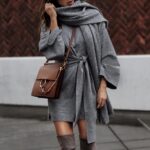
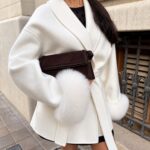
I reach for mine left open over a thin tee when I want the shape to hang straight, or belted at the waist when the bottom half needs definition.
The cropped cuts hitting shelves now sit right at the high waist of wide-leg pants or a midi skirt, which keeps the silhouette from going shapeless.
Leave the top two buttons undone and roll the cuffs once if the sleeves pool.
This one suits anyone building from a small closet: one cardigan, three distinct looks, no extra purchase required.
2. Oversized Crewneck

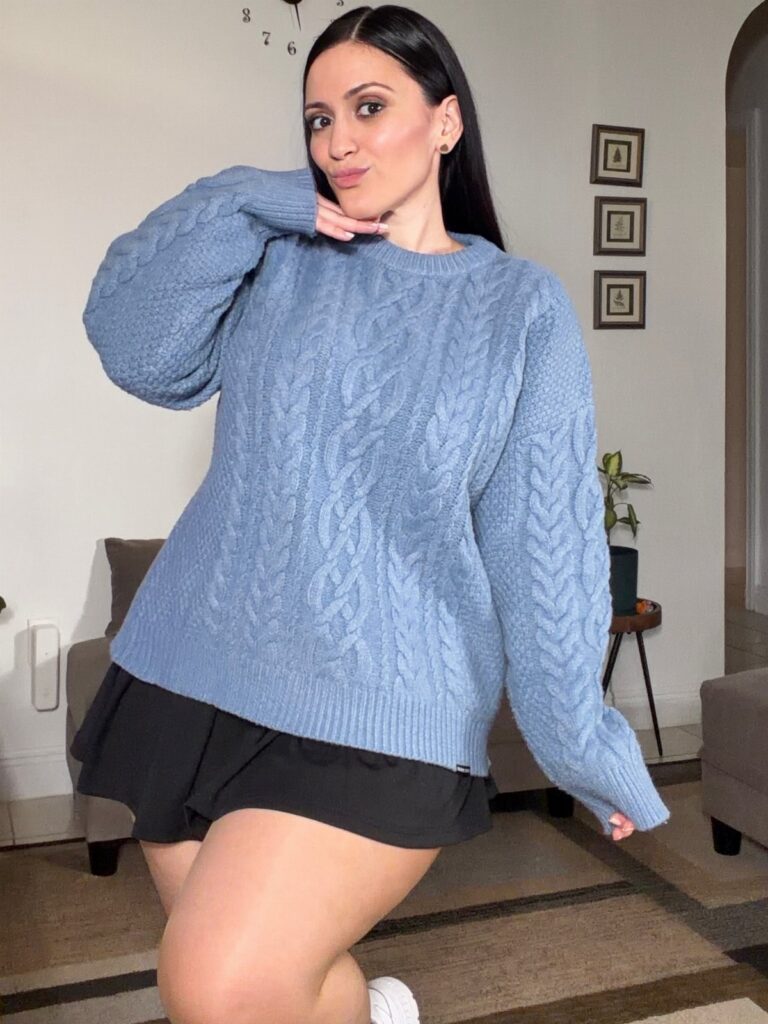
Dropped shoulders and sleeves that cover half your hand signal the right kind of slouch in an oversized crewneck.
Cable knit adds weight that balances a shorter hemline below, though I wear mine just as often with straight-leg jeans and leather boots for structure.
The proportion game matters here. Too slim on the bottom and you look swallowed; too bulky everywhere and the whole outfit reads pajama.
A light blue keeps the palette fresh against winter’s usual navy and charcoal rotation.
Best for casual days when comfort ranks equal to presentable. Skip it for settings where you need to look deliberately put-together.
3. Striped Sweaters

Horizontal stripes in a tight black-and-white read as a neutral once you stop treating them as a statement.
I used to default to nautical navy and cream until I tried a burgundy-navy-gold mix that functioned like a solid under a coat but added interest when the jacket came off.
The button-front cardigan shape gives more control than a pullover: wear it closed as a top, open as a layer, or half-buttoned with the bottom left loose for an asymmetric line.
A brown leather belt breaks the horizontal flow at the waist, which helps if you’re narrower there and want definition.
Worth widening your search to include menswear sizes for a truly oversized fit. The fuzzy iterations showing up in women’s lines now started there.
4. Turtleneck Sweater

An orange this saturated turns the turtleneck from basic layer into the whole outfit’s anchor.
I keep one bright knit for days when the rest of my closet feels tired, though ivory-on-ivory tonal dressing runs a close second for looking more expensive than the price tag.
The fold-over collar height matters for what goes over it. A fine-gauge merino slips under a slip dress or blazer; a chunky rib needs to stand alone.
Tuck a thin turtleneck into tailored trousers with a belt; leave the thick ones untucked and let the hem hit at mid-hip.
The real utility is transitional: this one piece takes you from office heating that barely functions to outdoor wind that bites.
5. Fair Isle Sweater

The hand-knit look of a true Fair Isle pattern carries nostalgia that can tip into holiday costume if the colors run too Christmas-red and pine-green.
I look for cream bases with muted rust, navy, or sage geometry that reads vintage without reading seasonal.
Paired with a pleated plaid skirt and boots, this lands in practical territory for actual winter weather: wool warmth, pattern mixing that works because the scale differs, and a hemline that covers where tights meet boots.
Dark-wash denim and sleek leather boots shift the same sweater toward early spring.
What you gain in warmth and pattern, you lose in flexibility: Fair Isle reads as weekend or holiday, not boardroom. You will be remembered in this sweater, which is ideal for weekends and risky for days you need to blend.
6. Argyle Sweater

Brown and beige argyle has the advantage of reading preppy without the golf-course brightness that can feel like a costume.
The diamond pattern in textured wool adds visual weight that needs balancing below; light-wash jeans keep it casual, wool trousers would push it toward intentional.
I would style this with a pleated skirt and loafers for a winter date night, or over a slip dress with tall boots when the pattern needs grounding against something fluid.
The 100% wool construction from responsible sources is worth seeking out; acrylic argyle pills fast and the pattern blurs.
Argyle’s diamond grid locks you into a preppy mood that doesn’t shift easily into other registers. Argyle demands clean lines elsewhere in the outfit.
One rumpled layer underneath and the whole look collapses into messy.
7. Sweater Vest

Sleeveless knits read as an afterthought until you treat them as the main event.
I layer a cable-knit vest over a crisp button-down with the sleeves rolled to the elbow, and the contrast of textures does the work that jewelry usually would.
The gap at the arm keeps you mobile through a heated office, while the wool or cotton body holds warmth where your core needs it.
A flared mini skirt underneath keeps the proportion playful; swap in trousers and the same vest passes for Monday meetings. A vest with enough structure sits cleanly over a shirt without bunching.
Size up if you plan to wear it over anything thicker than poplin.
8. Collared Sweater

The shawl collar on a striped knit brings back the kind of polish that used to require a blazer.
I reach for these on days when I need to look deliberate without looking dressed up, the collar doing the framing work so I don’t have to think about a necklace or a scarf.
Zip-neck, half-button, or true polo styles all share that same prep-adjacent energy, though cashmere or fine wool keeps it from feeling costume-y.
Light-wash jeans keep the pairing casual; swap in trousers or a leather skirt and you’ve got dinner without changing the top half. Wide, neutral stripes age better than narrow racing stripes.
9. Quarter-Zip Sweaters

A quarter-zip lands in the narrow space between a crewneck and a full cardigan, and that zipper is what makes it wearable for anyone who finds pullovers too committing.
I wear mine over a collared shirt and tie when the office runs cold, the ribbed knit holding its shape better than a standard V-neck would.
The collar shape mirrors a V-neck’s line but the zip lets you adjust for temperature and for formality, cracked open at the top for casual, zipped to the throat when you need to look sharp.
Thicker than most sweater weights, these work as a standalone layer rather than something that disappears under a coat. Navy, charcoal, or brown pair with nearly any trouser in a winter closet.
10. Textured Sweater Jacket

Chunky knits that button or hang open like a jacket give you the warmth of a sweater with the layering logic of outerwear.
A drop shoulder and batwing sleeve create intentional slouch without looking borrowed; a stripe at the back shoulder reads from behind.
I treat these as my indoor coat, the texture doing enough visual work that what sits underneath can stay simple.
A lace top and leopard print underneath push the mix far, though a solid tee and jeans land just as intentional. The weight matters: too light and it drapes like a cardigan, too heavy and you can’t move your arms.
True-to-size fit keeps the batwing from becoming a tent.
11. Matching Sweater Set

A matching knit set solves the problem of looking pulled-together when you feel like wearing pajamas. An oversized turtleneck and wide-leg trousers in one brown tone read as a choice rather than a default.
I wear mine with white sneakers for school pickup or weekend errands, the ribbed waistband holding shape without digging in. For actual cold, a wool coat layered on top and boots or clogs underneath gets you through a parking lot.
The set works as separates too, the sweater over jeans, the trousers with a tucked tee, which justifies the spend if you’re counting wears per dollar.
Neutral shades age better; a bold color makes the statement once and then sits in the drawer waiting for courage.
Sweater weather is well underway, meaning it’s time to round out your knitwear selection for the season.
12. With Wide-legged Pants

Wide-legged trousers need a top that knows what to do with all that volume below. A cropped sweater, or one you can tuck or half-tuck, keeps the waist visible and the silhouette from swallowing you whole.
A floral cardigan over a white crop top is one route; a single cropped knit in a solid color keeps the line cleaner. High-waisted pants are non-negotiable here, the rise determining where the balance point falls.
I check the pant length against my shoes: too short and the leg looks accidental, too long and I’m tripping.
The relaxed shape trades some warmth for movement, so I factor in whether I’ll be outdoors long enough to need a coat that covers the whole cut.
13. With a Leather Skirt

A leather skirt reads evening by default, but a sweater pulls it back into daylight. A loose beige knit over a brown leather mini works when the hemline hits where the sweater fabric ends, not where it begins.
Tuck or half-tuck if your torso runs long; leave it untucked if your waist is your narrowest point.
Tall boots behind her suggest the obvious pairing, though ankle boots and sheer tights handle milder days. The sweater should be solid or quietly block-colored; pattern competes with leather’s own texture.
This outfit costs little if you already own the skirt. A faux-leather mini wears harder than you’d expect, and the entry point is lower than most people assume.
Best for someone whose weekends mix errands with somewhere to be afterward.
Choosing Quality Materials
Cashmere, wool, and cotton blends are the fibers that survive a winter of actual wear. I would pass on anything labeled purely acrylic; it pills within a month and the surface blurs into fuzz that no shaver fixes.
Merino wool hits a useful middle point, warm enough for commuting, fine enough to layer under a blazer without bulk. The gauge matters too.
Check the label for fiber percentages. A 70/30 wool-cotton blend breathes better than either alone and washes without the shrinkage risk of pure wool.
The upfront cost runs higher, but cost-per-wear drops fast when the shape survives three seasons.
Layering Techniques
A sweater that works alone rarely works alone all day.
I build from thin to thick: a fine turtleneck or tee as base, the sweater as the visible layer, a coat on top that can come off without ruining the look.
A crewneck leaves room for a collared shirt to peek; a turtleneck needs a coat with enough throat clearance to zip or button without bunching.
Cardigans and quarter-zips earn their keep here, their openings letting you adjust for a subway car that feels like August and a sidewalk that feels like January.
A belt over the sweater, not under, defines the waist when the coat comes off and the silhouette goes shapeless.
Scarves work best with necklines that leave space; a tight turtleneck and a wrapped scarf fight each other at the throat.
Accessorizing Outfits
A belt breaks the horizontal line of a tucked or half-tucked sweater and gives the waist a location. I prefer leather in a tone that matches my shoes, which ties the middle of the outfit to the bottom without planning.
Jewelry sits differently against knit than against bare skin or silk. Small hoops or studs read; long pendants tangle in ribbing and catch on fuzz.
Shoes do more work than usual when the top half is soft. A pointed boot or structured loafer adds the architecture that the sweater lacks.
Ballet flats with a slim cardigan and pocketed jeans keep a simple outfit from looking accidental, the pocket detail doing what a necklace would.
Tights under a skirt let you choose opacity for temperature, not just coverage; 60–66 denier handles most winter days without the bulk of a second pant layer.
Color Coordination
Cream works better than pure white in winter, the slight warmth matching the lowered light.
I pair it with beige or tan below, reversing the expected order, white on bottom and the deeper tone on top, which reads more current than the reverse. Soft grey functions as a neutral that still registers as a choice.
Olive green has moved from military surplus to staple layer; it handles chocolate brown, butter yellow, or burgundy without the clash risk of brighter greens.
The earthy palette rewards texture mixing: a matte knit against a slight sheen in trousers, a ribbed sleeve against smooth leather boots. One saturated piece per outfit is enough.
An orange turtleneck or a burgundy stripe carries the color load; everything else stays in the cream-to-brown range.
Frequently Asked Questions
What are the sweater trends for 2026?
Oversized silhouettes, matching knit sets, and textured knits like cable and ribbed finishes are the directions worth watching. Collared styles, quarter-zips, and sweater jackets that function as indoor outerwear also keep showing up.
I look for pieces that layer cleanly rather than announce themselves as one-season items.
How to wear a sweater in winter?
Layer a thin turtleneck or merino under a blazer or slip dress for warmth that stays sleek, or let a chunky knit stand alone with tailored trousers.
Leaving a cardigan open draws the eye up and down; cinching it at the waist gives structure to fuller pants or a longer skirt. The sweater’s weight determines what goes over or under it, not the other way around.
What are some good outfits I can style with a sweater?
A cropped knit with high-waisted wide-leg trousers keeps the waist defined and the silhouette balanced. A loose solid sweater over a leather skirt pulls the skirt into daylight hours, especially with tall boots or ankle boots and sheer tights.
A matching sweater set with sneakers handles errands; swap in a coat and boots for actual cold.