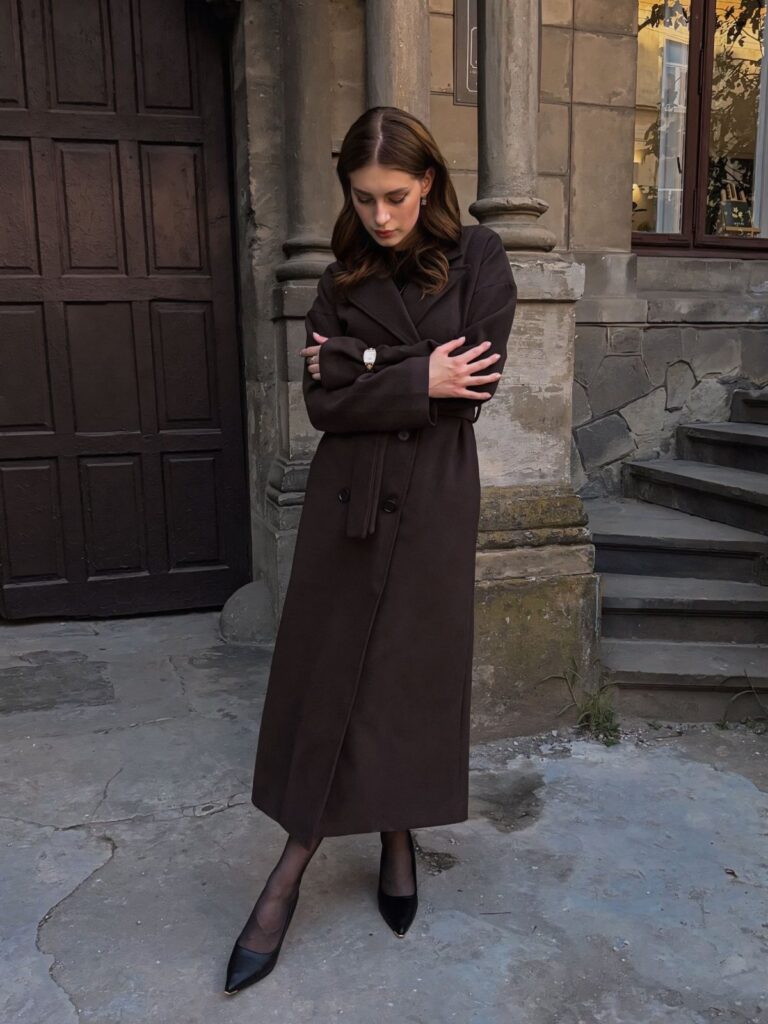
These six ideas run from the boots you pull on to the scarves you knot at the collar, so the deciding factor is where you’re headed and how much structure the occasion demands.
The coat itself supplies the formality; what changes underneath is the level of intention, whether that means white sneakers or black pumps.
Check your brown wool’s undertone in daylight before matching anything to it; chocolate reads very different than tan once you step outside.
1. Footwear Options

Dark brown leather boots ground an oversized herringbone coat without stealing attention. The safe move is black ankle boots, which pair with almost anything underneath.
Burgundy boots add warmth if your coat runs chocolate rather than tan. White sneakers keep it smart-casual, black pumps step it up for dressier plans.
What trips people up is matching brown to brown. Tan boots against deep chocolate can look like a mistake unless you’ve gone full tonal warm from head to toe.
Check your coat’s undertone in daylight before buying shoes to match.
2. Bold Jewel Tones

A bright red scarf against brown wool reads intentional, not accidental. Emerald, royal blue, or deep purple underneath do the same work, adding depth without the safety of neutrals.
The coat’s earthiness handles color that would fight with black or navy outerwear. A jewel tone sweater or scarf shows up best when the rest of the outfit stays quiet: blue jeans, simple boots, no competing pattern.
One saturated piece is usually enough; two starts looking like a costume unless you have a history of wearing color fearlessly.
3. Layering with Knits

A white collared shirt under dark navy knit, coat over both: the collar and cuffs give structure that a sweater alone loses. The chunkier the knit, the more the coat needs room in the shoulders to sit right.
This works because brown wool reads traditional, and the layered pieces underneath signal that you thought about it. Try olive or burgundy cardigans if navy feels too expected; argyle knits hit the same preppy note with more pattern.
The shirt underneath keeps you from looking like you dressed for a ski lodge.
4. Casual Denim Pairing

Wide-leg blue denim under a long brown coat is relaxed without being sloppy. The coat’s length and texture give the outfit enough structure that the jeans can be easy.
Black skinny jeans are the alternative when you want sharper lines or the coat itself is oversized.
Either way, the top underneath matters less than the proportion: a cropped or tucked shirt balances the volume, a long untucked one can look like you forgot to finish getting dressed.
Check the mirror from the side; the coat should hit mid-thigh or lower, not hover awkwardly above the knee.
5. Formal Attire

The coat itself brings the formality, so what you wear under it can stay simple. Black turtleneck, wide-leg trousers, and the coat over both reads professional without looking like you tried for a suit.
For most offices, this is enough. The coat’s tailoring does the work, so the pieces beneath stay clean rather than loud.
Bright scarves and weekend sneakers belong on your days off, not here.
If your office leans conservative, a white dress shirt and black dress pants underneath are the safer bet; the coat still keeps you from looking like everyone else in the elevator.
6. Accessorizing with Scarves

A large cream scarf against brown wool adds texture without demanding attention. Solid beige keeps the palette quiet; plaid works if the base tones pick up the coat’s color rather than fighting it.
The fringe or bulk of a big scarf does the styling work, so the rest of the outfit can be simple: light denim, plain boots, a tote that holds what you actually carry.
What to avoid is a scarf so small it disappears, or a pattern so busy the coat becomes an afterthought.
Hold the scarf up against your coat in daylight before you commit; brown can read orange or ash, and the wrong beige turns muddy against the wrong undertone.
Versatility of Brown Coats
A brown wool coat slips into a closet more easily than black because it reads as warm rather than severe, and it pairs with colors you already own.
The AW25 runway made this plain: Max Mara cinched wool at the waist with a statement belt, while Etro left it loose and unfastened. Prada trimmed wool with faux-fur collars, and Burberry’s brown trenches looked like the long-term buy.
What works in your closet depends on the shade and material. Chocolate, mocha, walnut, and bronze each read differently against skin tones and the rest of what you own.
A brushed wool in walnut behaves almost like a neutral; buttery leather in chocolate stands alone as the statement. Teddy and faux fur textures add volume that demands simpler pieces underneath.
The versatility is real, but it is not automatic. The coat gives you a structured starting point that brown’s warmth makes easier to build around than black’s severity.
Choosing the Right Fabric
Wool is the material that earns its place. A brown wool coat holds its shape through years of wear, and the fiber’s natural texture gives brown its depth; flat synthetics turn the same shade plasticky under office lights.
Check the label for wool content and pass on anything that lists polyester first. Low wool content pills faster and loses the drape that makes a coat look considered rather than merely warm.
Cashmere blends feel softer but wear faster at stress points; alpaca adds loft without bulk if you run cold.
Synthetic fills and bonded fabrics are the ones to walk past. They trap heat without breathing, so you arrive sweating or shivering, and they do not improve with age the way wool does.
The right coat should look better after years of wear than it did fresh from the rack; that is the test.
Layering Techniques
A belted coat lets you cinch the waist for shape over bulkier knits; an unbelted cut needs more attention to proportion.
Dresses underneath are the move I would pick for small-group dinners or anything that moves from day to evening. A midi length in a heavier fabric, wool or a dense knit, keeps the silhouette continuous with the coat’s line.
For warmth without volume, a thin turtleneck under a slip dress gives you two layers that read as one streamlined shape.
The coat’s length matters here: mid-calf over a midi dress is elegant, awkwardly knee-length breaks the line and looks like you grabbed the wrong coat.
A shirt collar left out over a crewneck sweater hits the same preppy note as the layered knits in the list, but with a different rhythm; the coat over both finishes it.
When it comes to styling, let the coat steer your outfit decisions. Drape a chocolate wool style over a knitted dress for an understated look.
— Elle