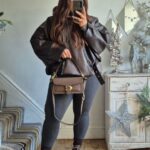
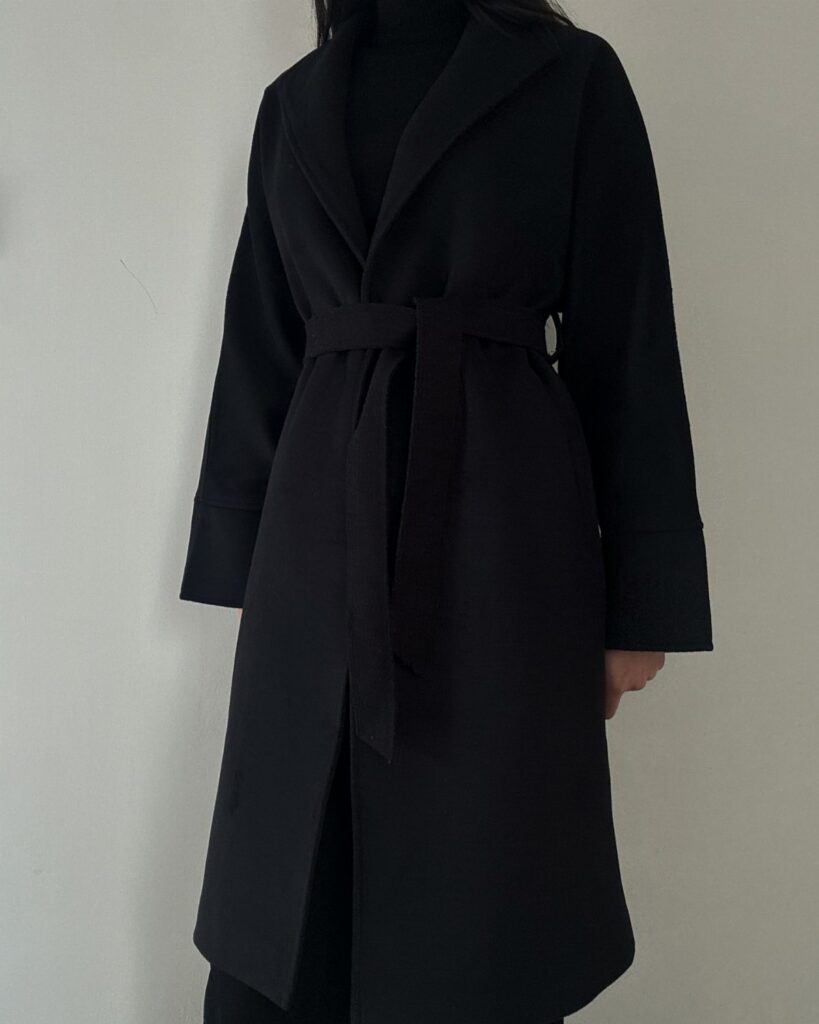
A black wrap coat works best when the belt lands at your actual waist, not above or below it, so try the closure before you commit.
1. The Black Wrap Coat
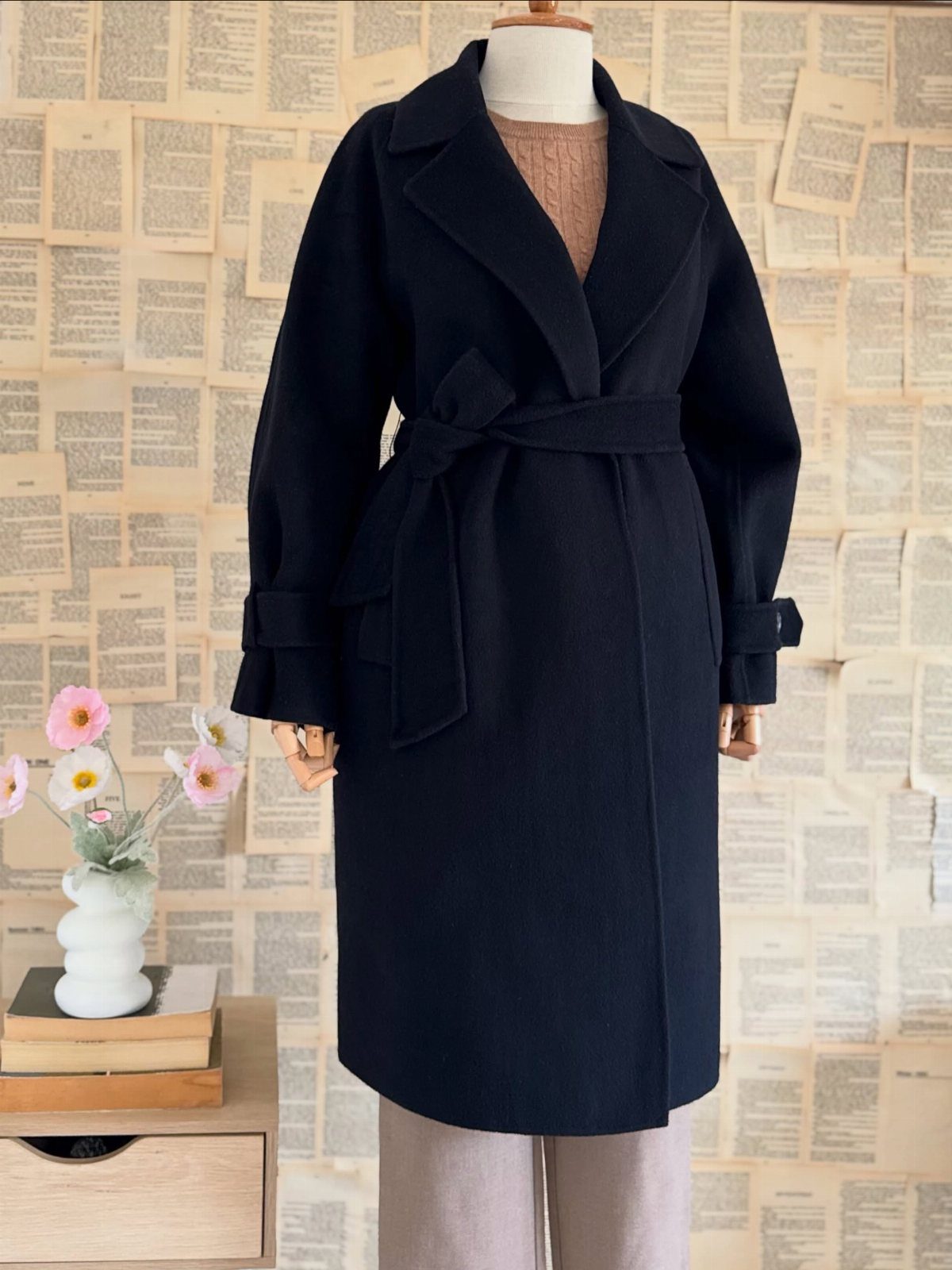
A black wrap coat is the single outerwear piece that makes every outfit underneath look intentional. The belted waist and wide lapels create shape without stiffness, and the textured wool holds its structure through years of wear.
The relaxed cut works for women who want polish without the formality of a tailored coat.
It drapes over a brown knit and light trousers the way it would over jeans and a tee, and the self-tie lets you cinch or loosen depending on what you are carrying underneath.
Check the lapel width against your shoulder line. Narrow frames can disappear under oversized collars, while broader shoulders balance them cleanly.
Crafted in structured black fabric, the coat features a refined silhouette that balances classic sophistication with Westwood’s distinctive architectural sensibility.
— 1stdibs
2. Styling Tips & What to Look for
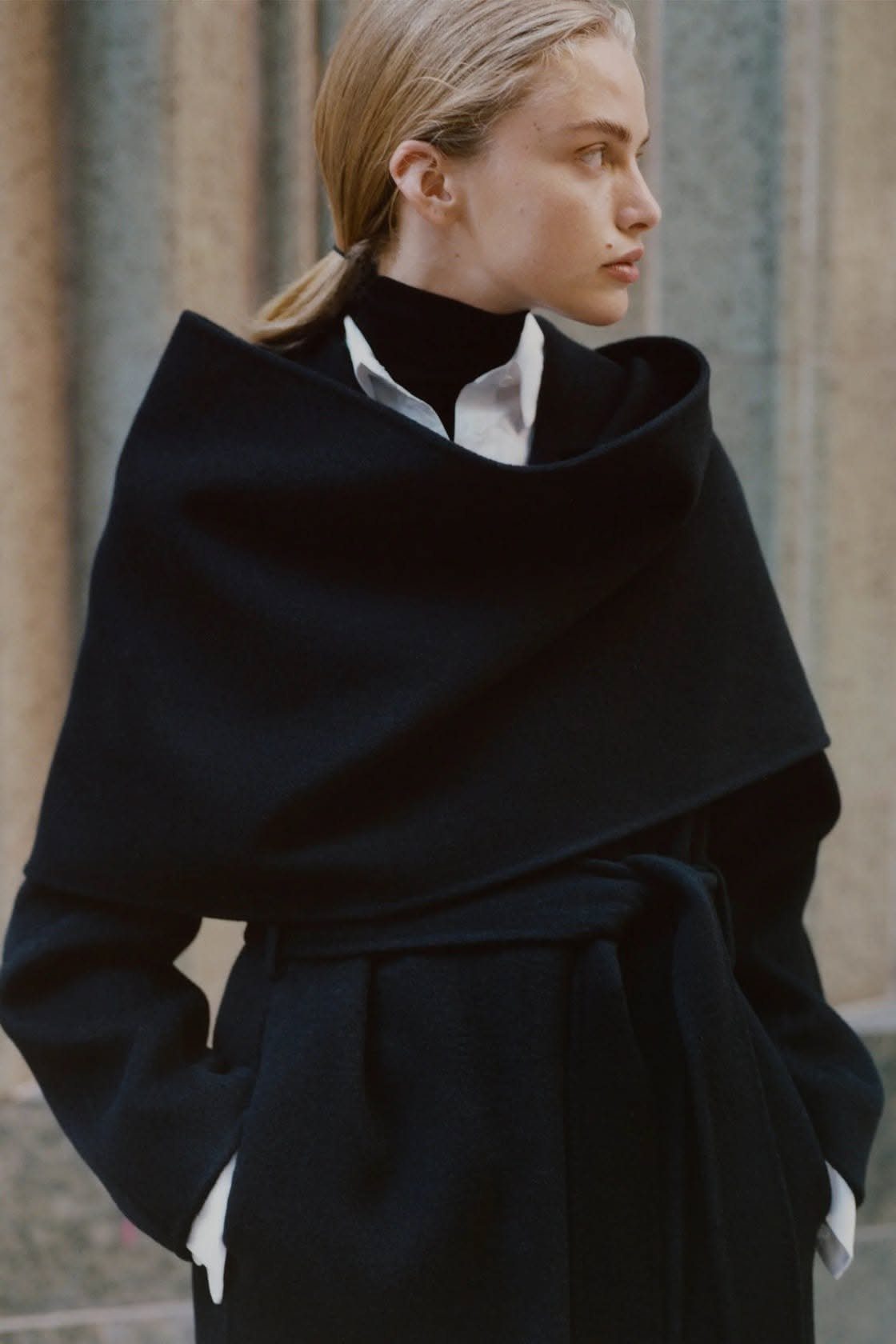
The best black wool coat is one you stop noticing because it simply works.
Structure matters more than price: slightly dropped shoulders or tailored seams give that soft drape without looking sloppy, and the collar should sit flat against your neck when buttoned.
Fabric composition changes everything. A 50% to 70% wool blend keeps warmth and shape at a lower cost than full wool, though 100% wool carries more heft and lasts longer.
Feel the weight in your hands before you buy; flimsy wool pills by March.
Layering is where the coat earns its keep. A white collared shirt over a black turtleneck adds dimension without color clutter, and the visible collar frames your face under the wrap opening.
Keep the palette neutral and let texture do the work: wool against cotton, leather boots against matte knit.
3. Belted Silhouette
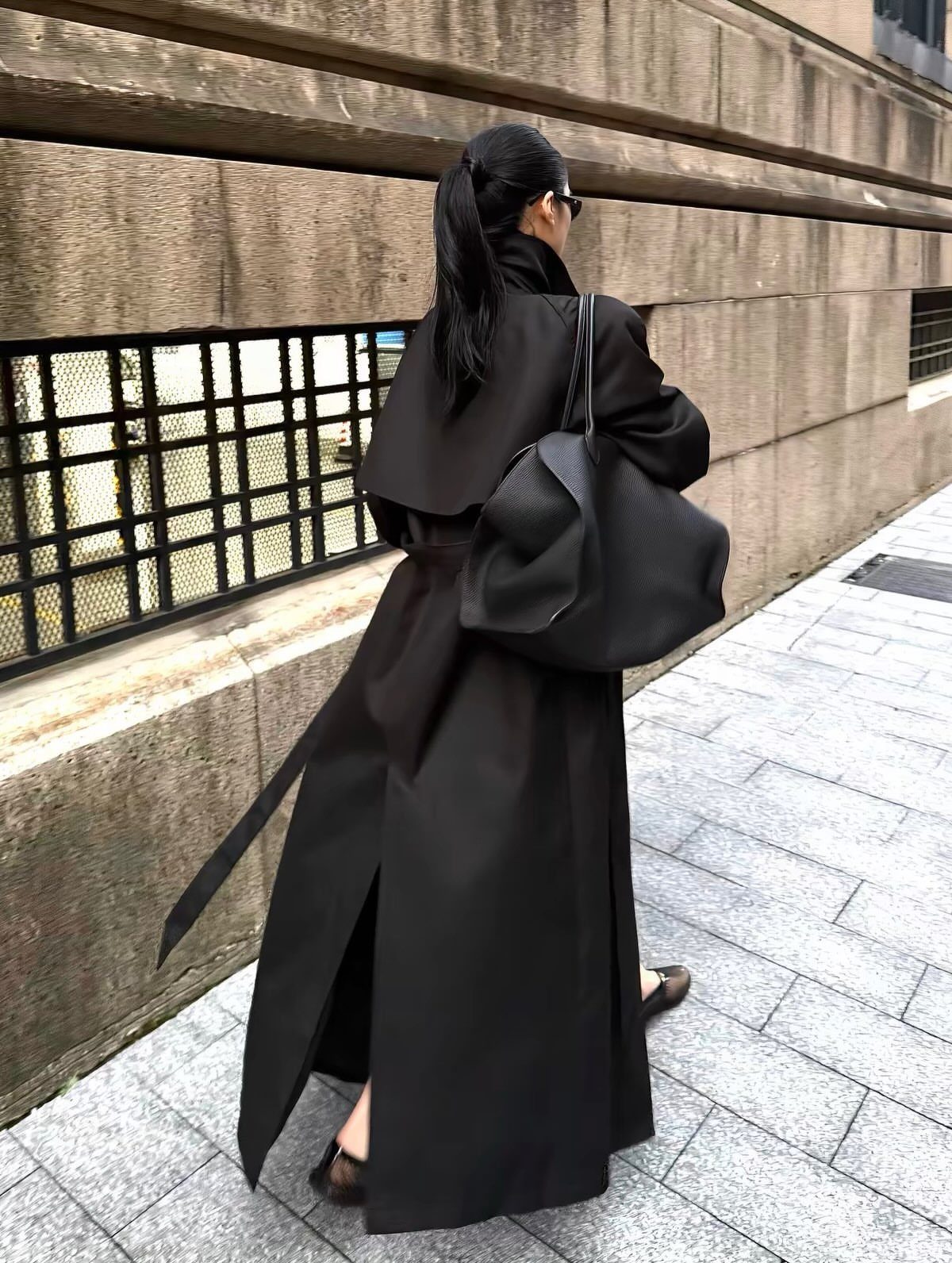
A belted silhouette turns a long coat from a tent into architecture. The tie sits at the natural waist, drawing a line that balances volume on top and length below.
For women between 5’4" and 5’8", this is often the proportion that keeps a midi coat from overwhelming.
The wrap style layers cleanly over both fitted and relaxed pieces. A ponytail and flat shoes keep the look grounded for daytime; the same coat with heeled boots and a structured bag shifts to evening without changing anything else.
The belt itself is the detail to test. Wide sashes add drama but can bulk at the side; slim ties lie flatter and adjust more precisely.
If the coat comes with a fixed belt, check that the placement hits where your waist actually sits, not where the designer assumed it would.
4. Casual Denim and Sneakers
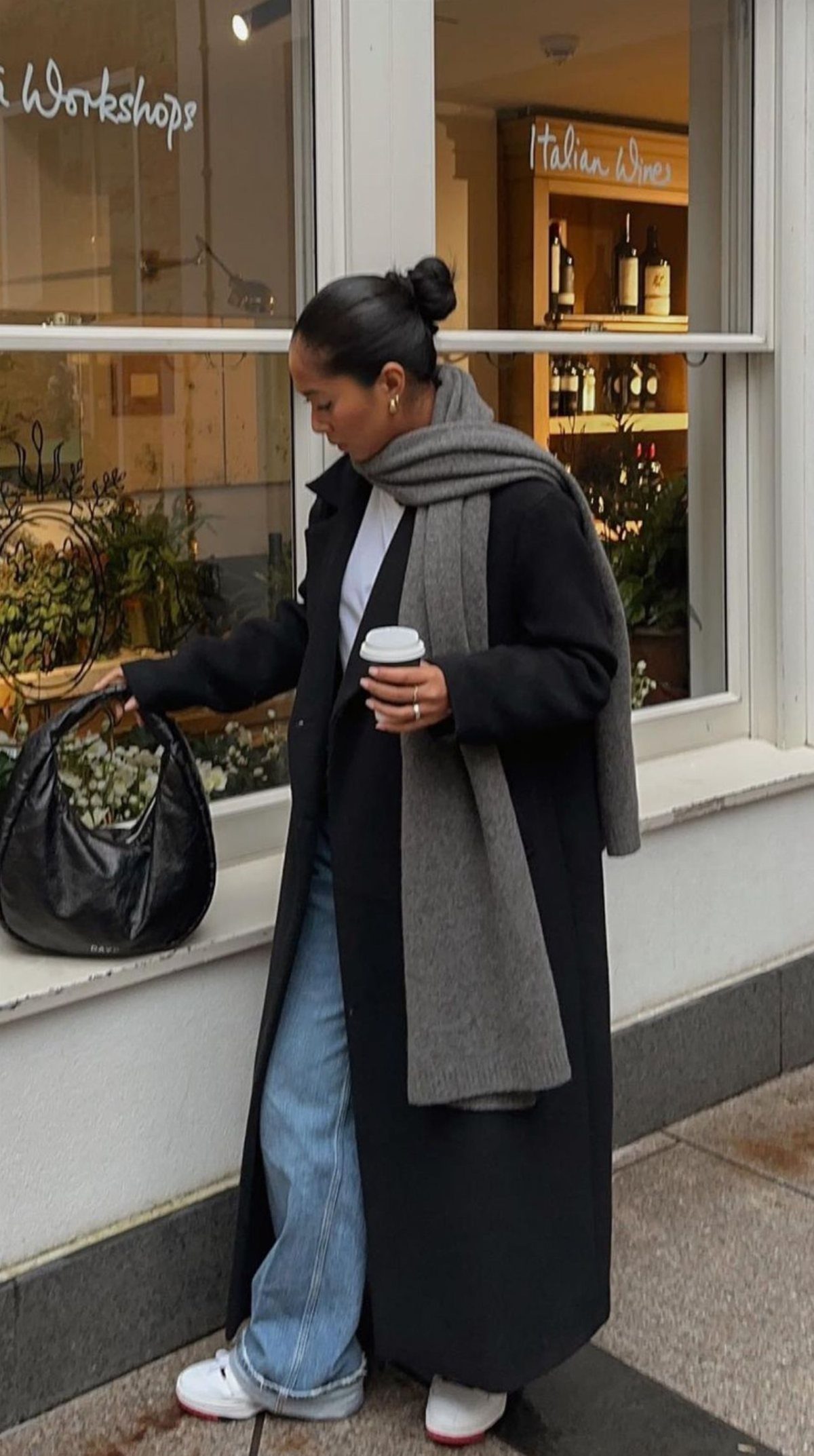
A black wrap coat over light-wash denim and white sneakers is the uniform that gets me out the door on Saturday mornings without looking like I stopped trying.
The coat does the heavy lifting here. Its structured length and tied waist keep the silhouette intentional, while the jeans and trainers underneath signal that you are off the clock.
I keep the denim slim or straight, never wide-leg, so the coat’s line stays clean from shoulder to hem. A grey scarf in a soft weave adds texture without competing.
This pairing works best when the coat hits mid-calf or longer; anything shorter and the proportions read as accidental rather than relaxed. Skip the handbag if you are carrying coffee and already have pockets.
5. Faux Fur Cuff Accents
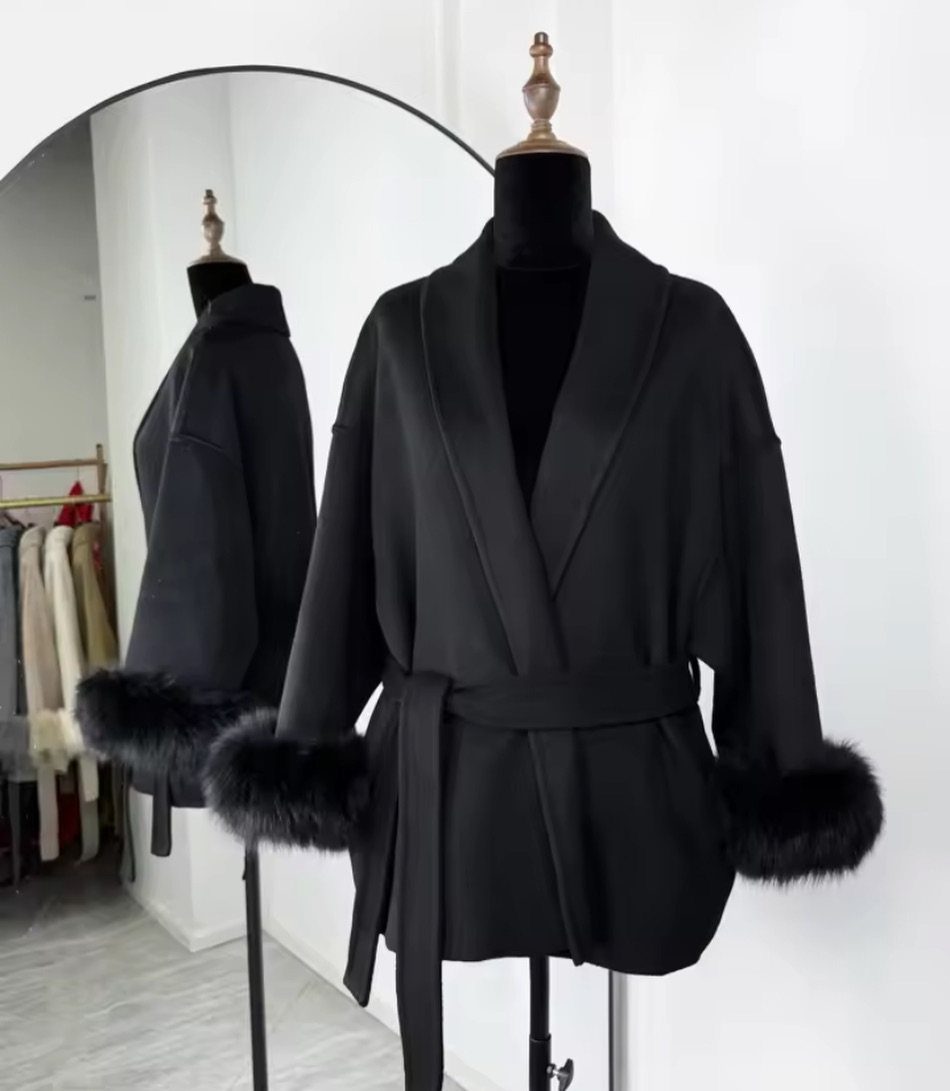
Faux fur cuffs turn a functional coat into something that reads deliberate from across a parking lot.
The texture sits at your wrists, where movement draws the eye, so the effect carries even when the coat is buttoned and the belt is tied.
I look for cuffs that detach with buttons or hooks, not stitching, because dry cleaning fur trim every time the wool needs it gets expensive fast.
The fur should match the coat’s black closely, or go intentionally lighter for contrast; a mid-tone muddies the whole piece.
This detail suits someone who wears mostly black already and wants variation without adding color. Bulk is the catch with fur cuffs: they catch on sleeves layered underneath, so I size up or wear them over thin knits only.
6. High Collar Design
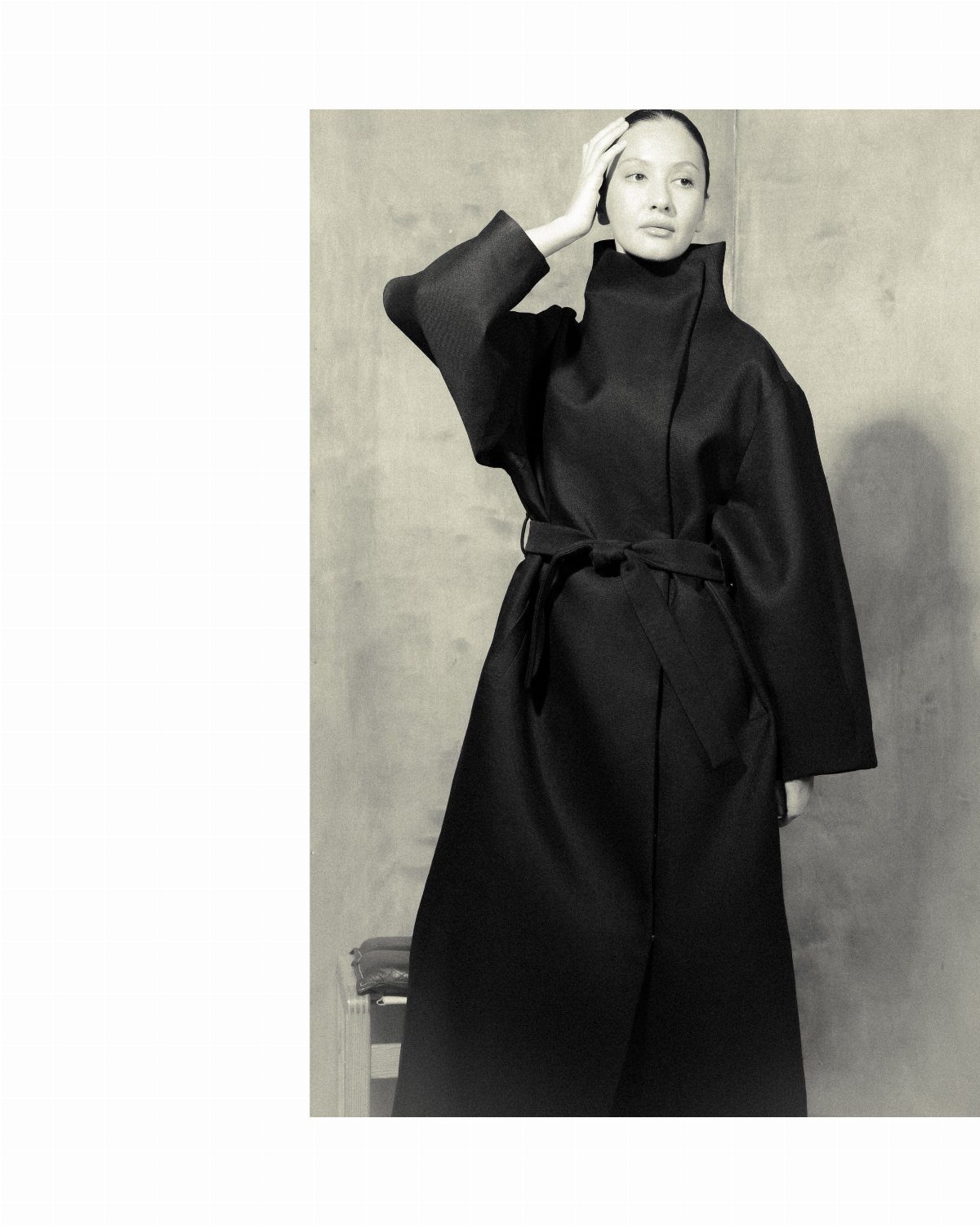
A high collar on a black wrap coat gives you the architecture of a turtleneck without the extra layer.
The standing collar frames the face and catches wind before it reaches your neck, which I appreciate on days when I have forgotten a scarf.
A high collar draws the eye up, and wide sleeves balance that vertical line; narrow sleeves would make the whole piece look top-heavy.
I find this collar style works best in a wool with enough body to hold its shape, not a floppy cashmere blend that collapses after an hour.
This design favors someone with a longer neck or an angular jaw, since the collar cuts a horizontal line right at the chin. For rounder faces, I would choose a lower, folded lapel instead.
Frequently Asked Questions
What is a wrap jacket?
A wrap jacket, or wrap coat, fastens with a self-tie belt rather than buttons or zippers. The belt sits at the natural waist and lets you cinch or loosen the fit depending on what you are wearing underneath.
Wide lapels and a draped cut create shape without the stiffness of a fully tailored coat.
Are wrap coats in style?
Wrap coats read as timeless rather than trend-driven. Decades of women reaching for the same belted waist and wide lapels says something about the shape: it narrows where you want it to and skims where you don’t, season after season.
A black wool version in particular works across years of wear.