Sweater dress outfits run from a baseball cap and sneakers to a belted turtleneck with knee-high boots, and the deciding factor is the shape of your day, not the dress itself.
A hooded knit with white sneakers carries you through errands; the same dress with a chain belt and structured bag works for dinner.
The 15 ideas below cover everything from adding texture and belts to layering with denim jackets and winter coats, and every combination is built from pieces you likely already own.
1. Dress Up with Accessories
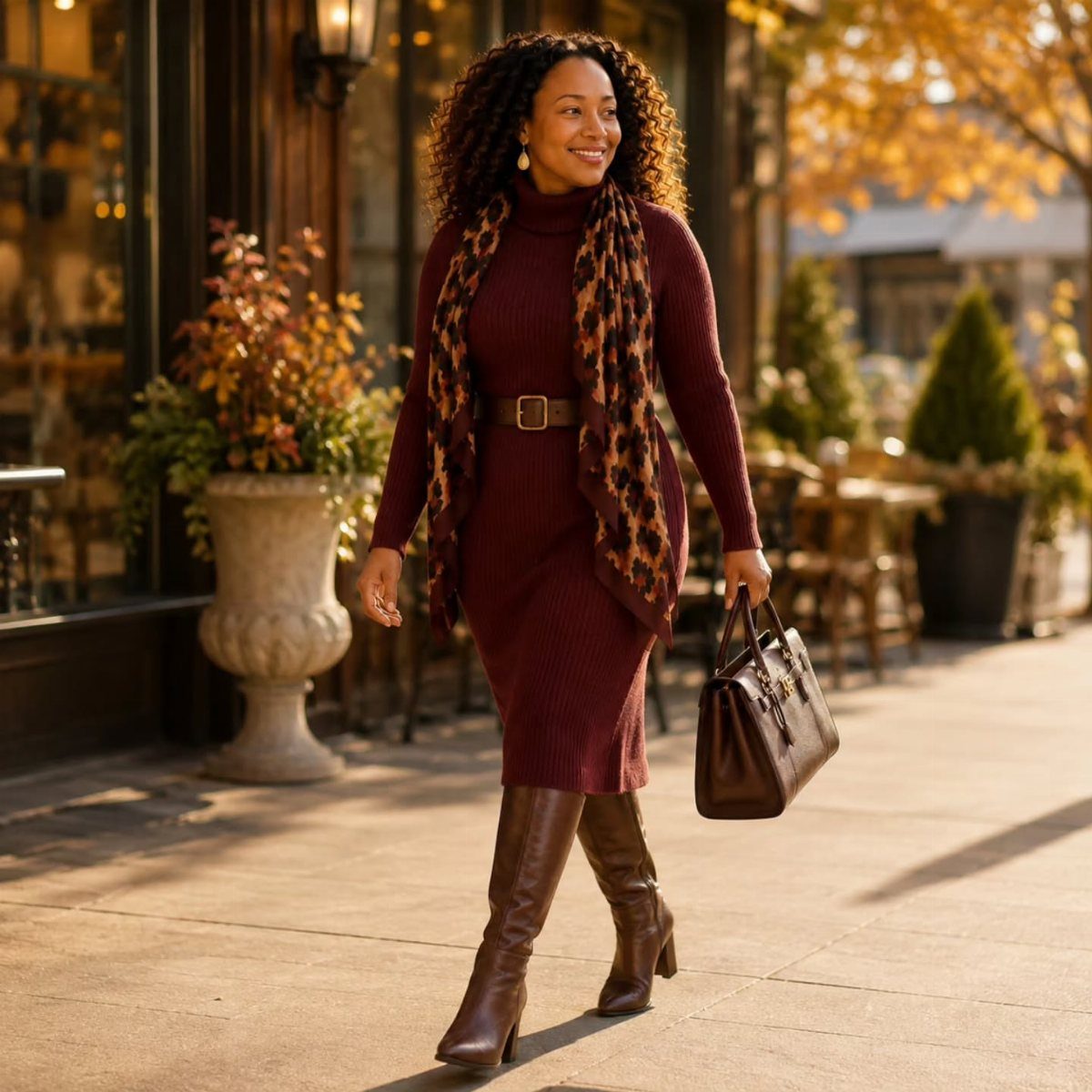
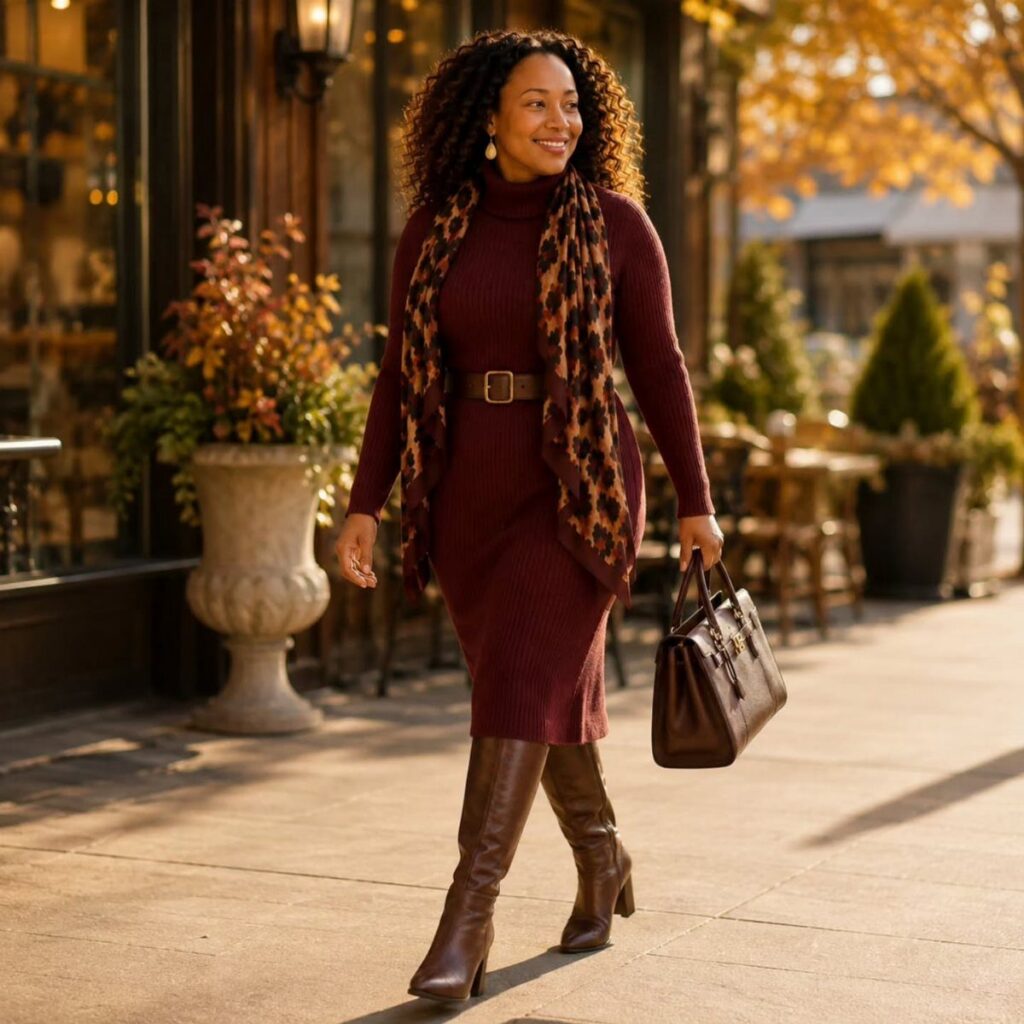
I reach for one statement piece, a printed scarf or a chain belt, and keep the rest in the same tonal family so nothing competes.
The belt gives shape, the bag adds polish, and the scarf supplies the pattern a solid dress lacks.
This works best when the dress itself is simple and the accessories are pieces you already own. If your closet runs minimal, swap the print for a wide gold cuff or a structured leather bag in a contrasting color.
2. Add Texture

Cable knit and ribbed textures do the styling work for you.
A beige dress with visible stitch detail holds its own without layers or jewelry, which is why I pack one for travel when I want to look pulled together with zero effort.
The texture reads as intentional, not lazy.
Check the weight against your climate; a chunky cable can add bulk where you do not want it, while a fine rib skims closer and layers more easily. Black tights underneath keep the focus on the dress surface.
3. Turtleneck Dresses
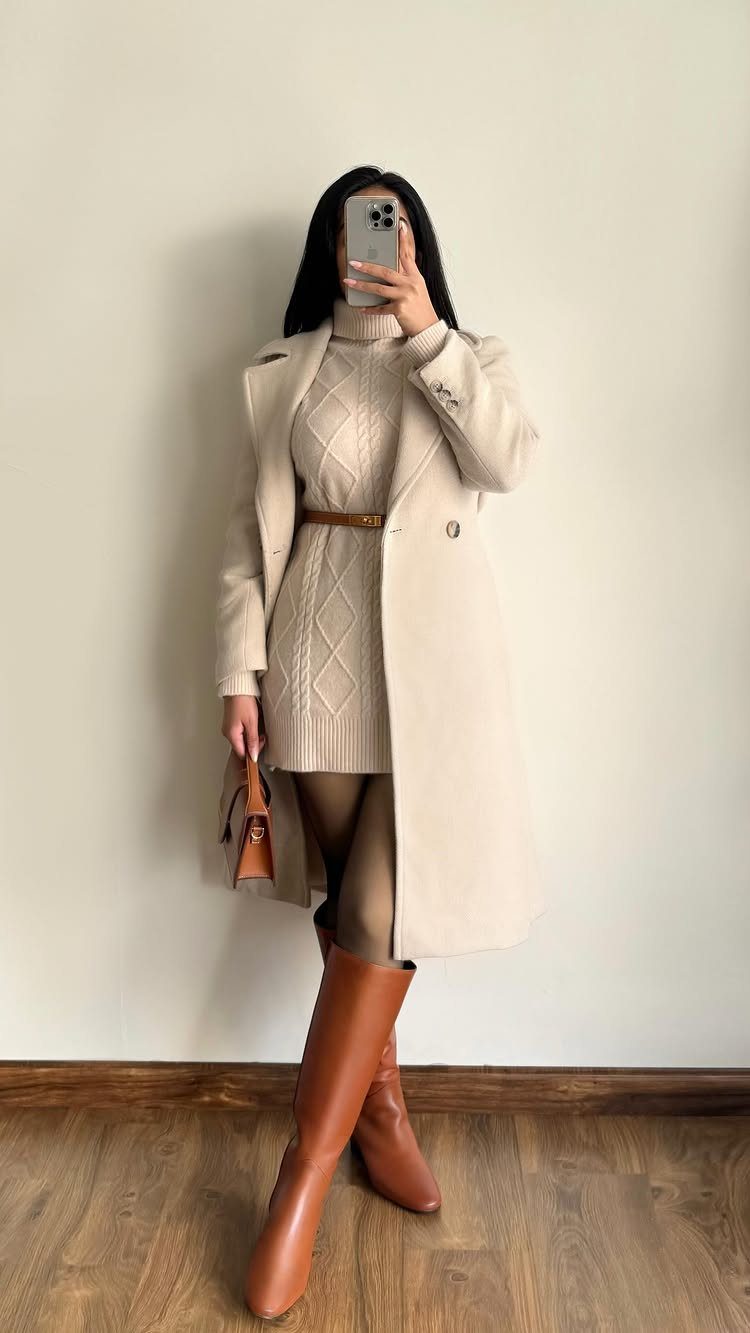
A turtleneck dress is the one sweater style that looks finished at a dinner table and warm enough for the walk home.
The high neck removes the need for a scarf, so I treat the coat and boots as the accessories instead.
Belt it if the silhouette needs definition, or leave it straight for a column effect that reads modern rather than boxy.
Heavyweight wool with ribbing holds its shape better than a loose gauge, which can stretch at the hem after a few wears.
4. Add a Belt
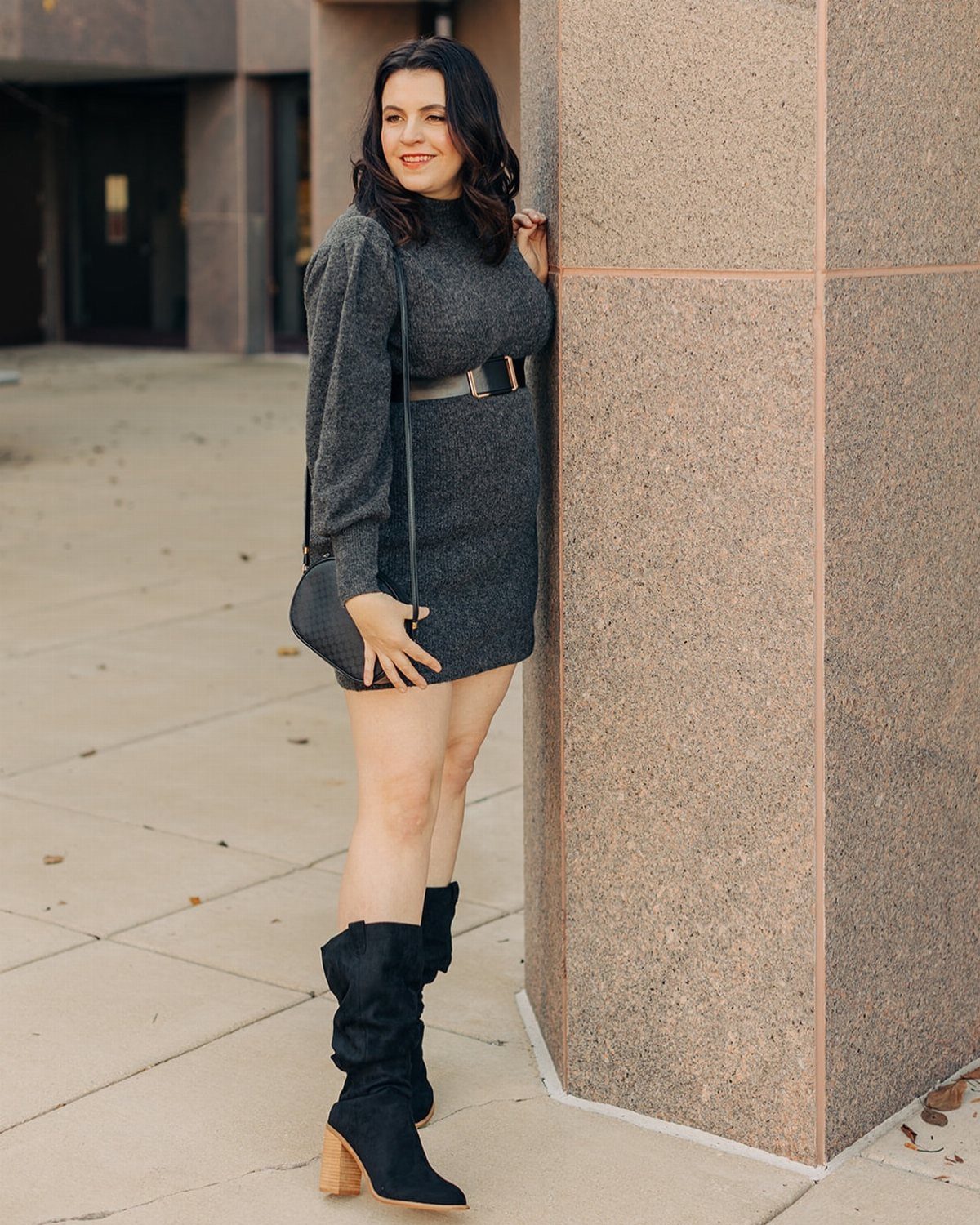
A black belt with gold hardware against charcoal knit creates a waist where the dress offered none. I cinch at the natural waist, not the hips, to avoid an empire effect that shortens the legs.
The buckle finish matters more than the color match.
A matte black buckle reads casual; polished metal steps it up for an office or evening. If the dress has no belt loops, a narrow belt stays put better than a wide one, which tends to ride up.
5. With Knee High Boots
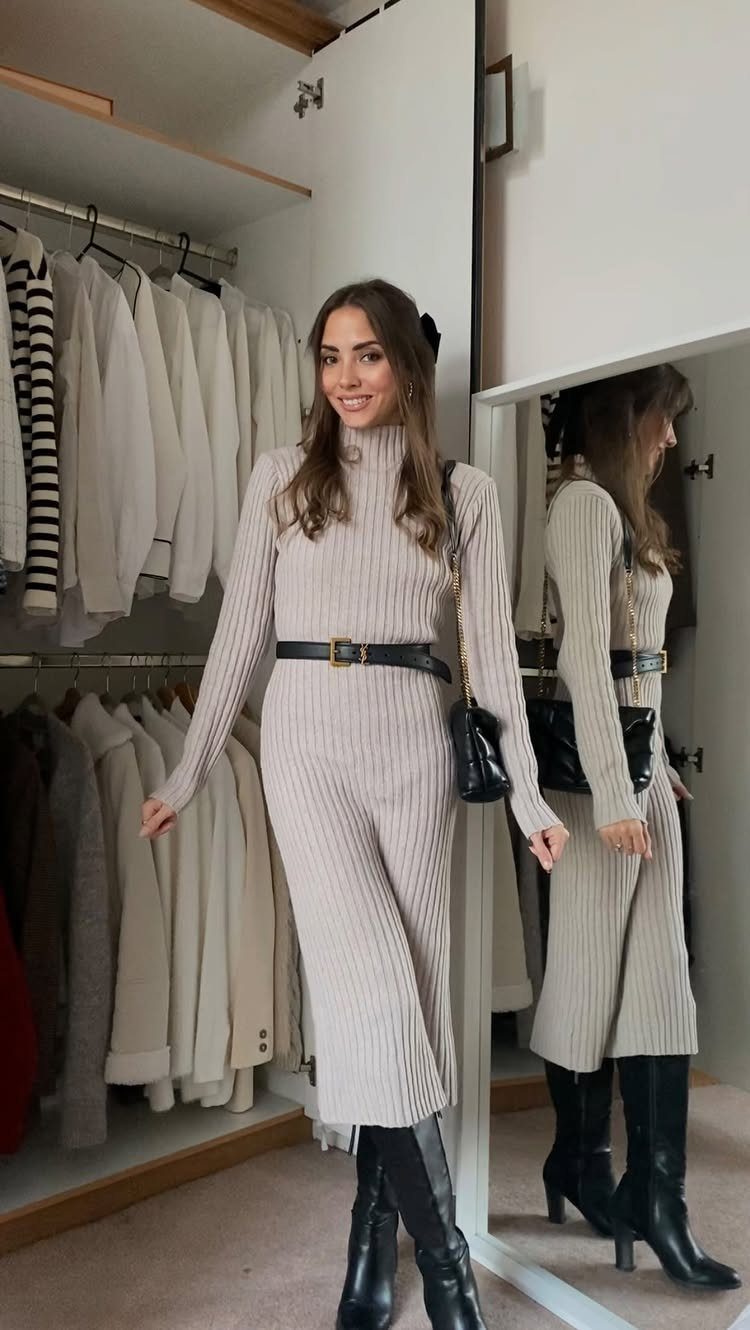
Beige ribbed knit tucked into black knee-high boots builds a leg line that looks longer than it is.
I keep the boot shaft tight to the calf; a gap between dress hem and boot top breaks the vertical line this pairing is meant to create.
Tonal dressing, a coat in a similar warm neutral, extends the effect upward. This is the combination I suggest when someone wants to look dressed up without wearing heels, since a low block heel in the boot still reads polished.
6. With Over the Knee Boots
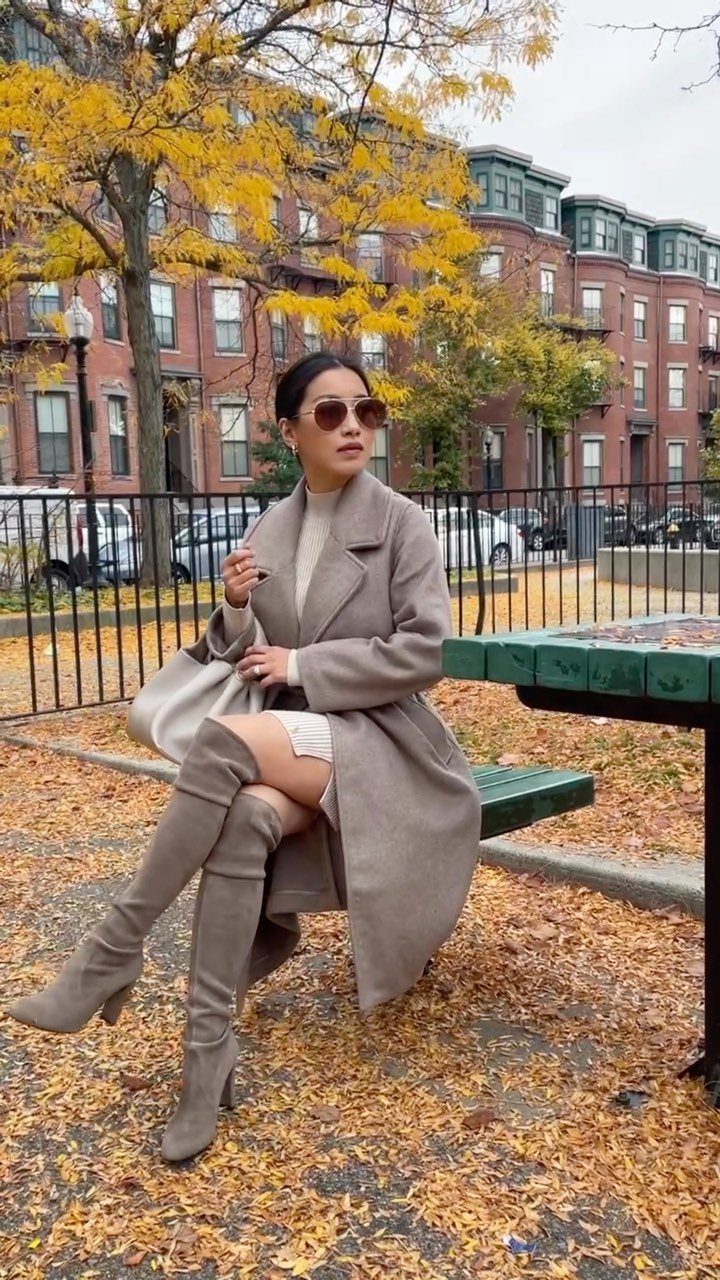
A shorter sweater dress needs the coverage that over-the-knee boots provide in late fall. I prefer suede for the texture contrast against ribbed knit, though smooth leather is easier to wipe clean after a day in wet leaves.
The boot height should meet the hem or sit clearly below it; anything in between looks accidental. Flat soles keep the look daytime, while a slim heel shifts it to evening without changing anything else.
7. With Sneakers
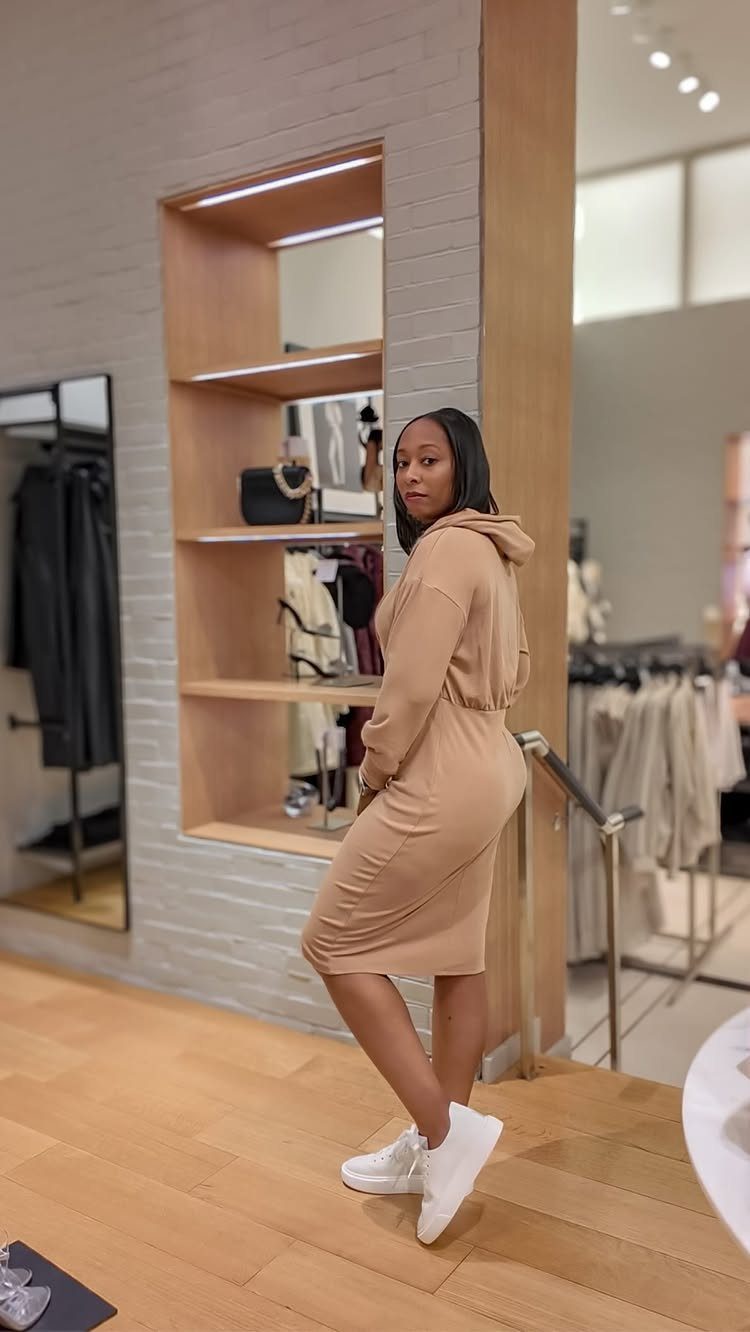
A hooded sweater dress with clean white sneakers turns the whole look into something you can actually run errands in.
The hood itself does the styling work, so you skip jewelry and keep the bag small. I reach for this pairing when I need one outfit to carry me from a morning coffee through an afternoon of returns and browsing.
A midi that hits at the narrowest part of the calf keeps the line clean; anything shorter or longer fights the shoe.
At or above the knee keeps the proportions from going sloppy; longer hemlines need a slimmer sneaker, not a chunky sole.
Check the mirror from the side. If the dress swallows your ankles, the shape is wrong for this pairing.
8. Layer with a Denim Jacket

Black denim over burgundy knit gives you the contrast without the formality of a blazer.
The cropped cut is what makes it sit right; a longer jacket fights the dress hem and you end up with a horizontal line at the wrong thigh.
I like this for dinners where you might end up holding your coat the whole night.
The jacket stays on, the dress speaks for itself, and you are warm enough near the door or in over-air-conditioned rooms. A crossbody bag keeps the hands free and the look modern.
For patterned sweater dresses, this same move works with a suede or trench layer instead, though that shifts the mood toward Saturday evening.
9. Pair with Black Tights
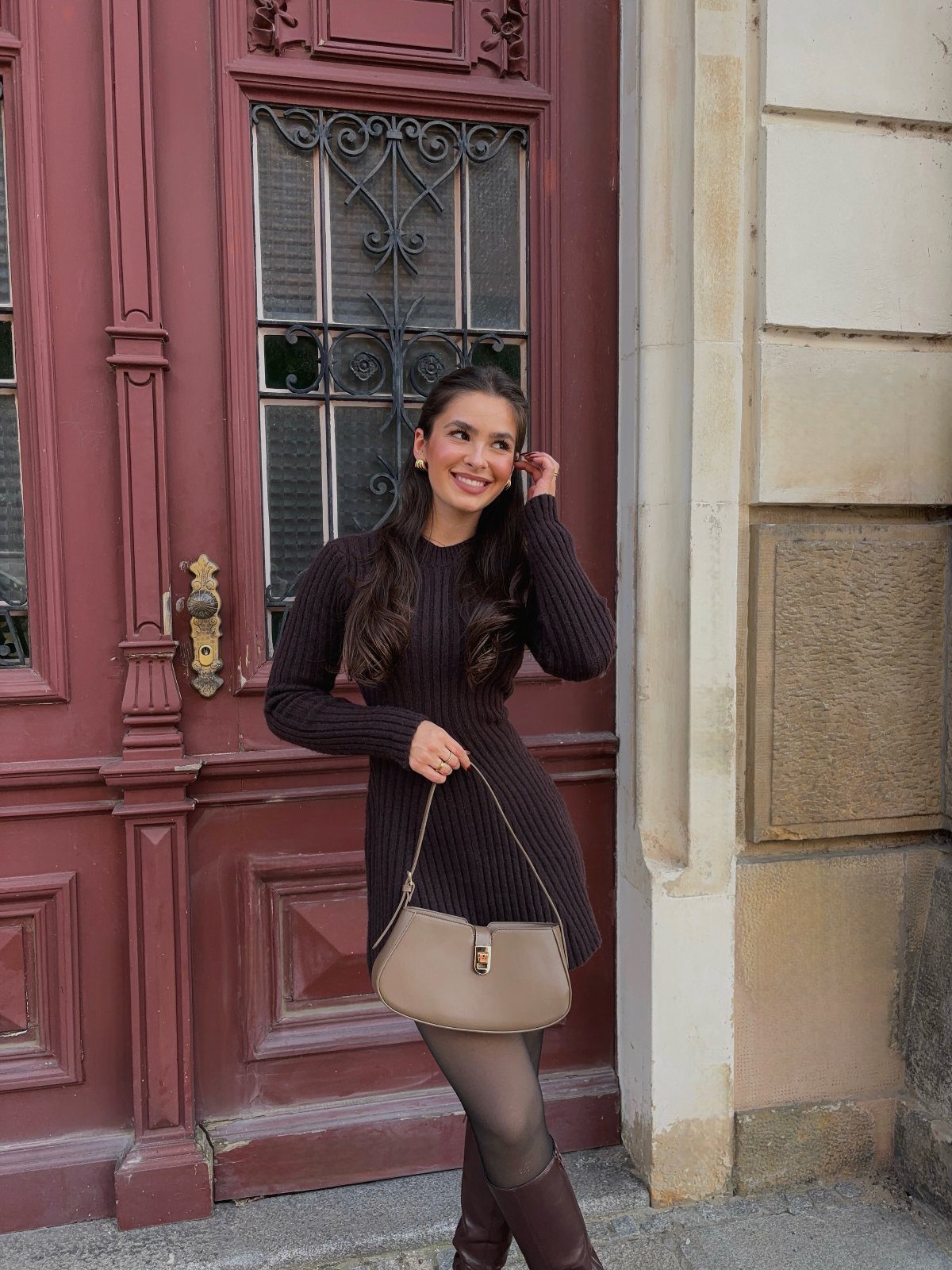
Sheer black tights under a ribbed mini dress bridge the gap between bare legs and full winter coverage without looking like you are trying too hard.
The brown boot picks up the dress tone so the tights stay the quiet base layer, not a statement.
I have worn this combination to offices where leggings would feel underdressed and bare legs would feel exposed.
The ribbing on the dress gives texture up top; the sheer keeps the leg line clean rather than bulky. Opaque tights would change the whole proportion and turn it into a different outfit entirely.
Check the denier in daylight before you commit. Sheer reads differently under fluorescent store lights than it does outdoors.
10. Layered with a Winter Coat
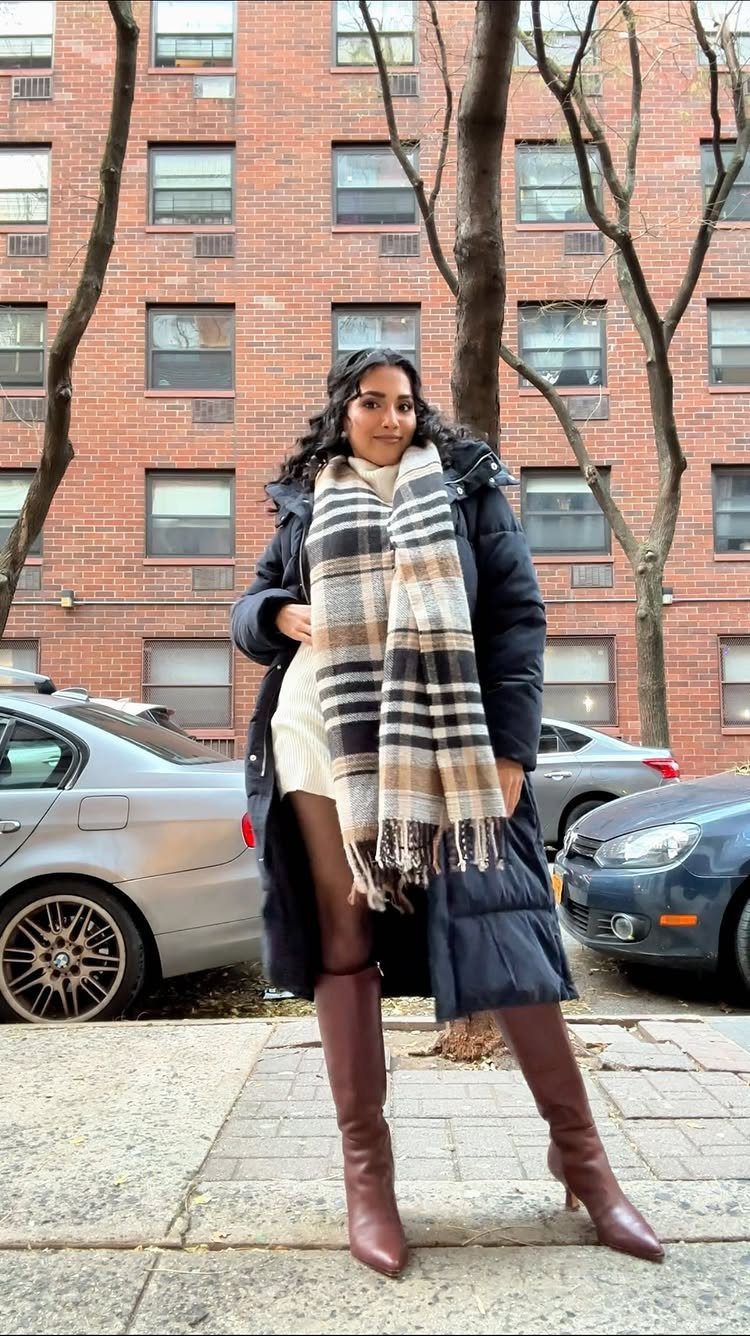
A cream dress under a dark puffer with a plaid scarf is the winter version of throwing on a cardigan.
The scarf does the pattern work so the coat can stay plain and practical. I have worn this to outdoor markets and to meeting a friend at a place with a long wait on the sidewalk.
The turtleneck sweater dress underneath is what I would reach for if the day starts cold and ends in a overheated restaurant.
The puffer comes off, the dress stands alone, and you are not carrying a heavy layer across your lap through dinner.
Boot height should clear the dress hem by a couple of inches. Anything shorter and the proportions turn stumpy once the coat opens.
11. Sporty with a Baseball Cap
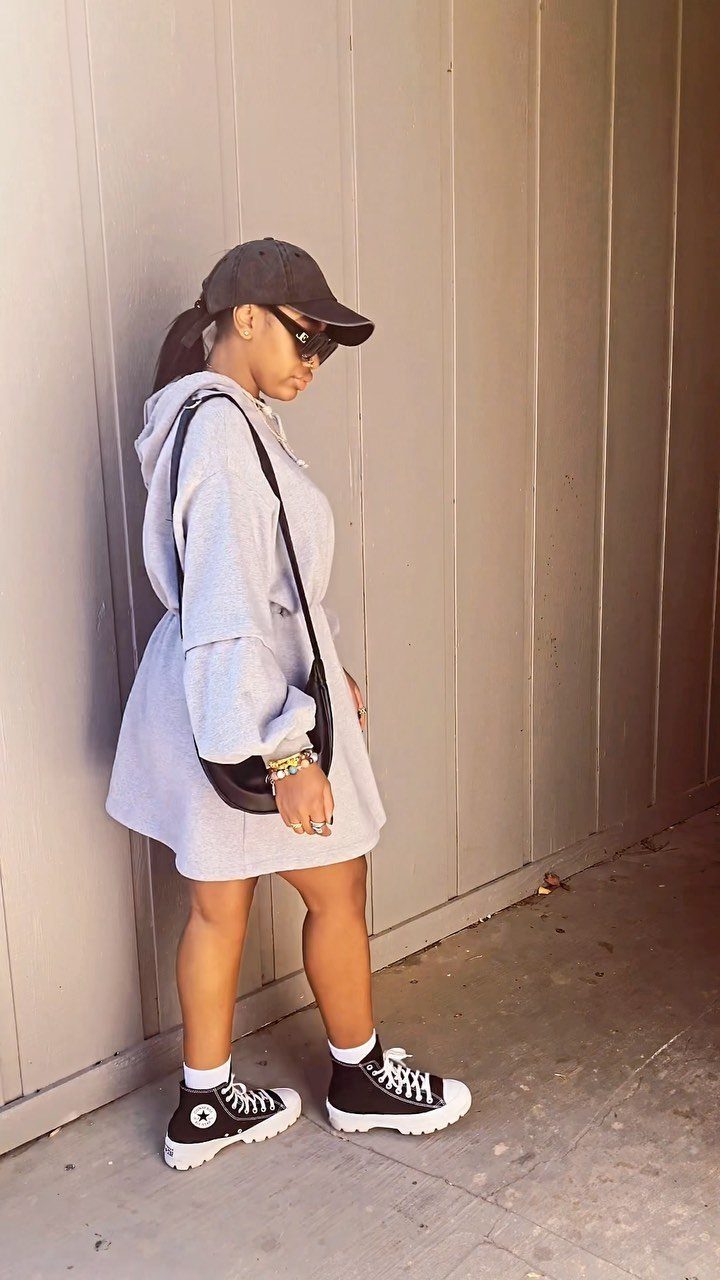
A baseball cap with a hooded sweater dress is the kind of pairing that reads as intentional only when everything else stays minimal.
A grey knit against a black cap stays in one quiet register, which is the point; a third color turns the whole thing into a statement you did not mean to make.
I would wear this for a long-haul travel day or a Saturday when the only plan is a bookstore and a late lunch.
The cap does what a ponytail cannot when your hair has gone flat and you still need to leave the house. The hood gives you a second option if the wind picks up.
Sunglasses and the crossbody finish the look.
Without them, the cap can tip toward sloppy. Check that the cap sits low enough; a high crown with a hood behind it gives you double volume at the back of the head.
Versatile Wear
A sweater dress earns its keep by crossing more situations than almost anything else in my closet.
The same charcoal ribbed midi carried me through a morning meeting, a late lunch, and a dinner where there was no time to change. The difference was the boots and whether I added a belt.
The fabric itself signals the level of polish.
A fine-gauge merino or cashmere blend reads more formal than a chunky hand-knit, even in the same silhouette. Keeping one of each weight means a casual piece never gets forced into a setting where it looks out of place.
For travel, a sweater dress replaces separate tops and bottoms.
It packs smaller, wrinkles less, and you need only swap the jacket and shoes to shift the tone. That is the versatility I actually use, not a theoretical wardrobe diagram.
Beyond the ease of wear (they go with practically everything), sweater dresses pack a lot of versatility in a single piece, whether styled for relaxed moments with comfortable smoking loafers or amplified with modern pumps and jewelry for events or date night.
— Vogue
Comfortable Fit
The stretch in a knit dress is what lets it sit close without binding.
I look for a blend with some elastane, enough that the shape recovers after sitting. Without it, wool and cotton relax by noon and the dress looks like you pulled it from the laundry basket.
The wrong size destroys this advantage. Too large and the fabric pools at the hips and arms; too small and the ribbing strains open and the whole thing looks like shapewear.
I order two sizes when I am unsure and return the one that does not skim.
Length matters for comfort too. I check the return policy on anything I have not touched in person.
Layering Options
Layering a sweater dress is not about piling on pieces. The dress is already volume; what goes over or under it needs to be thinner or shorter so you do not lose your shape entirely.
A long-sleeve tee under a short-sleeve or sleeveless knit dress works in early fall.
The cuff should sit close to the wrist, not balloon out. I use a tissue-weight merino or a smooth jersey; anything thicker and the arm looks like stuffing.
A trench that hits mid-thigh cuts the body in half and the dress becomes a skirt you did not choose. The same rule applies to cardigans: waist-length or long enough to wear open as a column, nothing in between.
Styling for Different Body Types
Fit is where a sweater dress either flatters or fails, and the mirror does not always tell the truth until you move.
Sit down, reach up, bend forward. If the fabric pulls across the hips or the neckline gapes, the size is wrong even if it looked fine standing still.
For a straighter figure, a belted waist or a dress with built-in ribbing at the midsection creates shape without adding bulk.
Curvier frames often benefit from a finer gauge that skims rather than a chunky knit that adds volume.
A V-neck or a crew that sits wide on the collarbone opens the neckline; a turtleneck can compress the whole upper body if the proportion is already full.
Petite heights need to watch the hem.
What overwhelms a taller friend will swallow your frame entirely. I suggest a mini or a knee-length cut, or having a longer dress tailored rather than rolling the waistband, which distorts the knit.
Frequently Asked Questions
What pairs well with a sweater dress?
Knee-high boots in a matching tone build a longer leg line, especially with a tight shaft and no gap between hem and boot top.
For travel or errands, clean white sneakers work with a hooded style that hits at or above the knee.
Are sweater dresses still in style?
Yes. The sweater dress functions as a wardrobe staple that moves between seasons, not a trend piece with an expiration date.
I pull mine back out in spring with a denim jacket or trench, and the range of current cuts, from turtlenecks to balloon sleeves, keeps the silhouette from looking dated.
Styling makes the difference. An unshaped dress with the wrong shoes reads frumpy, while the same knit with a belt and boots looks intentional.