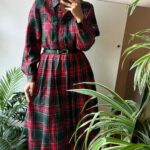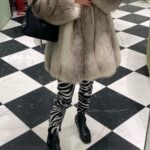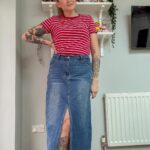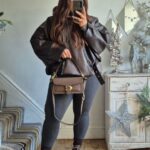
These 12 fall layering outfits move from a second sweater knotted over your shoulders to a button-down under a sleeveless dress, and the one that fits depends on whether your day stays cold or swings twenty degrees by noon.
Most of fall lives in that middle-weight zone where a thin turtleneck under a blazer still looks finished when the blazer comes off.
Camel over cream in a striped knit keeps the layer from looking like you grabbed whatever was nearby.
1. Layer Up on Knitwear Instead of a Scarf
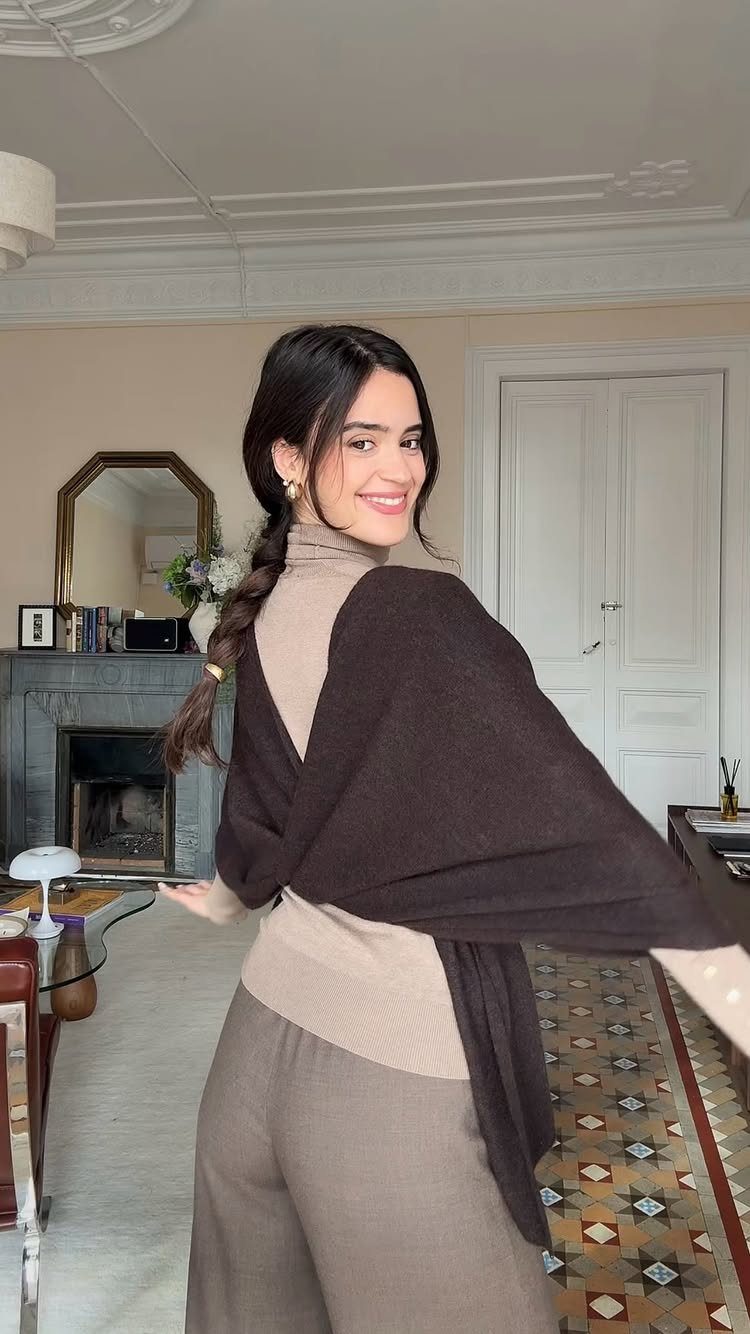
A second sweater across your shoulders adds warmth without the fuss of wrapping and tying, and it stays put while you move.
I reach for this on days that start cold and warm up fast; the extra knit comes off when I need it and goes back on just as easy.
A thinner turtleneck underneath keeps the bulk in check, and wide-leg trousers balance the shape.
Choose a contrasting tone, like camel over cream or chocolate over beige, so the layer reads as intentional. Leave a cardigan open and flip the front panels back over your shoulders for the fastest way to try this.
2. Leggings
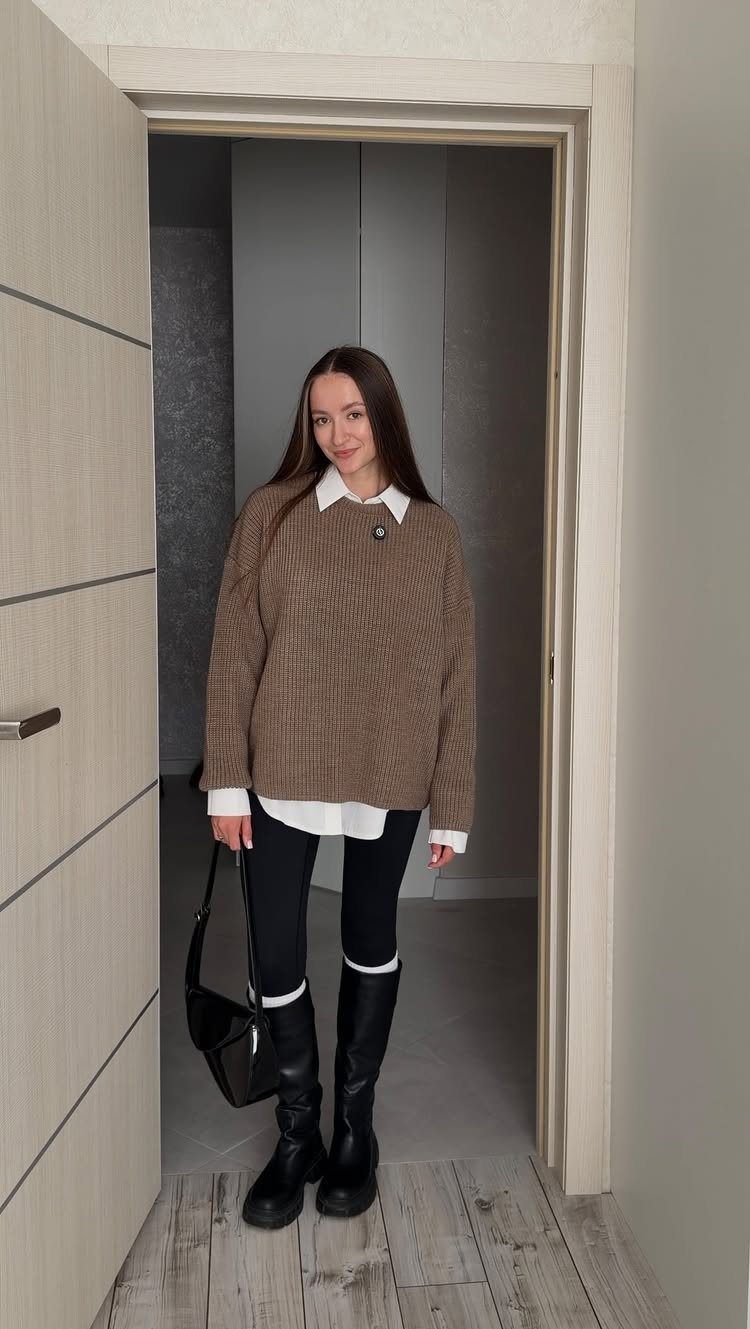
Leggings under a sweater and button-down give the look of pants with the stretch of tights. Black leggings tucked into knee boots with a thin white sock showing at the top makes the whole thing feel considered.
Check that yours are thick enough for opacity, especially in direct light, and that the waistband sits flat under whatever tops you choose.
I prefer a high rise to keep everything in place when I bend or sit. Ankle boots work too, though the line changes; tall boots elongate the leg more.
3. Add Mid-Weight Layers for Warmth
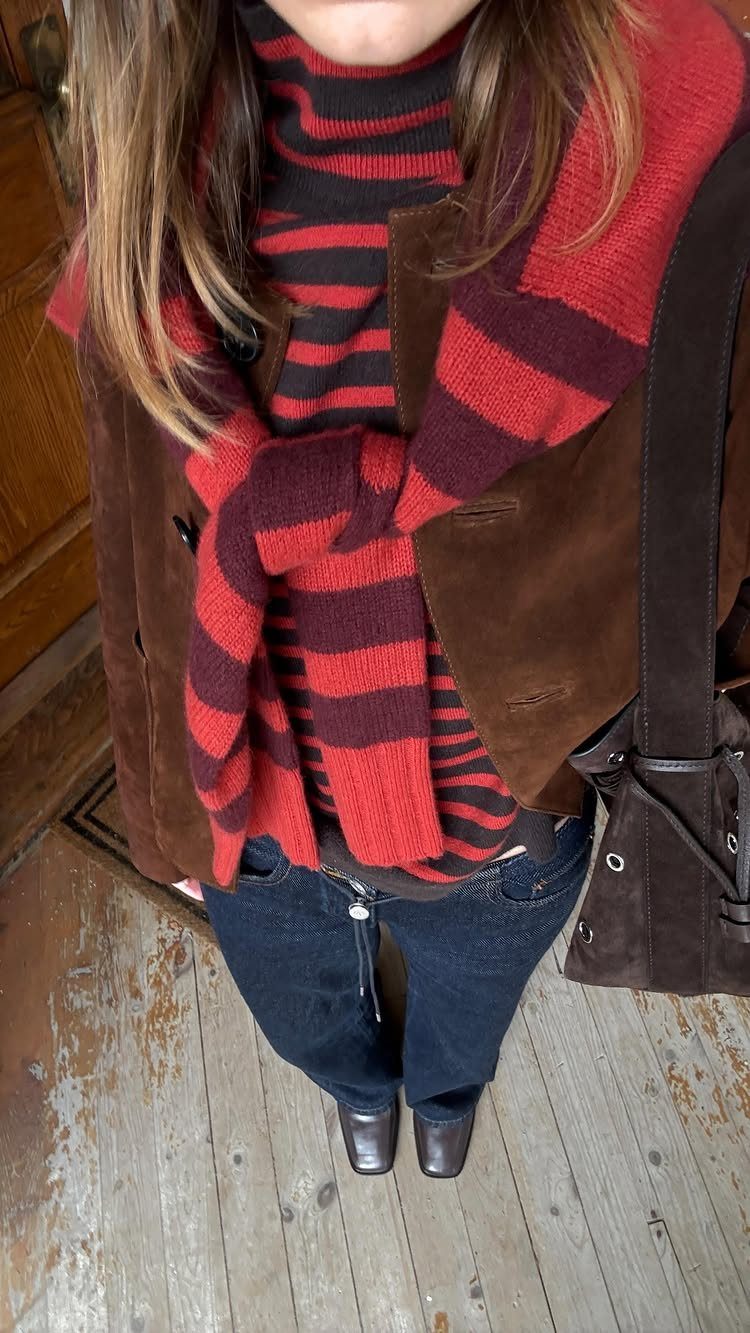
A striped knit tied over your shoulders adds pattern and serves as backup warmth if the suede jacket isn’t enough.
I build most fall outfits from this middle zone, since the base layer stays thin and the coat comes off indoors.
Chunky knits over fitted tops work; so do long cardigans with a half-tuck into jeans to keep the shape from going sloppy. Suede weighs less than a winter coat, so it layers without fighting the knit underneath.
4. Top It Off with Outer Layers
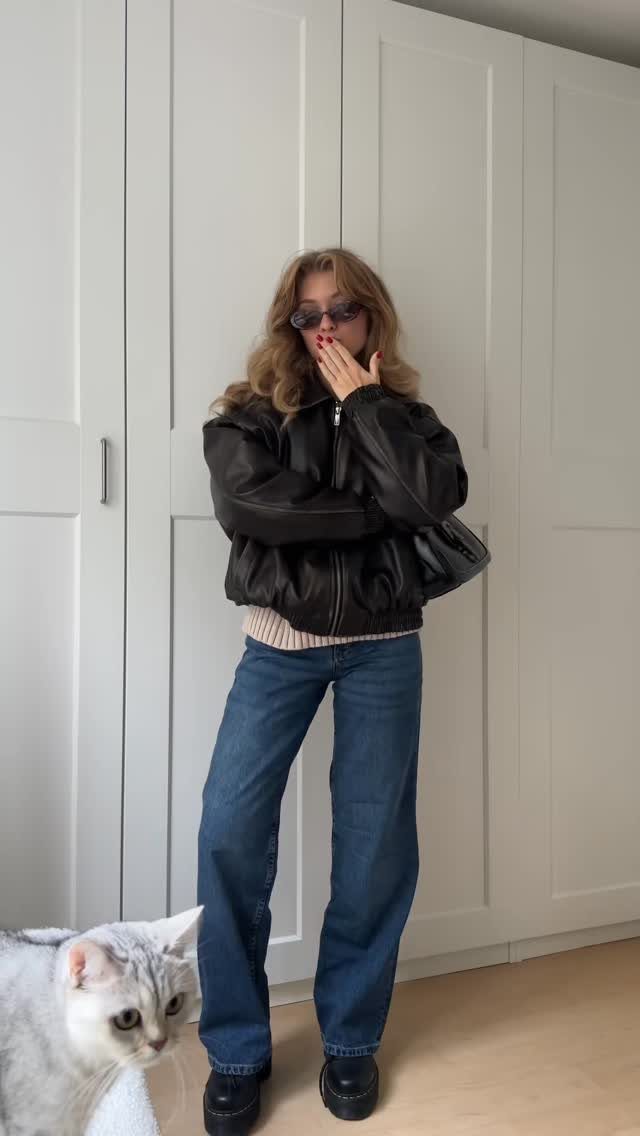
The outer layer is what people see first, so I choose it for the occasion and let everything else support.
A bomber or leather puffer like the ones in the photos works for casual days; a wool coat upgrades the same pieces for dinner.
I keep one structured coat and one relaxed jacket in rotation through November, swapping based on where I’m going. Sunglasses finish the look because fall light is low and angled, and squinting ruins the effect.
5. Sweater Vest Over Button-Down
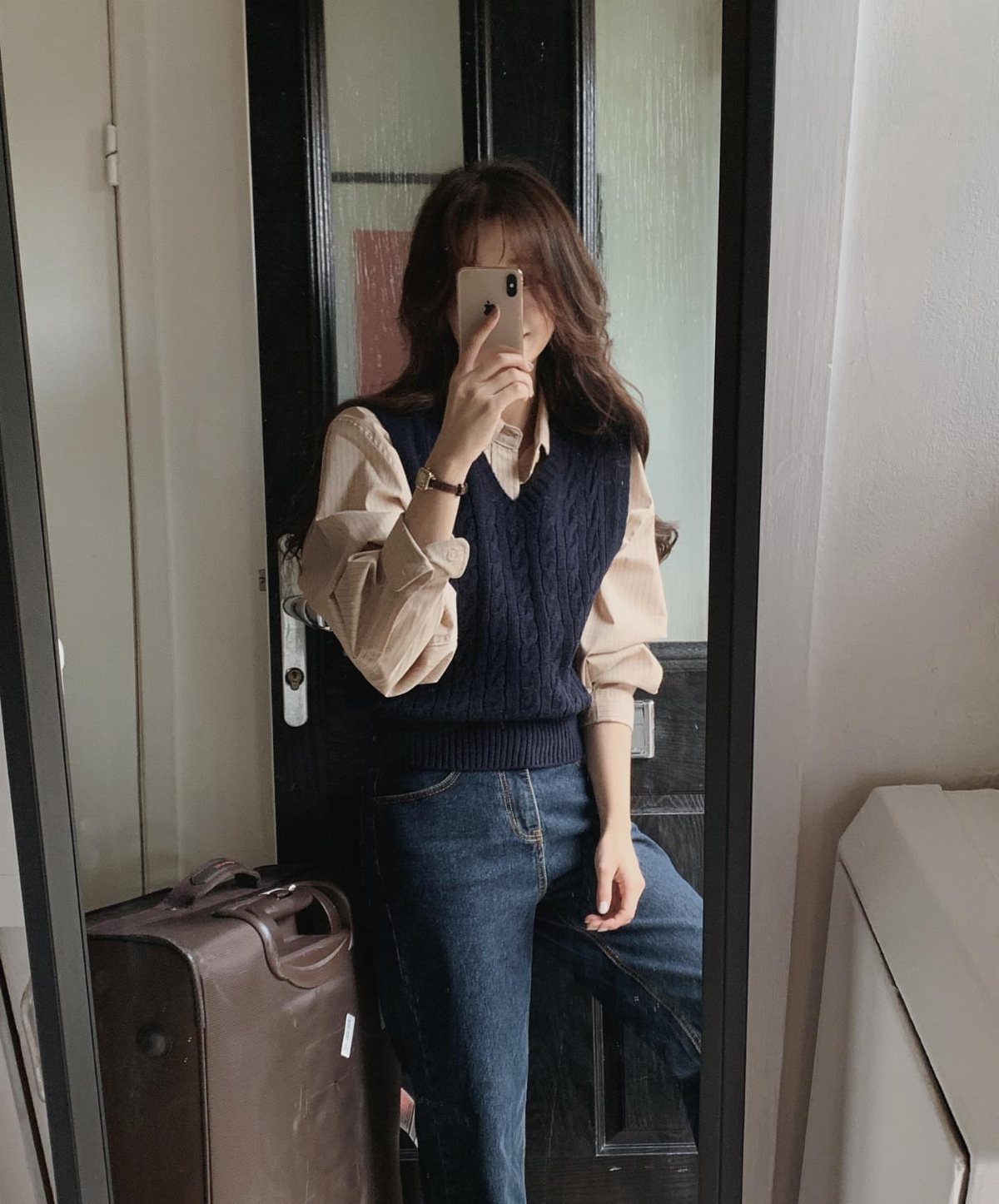
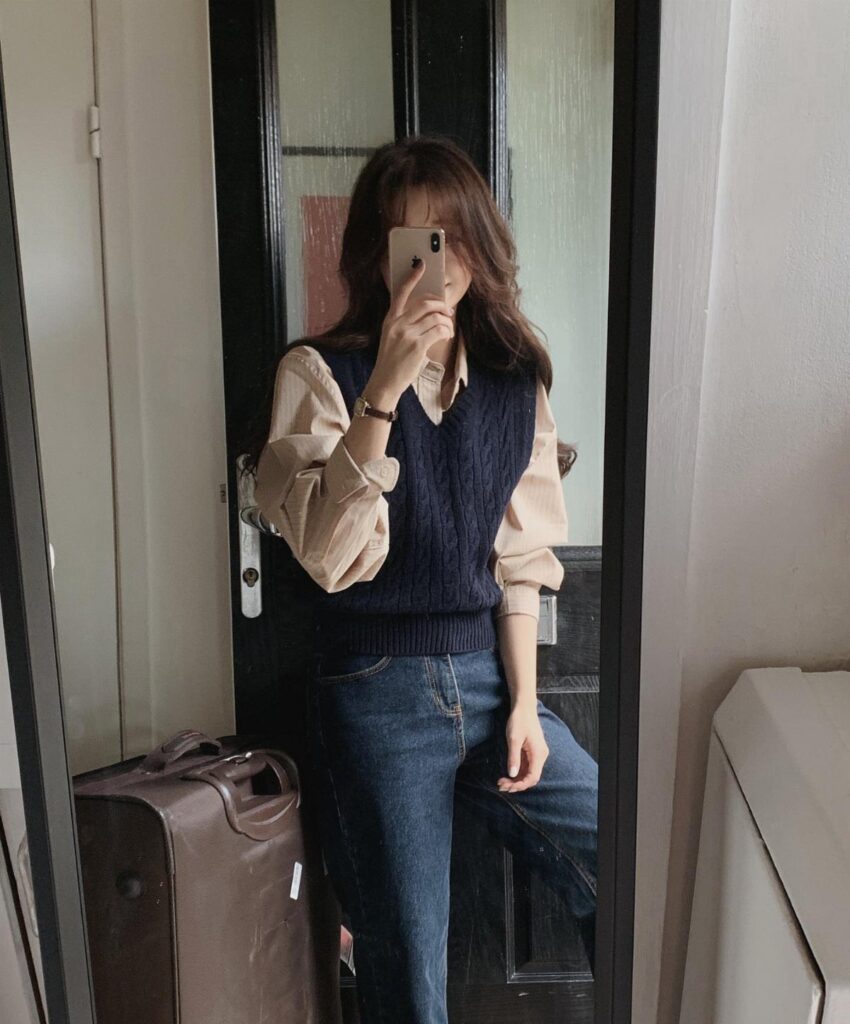
A cable-knit vest over a button-down is preppy done right.
Navy against cream keeps it from looking like a uniform; the jeans relax it further. I like this combination for days with real temperature swings, since the vest warms the core and the sleeves stay free.
The shirt should be slim enough to tuck without bunching, and the vest long enough to hit near the hip.
If the vest is cropped, the proportion shifts and you need a higher rise on the bottom. This is one of the few looks where I check the mirror from the side; bulk at the waist is the usual mistake.
6. Cape Jacket with Skirt
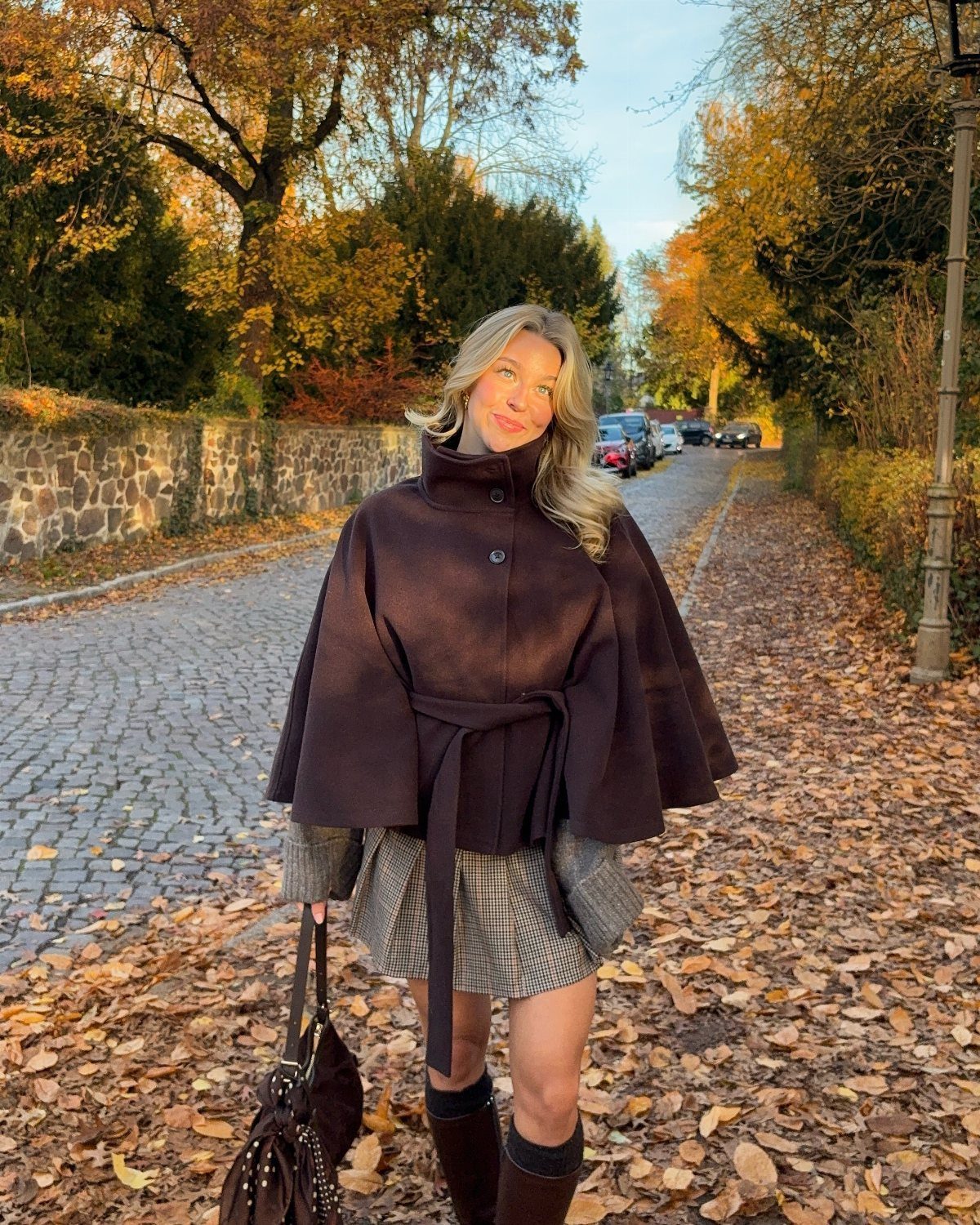
A belted cape jacket gives shape to something that could otherwise read as a blanket. Cinch a cape jacket at the waist to keep the silhouette from overwhelming a shorter skirt.
Tall boots with knee socks extend the line and add warmth where the cape ends. I find this works best when the cape hits at or above the knee; anything longer and the belt loses its purpose.
The skirt underneath should be slim or structured, since the cape provides all the volume. For real cold, a turtleneck base layer fills the neck gap without disturbing the drape.
7. Blazer Over Turtleneck and Midi Skirt
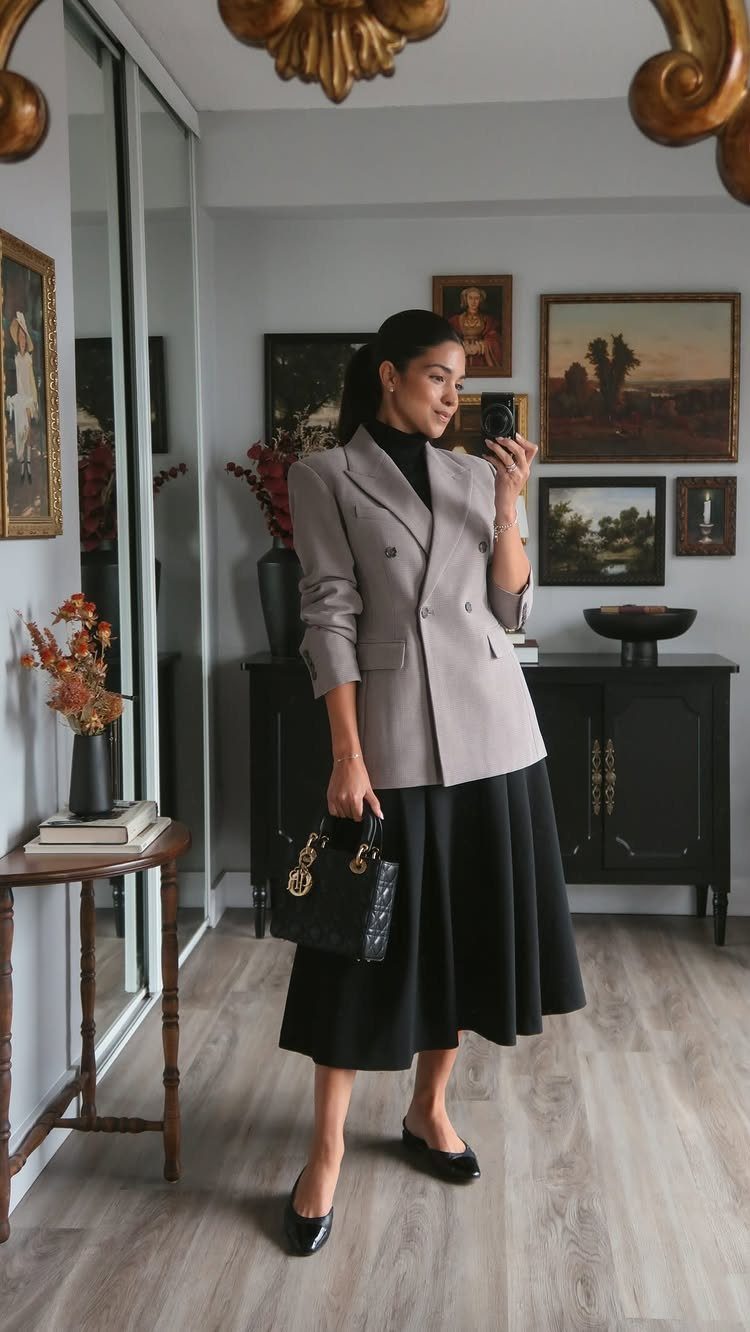
A grey double-breasted blazer over a black turtleneck and pleated midi skirt reads as office-appropriate without feeling stiff.
I like this for days that move from desk to dinner because the blazer comes off and the turtleneck still looks finished on its own.
The skirt length should hit mid-calf to keep the line long; anything shorter and the proportion shifts toward school uniform.
Check that the turtleneck is thin enough to sit smooth under the blazer’s shoulders, and that the skirt’s waistband lies flat. Flats keep it walkable; swap to boots when the temperature drops.
8. Cardigan Over Casual Separates
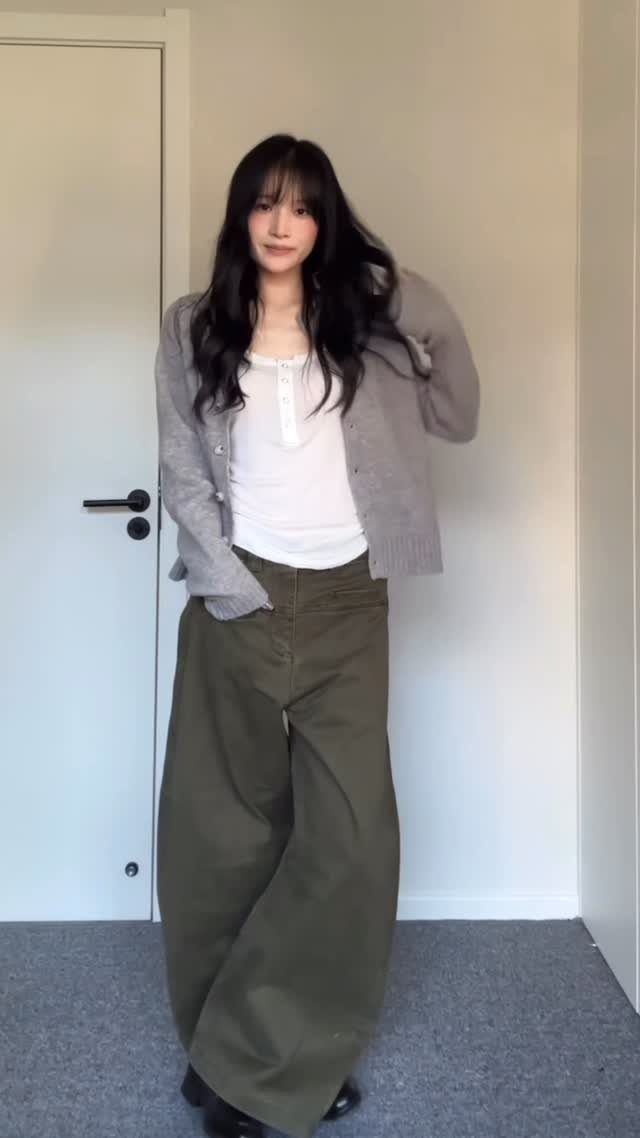
A grey cardigan thrown over a white Henley and olive wide-leg trousers is the kind of outfit that looks like effort but feels like pajamas.
The cardigan should be long enough to hit near the hip; anything shorter and the proportions with wide legs go off.
I leave mine unbuttoned so the Henley shows at the placket, which keeps the layers from flattening into one mass.
The trousers need a clean drape, since the top is soft all over. This is my default for coffee runs and errands when I want to look pulled together without planning.
9. Leather Jacket Over Plaid Midi
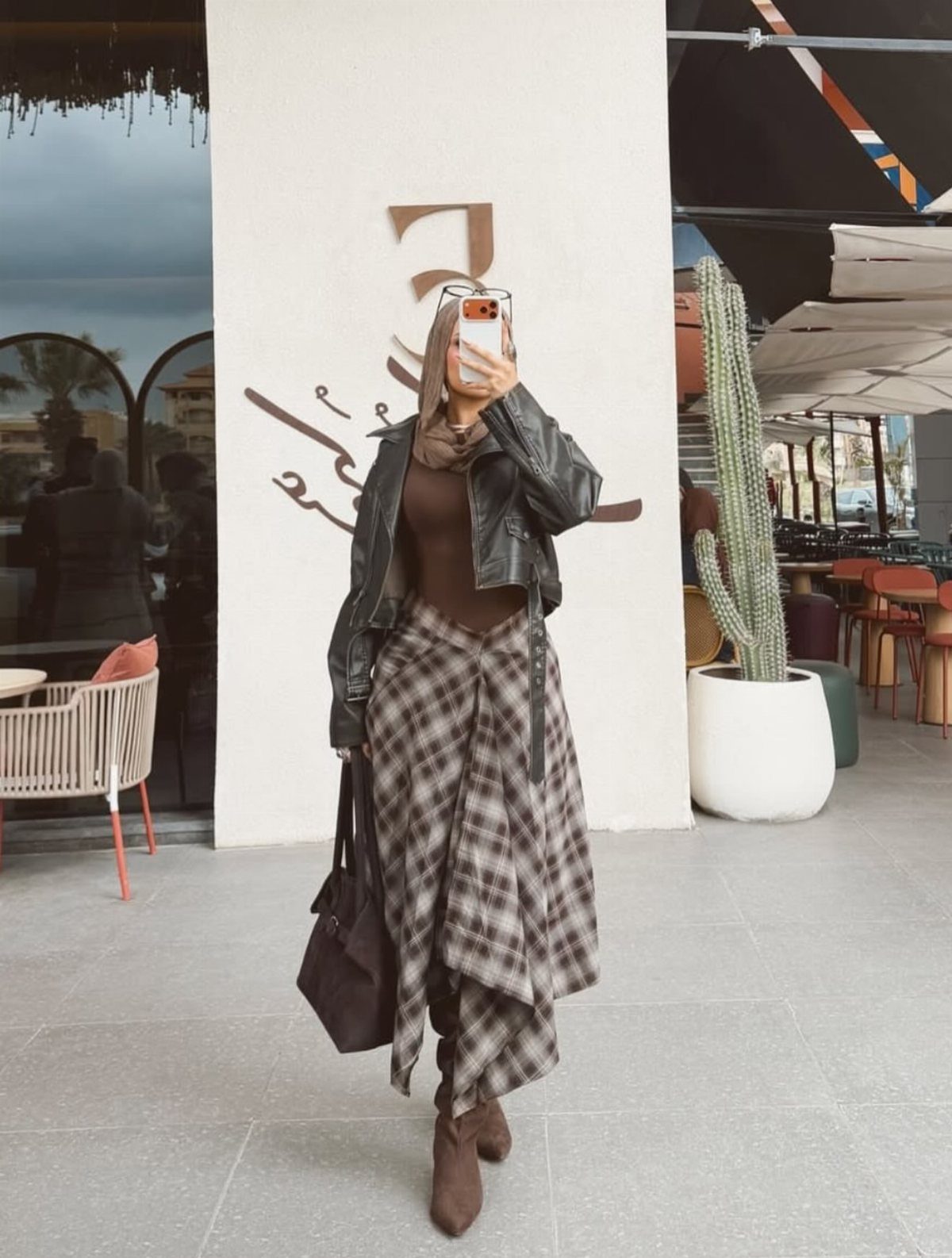
A cropped black leather jacket over a fitted brown top and plaid midi skirt gives pattern some edge. The jacket’s short length keeps the skirt visible; a longer coat would hide the drape that makes this silhouette work.
I find this combination best for mild fall days, since leather blocks wind but doesn’t breathe once you warm up. The skirt should sit at the natural waist so the cropped jacket meets it cleanly; any gap breaks the line.
Brown boots extend the leg and tie back to the top. For real cold, a thin turtleneck under the fitted top adds warmth without adding bulk.
10. Turtleneck Under Cardigan and Skirt
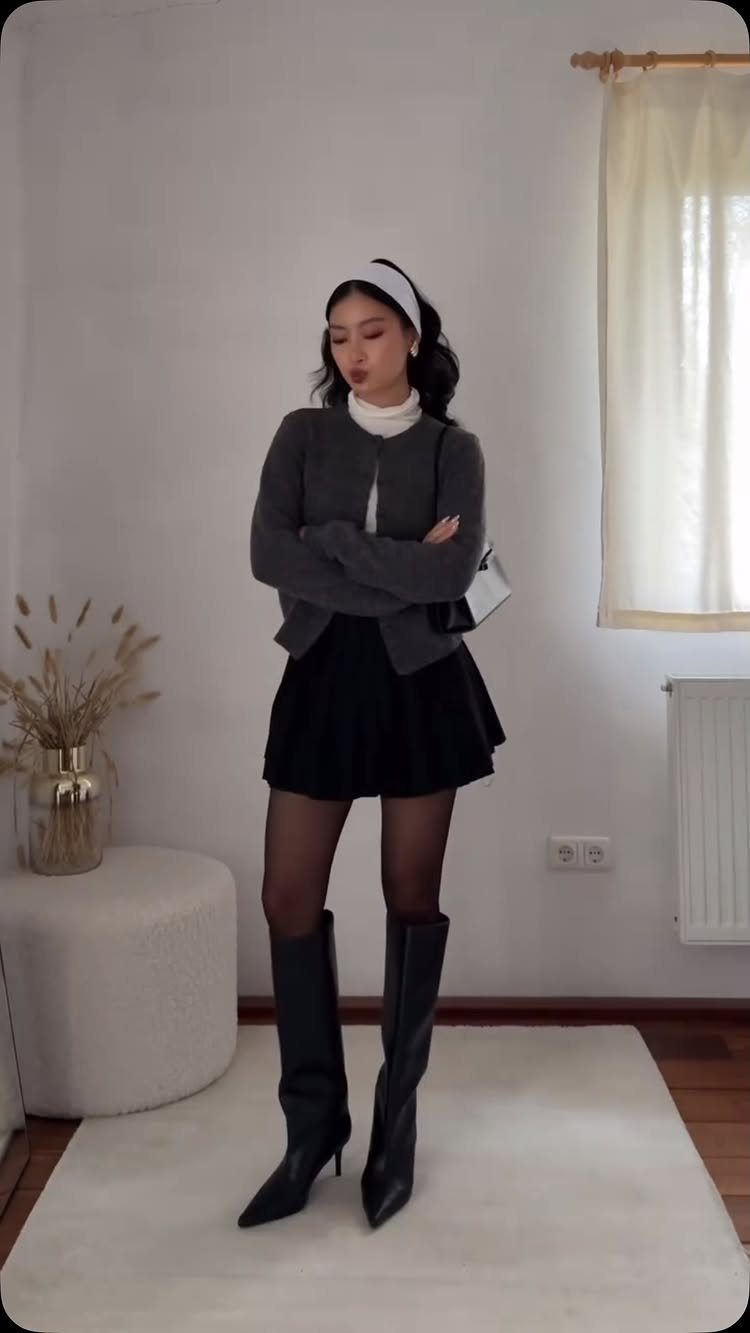
A white turtleneck under an unbuttoned grey cardigan, paired with a black mini skirt and knee-high boots, is how I stretch summer skirts into October.
The turtleneck must be thin and close-fitting; anything chunky and the cardigan won’t lie right open. Sheer tights keep the leg line sleek under the boots, which need to fit snug at the calf so the shaft doesn’t gap.
I check that the cardigan hits at or below the skirt waist; higher and the proportions turn boxy.
This works best when the air still feels mild; once the temperature drops, sheer black tights under the skirt keep the look going without the chill.
11. Belted Cape Over Turtleneck
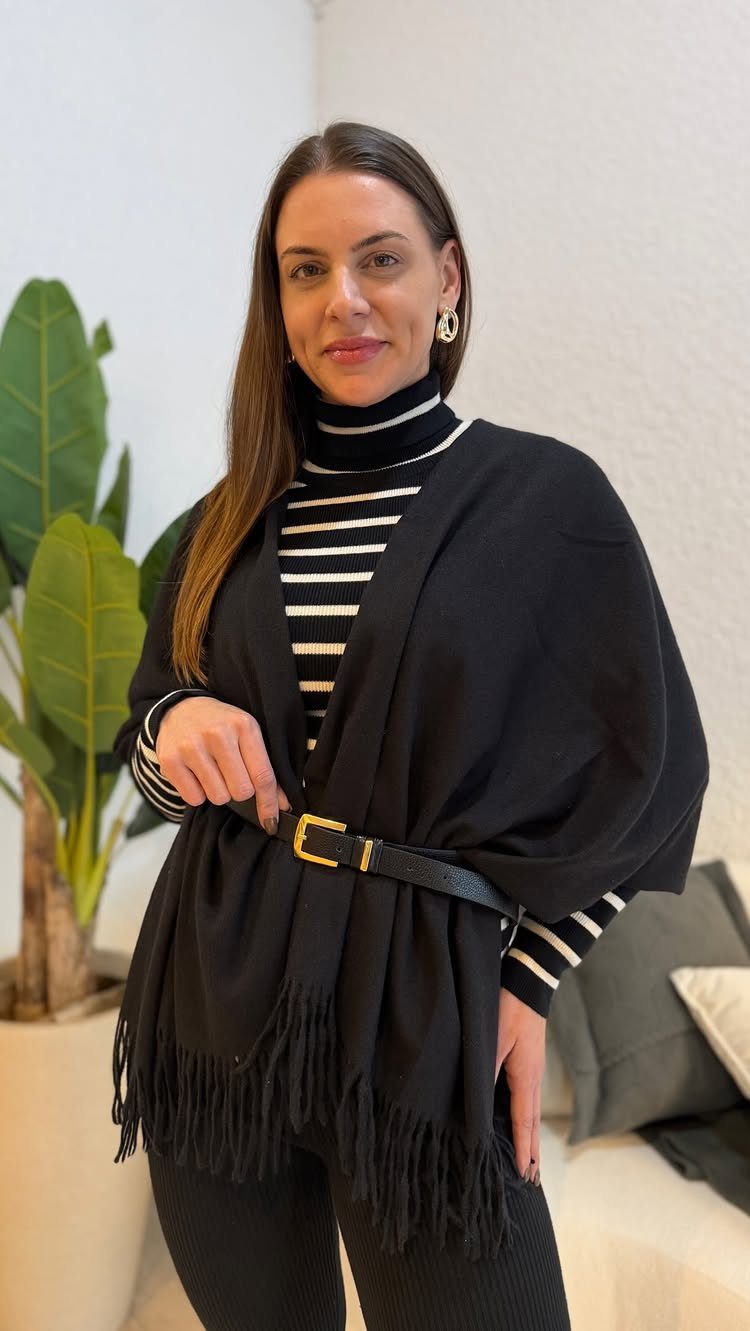
A black fringed wrap cinched over a striped turtleneck with a buckle belt turns a blanket shape into something structured. The belt is doing all the work here; without it, the volume swallows the frame.
I keep the turtleneck fitted and the pants slim so the cape has something to contrast against. Fringe moves when you walk, which makes this feel dressed up even in flat shoes.
Check that the wrap sits square on the shoulders before belting, and that the belt sits at the true waist, not the hips, to keep the proportion intentional.
12. Button-Down Under Sleeveless Dress
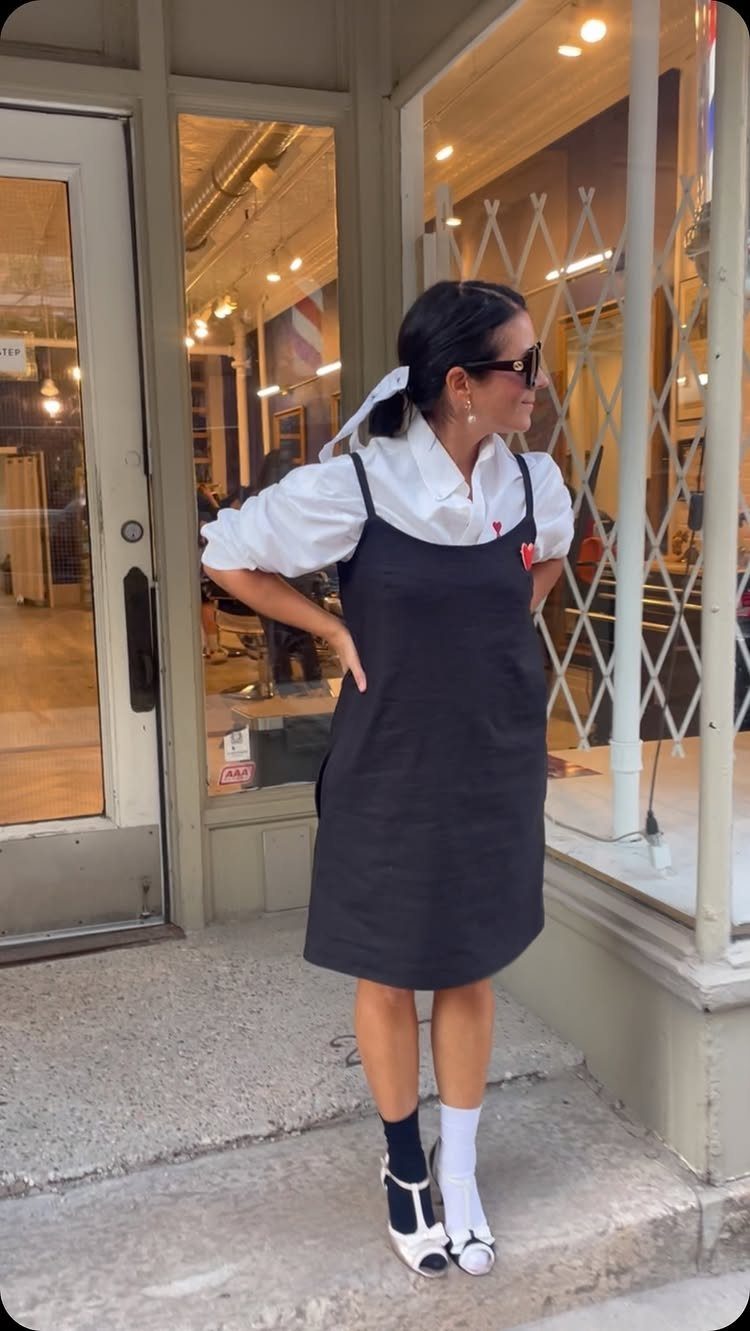
A white button-down under a black sleeveless midi dress with Mary Janes and patterned socks is preppy made strange, in a good way.
The shirt sleeves should be slim enough to fit through the armholes without bunching; I roll mine once to show the cuff. The dress waist needs to sit loose over the shirt’s bulk, so size up if yours is fitted.
Mismatched socks are a choice, not a requirement; matching ones keep the look cleaner. This is my go-to for fall weddings when I want coverage without a jacket to carry around all night.
Keep It Comfortable
Breathable fabrics save a fall outfit from becoming a sauna by noon. Cotton, silk, and lightweight merino let heat escape so you don’t have to peel everything off the second you step indoors.
I look for base layers that slide under a sweater without grabbing, since tugging at a bunched-up sleeve ruins the look and the mood.
Pieces that open in front, a cardigan or button-down left unfastened, let you vent one layer at a time as the day warms.
If a layer needs to come off entirely, I check that what’s underneath still reads as a complete outfit on its own. A thin turtleneck under a blazer works; a sheer camisole under an open cardigan does not.
Play with Scarves, Hats, and Accessories
A scarf is the fastest way to add warmth without committing to another full layer.
I drape a plaid blanket scarf loose over my shoulders when I want the look of a shawl without the wrapping ritual; it comes off the moment I warm up and goes back on just as fast.
Hats do the same job for heat loss through the head, a knit beanie for casual days, a wide-brim felt hat when I want the silhouette to read as dressed.
Socks in a pattern or color that clashes deliberately with the rest of the outfit turn a neutral base into something personal.
A red beret or a mustard scarf does nothing but add color, which is exactly what I need on days when everything else is grey, navy, or cream.
Don’t Forget Bottom Layers
Tights under a skirt extend the wearing season by months. Once the temperature drops, I choose opaque over sheer; anything thinner and I feel the wind.
Leggings work the same way under a sweater that hits mid-thigh or lower, though I check the opacity in daylight before I leave the house.
Jeans layer under tunics and bulky knits without adding another fabric to think about; straight-leg cuts tuck into boots more cleanly than wide-leg.
Mixing textures between top and bottom, denim against a chunky knit, corduroy against a soft cardigan, keeps the eye moving so the outfit doesn’t flatten into one mass.
Layering Essentials
The pieces I reach for first are thin turtlenecks, long cardigans, and a trench that actually sheds rain.
A lightweight cotton or silk camisole as the true base layer wicks sweat and slides under everything; a long-sleeved shirt or thin sweater builds from there.
Proportion matters more than price. I start with one base layer in a neutral, add a mid-layer in a texture or tone that stands apart, and finish with outerwear chosen for where I’m going.
Scarves, gloves, and even jewelry can layer too; a thin chain over a turtleneck, a thicker one over the collar of a button-down, builds depth without bulk.
At Maria McManus, the art of layering came to life in shades of grey. And for particularly cold days, the memo was to embrace textures—and pile on the jackets.
— Vogue
Frequently Asked Questions
How to dress in layers for fall?
Start with a thin base layer in cotton, silk, or lightweight merino that wicks sweat and slides under everything without bunching.
Add a mid-weight layer with a different texture or tone, like a turtleneck under a cardigan or a sweater vest over a button-down, so the layers read as intentional rather than accidental.
What are the trendy fall looks for 2026?
Layering techniques that work from pieces you already own matter more than chasing runway trends. The writer builds outfits from thin turtlenecks, long cardigans, and structured outerwear, choosing proportion and occasion over what’s current.