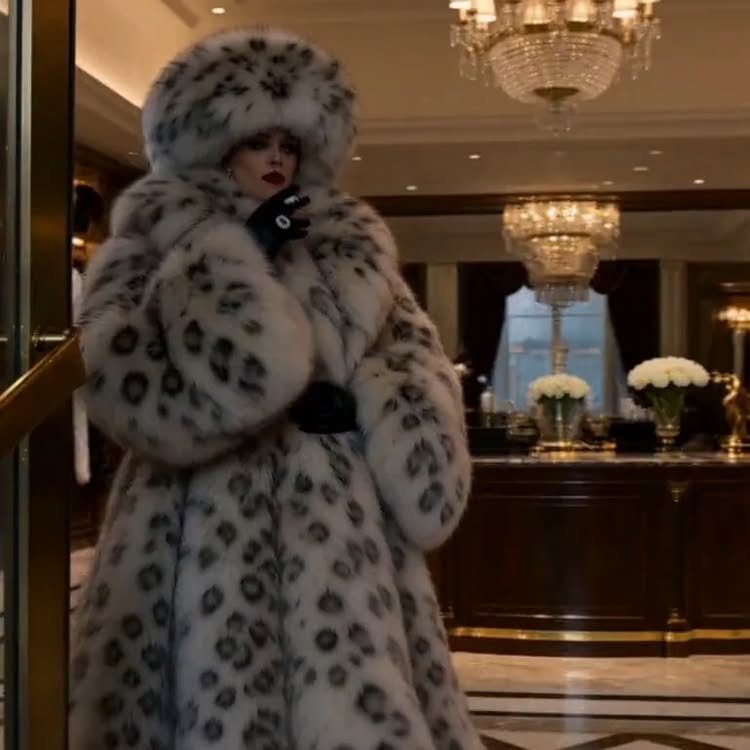
The coats below run from a cropped blue fox jacket you could wear to dinner to a full-length Russian sable that arrives before you do, so the deciding factor is the occasion itself and how much presence the room allows.
A white mink jacket with concealed snaps and wide sleeves works when you want quiet money; a long sable with hood in Barguzinsky is how you wear it when you mean business.
1. White Mink Fur Jacket

A white mink jacket reads quiet money better than almost anything else in fur.
The stand collar keeps the line clean without competing with jewelry, and the wide sleeves give it a robe-like ease that works over slim trousers or a narrow skirt.
I would reserve this for indoor occasions where the jacket stays on: restaurant dinners, gallery openings, hotel lobbies. The satin lining and concealed snaps keep the inside as considered as the outside.
Two side pockets plus an interior one mean you can leave the bag at home.
2. Blue Fox Fur Jacket

Blue fox runs denser and more vividly colored than most farmed fur, which is why it photographs so well under boutique lighting. The high collar on a cropped jacket frames the face and eliminates the need for a scarf.
That volume demands balance below: a slim leg or fitted dress underneath, nothing else bulky.
I tried one on once and the weight surprised me; it is warmer than it looks, so this is a piece for real winter, not transitional weather.
Natural blue fox will soften and shed some dye with age, so store it dark and cool.
3. Sable Fur Coat

Russian sable is the standard other furs are measured against, and the matching stand collar on a full-length coat is how you wear it when you mean business.
The satin lining and button front keep the interior functional; two side pockets plus an interior one hold what you need without breaking the silhouette. This is event dressing: the coat arrives before you do, and it stays in memory.
The investment is serious, so buy it for the body you have now, not the one you are planning. A long sable coat with hood in Barguzinsky is an alternative if you want coverage without the drama of full length.
4. Fashionable to Wear Fur

Fur still holds ground in fashion, but the conversation has shifted toward how it is sourced and how long it lasts.
Vintage pieces and ethically certified new fur are the two directions that feel current; either way, the coat should be something you will wear for decades, not a season.
A dark, textured coat over white knit and jeans hits the right balance: casual enough for daytime, rich enough for evening. I would add a patterned belt only if the coat itself is simple; let one element do the talking.
The real style move is wearing fur like a barn jacket, not like a trophy.
Just throw them on with a few of your other favorite essentials and expect sartorial success each and every time. One cold-weather mainstay not mentioned–but arguably more statement-making than the rest–is the fabulous faux fur coat.
— Vogue
5. Chic Ways to Wear Faux Fur

Faux fur rewards the same styling discipline as real fur, maybe more, since it can read costume if you are not careful.
An oversized shaggy cut stays wearable when everything else is restrained: straight jeans, a sleek bun, black bag, sunglasses.
I would add tailored trousers or a belted midi dress as alternatives, but the principle stays the same: one statement piece, everything else supporting. Quality varies enormously in faux fur, so touch before you buy.
The best versions have a dense underpile and varied fiber length; cheap ones flatten to a uniform plush that photographs flat too.
Fur’s Evolving Status
Fur’s meaning has changed faster than its price tag. Where a mink or fox coat once signaled arrival without question, it now sits in a more complicated spot between taste, ethics, and what a shopper is willing to explain.
The generational split is real: younger buyers grew up with different assumptions about animal sourcing and environmental footprint, and that pressure has pushed even legacy houses to rethink how they talk about pelts.
What I watch now is how designers respond to the gap. Some have moved to certified programs with traceable supply chains; others lean into vintage as the compromise that lets the material exist without new production.
The question is no longer whether fur reads as luxurious. It is whether it reads as thoughtful, and that standard keeps shifting.
Quality and Craftsmanship
A well-made fur coat outlasts its owner, which is why craftsmanship matters more than trend.
The construction details are where this shows: a hand-finished seam on a sable coat, the weight and drape of a properly tanned pelt, lining that is replaced every decade rather than disintegrating.
These pieces were always meant as heirlooms, and the market that still buys fur buys it for that permanence.
The brands surviving this transition understand the shift. They are not selling excess anymore; they are selling one decision, made carefully, that eliminates the need for five cheaper ones.
A coat with documented provenance and repair access holds value differently than fast fashion ever could. The craftsmanship is the argument now, and it is a harder one to make, but it is also harder to dismiss.
Ethical Considerations
The ethical questions around fur have moved from the margins to the center of any purchase decision.
Sourcing transparency is the baseline now, not a premium feature, and shoppers are right to ask for documentation: where the pelts came from, how the animals were raised, what certifications apply.
Without that, even a beautiful coat carries a hesitation that did not exist a generation ago.
I would not buy new fur without it. The vintage market offers an alternative that sidesteps new production entirely, though condition and previous storage matter enormously.
For those considering faux options, the environmental cost of synthetics is its own conversation, and the best versions are not the cheapest.
The honest position is that every material carries tradeoffs, and the decision belongs to the buyer who has seen them.
Frequently Asked Questions
Are fur coats still in style in 2026?
Yes, fur coats remain in style when they reflect craftsmanship and ethical awareness.
Are women still wearing fur coats?
Yes, many women continue to wear fur, especially vintage or ethically sourced options. Italian fur coats in particular are prized for their attention to quality and detail.
The shift toward sustainability has made longevity and sourcing transparency more important than ever.
Why do women love fur coats?
Women appreciate fur coats for their warmth, luxury, and the way they function as heirloom pieces. The craftsmanship and density of materials like Russian sable or blue fox offer practical warmth alongside their visual presence.