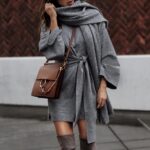
The ideas below run from zero new purchases to one deliberate splurge, and the deciding factor is how much of your closet you already use.
A thin long-sleeve layer you already own beats a marketed "thermal" every time, and the right heavy knit replaces a jacket on mild days before it becomes the inner layer when temperatures drop hard.
1. Layering with Fall Staples

A short-sleeve striped shirt over a cream long-sleeve top turns one warm-weather piece into a fall layer that still works come winter.
Weight matters: the underlayer needs to be thin enough to add warmth without bulk, and the top layer needs room to sit right.
I reach for my spring and summer tees and tanks first, since I already own them and the colors are usually brighter than what stores stock in October.
Sweater dresses and cardigans follow the same logic. A ribbed cardigan over a fitted turtleneck adds texture; a sweater dress with leggings underneath gets me through mornings that start cold and afternoons that warm up fast.
The reader who already owns wide-leg jeans and a few lightweight tops can build a whole transition wardrobe without a single new purchase.
Check your closet for thin long-sleeve layers before you buy anything marketed as "thermal." The ones you already have may be enough.
2. Creative Styling

Accessories do the work of making an outfit feel intentional rather than thrown-on; a newsboy cap, suede boots, or a belt in an unexpected finish can shift the same sweater dress from errands to dinner.
The cap adds structure where the knit is soft; the boots add height where the dress hits mid-thigh; the green bag against pink and brown is the single color choice that keeps the whole thing from reading as a costume.
I add belts when layers start feeling shapeless, which for me happens around the third piece. A thin belt over a cardigan or under a coat defines the waist without the bulk of a cinched outer layer.
Sunglasses in winter read as effort, not leftover summer, especially with a heavier frame. Jewelry stays small: a single chain or stud earrings, since scarves and collars already compete for attention.
The reader who tends toward monochrome should try one accessory in a color she never wears in clothing. It carries less risk and often gets more use.
3. Add Heavy Knitwear

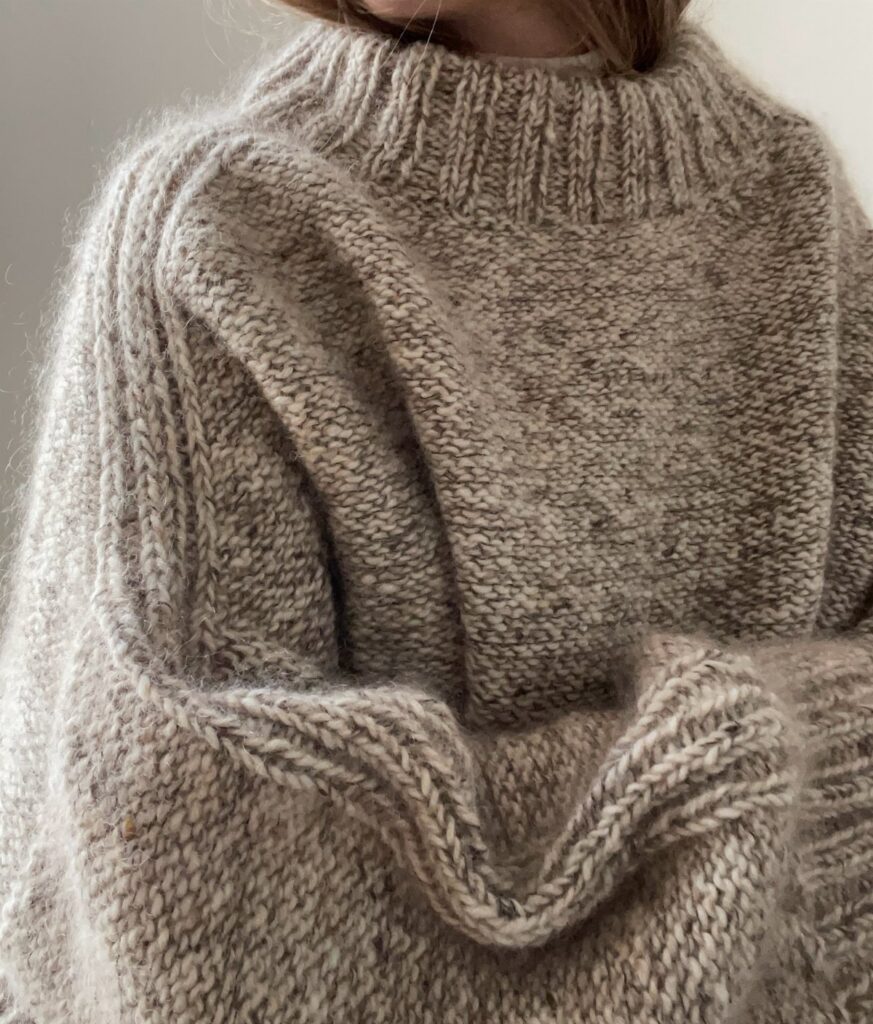
A thick ribbed knit with a high neckline and visible seam detail is the kind of piece that replaces a jacket on mild days and becomes the inner layer when the temperature drops hard.
Wool and cashmere hold heat even when damp; cotton knits do not, so I check the fiber content before I buy.
Hoodies and flannel shirts serve the same layering purpose at a lower price point and with more casual texture. I wear a flannel open over a thermal tee, or under a puffer when the wind cuts through.
The hoodie’s drawstring and pocket placement matter more than the logo: a flat hood sits better under a coat than one with a stiff brim.
Heavy knits ask more of your care routine. Hand-washing or dry-cleaning extends the life of wool and cashmere; machine-washable knits pill faster and lose shape.
The reader who hates maintenance should budget for fewer, better pieces rather than replacing cheap ones each season.
4. Neutral Color Palette

A coat, skirt, boots, and bag in three shades of brown with one cream top is a study in why neutrals work for transition dressing: every piece already agrees with every other piece.
Black, cream, beige, and navy do the same job with different moods. I find brown softer against winter-pale skin than black, and navy more forgiving with pet hair than beige.
Bright colors and pastels fight the light from November through February. A red coat is an exception that proves the rule: it works because it is deliberate, not because red is secretly neutral.
The reader who loves color should concentrate it in one item, the way a single red clutch upgrades a black coat.
Check what you already own in neutrals before buying a "capsule" set. Most women already have the bones of one and are buying duplicates in slightly different shades.
5. Statement Coats

The structure means it sharpens jeans and a tee; the color blocking means it does not read as office uniform.
I look for a coat that fits in the shoulders even if I plan to wear it over layers: sizing up ruins the line that makes it worth the investment.
Black, white, and bold solid colors each send a different signal.
Black is safe and shows wear last; white demands better care and reads expensive when it stays clean; a bold color like red or cobalt is the whole outfit’s statement and limits what else you can wear with it.
The reader who wears mostly neutrals should consider one coat in a color she would never wear as a sweater.
A coat’s surface area is large enough to register as intentional rather than accidental, and the commitment ends at the door.
6. Seasonal Outfit Inspiration

A cardigan, white tee, jeans, and boots on a leaf-strewn sidewalk is the uniform that works for coffee, a meeting, or dinner depending on the cardigan’s weight and the jewelry’s presence.
The same pieces at the office need a belt and a structured bag; the same pieces at night need a swap to heeled boots and a silk camisole under the cardigan.
I plan my transition outfits by occasion rather than by item. The knit dress that works with flats for day gets thigh-high boots and a cropped jacket for evening.
The trench coat over a turtleneck and trousers is office; the same coat over a hoodie and leggings is weekend.
The reader who feels she has nothing to wear usually has plenty of items and no map for putting them together.
Start with one base layer, one bottom, and one third piece, then change the shoes and bag to shift the destination.