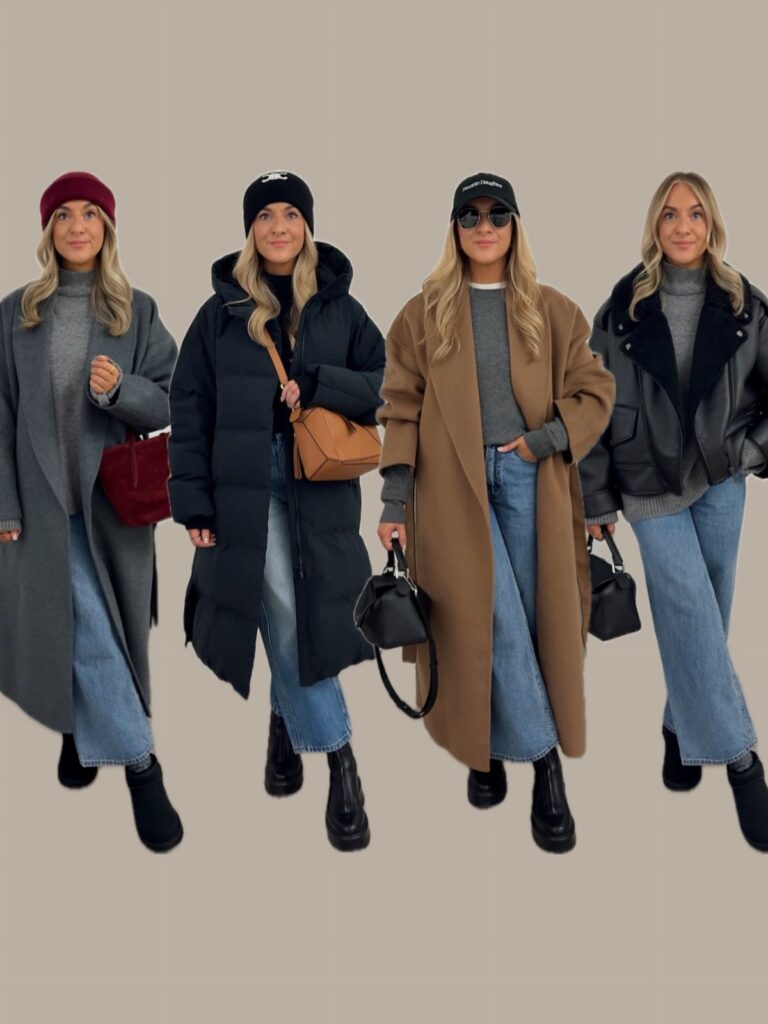
Cold weather outfits for women run from a single pastel coat to a full quilted parka with structured boots and a knit scarf, and the right one depends on whether your day keeps you outside or moves you between overheated offices and slushy sidewalks.
1. Quilted Parkas

A quilted parka is the one coat that keeps heat in without the Michelin-man bulk. An olive quilted parka stays casual with light-wash denim; darker denim would push it toward evening, which checkered shoes don’t want.
The hood matters more than people admit. A fixed hood blocks wind better than a snap-on, and the quilting pattern changes how it drapes: horizontal channels puff more, diamond stitching lies flatter across the shoulders.
For all-day wear, I’d check the pocket depth before buying. Shallow pockets force you to carry a bag you didn’t plan on.
2. Accessorizing
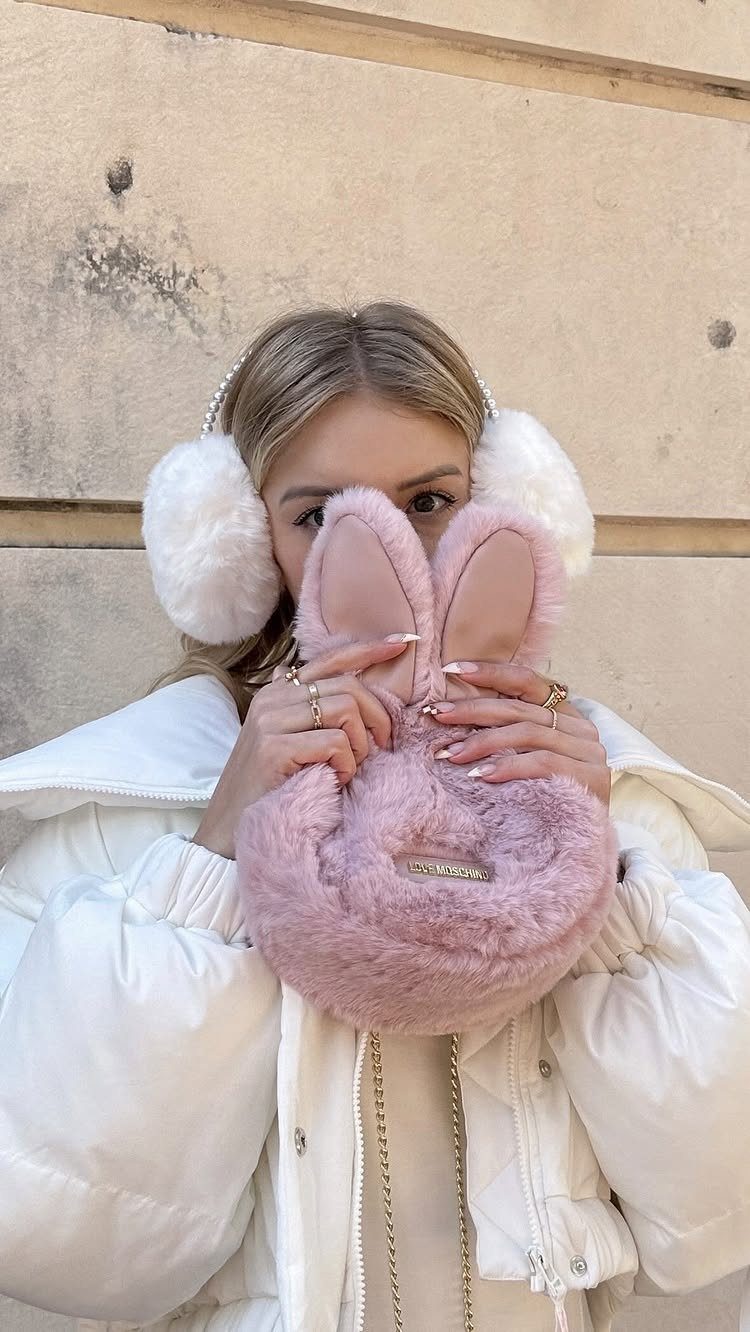
Winter accessories do the work that your coat can’t: they cover the gaps. A structured bag in a bright shape, like a pink bunny, turns a plain white puffer into something intentional rather than merely practical.
Earmuffs do double duty: they keep ears warm and they read as an actual choice. Plush texture reads as deliberate against smooth nylon, and they spare you hat hair if you’re heading somewhere indoors.
For everyday use, I’d swap the statement bag for something crossbody on slushy days; hands stay free and leather trim survives salt better than fuzzy surfaces.
A chunky knit scarf adds warmth where your coat opens, but keep the proportion in mind. Oversized works with a streamlined coat; with a puffer, it can swallow your neck entirely.
3. Stylish Boots
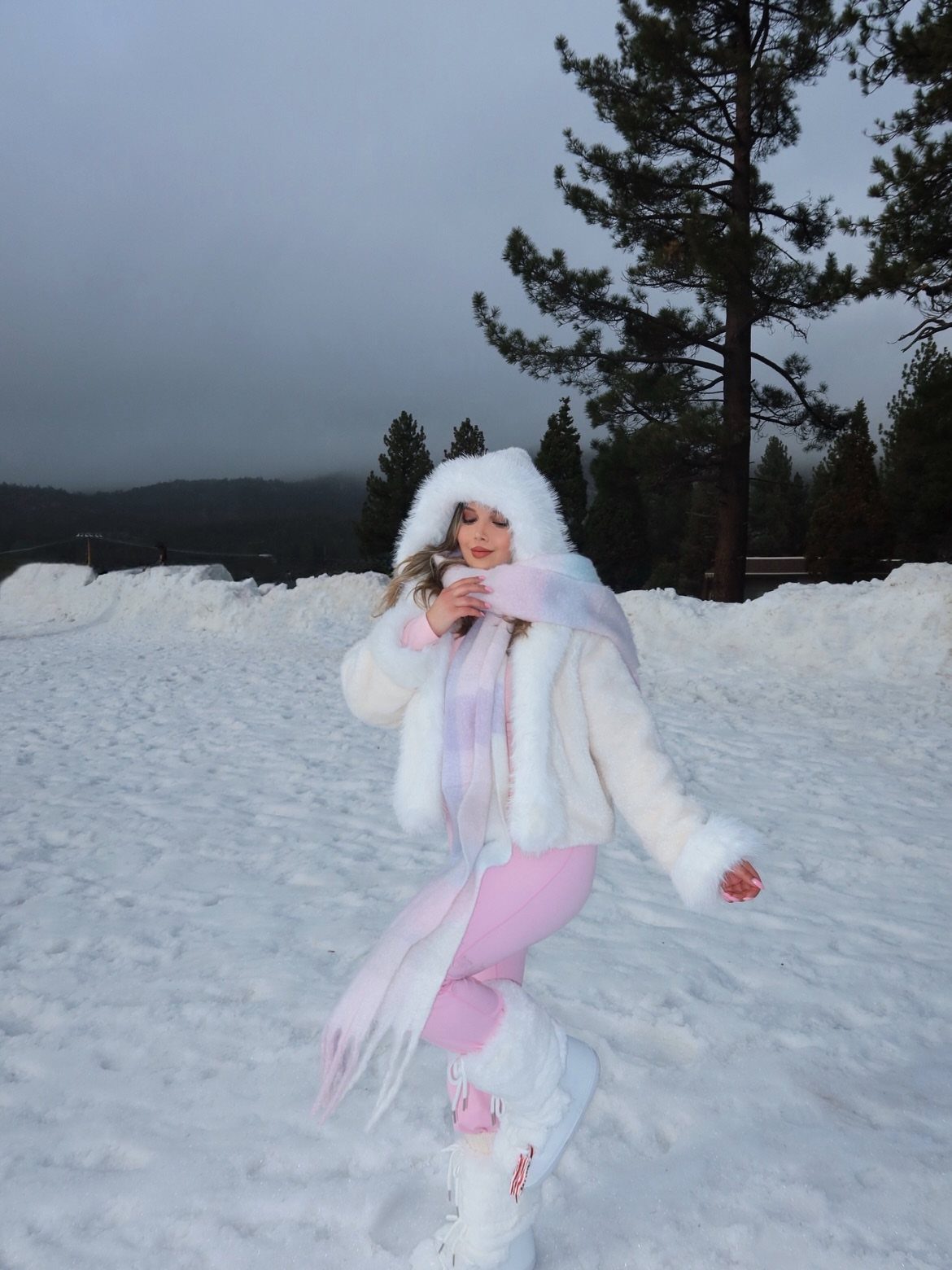
Boots ground a winter outfit the way a frame grounds a picture. White fuzzy boots read mountain-weekend, but the same silhouette in leather handles city slush without the dry-cleaning bill.
Chunky ankle boots suit most leg lengths because the cut hits at the narrowest point above the ankle.
Knee-high versions need more thought: they work best with skirts or cropped pants that let the shaft show, otherwise you’re paying for height no one sees.
Combat boots give contrast to softer pieces, which is why they look right with a pastel scarf and fitted pants rather than more hardware.
Check the sole before you commit. A lug sole handles ice; a smooth platform looks sharp and slides.
4. Knitwear Staples
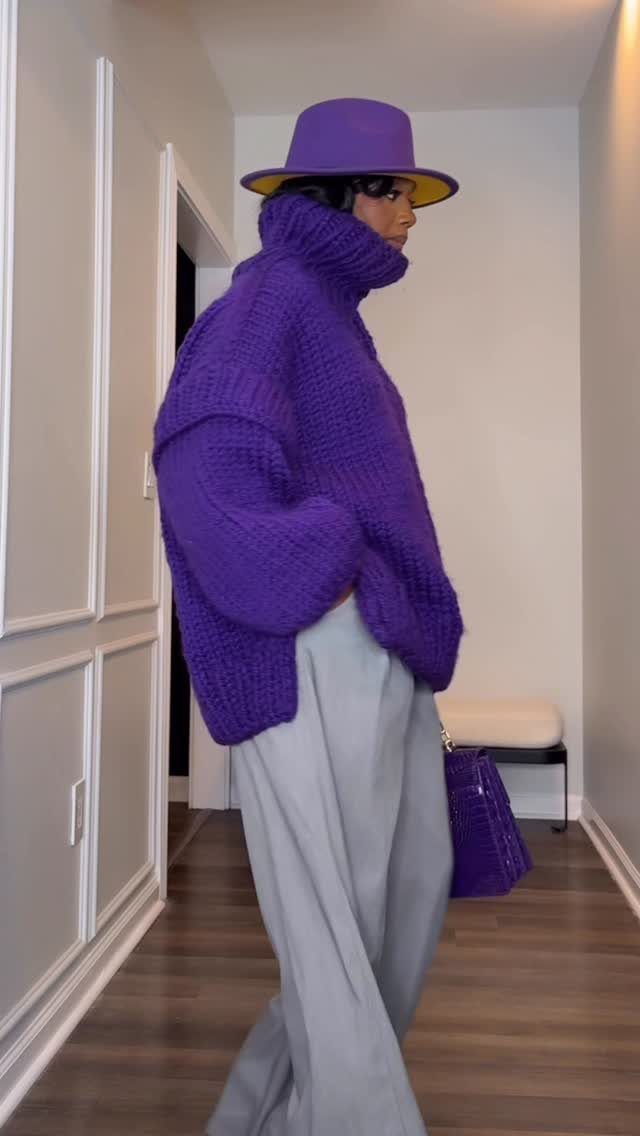
A chunky knit turtleneck is the piece I reach for when I need to look dressed without trying.
A purple sweater gets away with volume because wide, structured trousers balance it; swap in leggings and the sweater suddenly reads as hiding something.
Cable-knit carries more bulk than ribbed, so it suits straighter body shapes that need the added dimension.
If you’re broader through the shoulders, a finer rib with a mock neck sits closer and doesn’t add width where you don’t want it.
The matching hat here is a choice, not a rule. I’d wear the sweater alone for errands and add the hat only when the outfit needs to feel finished, like dinner where the coat comes off.
5. Casual Winter Outfits
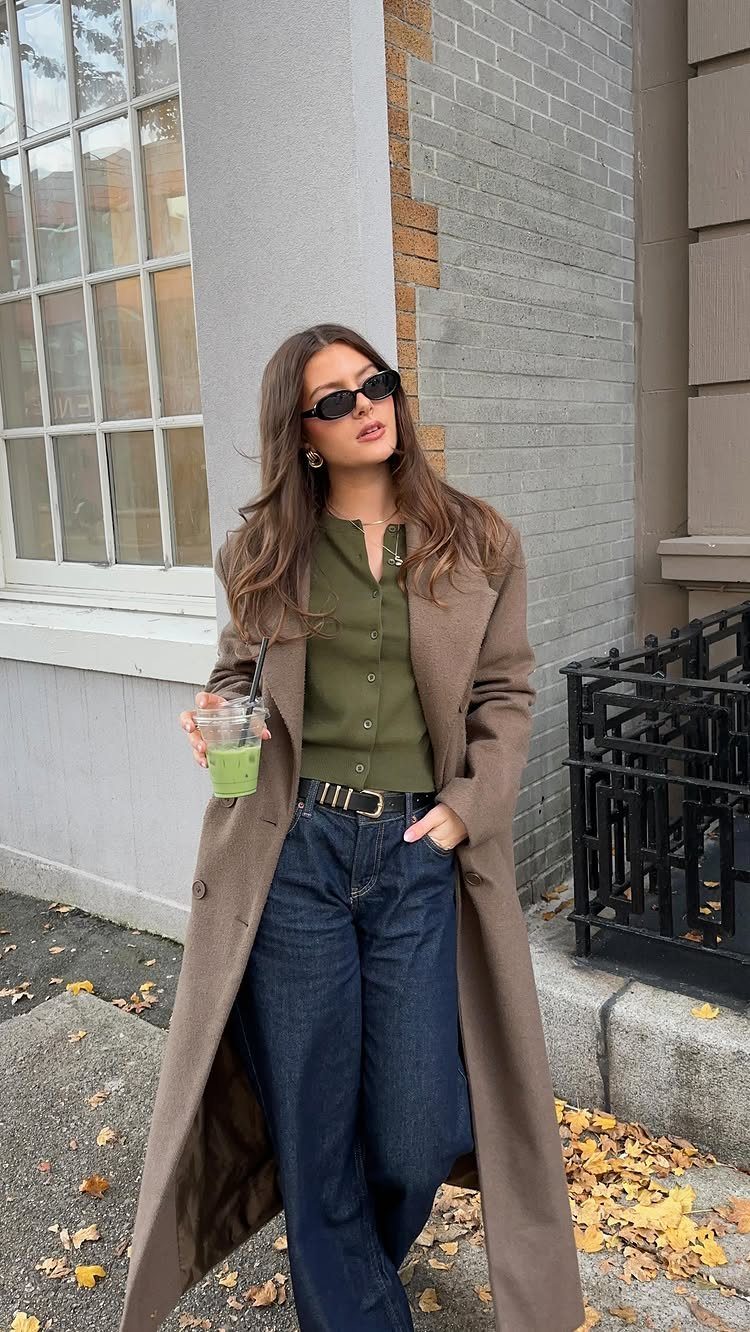
A good wool coat over a cardigan is the uniform I fall back on when mornings feel rushed.
An olive layer under brown works because both colors sit in the same warm family; a cool grey cardigan would fight the coat instead of settling in with it.
Dark wash skinny jeans keep the line clean below the coat’s length. Straight or wide legs can work, but they need a shorter coat to avoid looking like you’re wearing someone else’s proportions entirely.
The sunglasses and iced drink signal that this outfit travels between temperatures: car, train, overheated office. I’d add a scarf only for real time outside; otherwise it’s one more thing to carry indoors.
6. Pastel Winter Colors
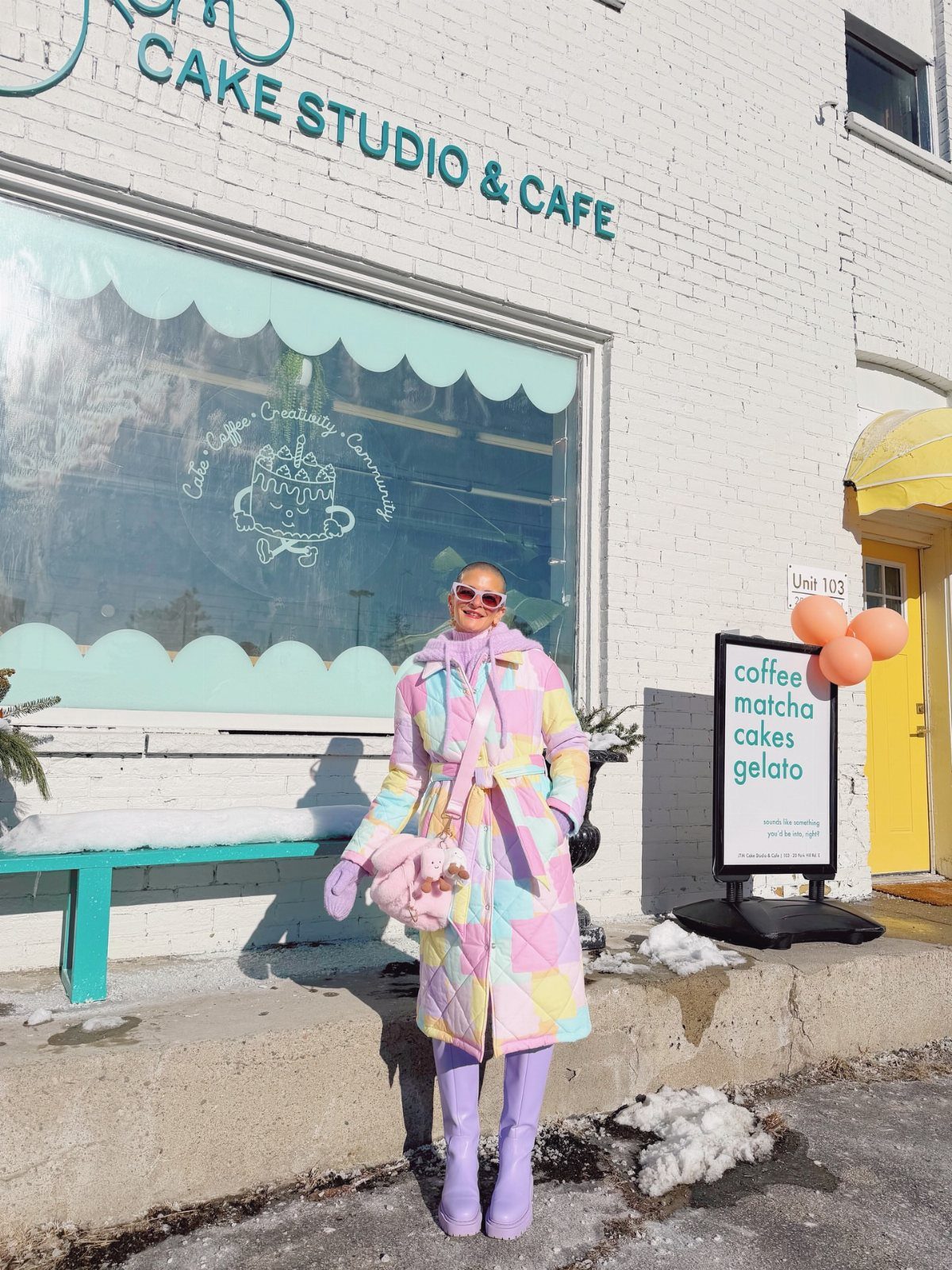
Pastel in winter reads as confidence because it breaks the unspoken rule that cold months belong to dark colors.
A patchwork coat works because the colors stay muted; a single bright pastel would look like spring arrived too early, but mixed shades read as deliberate layering.
Lavender boots are a commitment I’d make only if my coat collection already covers the neutrals. They pair back to the coat but fight most of what else hangs in my closet.
For a smaller budget, I’d buy the coat in a single soft color and keep boots to cream or grey.
Light colors show salt and slush faster, so the fabric matters more than with navy or black. A quilted synthetic wipes clean; wool or suede pastels become high-maintenance fast.
7. Black Coat with Colorful Accessories
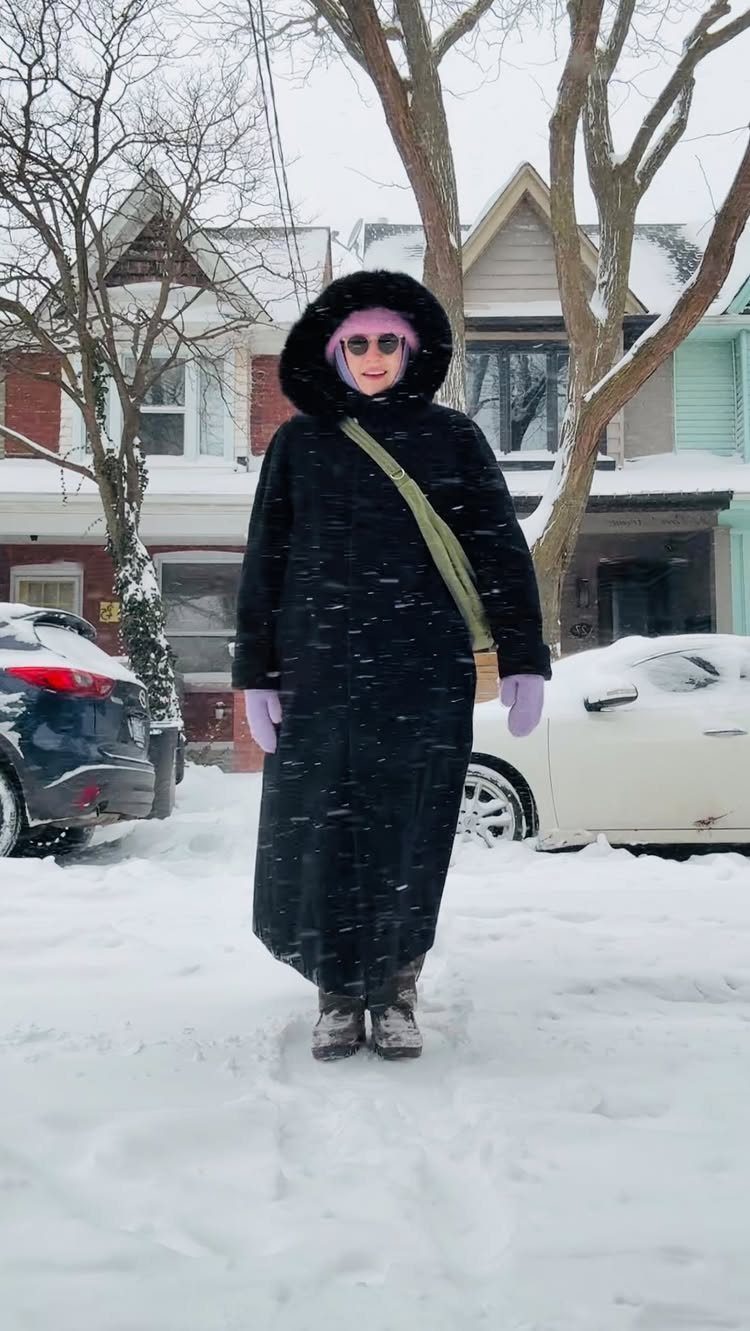
A black coat is the closest thing to a blank check in winter dressing. It works with everything you already own, and the cost of that versatility is how easy it becomes invisible.
Purple gloves and a matching beanie against all that black turn the coat into a frame instead of a statement. The color does not need to be purple; any saturated hue you already reach for works.
I would keep the accessories in one color family rather than mixing, since two pieces read as intentional and three start to look like you are trying too hard.
This suits anyone whose winter coat budget went to the coat itself and who needs the rest of the outfit to come from the accessory drawer.
Color takes the spotlight here, not silhouette, so keep the coat’s cut simple and let the accessories do the talking.
8. Belted Cable Knit Sweater Dress
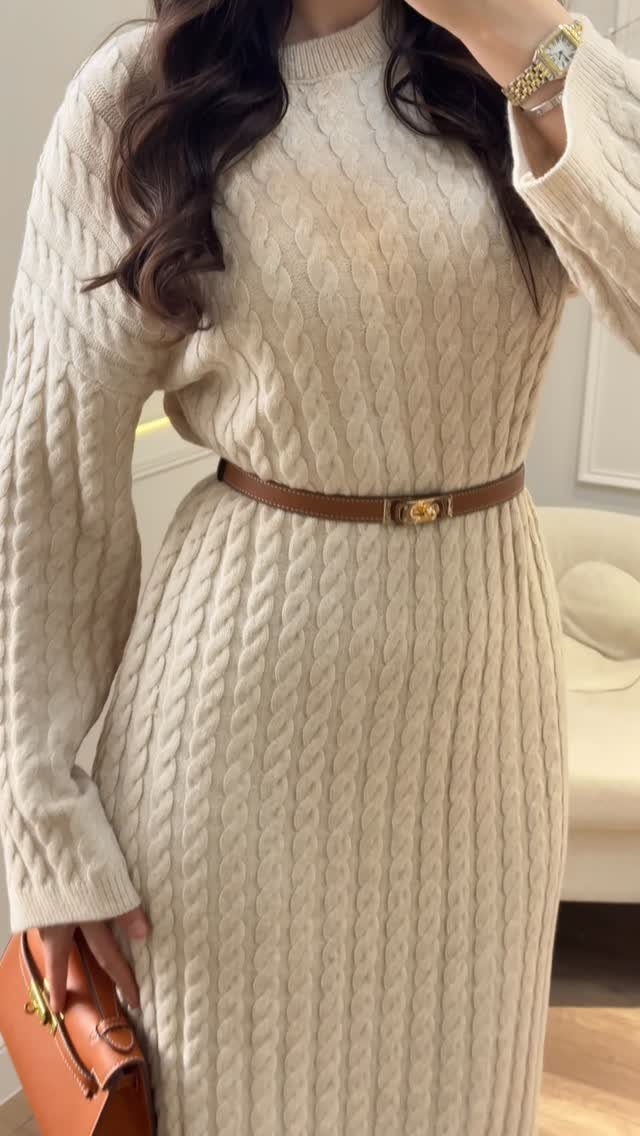
Cable knit has a way of swallowing a figure whole. A thin leather belt at the natural waist pulls the volume back to where you want it.
Cream flatters winter skin more forgivingly than optic white, which can turn harsh under gray skies.
I have found that a belt in a tone that matches your bag or boots keeps the eye moving rather than breaking the outfit into pieces.
Gold jewelry sits warm against cream knit in a way silver does not always manage.
This works for the office holiday party that starts right after work, when you need to look dressed up but refuse to change in a bathroom stall. The sweater dress does the layering for you.
The risk is bulk at the hips; if you carry weight there, a belt slightly above the waistline rather than at it changes the proportion.
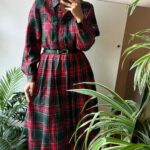
9. Chunky Knit with Maxi Skirt
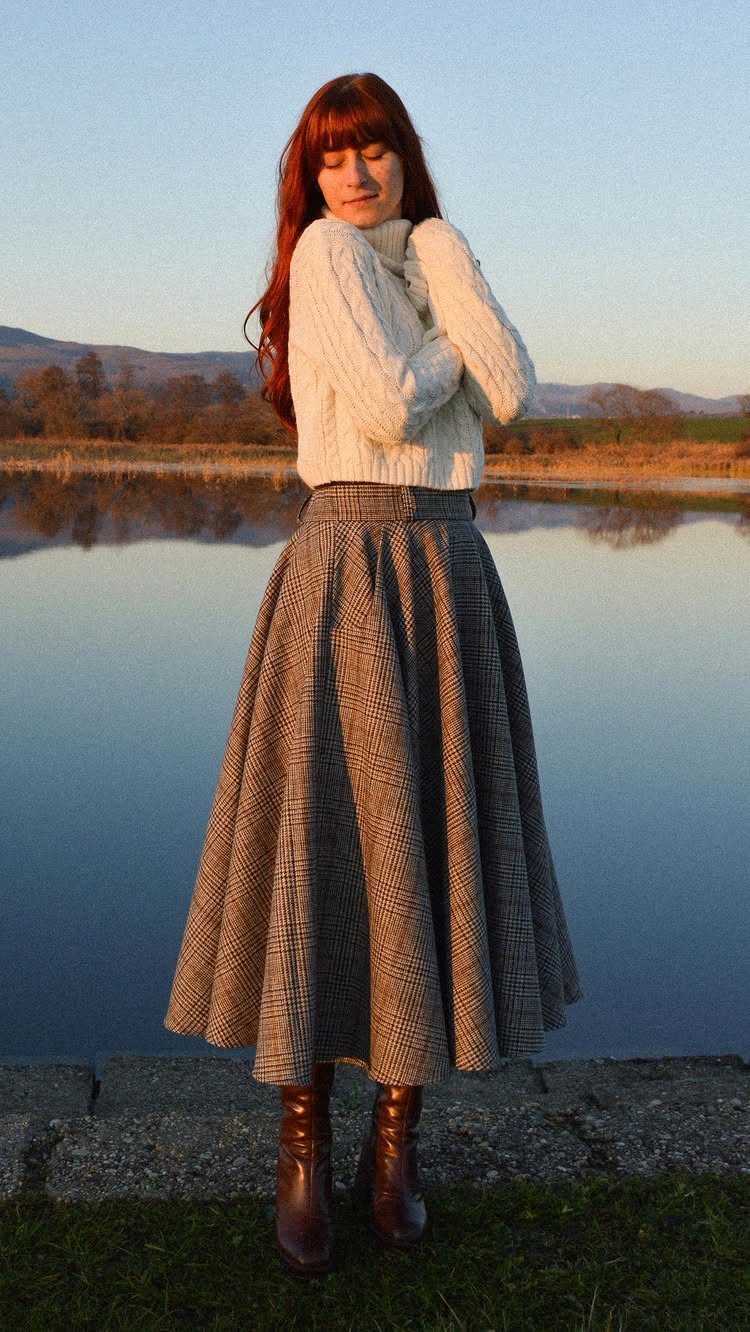
A chunky knit and a long skirt solve the problem of wanting to look dressed while feeling wrapped in a blanket. The sweater handles the warmth; the skirt adds movement that pants cannot give.
The boots need to hit at or above the ankle to keep the gap between hem and footwear from becoming a cold stripe of skin.
Tights in a weight that matches the skirt’s heaviness keep the look grounded rather than accidental.
I would choose a boot in brown leather over black here; the softer line against a patterned skirt keeps the outfit from turning into blocks of color.
This is for the reader who owns three good sweaters and is tired of pairing them all with the same jeans.
A long skirt in snow is a gamble; hem-weighted fabrics help, but slush and salt still climb upward with every step.
10. Cropped Capelet and Plaid Skirt
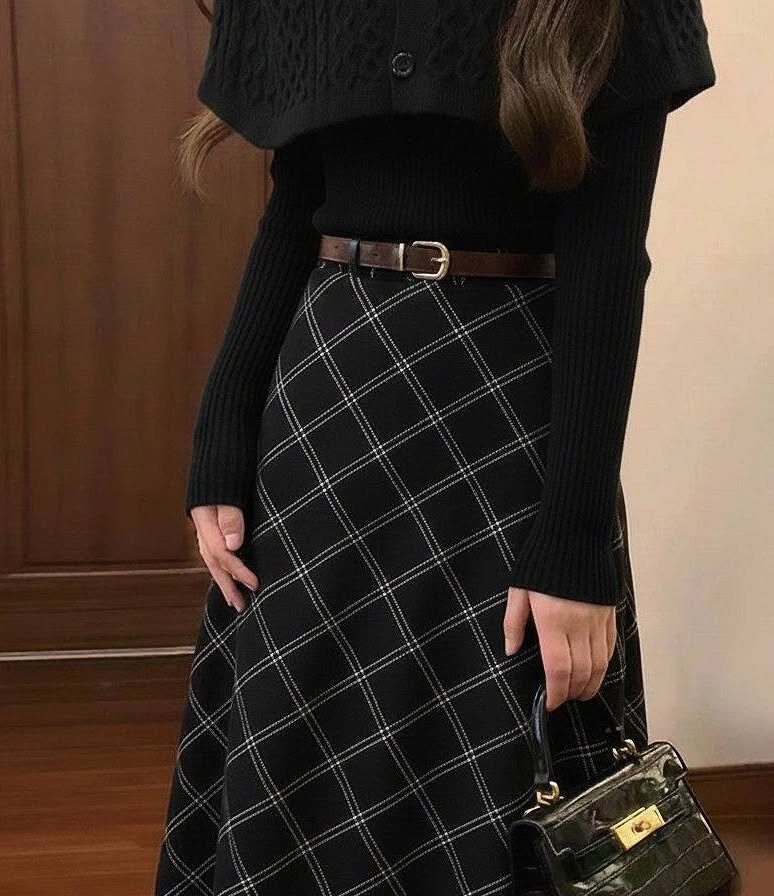
A capelet reads as costume until you anchor it with something sharp underneath.
The windowpane pattern on the skirt keeps the look graphic without needing more color. I would keep the capelet in a tone that matches the base layer rather than contrasting it; the silhouette is already doing enough.
A small bag rather than a tote keeps the line clean across the hips, where the capelet ends and the skirt begins.
This suits someone whose winter style leans toward the put-together and who does not mind adjusting a layer that shifts when you reach for a door handle. A capelet is theater, not insulation.
Wear it for the car-to-door walk, the overheated office, or layered under a real coat that comes off at the party.
Footwear Choices
Ankle boots, knee-high boots, and over-the-knee boots each pair differently with winter layers.
Over-the-knee versions read more dramatic; I’d reserve them for outfits where the coat comes off indoors.
Platform boots add height, but the sole type matters more than the lift.
For slushy days, I’d swap any statement boot for leather with a sealed seam. Salt stains suede in one crossing.
Color and Pattern Mixing
Black, camel, grey, white, and brown mix without fighting; they’re the backbone I’d build around if most of my closet already lives there. Adding one bold color through a single piece keeps the outfit from feeling like costume.
A bright sweater against dark jeans works because the contrast is simple; a patterned skirt with a solid top keeps the eye from tiring.
I’d avoid pairing two loud pieces at once unless the pattern shares a color with the solid.
Frequently Asked Questions
What should I wear in extremely cold weather?
Layer a quilted parka over a chunky knit turtleneck, with a wool coat option for days that shift between overheated offices and real time outside.
For a hood that actually stays put in wind, I’d look for one that’s attached rather than snapping on and off, and I’d try the pockets in person; shallow ones mean you’re stuck carrying a purse you didn’t plan on.
Earmuffs spare you hat hair indoors while covering the gaps your coat leaves open.
What to wear instead of jeans in winter?
Wide, structured trousers balance a bulky sweater without the casual default of denim.
A dark, slim jean stays tidy under a full-length coat, but if you’re in a wider leg, the coat has to hit higher or the whole silhouette looks like you grabbed someone else’s clothes.
For leg coverage that isn’t denim, I’d look at the cut above the ankle where chunky boots hit; that’s the narrowest point and works for most leg lengths.