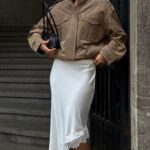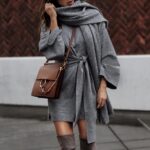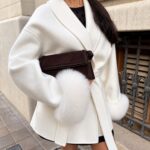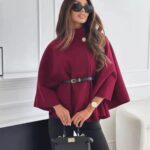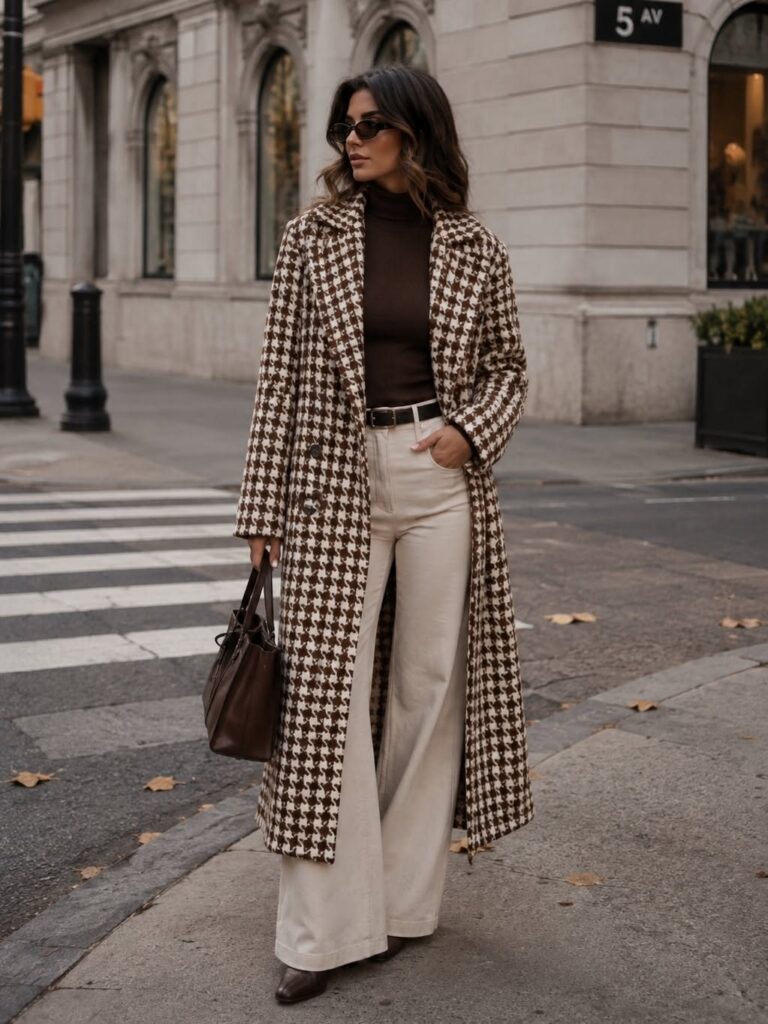
These outfits range from swapping in one accessory to building around a full knit set, and what your day actually demands, errands, office hours, or dinner out, is what shapes the final look.
The same pair of black leather trousers moves between sneakers and loafers without a change of clothes, and a coat that hits mid-calf keeps more of your look visible through commuting months than one that stops at the knee.
1. Cozy Sweater Outfits

A sweater that actually covers your hands changes how cold mornings feel. An oversized red knit works when the proportion is deliberate: the volume sits up top while the jeans stay straight and ankle-baring.
That balance keeps you from looking swallowed.
I reach for this shape most days from October through March. Fabric weight matters more than most people check.
A fluffy mohair blend reads cozy; a dense merino reads polished. Same silhouette, different room.
Pair it with anything that fits closer below: wide-leg trousers need a tucked or cropped sweater instead, or the whole outfit loses its anchor.
For maximum wear, buy in camel, gray, or black first. Add color once you have two neutrals that layer under every coat you own.
2. Trousers Outfits

Black leather trousers sound like a commitment until you wear them to the grocery store and realize they wipe clean. Trousers styled with a button-down and a sweater draped over the shoulders reads intentional without trying hard.
The waistband matters more than the fabric. A rigid high waist holds its shape through a day of sitting; a low-rise pair bags out by lunch.
Check the lining too. Full lining in winter means you can skip the long underwear; half lining sticks to tights and drives you crazy.
I wear mine with sneakers for errands and swap in loafers for dinner. The same pair, two contexts, no change of clothes needed.
Trousers over jeans pull off a step up without demanding more effort.
3. Monochromatic Looks

Walking out in one color from collar to sole feels like a private uniform. An all-black look holds together when the coat is matte, the trousers carry a slight sheen, and the bag is structured.
Three textures, one tone, enough variation to keep it alive.
Beige and cream do the same job with less severity. I find gray the easiest to build: charcoal knit, mid-weight flannel pant, pearl coat.
Each piece finds its neighbor naturally.
The risk is looking like you gave up. Avoid that by keeping one element sharp: a tailored shoulder, a patent shoe, a visible belt.
Something has to say you chose this on purpose.
4. Statement Coats
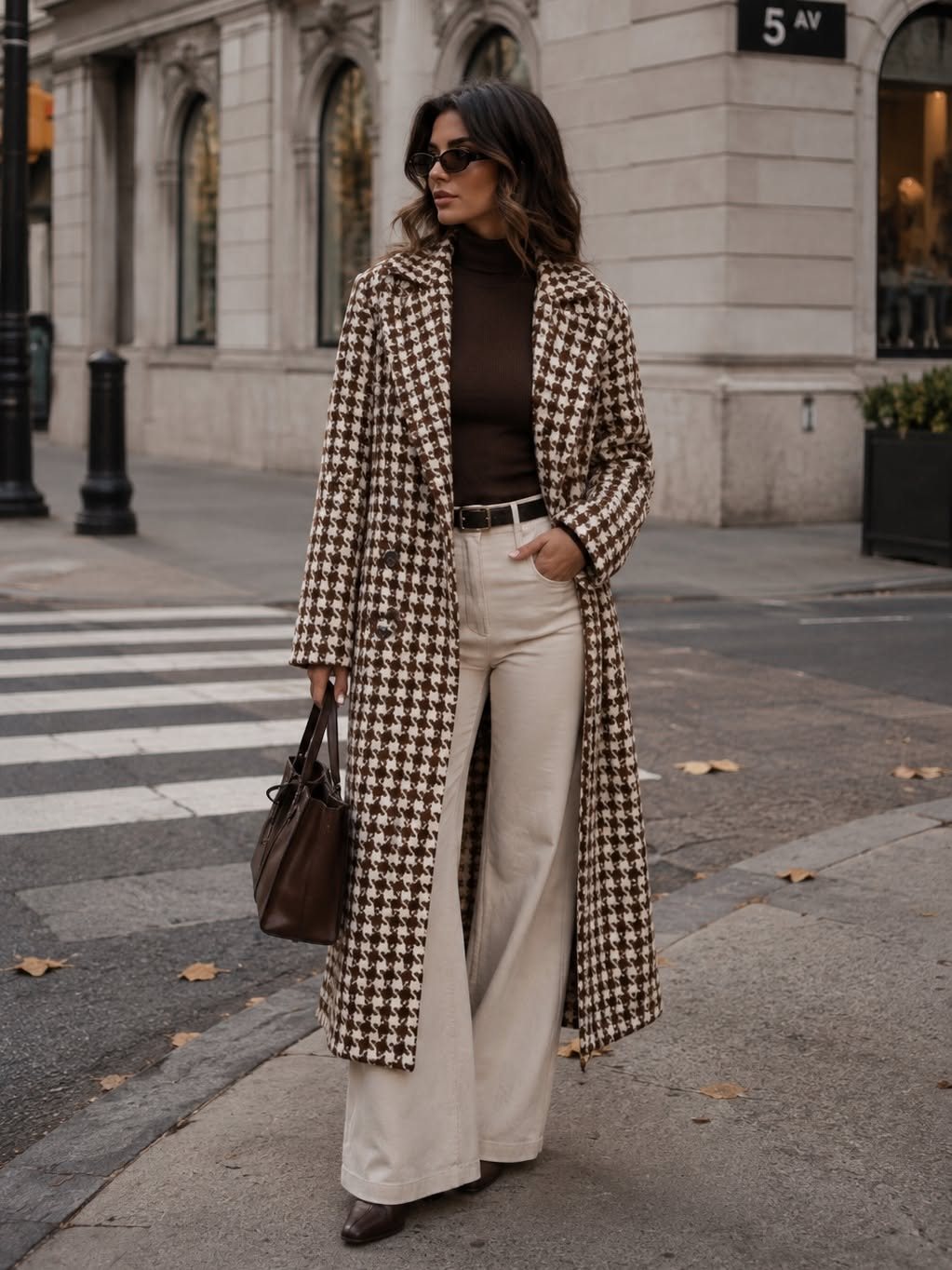
The pattern does the work so nothing underneath has to compete.
I bought my first statement coat after years of safe camel and regretted waiting. The cost per wear drops fast when it is the only thing people see during commuting months.
Look for a pattern large enough to read from across the street; small checks blur into static at distance.
Length is the decision that matters. A coat that hits mid-calf keeps more of your outfit visible and works better with dresses.
One that stops at the knee is easier in cars and on stairs. My bias is toward longer coats, but height changes what reads as balanced.
A petite frame can handle the drama if the shoulders fit; otherwise the coat wears you.
5. Knit Sets

Matching knit top and trousers in one tone solves the morning decision before coffee. A knit set gains polish with a coat in a related shade, which is the advanced move: taupe under brown, cream under camel, gray under charcoal.
The danger is pajama territory. Separates that are too soft or too slouchy read like loungewear the moment you sit down.
I look for a pant with a real waistband and a top with shoulder seams that sit where they should. Structure somewhere saves the whole look.
Wear the pieces together for the full effect, or split them after you have established the set in your rotation. The sweater with jeans, the trousers with a white tee: both work once people know you own the combination.
6. Cool Sneakers

Gray sneakers with a black coat and blue jeans work better than the color math suggests. The mismatch of city formality and suburban practicality is exactly what makes it look modern.
I have worn the same pair of leather-trimmed running shoes through three winters. They handle slush better than canvas, and the subtle shine keeps them from looking like I am actually going to the gym.
Sole thickness makes or breaks the look: a platform or chunky sole grounds a long coat; a thin sole looks elegant but disappears under wide hems.
Skirts and dresses need the same consideration. A midi length with a low-profile sneaker can read frumpy; the same skirt with a slightly elevated sole reads intentional.
Check your hemline against your shoe shelf before you commit.
7. Ankle Boots

Ankle boots bridge the gap between a sneaker day and something sharper without changing your whole outfit.
Tan ankle boots that hit right at the ankle bone keep the line clean with cuffed jeans and avoid chopping your leg off visually with a midi hem.
A flat or low-block heel works for walking commutes and grocery runs. A heeled version, maybe suede or with a pointed toe, shifts the same boot into dinner or office territory.
I reach for black leather most often because it handles slush and salt better than suede, but brown or tan warms up an otherwise neutral look.
Check where the boot hits against your jeans. Skinny or straight cuts tuck or cuff cleanly; wide-leg pants need a boot slim enough to disappear underneath or bold enough to stand out on purpose.
8. Jeans and Flats

Light-wash cropped jeans with pointed-toe tan flats look like someone who had coffee waiting and still made it on time.
The Mary Jane strap keeps the shoe from slipping, which I appreciate on days with a lot of walking, and the pointed toe does more leg-lengthening work than a round toe ever managed.
Loafers or mules work the same way: flat, structured, easy to kick off at the door. I prefer a sole with some grip; leather bottoms on wet November sidewalks are a mistake I have made more than once.
The wash of the jean changes the mood: dark indigo reads sharper, light wash more weekend.
This pairing suits days when you need to look put-together but cannot commit to a heel. It trades away height and some formality; if your office is strictly business, a sleek loafer in black leather gets closer.
9. Adding Tights to Dresses

Sheer black tights under a sleeveless black dress, with a long-sleeve layer underneath, turns a summer piece into something you can wear until March.
The contrast in weight matters: the dress stays light, the tights and boots ground it, and the knit or shirt underneath handles the actual warmth.
I like this best with dresses that have some structure, a button front or a defined waist, because they hold their shape against the bulk of tights and boots.
A slip dress works too, but worn as a skirt with the top half covered by a chunky sweater; the hem becomes a detail rather than the whole look.
Opaque tights read more winter, sheer more transitional. A cable-knit or ribbed tight adds texture if your dress is plain; keep the tight smooth if the dress already has pattern or hardware.
10. Quirky Accessories

I would not build a whole look around a statement piece this loud.
Start with clothes you already wear, neutrals or near-neutrals, then add one odd thing: a sculptural earring, a vintage brooch, a knit hood in a color that does not occur in nature.
The risk is costume; the control is keeping everything else quiet.
This suits someone whose basics are solid and who is bored by them. It trades away the safety of full coordination.
If the accessory is also functional, a warm hood or a substantial glove, the oddity feels clever rather than try-hard.
Choosing Colors and Textures
Rich neutrals, deep jewel tones, and autumnal hues carry fall and winter better than bright summer shades ever could. Beige, cream, taupe, black, and gray form the backbone; they layer without fighting and let texture do the variation.
A chunky knit against sleek pants, or soft cashmere against tailored wool, creates the interest that color would provide in warmer months.
For holiday gatherings, an all-red or all-green monochromatic look reads festive without relying on a novelty sweater. Mixing textures within one tone, matte against shine or rough against smooth, keeps a single-color outfit from going flat.
Three textures in one color looks intentional; one texture looks like you grabbed what was clean.
Winter white works the same way, though it demands more attention to fabric weight. A cream coat in heavy wool carries authority; the same shade in thin jersey looks like a mistake by February.
Occasion Considerations
The calendar matters as much as the thermometer.
The same piece that feels right under restaurant lighting can look too formal for a daytime campus event; one that works for a brisk commute reads underdressed once candles come out at a family gathering.
I think about time outdoors first. A first date on a frosty evening needs fabric weight and sleeve length that can handle the walk from car to door without a coat that dominates the whole look.
A piece that moves from daytime plans into evening without a change of clothes saves a lot of hassle.
Stretch, hemline, and neckline influence comfort across hours of sitting, standing, or walking. Tailored shapes hold up for occasions where you are seen; soft knits suit occasions where you are mostly comfortable.
I filter everything else through how much time will actually be spent outdoors.
Mixing and Matching
Layering is where a fall wardrobe earns its keep.
The contrast in weight between layers keeps the look deliberate. Each piece plays a specific role rather than piling bulk on bulk.
The jacket should look like part of the plan, not an afterthought thrown on at the door.
Once a set is established in your rotation, splitting it, sweater with jeans, trousers with a white tee, doubles the combinations without doubling the closet.
Comfort and Warmth
Soft knits and cozy layers are the pieces that actually get worn when the temperature drops. The sweater collection grows naturally in a cold climate because these are the items that make November through March bearable.
Classic colors and styles maximize wearability over years, not weeks. A fun striped or patterned sweater has its place, but it cannot anchor a wardrobe the way a solid camel or gray can.
Different arm lengths switch up the look without switching the core piece; a three-quarter sleeve under a coat reads different from a full-length cuff, even in the same knit.
The soft textures create the seasonal atmosphere, but the density of the knit determines whether you need another layer. Toss on a coat for the outdoors, but the sweater itself should handle most of the work.
Packed with cozy layering tricks, stylish ways to wear coats, and ensembles to keep warm but not sweaty, here’s your guide to nailing dressing this time of year.
Frequently Asked Questions
What are some good outfit ideas for fall and winter?
Cozy sweaters with straight-leg jeans, monochromatic looks in black or beige, and statement coats that do the heavy lifting are the shapes I return to most.
An oversized knit works when the volume up top meets something fitted below, and a single-color outfit stays alive through three different textures. A patterned coat turns grocery runs into something considered without any extra effort underneath.
What should I wear for a winter night out?
For a winter night out, I reach for black leather trousers, a crisp button-down, and a sweater tied at the shoulders. The combination looks deliberate without feeling overworked.
Swap your daytime sneakers for loafers and the same pair works for dinner. Suede heeled ankle boots or a pair with a pointed toe push the same outfit deeper into evening without asking you to change anything else.