A duster coat outfit can run from leggings and a knit sweater to checked trousers in a client meeting, with the deciding factor being whether you need the coat to carry the look or simply frame what’s underneath.
The same camel wool that balances a wide-brim hat at forty-five degrees reads as bathrobe territory over baggy trousers if the fabric weight is wrong.
1. Duster with Jeans

A duster coat turns jeans from weekend default to something with intention.
The length matters more than the wash: a coat that hits mid-calf balances skinny cuts, while cropped or straight-leg denim needs the longer line of a full-length duster to keep proportions from feeling truncated.
I reach for blue denim when the coat itself carries pattern or texture, since the contrast reads as deliberate. Black jeans work better under solid neutrals where the silhouette does the talking.
Check your mirror from the side; the coat should move independently from the denim beneath it, not cling like a cardigan. If the duster has any volume through the sleeve or shoulder, keep the jean slim.
2. Duster for Office
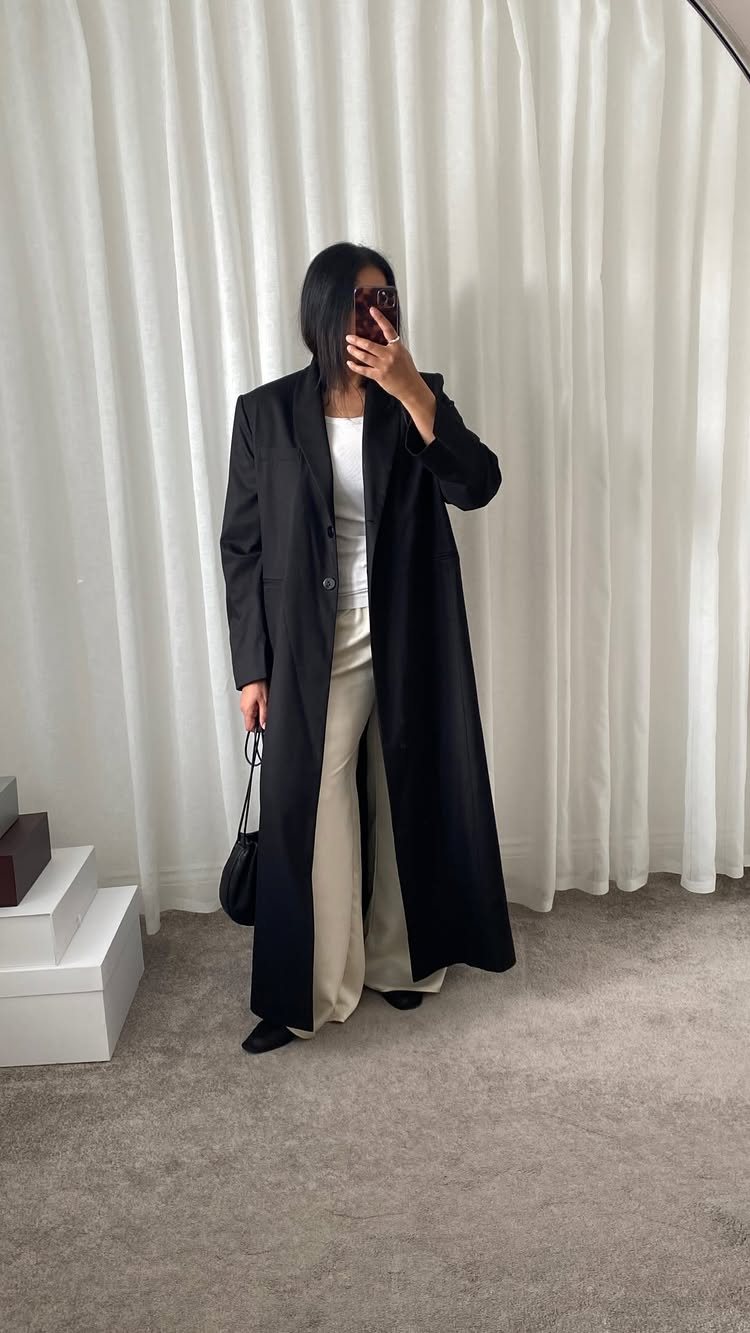
Checked trousers and a light shirt under a black duster reads as senior staff without the stiffness of a full suit.
The coat replaces a blazer here, so fabric weight becomes the judgment call: anything too light or fluid slips toward bathrobe territory, which no meeting room needs.
Wide-leg trousers work if the duster hangs straight and long; anything cropped or tapered demands a coat that closes cleanly at the front.
I have made the mistake of wearing an open, flowing duster over baggy trousers, and the whole shape dissolved into fabric with no person inside it.
For client-facing days, I prefer the coat buttoned or belted, the shirt collar visible, the bag structured. Cream trousers with a black duster give enough contrast that the outfit registers as composed from a distance.
3. Duster with Boots

The boot height decides whether this looks like an outfit or a costume. Ankle boots or Chelsea boots keep the duster grounded; anything taller competes with the coat’s hemline unless you plan the gap between them deliberately.
Tall boots under a long duster need either bare leg or very fitted pant to avoid bunching that reads as accidental. A tan boot picks up a tone from a plaid pattern instead of adding a third neutral.
I would not wear black boots with that particular coat; the contrast would fracture the line.
For rainy city days, a rubber-soled Chelsea boot under a wool duster gets you where you are going without the costume drama of a rain boot.
4. Duster Over a Dress

Layering a duster over a dress solves the problem of sleeveless or short-sleeved pieces your calendar has already outlasted.
The olive midi under a textured brown coat shows the formula: dress length shorter than coat length, dress fabric lighter or smoother than the coat’s weight.
A black leather duster over a flowy midi dress trades earthy warmth for something sharper, more evening.
The leather adds structure that a knit or crepe duster would not; the flowy dress underneath keeps the whole thing from reading as costume.
I have found that belting the duster over a dress rarely works unless the dress itself is very straight and narrow; otherwise you get gathering and bulk at the waist that the eye reads as weight gain.
Leave it open, let the dress shape show, check that the neckline still frames your face.
5. Duster for Fall
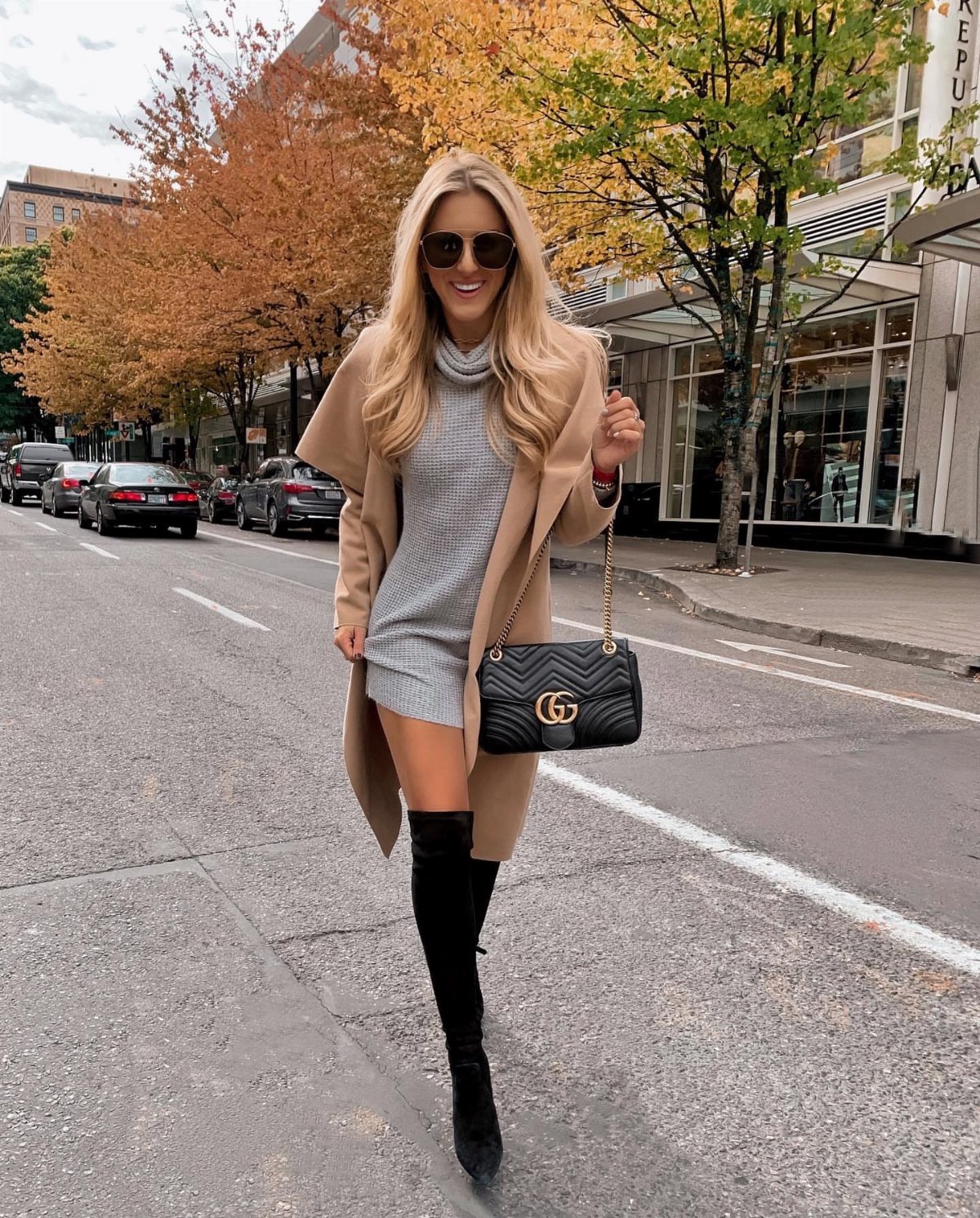
Fall dressing is layering, and a duster accommodates the bulk of a knit sweater without the sausage-casing effect of a shorter jacket.
Brown leather or camel wool both pick up the season’s palette; the camel reads softer, the leather more directional.
A knit sweater and leggings underneath only work if the duster is long enough to cover where the leggings become too casual for public view.
I would add a wide-brim hat or wool scarf when the temperature drops below fifty degrees, not for warmth alone but because the coat’s length needs something happening at the neck to balance it.
Suede boots finish the look; I have worn this same shape with riding boots and found the effect more equestrian than I intended.
The camel duster in particular suits blondes and anyone whose coloring sits in the warm range; ash tones or true black hair might look cleaner in the brown leather.
6. Duster with Accessories
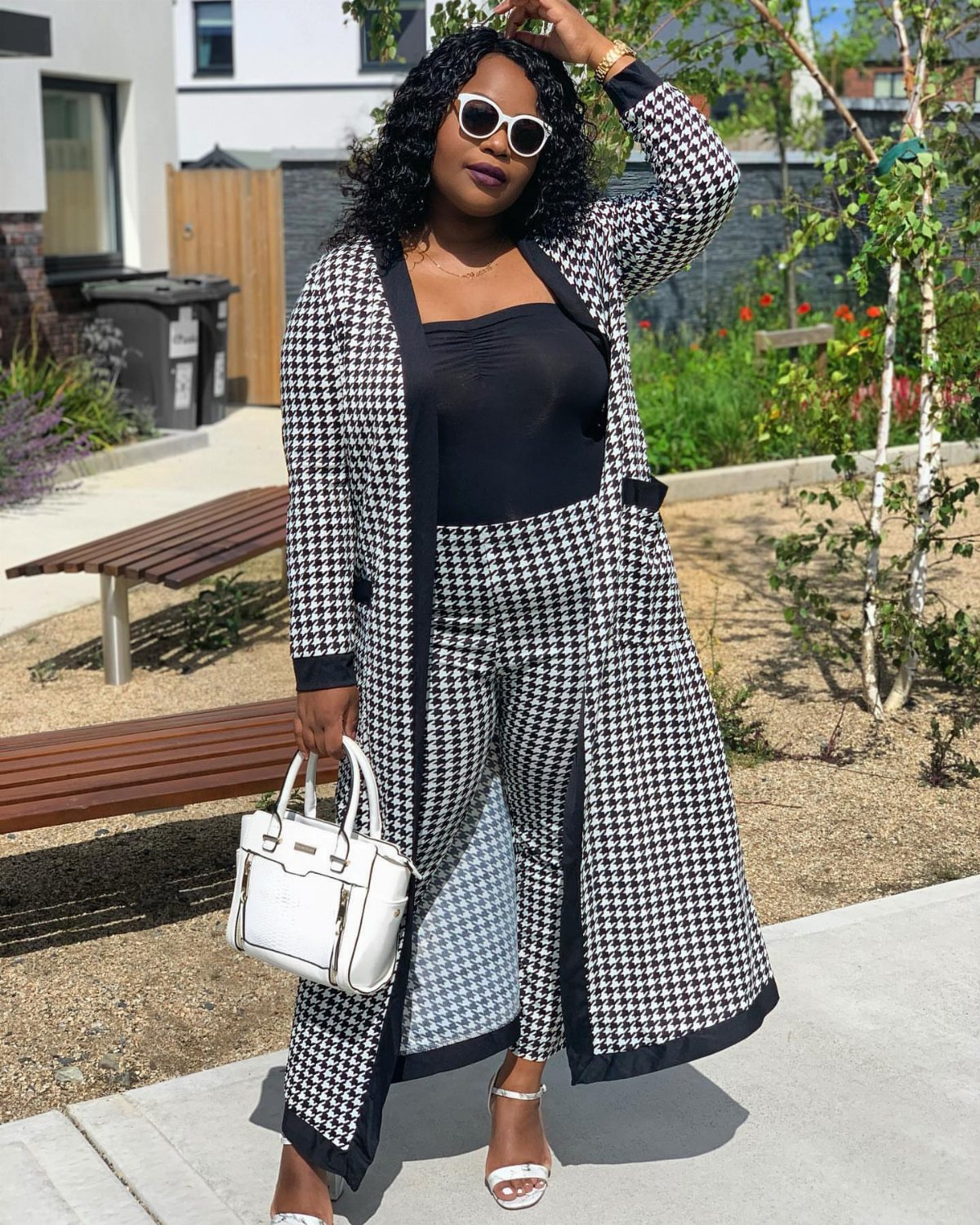
A patterned duster already carries enough visual noise that accessories must choose between echoing or contrasting, never competing.
Scarves, hats, and statement jewelry all work, but not together. A hat with a long coat risks costume unless the brim is moderate and the color quiet.
I would reserve statement jewelry for solid-color dusters where the neck area needs interest; under a houndstooth or plaid, a simple chain or small hoop keeps the eye moving.
The judgment call is whether your accessory solves a problem (cold ears, empty neck) or creates one (too many elements, no place for the gaze to rest). The latter is the more common mistake.
7. Duster Coat Colors
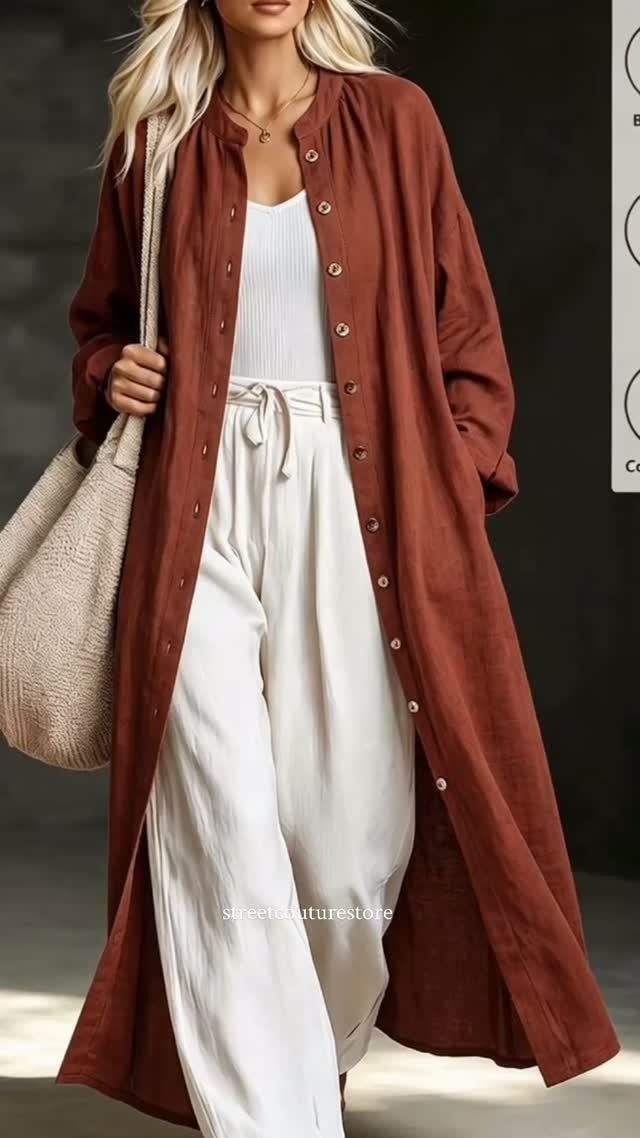
A rust duster against white is the kind of pairing that makes the coat do the work. The warm tone reads expensive without trying, and it photographs well against concrete or brick if you care about that sort of thing.
Black, brown, or beige will take you farther if you buy one coat and need it to cover everything from client lunches to airport gates. Pastels and soft blues read spring; camel and forest green belong to fall.
I would not buy navy unless you already live in it. Winter weight in burgundy is its own mood, but it narrows where you can wear it.
Check your closet before you choose. If you own mostly gray and black, a rust coat becomes a statement you did not plan for.
Duster Coat Versatility
A duster reaches below the knee or above the ankle, long enough to change how the rest of your outfit registers.
The original design stayed open; belts and buttons came later, so the shape still carries some of that borrowed ease.
I would keep one neutral duster and one with pattern or texture if you are building around this piece. The neutral does the daily work; the statement one rescues jeans and a tee from looking like you gave up.
Lightweight leather or linen works for warmer months, and the same coat in heavier wool or shearling replaces it when the temperature drops. The length flatters most body types because it draws a straight line downward, which shorter jackets interrupt.
Fabric Choices for Dusters
Cotton, linen, and lighter blends are what I reach for once the temperature climbs; they move air without clinging. Linen in particular suits humid climates; it wrinkles, but that reads as texture rather than neglect.
Fall shifts to suede, wool blends, and midweight leather. Winter demands shearling, heavy wool, or full-grain leather, materials that trap heat without the padded bulk of a parka.
The duster’s length helps here: it elongates the frame while the fabric does the insulating.
I would avoid wearing one weight year-round; rotating fabrics by season keeps the shape fresh and prevents the overuse that wears out a shoulder or collar first.
Layering Techniques
The duster’s loose cut accommodates layers underneath without the compression a shorter jacket applies. In winter, a thick sweater, scarf, and wool trousers fit comfortably beneath a shearling-lined or heavy wool style.
A turtleneck dress under a wool duster with knee-high boots gives enough coverage that you are not adjusting hemlines in a wind.
The coat’s length is what makes this possible. A parka or puffer stops at the hip and pushes upward when you sit; the duster’s hem stays settled, and the vertical line survives the extra clothing beneath it.
I would check that the sleeve of the duster clears the cuff of whatever you are wearing under it; bunching at the wrist is where layering reads as accident.
Footwear Pairings
Spring dusters sit right with sneakers or loafers; summer calls for sandals, espadrilles, or stripped-back trainers. Fall brings ankle boots, Chelsea styles, or rugged lace-ups that pick up the texture of a leather duster.
Winter needs insulated boots or formal leather shoes with enough structure to hold their own against a heavier coat.
Heels with a long duster elongate further, though I would reserve that for occasions where the extra height reads as choice rather than commute. Flats keep the same line without the commitment.
The coordination matters: a rubber-soled boot under a wool duster is practical; the same boot under a lightweight linen coat in May looks like you dressed for two different forecasts.
Match the footwear weight to the fabric, and check where the hem falls relative to the boot top. A gap or an overlap both work if it is deliberate; an almost-touch reads as mistake.
Frequently Asked Questions
How do you style a duster coat?
A duster coat works with jeans, dresses, trousers, or boots, and the length of the coat against the piece beneath it is what makes or breaks the proportion.
Mid-calf dusters balance skinny jeans, while full-length coats keep cropped or straight-leg denim from looking truncated.
With a dress underneath, the coat needs to fall past the hemline, and the dress fabric should sit lighter and smoother against the heavier layer so the pairing looks deliberate rather than accidental.
Are duster coats still in fashion?
Duster coats remain a wardrobe staple because the shape has moved beyond trend into practical territory. Leather versions in particular have given the style fresh momentum, and the coat’s long line works across seasons if you choose the right weight.
What keeps it current is its adaptability: the same silhouette reads as office-appropriate over checked trousers or weekend-casual with denim.
What is the purpose of a duster coat?
The duster coat began as a long, loose layer meant to protect clothing from dust and dirt, which is where the name originates.
Now it functions as architecture for the body: the long column draws the eye up and down, the open or closed front stands in for a blazer, and the roomy cut lets you pile on sweaters without the squeeze of a cropped jacket.
It solves the problem of looking pulled-together when a full coat is too heavy and a cardigan too informal.