The outfits below run from a long dress with scalloped trim to full ballroom gowns that sit just below black tie, so the deciding factor is the dress code on the invitation and whether the ceremony starts before or after 5 p.m.
What unites them is fabric weight: burnout jacquard, velvet, and brocade handle October temperatures without looking like you reached for a summer dress and hoped for the best.
1. Long-Sleeve Fall Wedding Guest Dresses
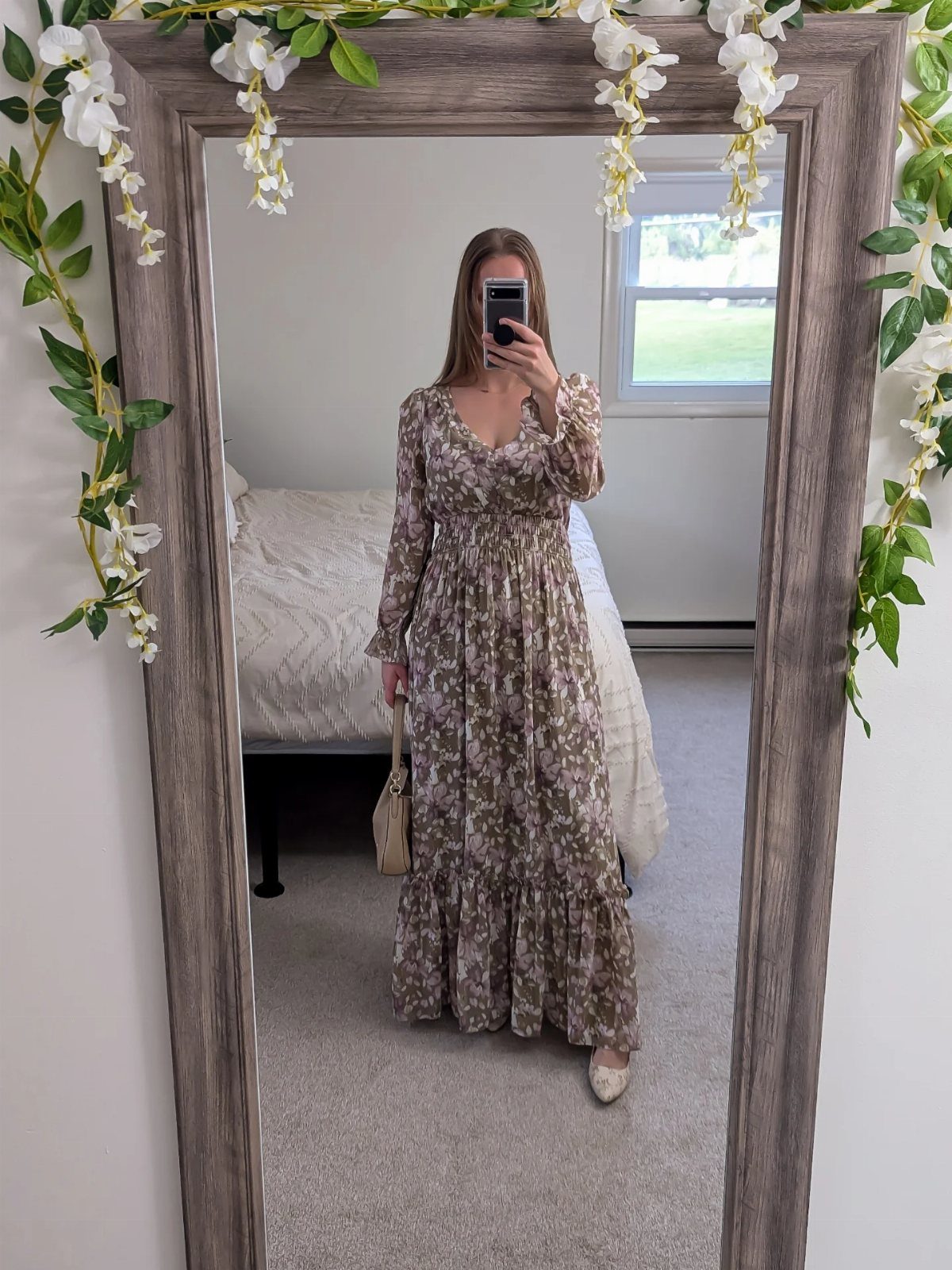
Long sleeves solve the temperature problem without making you hunt for a cover-up that matches. Ankle-length hemlines mean block heels work as well as stilettos if the reception moves onto grass.
For fall, I look to burnout jacquard, moody florals, or a solid in emerald, navy, or brown.
A lace-up back or tiered skirt adds interest without pushing the dress code. Metallic accessories pair naturally with those deeper tones; I would add statement earrings if the neckline is simple.
A tailored jacket or wrap handles the walk from car to venue. The same dress works again for holiday parties, which matters when you are buying something specific.
2. Floor-Length Gowns
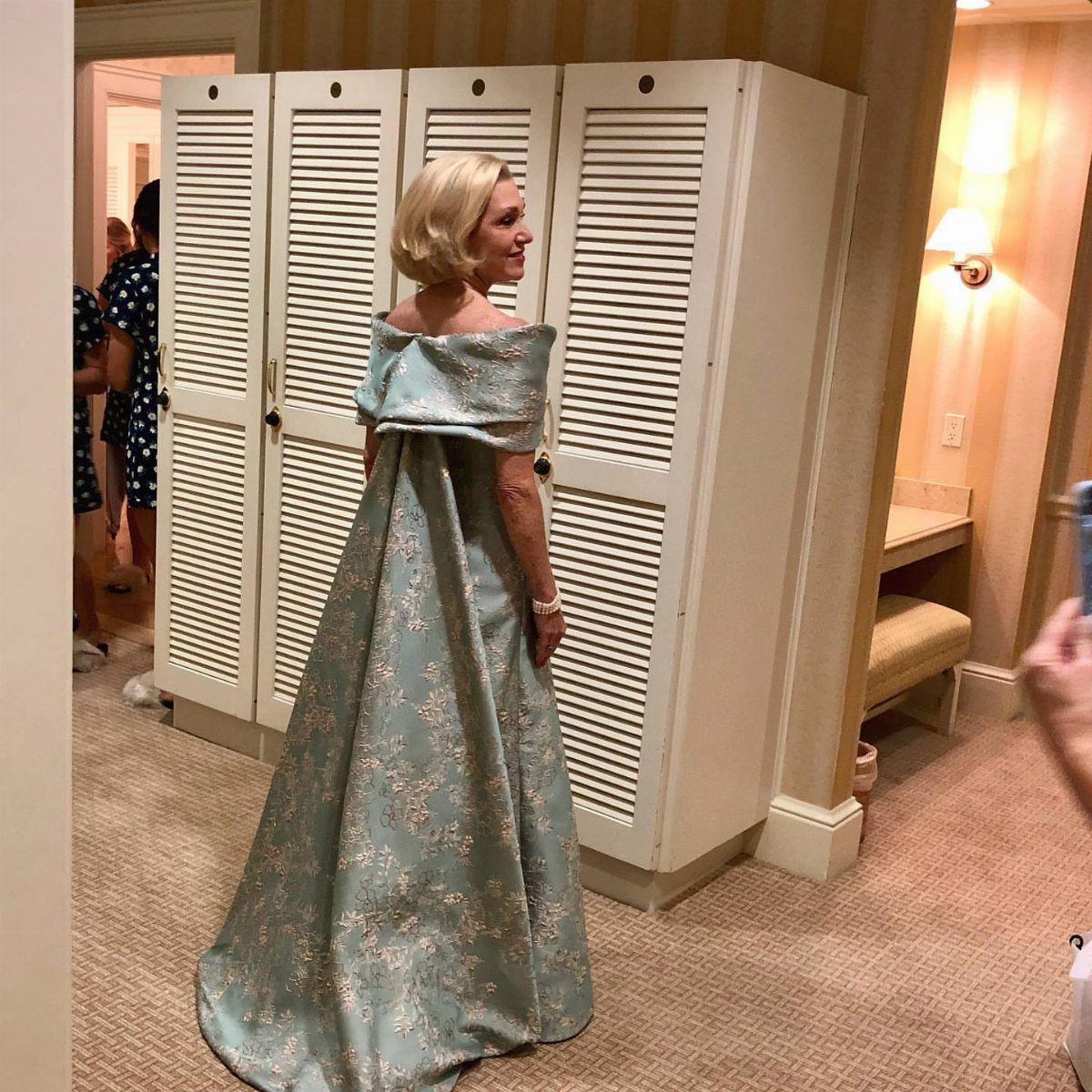
Pale blue reads as formal without the heaviness of black, and brocade texture catches ballroom light without relying on sequins.
The gown here has structure through the bodice and flows from the waist, which suits most body shapes without needing alterations.
For fall, I would steer toward deeper tones than this if the wedding trends formal, though the shape translates across colors.
Elegant heels remain standard, though I have worn block heels to outdoor ceremonies without anyone noticing. A structured evening jacket or shawl handles temperature drops after sunset.
3. Ballroom Wedding Formal Gowns
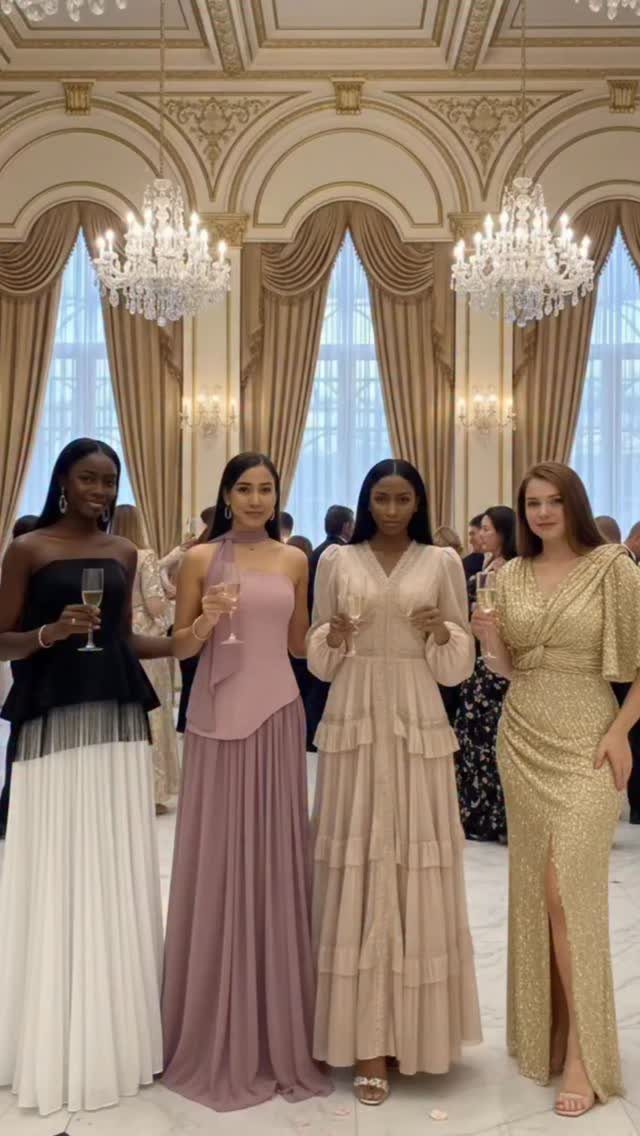
Crystal chandeliers mean the venue already did the work; your job is not to compete.
Solid color, clean line, and fabric that moves rather than clings: those are the details that carry a formal gown. In a ballroom, that reads as intentional rather than safe.
A vineyard wedding shifts the same guest toward an elegant midi, which is where I would spend my money if I attended more of those.
For a ballroom, floor-length feels correct; the space swallows shorter hemlines and makes them look underdressed.
I have found that a compact clutch and one strong accessory finish the look without overcomplicating it. The women here chose earrings or a neckline detail, not both.
4. Off-the-Shoulder Midi Dress
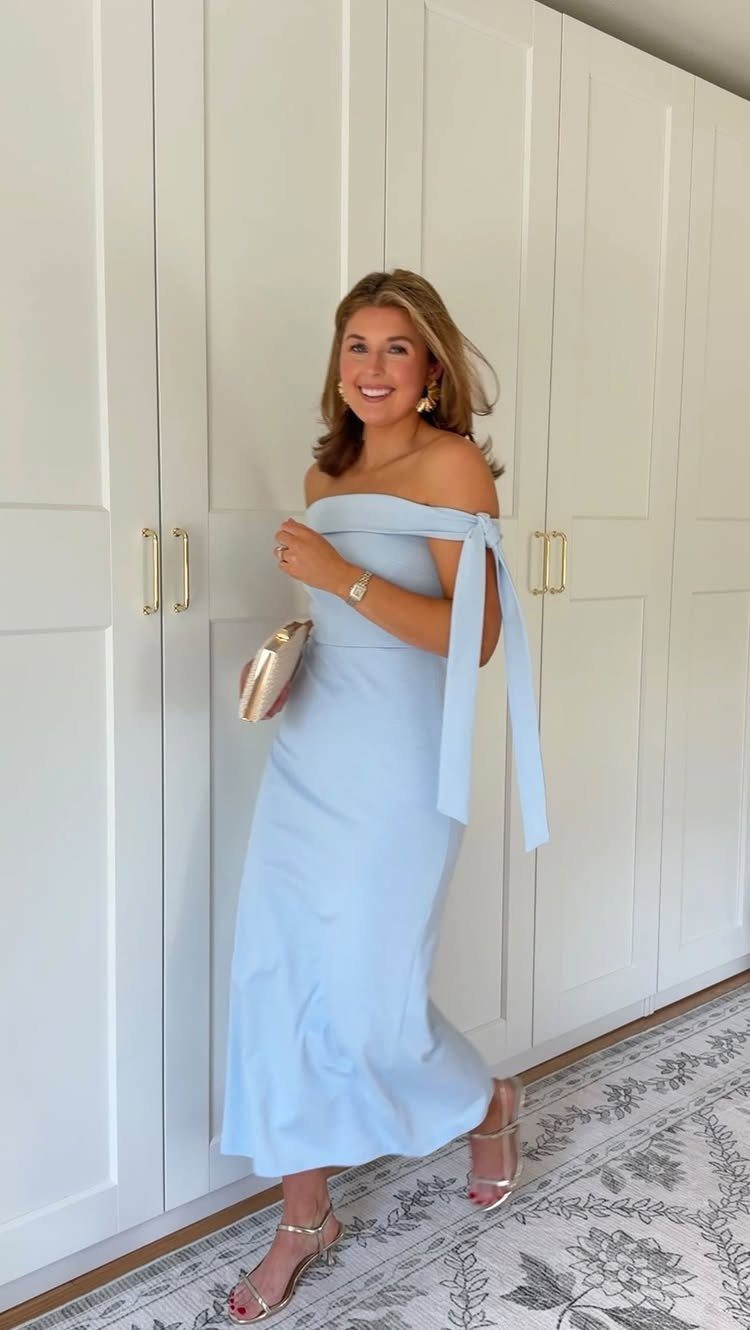
Bare shoulders work in fall when the cut sits close to the body and the fabric has weight. The light blue here reads as fresh against typical autumn palettes, and the midi length keeps it from feeling too summery.
Metallic strappy heels and a gold clutch pull it toward evening; I would swap in a closed-toe pump if the forecast calls for cold. The off-the-shoulder neckline needs a strapless bra or built-in support, so check the construction before buying.
This is the dress I would choose for a daytime ceremony that runs into cocktail hour. The shape suits hourglass and pear frames particularly well; the volume sits at the shoulder and hem, not the waist.
5. Traditional South Asian Dupatta Ensemble
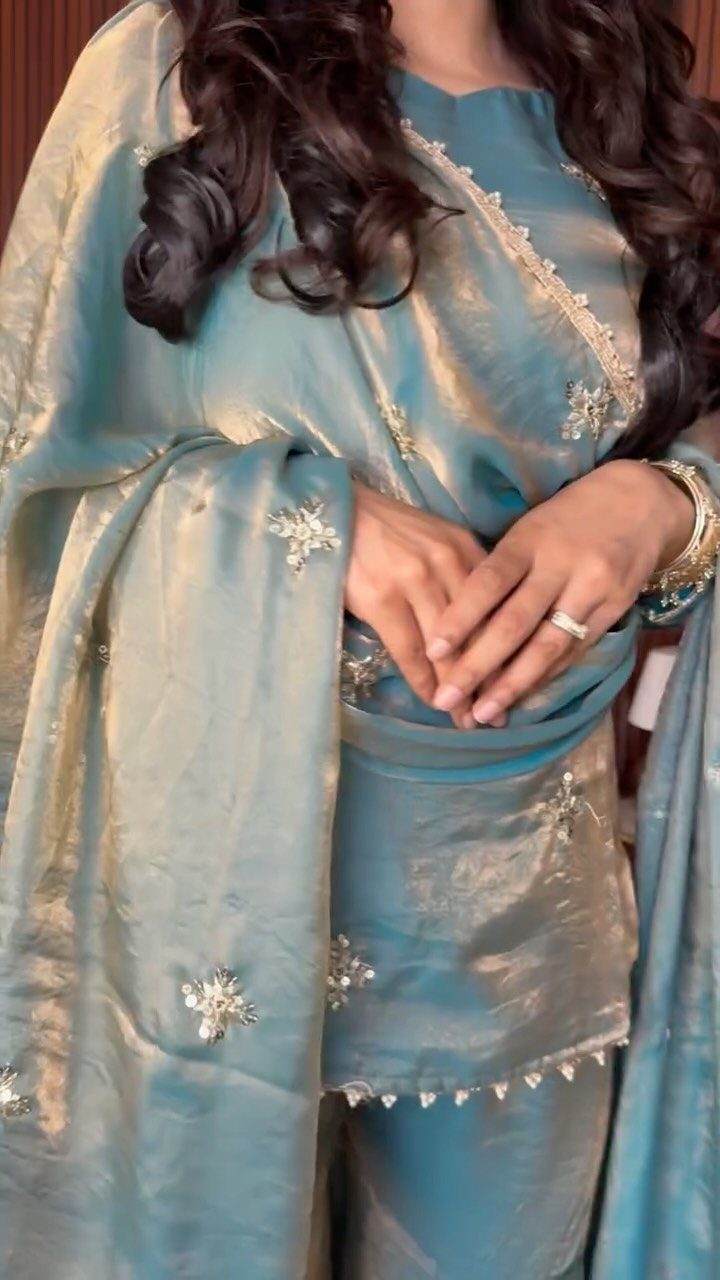
Teal and gold embroidery carries enough presence that additional jewelry stays minimal; the dupatta itself becomes the accessory. Draping the fabric over one shoulder keeps it secure through hours of sitting and standing.
For a non-South Asian guest wearing this, I would ask the couple or a knowledgeable friend about appropriate styling; the embroidery density and color choice signal respect for the occasion. Gold jewelry matches the threadwork without competing.
The tunic length covers the hips, and the cut allows movement for dancing. This is not an outfit to improvise; the tailoring and drape require a specialist, and the investment reflects that.
6. Sleeveless Embroidered Two-Piece Set
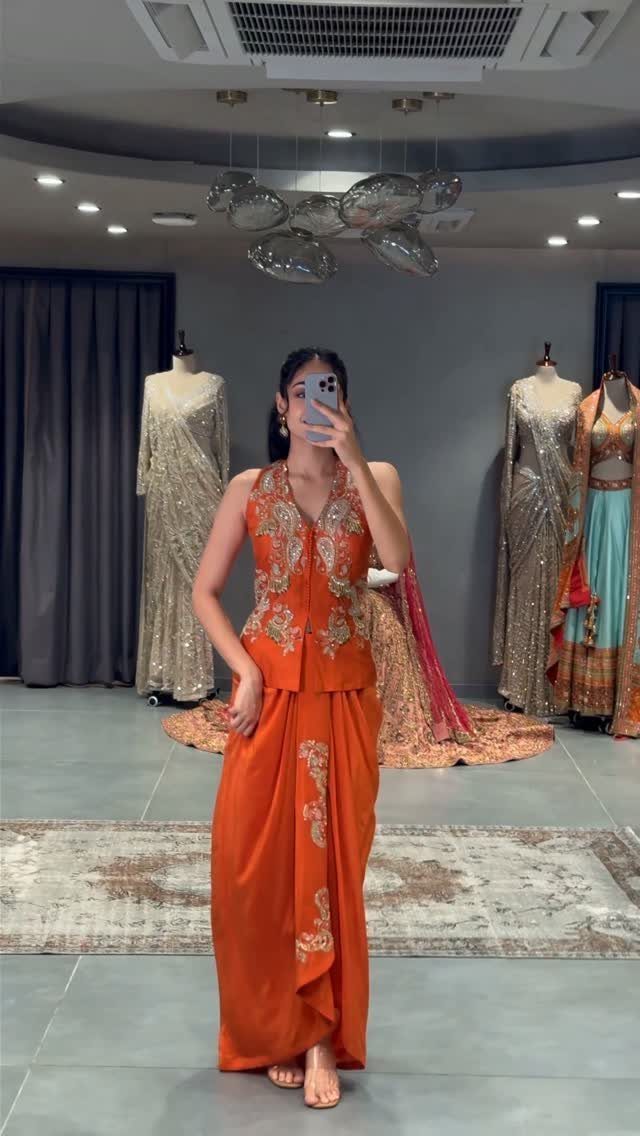
Bright orange with gold threadwork reads celebratory without needing a separate print or pattern.
A two-piece construction offers more flexibility than a dress: the skirt sits at the natural waist, and a cropped vest ending just above it elongates the torso.
The sleeveless cut suits warm afternoons, though a matching jacket or shawl would carry it into evening.
Gold embroidery this dense shows best in natural light, which makes it ideal for daytime ceremonies.
7. Burgundy Halter Tiered Dress
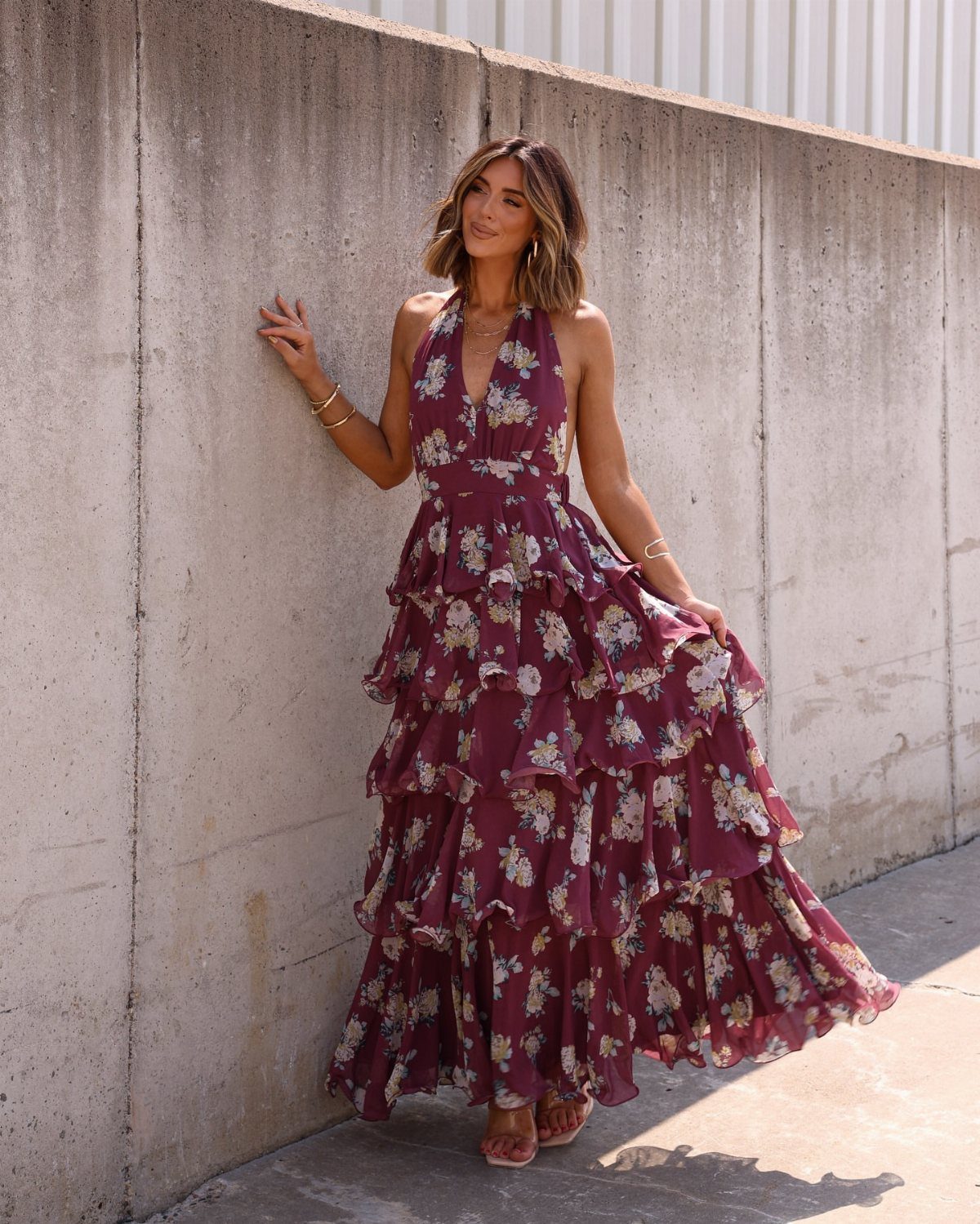
Burgundy halter tiers keep the neckline clean while the skirt does the movement work. The floral print here is small-scale, which reads as texture from across the room rather than a bold statement.
A halter leaves the shoulders open, so I would add a cropped evening jacket for the ceremony rather than a wrap that fights the neck strap.
Block heels work under the long hem if the reception heads onto lawn; the tiered skirt hides them anyway. Gold earrings pick up the warm undertone in the burgundy without needing a necklace to compete with that neckline.
8. Dark Plum Ruffled Maxi
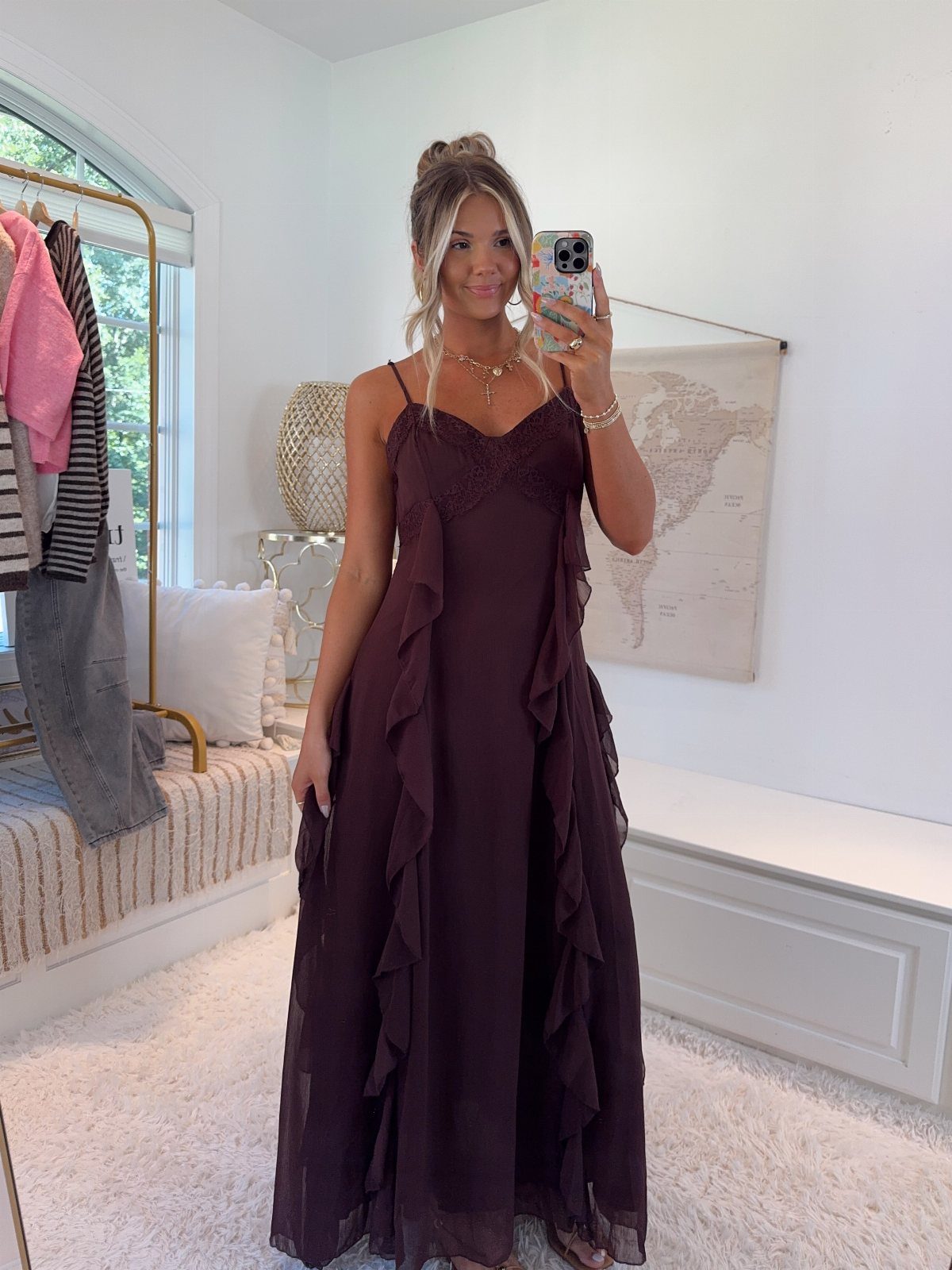
Vertical ruffles on a dark plum maxi draw the eye up rather than out, which is the trick with a full skirt. The lace bodice here adds structure where ruffles alone would read as too soft.
Sleeveless cuts in fall depend on fabric weight; this one looks substantial enough for indoor venues.
I would pack a pashmina in a deeper tone for the gap between ceremony and heated reception. Closed-toe heels in a metallic finish keep the look evening-appropriate without demanding attention.
The ruffle placement at the bodice and hem creates balance; a ruffle at the waist would add volume where most bodies do not need it.
9. Dark Brown Pleated Maxi Dress
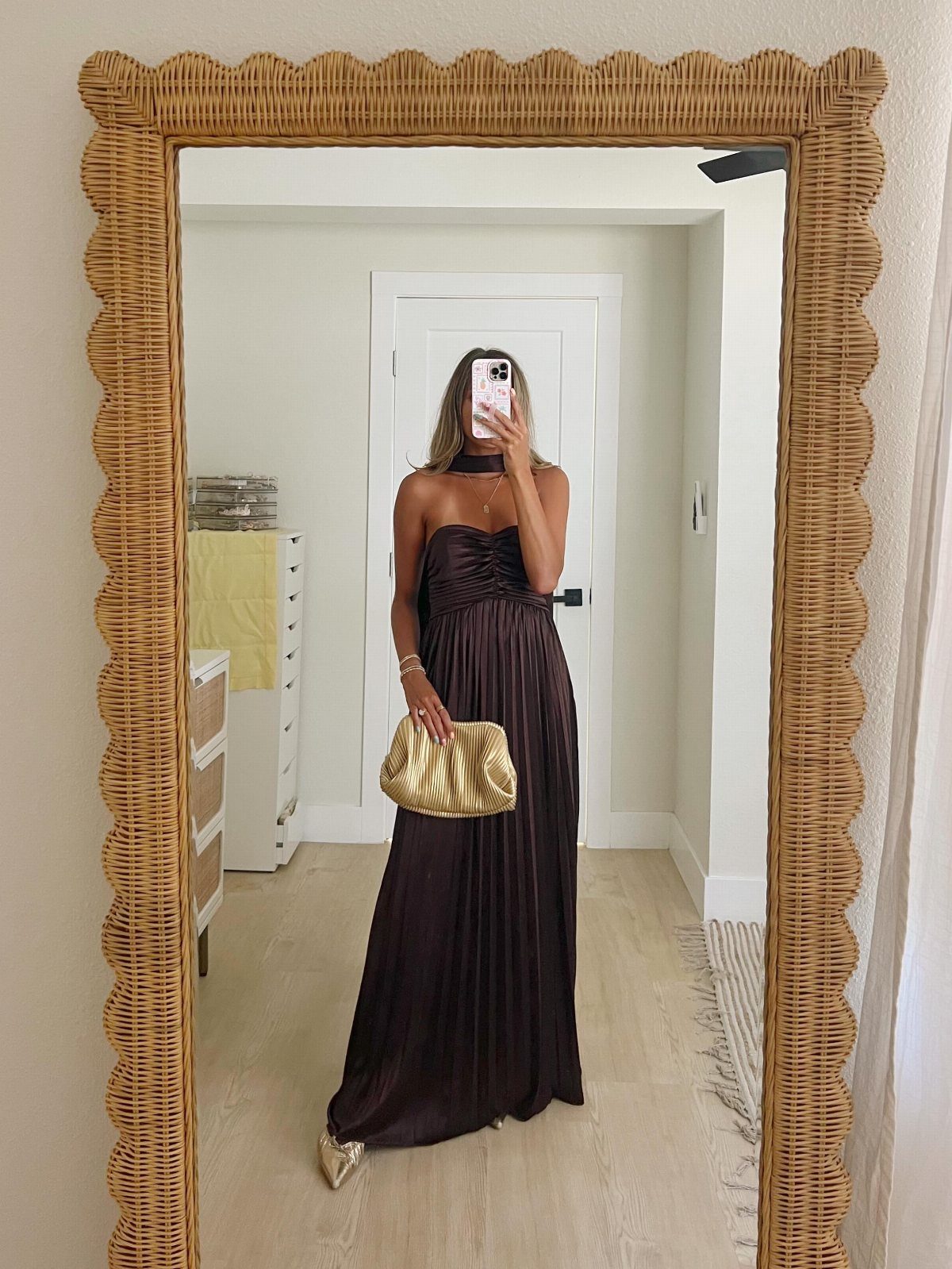
A strapless pleated maxi in dark brown reads as formal without the drama of black, and the pleats keep the skirt moving when you walk.
The metallic gold clutch and matching pointed-toe heels here turn a simple dress into an intentional outfit.
Pleats need a fitted bodice to anchor them; without structure, the whole thing balloons.
I would check that the top has boning or substantial lining before relying on it for a long evening. The gold accessories work because they repeat the same finish; mixed metals would fight the clean lines.
This is the dress for a city evening wedding where the venue has heat and solid floors.
10. Olive Green Sleeveless Maxi
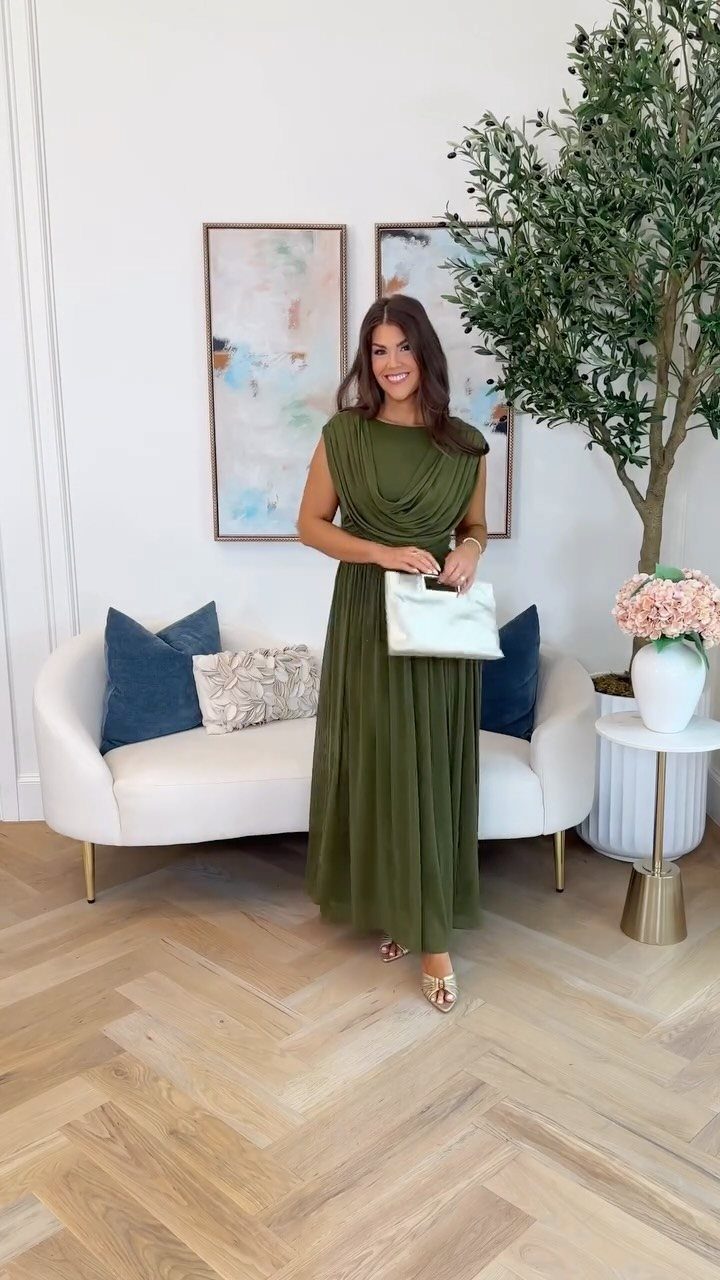
Olive green hits a middle ground between neutral and color: it photographs well against fall foliage without screaming seasonal costume. The draped neckline here adds interest without jewelry, which matters when you are rushing from ceremony to cocktail hour.
Gold sandals and a white clutch keep the palette pulled together; I would swap the white for cream or tan if the wedding trends more formal.
Sleeveless maxis in jersey or crepe work for afternoon ceremonies that stretch into evening; the fabric needs enough weight to drape rather than cling.
The cut suits frames that carry weight through the hips; the drape skims rather than defines.
11. Burgundy Velvet Blazer and Vest
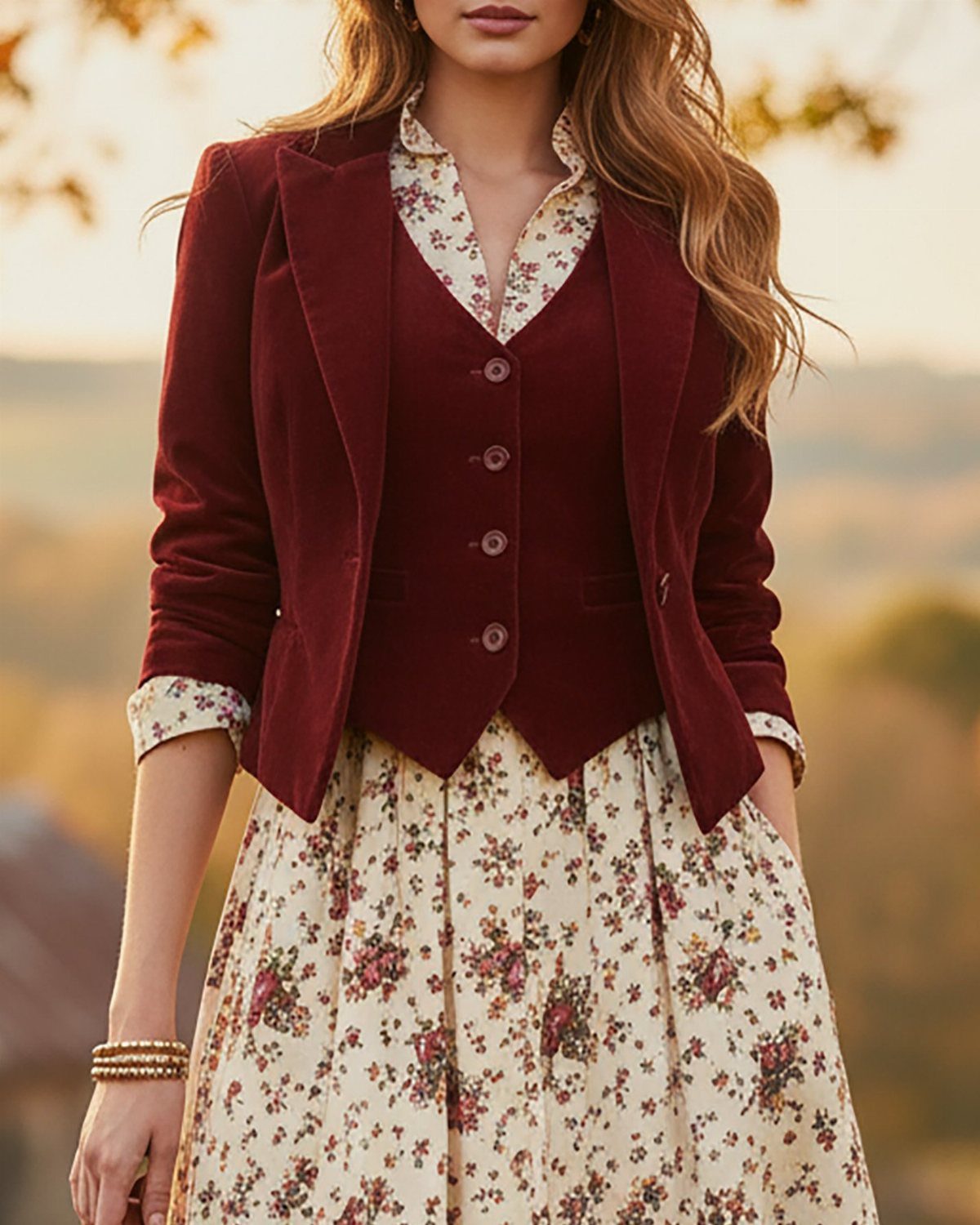
Velvet over floral print is the layering move that carries a summer dress into fall without looking like you grabbed the wrong season.
The burgundy waistcoat and blazer here match in weight and tone, which reads as a considered choice rather than an afterthought.
The vest buttons to the neckline, so a necklace would tangle; I would do small earrings and let the velvet texture speak.
This works for venues where the temperature swings between overheated ceremony and drafty cocktail tent, because the jacket comes on and off without disrupting the look.
A matching set like this requires finding both pieces from one maker; mismatched velvet reads as error, not eclectic.
12. Tan Dress with Scalloped Trim
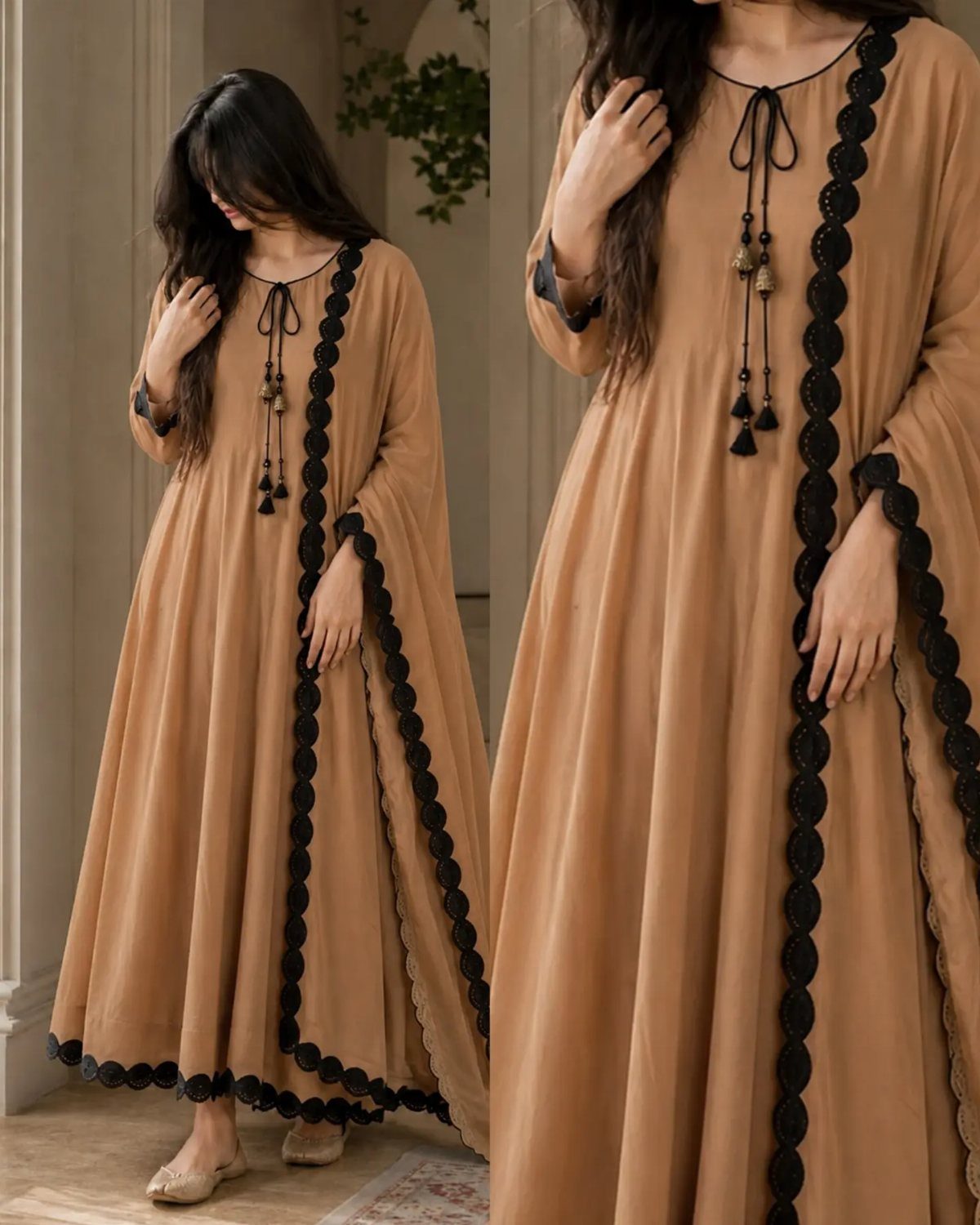
Scalloped trim in black against tan creates the kind of graphic detail that photographs clearly without demanding attention. The tassel at the neckline here moves when you do, which adds life to a long dress in a static color.
The cut reads as relaxed formal; I would add a structured clutch and heeled sandal to pull it toward evening.
The black trim means any black accessory works; brown or tan shoes would look like a mismatch against that deliberate edge.
This is the dress for a late-afternoon outdoor ceremony where the dress code says cocktail but the setting says watch your hem on the stairs.
Dress Code Importance
Most invitations spell out the dress code, and black tie leaves no room to guess.
After 5 p.m. usually means formal, afternoon leans cocktail or semi-formal, and morning stays polished but relaxed. If the invitation says nothing, ask friends what they are wearing, or check directly with the couple.
Casual still means wedding-worthy. A relaxed midi, polished jumpsuit, or easy A-line works; save jeans for an invitation that specifically welcomes them.
For fall, abstract prints, embroidery, soft mesh, or cotton feel elevated without pushing too formal. A mock-neck midi adds coverage, and pleated skirts or embroidered accents give occasion-ready polish.
Weather Considerations
Check the forecast before you commit to an outfit.
Fall evenings cool fast, and indoor venues run aggressive AC. I bring a shawl to most weddings regardless of season; for fall, a coat or wrap is worth the bag space.
Fabric and sleeve length matter more now than in summer. Lightweight dresses layer easily under wraps, while long sleeves or velvet handle formal events without extra pieces.
Versatility of Outfits
A dress bought for one wedding and never worn again is poor value. Pieces that work for holiday parties, or shift from ceremony to cocktail hour with a shoe swap, are the ones worth the higher price tag.
Look for shapes that do not scream "wedding guest": solid colors over prints you will not repeat, necklines that work with your own jewelry, hemlines that suit your actual life.
A floor-length gown in emerald or navy reappears at company galas; a midi in burgundy or olive works for dinner parties. The tan dress with scalloped trim reads relaxed enough for a nice restaurant.
The more specific an outfit is to one couple’s aesthetic, the less you will wear it again.
Seasonal Aesthetics
Fall color works in 2 directions.
Warm tones, wine reds, rust, cinnamon, chocolate brown, deep orange, and burnished gold echo the season directly. Cooler alternatives, emerald, navy, dark teal, and plum, read as rich without the costume quality of full harvest palette.
Florals stay in play if they shift mood: darker backgrounds, richer palettes, textural fabrics like burnout jacquard or lace. Brown, burgundy, plum, and jewel tones in a print read autumnal rather than summery.
Fabric carries as much seasonal weight as color.
Satin, jacquard, lace, and velvet add depth that cotton or chiffon lack in October. These textures matter most where they show; a velvet blazer set works as layering, not costume.
Frequently Asked Questions
What should I wear to a fall wedding as a guest?
The invitation usually tells you most of what you need: the dress code sets the formality, the venue suggests heel height and hem length, and a quick weather check keeps you from freezing through the ceremony.
Sleeves that hit at the wrist mean you can skip the shrug hunt, and a hem that brushes the ankle lets you swap stilettos for a block heel when the party shifts to lawn.
What are the trendy wedding guest dresses for fall 2026?
Long-sleeve dresses, velvet styles, and florals in deeper shades are the directions I see.
Velvet reads autumn in a way chiffon never will; a long-sleeved dress in that fabric needs no layering piece to feel like the right season. Burnout jacquard and moody florals shift prints toward autumn when lighter backgrounds would read summery.