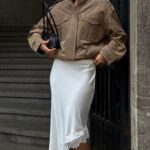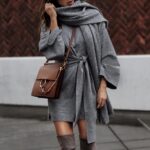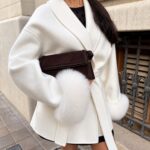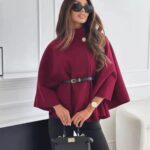
The outfits below run from a basic anorak shell to a structured patent hat that costs more than some jackets, and the deciding factor is how long you’ll be outside in actual rain versus crossing a parking lot between your car and the door.
1. Rain Jacket

A hooded rain jacket is the piece that lets you stop checking the forecast three times before leaving the house. Any anorak cut with a hood and sealed seams will do the job, even toward the technical end.
Breathable fabrics matter more than waterproof ratings if you’re wearing it longer than a quick dash, since trapped sweat feels as clammy as rain once you’re indoors.
I reach for mine over a hoodie when the temperature drops enough to need the extra layer. The hood saves you from carrying an umbrella for light drizzle, and the shoulder bag keeps your hands free for coffee or phone.
For someone building a capsule wardrobe, a black shell pairs with everything you already own and travels better than a bulky coat.
2. Comfortable Footwear

Rain boots or synthetic shoes are the only real options here. Suede soaks through in minutes and never recovers its shape, so I leave mine at home the second the pavement looks wet.
Rubber boots repel water completely and wipe clean, but a sleeker synthetic sneaker in dark colors passes in offices where cartoon prints would raise eyebrows.
Your choice depends on how long you’ll be outside and what you’re walking through. Puddles call for taller boots; misty sidewalks let you get away with water-resistant trainers if the seams are sealed.
Check whether the lining is mesh or insulated before you buy, since an unlined boot in November will chill you fast. I keep one pair of each on hand and decide that morning.
3. Layering Pieces

Layering turns a rain jacket into an outfit instead of a costume. A trench over a sweater, a patterned shirt, and jeans gives you pieces to adjust as buildings heat up or the wind shifts.
The trench is doing the waterproof work; everything underneath handles temperature.
I build my own version from the inside out. A thin thermal or long-sleeve tee against the skin, a cotton sweater or cardigan for bulk, then the shell on top.
Oversized sweaters work here in a way they don’t under fitted coats, since the trench’s looseness swallows the volume. A scarf is optional warmth you can strip off without undressing.
For anyone commuting by train or working in overheated offices, this flexibility pays off more than any single thick coat.
4. Dark Colors

Dark colors hide the splatter marks that light fabrics collect within two blocks of walking in rain. An all-black base, striped through with white, reads as intentional rather than practical, which is the trick.
Black doesn’t show wet spots the way tan or cream does, and it masks the grime that kicks up from gutters.
I default to charcoal or navy when I know I’ll be walking through actual weather rather than just crossing a parking lot. One accent piece that stays dry under an umbrella or inside the coat carries the color load.
Leather or faux leather shorts like hers make sense here too, since they shed water better than denim.
For someone who wants to look pulled together at a meeting after walking in drizzle, this palette forgives what the sidewalk does to you.
5. Fun Hats

A rain hat keeps water off your face and hair without the juggling act of an umbrella in wind.
A patent hat that sits wide enough to shield, structured enough not to collapse, and finished with a buckle reads as accessory rather than gear. That distinction matters if you’re wearing it into a restaurant or meeting.
I look for a brim wide enough to actually shield your face and a material that wipes dry, leather or treated cotton rather than felt, which warps and smells when soaked.
The hat becomes the statement piece while everything else stays neutral. For someone who walks a lot and resents carrying one more thing, this trades the umbrella for something that stays on your head.
Check that the interior band adjusts, since a loose hat in gusts is as useless as no hat at all.
Avoiding Ruined Shoes
All-weather spray belongs on every synthetic shoe before it faces wet pavement. I treat mine the evening before a storm, two light coats with time to dry between, and reapply after heavy days.
The spray won’t make suede safe, but on rubber or sealed synthetics it buys you time against the salt and grime that etch permanent marks.
Check the label for silicone versus fluoropolymer formulas. Silicone beads water and costs less; fluoropolymer handles oil-based stains too, which matters if you’re walking city streets.
I keep a can by the door and hit the seams and toe cap where wear concentrates. One can lasts me two Chicago winters of regular use.
Layering for Warmth
A thin thermal under a sweater adds warmth without the restriction of a single thick coat. I buy mine in merino or a synthetic blend that dries fast if sweat builds up on a crowded train.
Fit matters most: skimming the body, not compression-tight, so air doesn’t channel between layers.
A long-sleeve tee as your base gives you something presentable if the office overheats and you strip down. I prefer a crew neck that stays hidden under the sweater’s collar.
The thermal handles the temperature gap between outdoor wind and indoor heating; without it, I end up sweating through my shell or shivering in a thin blouse alone.
Choosing Colors
Charcoal and navy read as intentional in offices where black can look severe.
I add one piece in olive or khaki green when the day needs something less expected, but I keep it under the rain jacket so it stays dry and crisp.
The green works back to denim, to camel, to the gray layers most people already own.
White as an accent stripe or trim stays readable in rain because it sits high on the body, above where tires splash. I avoid it on hems or trousers.
One bright piece, dry under the shell, carries the whole outfit; everything else can take the weather’s punishment without showing it.
Practical Accessories
Metal jewelry in rain risks tarnish that no polishing fixes. I leave rings at home and wear one small stud or a coated chain that won’t streak green on my neck.
A crossbody bag beats a tote here; your hands stay free and the strap doesn’t slip off a slick shoulder.
I look for bags in coated canvas or rubberized nylon that wipes dry, with a flap closure rather than an open top.
A bulky bag catches wind and knocks against doorframes; a slim profile that holds phone, keys, and a small wallet is enough for most rainy days. The less you carry, the less you drop when your grip is cold.
Frequently Asked Questions
What are the best clothes to wear on rainy days?
A hooded rain jacket with sealed seams, synthetic footwear that won’t soak through, and layers you can add or remove as buildings heat up.
A jacket you wear all day needs to let sweat out, not just rain off, or you’ll feel soaked from the inside once you step indoors.
How to look good on a rainy day?
Splatter marks vanish against dark denim or black pants, while a bright scarf or clean white sneakers stays protected under your coat.
A structured rain hat with a buckle finishes the outfit like an accessory, not gear, and saves you from wrestling a wind-flipped umbrella.