The ideas below run from a quick belt cinch to full silhouette rethinks, and the right one depends on whether your puffer is cropped, oversized, or fitted to start with.
1. Puffer Jacket with a Long Scarf

A long scarf changes a puffer from utility piece to something you planned.
Drape it loose over the shoulders, knot it once and let the ends hang, or wrap it balaclava-style across the chest and neck if the wind is sharp.
Cashmere actually holds heat; acrylic only looks the part until the temperature drops.
Cream and black is one reliable route for a long scarf against a dark puffer.
A silk neckerchief knotted at the throat works for milder days, or a bright color-blocked scarf against a neutral jacket if you want the eye to travel up.
The fringe adds movement; the length is what lets you style it more than one way.
2. Monochromatic Outfit

Head-to-toe beige reads expensive even when none of the pieces were. The match does the work: jacket, sweatshirt, trousers all in the same tone, with a white beanie to break it just slightly.
Adidas or clean white sneakers keep the line casual; boots would shift it toward something else entirely.
This is the easiest way to look like you tried. Prints fight the puffer for attention; one color lets the shape of the jacket sit where it belongs.
All black works the same, though it photographs flatter in daylight. All green, all camel, all gray: the specific color matters less than staying inside it.
3. Puffer Jacket with Combat Boots

Combat boots give a puffer jacket the edge it usually lacks.
Studded boots against light denim and a fuzzy tan jacket show the logic, but sleeker leather with a matte black puffer or scuffed vintage lace-ups with something olive and oversized works the same way.
The boot should hit at or just above the ankle. Anything taller competes with the jacket’s hem; anything lower and the proportion goes off.
Skinny jeans tuck in clean, but a straight leg cropped to show the boot works too. I reach for this pairing on days when I need to walk through slush and still look like I chose the outfit on purpose.
4. Accessorizing with Scarves and Hats

A simple puffer becomes interesting through what you add around it. All-black beanie, scarf, and gloves keep a look unified; texture supplies the variation with knit against fur trim, fringe against smooth nylon.
The choice depends on what you already own and what temperature you’re facing. Leather gloves read more polished than knit; a structured bag pulls the same direction.
For a dressier version, add a tailored scarf and pointed-toe ankle boots. For everyday, fuzzy gloves and a pom-pom beanie are enough.
Check your own accessories before you buy new: one good piece often covers what the jacket lacks.
5. Puffer Jacket with Tailored Trousers

Tailored trousers with a puffer jacket is the combination that gets you into restaurants without checking your coat.
A wide-leg creased pair needs a jacket that cinches at the waist or sits short enough to show the line of the leg; otherwise the silhouette goes bulky on top and bottom both.
Gold buttons help, but the real move is the contrast between outdoor padding and indoor polish. Dark boots continue the leg line; anything lighter breaks it.
This works best with a fitted or belted puffer, not an oversized one, and with trousers that hold a press rather than jersey or denim.
The trade is warmth for shape: a thinner puffer layer, or accepting that you’ll feel the cold more on your arms than your core.
6. Dress ‘Em Up

A puffer over a dress sounds wrong until you see it done. A cropped navy jacket sitting at the waist lets an olive pleated skirt move underneath; the skirt length does the heavy lifting, not the jacket.
A midi or maxi dress with some structure through the waist works best. Anything too floaty and the puffer flattens it; anything too fitted and you look like you forgot to take your coat off.
Uniqlo’s ultra-thin parka in a solid color is one starting point, but any puffer without busy prints will do. Monochrome under the jacket keeps the eye on the shape, not the pattern.
I save this for evenings when I want warmth without the full outdoor look, and I carry a smaller bag than usual so nothing competes with the skirt.
What puffer jackets may lack in structure and polish, they more than make up for in warmth and comfort. And when styled correctly, they can add dimension, contrast, and even unexpected cool to any outfit.
— Vogue
7. Puffer Jacket with Pointy-toe Boots

Pointy-toe boots do the heavy lifting of making a puffer jacket feel intentional rather than purely practical. The slim toe line draws the eye downward and creates a longer leg, which matters when the jacket adds bulk up top.
A puffer that darts slightly at the waist or hits cropped keeps the proportions working in your favor; a boxy, hip-length puffer fights the boots and looks like two outfits arguing.
White boots against black leggings sharpen the contrast and keep the look clean. For a more wearable version, I’d reach for black or chocolate brown boots with a similar heel height.
The heel itself matters more than the color: a higher heel shifts the jacket from streetwear to evening.
This pairing suits someone who needs one winter outfit that reads dressed-up without requiring a wool coat. A slimmer puffer means less down fill, so layer accordingly underneath.
8. Puffer Jacket with High-waisted Pants

High-waisted pants redraw the silhouette so the puffer sits above a defined waist rather than floating somewhere mid-torso.
A cropped black jacket with high-waisted pants works because the gap between hem and waistband is deliberate; it creates a vertical break that elongates the legs.
For a fuller puffer, the same principle holds but the execution changes. Tuck a thin thermal or fitted turtleneck into the pants and let the jacket zip only partway, so the waistband stays visible.
White sneakers ground the look in practicality. Swap them for ankle boots and the outfit shifts toward evening without losing the structure.
9. Puffer Jacket with a Graphic Tee

A graphic tee under a puffer jacket is the easiest way to signal that your warmth layer is an afterthought, not the main event.
The visible shirt says you dressed for the room you’ll enter, then grabbed the jacket for the walk there.
A patterned puffer over a bold print works when both pieces share a similar energy level. A safer path is a solid-color puffer, navy or olive, over a tee with one dominant color in its graphic.
The tee should hit at or just below the hip so it doesn’t bunch where the jacket closes.
This combination lives or dies on the jacket’s weight. A thin down layer that packs small lets the tee read as deliberate; a heavy, glossy puffer swallows the graphic and looks like you threw on whatever was nearest the door.
Check your own closet: if the puffer is the investment piece, keep the tee cheap and replace it when the print cracks.
10. Puffer Jacket with Animal Prints

Animal print on a puffer jacket commits to the idea that winter outerwear should do more than disappear.
Pink leopard reads playful rather than aggressive because the base color softens the pattern; a traditional tan-and-black leopard on the same shape would feel louder and more demanding.
Pairing it with camouflage pants is one approach if you already mix prints confidently. For most, I’d suggest letting the jacket carry the pattern load and keeping everything else subdued: black straight-leg pants, a thin black turtleneck, one simple earring.
The puffer’s volume already adds enough visual weight.
Snakeskin or metallic finishes work similarly if leopard feels overexposed in your circle.
Choose a print that still functions as a neutral in your wardrobe: something that reappears with multiple pant colors and doesn’t require buying new pieces to justify it.
11. A Cropped Vibe

A cropped puffer jacket hits at the ribcage or just below, leaving the full length of your torso and legs uninterrupted.
The effect is less about showing skin than about redefining where your waist sits: higher, visually, than a standard jacket allows.
Matching wide-leg trousers in the same grey creates a column effect and avoids chopping the body into segments.
For a more typical day, I’d pair a cropped puffer with high-waisted jeans or a midi skirt; the jacket should end where the waistband begins, not hover awkwardly above it.
This shape suits anyone who finds standard puffers overwhelming on their frame. A true crop leaves more midsection exposed to wind, so a tucked-in base layer becomes essential.
A mock-neck thermal or slim sweater vest, as some style out this look, adds coverage without bulk.
12. Puffer Jacket with Leggings

Fitted leggings and a puffer jacket balance each other by opposing geometries: the narrow leg contains the volume up top, and the jacket’s puff prevents the whole silhouette from reading as gym-only.
A cropped black puffer worn with black leggings keeps the color continuous so the shape, not a color break, does the work.
Any sneaker works here, though I’d avoid anything too technical or brightly colored unless the jacket is equally sporty. A clean white leather trainer or a retro runner in muted tones bridges the gap between athletic and street.
This is the outfit for days when you need to move, carry things, and not think about your clothes.
The limit is social context: it reads casual everywhere, so for anything requiring authority or polish, add a structured bag and a visible earring, or change the pant to a slim trouser instead.
13. Puffer Jacket with Straight-leg Jeans

Straight-leg jeans give a puffer jacket room to breathe without sliding into sloppy territory. The cut keeps the line clean from hip to ankle, so even a longer puffer that hits mid-thigh reads as intentional rather than swallowed.
A slim-shaped long puffer works best here; something bulkier fights the relaxed leg and leaves you looking like you’re wearing two outfits at once.
Light denim against a black puffer keeps the contrast sharp enough that the shape does the work.
Fuzzy slides or a slim sneaker finish it. Ease still looks considered, not like you grabbed the nearest warm thing and ran.
14. Puffer Jacket with a Belt
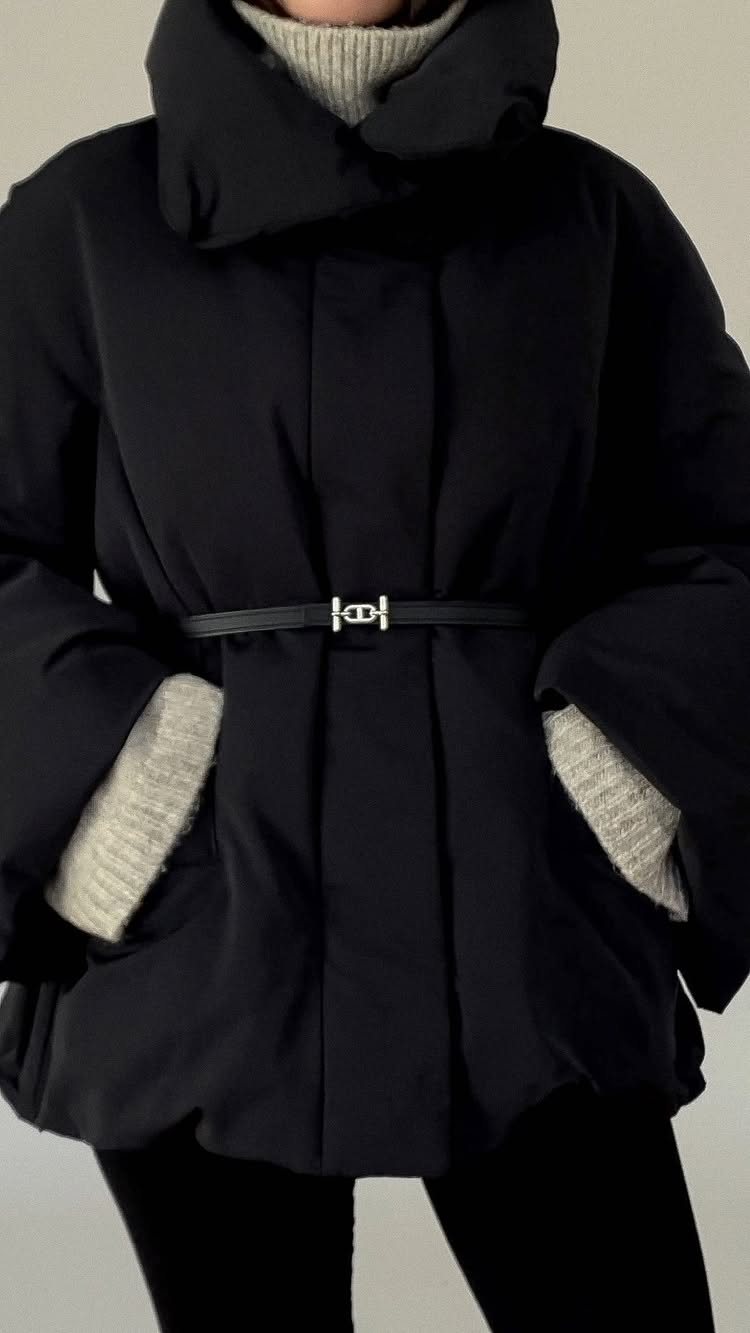
A belted puffer is the fix for anyone who misses their waist the second cold weather hits. Cinching the middle reshapes the silhouette entirely; the same jacket goes from sleeping bag to structured outerwear with one narrow strap.
The belt itself should stay slim. A wide one competes with the quilting and adds bulk where you’re trying to subtract it.
Black on black keeps the focus on the shape rather than the accessory.
This works best on oversized or longline puffers where there’s actual fabric to gather. On a cropped or already fitted style, the belt can read as afterthought.
Check that the jacket has interior anchor points or loops; otherwise the belt rides up and the effect collapses by noon.
Choosing the Right Puffer
Fit matters more than fill power for how the jacket reads on your body.
I check three points in a mirror: the shoulder seam sits at the edge of my shoulder, the zipper closes without strain across my chest, and the hem covers my belt line when my arms are raised.
Oversized silhouettes work when the volume is intentional, not accidental. Quality materials show in the shell, not just the stuffing: a matte nylon reads cleaner than high-gloss, and tight quilting stays neater than wide baffles over time.
A bright puffer can carry a whole outfit, but only if the cut is right; color draws the eye to fit flaws you’d otherwise miss.
Layering Techniques
A fitted base layer keeps the heat without the sleeping-bag effect. I wear a thin thermal long-sleeve under everything in true cold; the fabric should sit close enough that the puffer zips over it without redistribution.
Chunky knits work only under oversized or belted puffers, and even then, the sweater should stop at the wrist so nothing bunches at the jacket’s cuff.
Two puffers at once sounds like overkill until you try it: a thin down layer under a heavier shell jacket keeps the silhouette neat and leaves a pocket of warm air between them.
The inner puffer should be thin enough that the outer one still closes and moves normally. On milder days, a flannel or cotton twill shirt beneath replaces the sweater bulk entirely.
The eye goes to the outer shape; what sits under it only needs to keep you warm and stay flat.
Accessorizing
A puffer’s sportiness needs counterweight from what sits around it. A structured handbag does similar work, adding a tailored element that the jacket alone lacks.
I keep jewelry minimal against quilting, which already supplies texture. One bold cuff or a visible earring reads deliberate; layered necklaces disappear against a high collar and look like afterthoughts.
Fuzzy gloves and pom-pom beanies have their place, but that place is errands and dog walks, not meetings.
Color Coordination
Neutral puffers earn their keep by working with prints and colors you already own. A black or olive shell lets a patterned trouser or bright sweater carry the outfit; the jacket recedes instead of competing.
This is the practical argument for choosing plain over printed when you buy.
A colorful puffer demands the opposite discipline. The jacket is doing the speaking.
Staying in one color family keeps a puffer from overwhelming the rest of the outfit; a deep green shell over olive or forest green underneath builds depth without the pieces fighting each other.
Monochrome dressing, head-to-toe in one tone, works because the match does the styling work. All beige, all gray, all black: the eye reads intention rather than effort.
Accessories in matching tones extend the effect without adding new variables. A neutral puffer is the safer investment; a bright one is the better choice only if your closet already runs quiet.
Frequently Asked Questions
What to wear with a puffer coat?
Jeans, straight-leg or high-waisted, work with nearly every puffer shape; skirts and dresses need a cropped or thin jacket so the volume doesn’t flatten them.
A long scarf, structured bag, or pointed-toe boots shifts the same coat from errand-running to dinner-ready without changing the base layer.
The piece you add does the styling work; the puffer just needs to stay quiet in color or commit fully to a print.
Are puffer coats still in style in 2026?
Yes. Puffer coats have moved past trend status into the category of winter equipment that happens to look current, like a good boot or a cashmere scarf.
The shapes evolve slightly each year, cropped or belted or extra-long, but the core idea of warm padding worn as outerwear hasn’t left runways or sidewalks in decades.
How to not look fat in a puffer jacket?
Balance the volume up top with something narrow or defined below: fitted leggings, a belt cinched at the waist, or high-waisted pants where the waistband stays visible.
A cropped puffer paired with wide-leg or barrel-shaped trousers creates an hourglass silhouette by letting the body narrow where the jacket ends. Avoid a boxy hip-length puffer over equally boxy bottoms; two wide shapes stack instead of contrast.
How to make a puffer jacket look cute?
A beanie with a pom, leather gloves, or a silk neckerchief against a neutral coat does more of the work than the coat itself. Fitted layers underneath help, but the visible add-ons signal intention.
Even a basic black puffer reads styled if the scarf is cashmere and the bag is structured rather than slouchy.