Warm rainy day outfits run from a silicone cover stretched over your own sneakers to patent knee-high boots that ask more of your budget, and the deciding factor is how much of your day you spend moving between indoors and out.
Silk sits lighter than wool and still breaks color against a neutral trench, which matters when you are peeling layers on and off all day.
1. Layering with Trench Coats
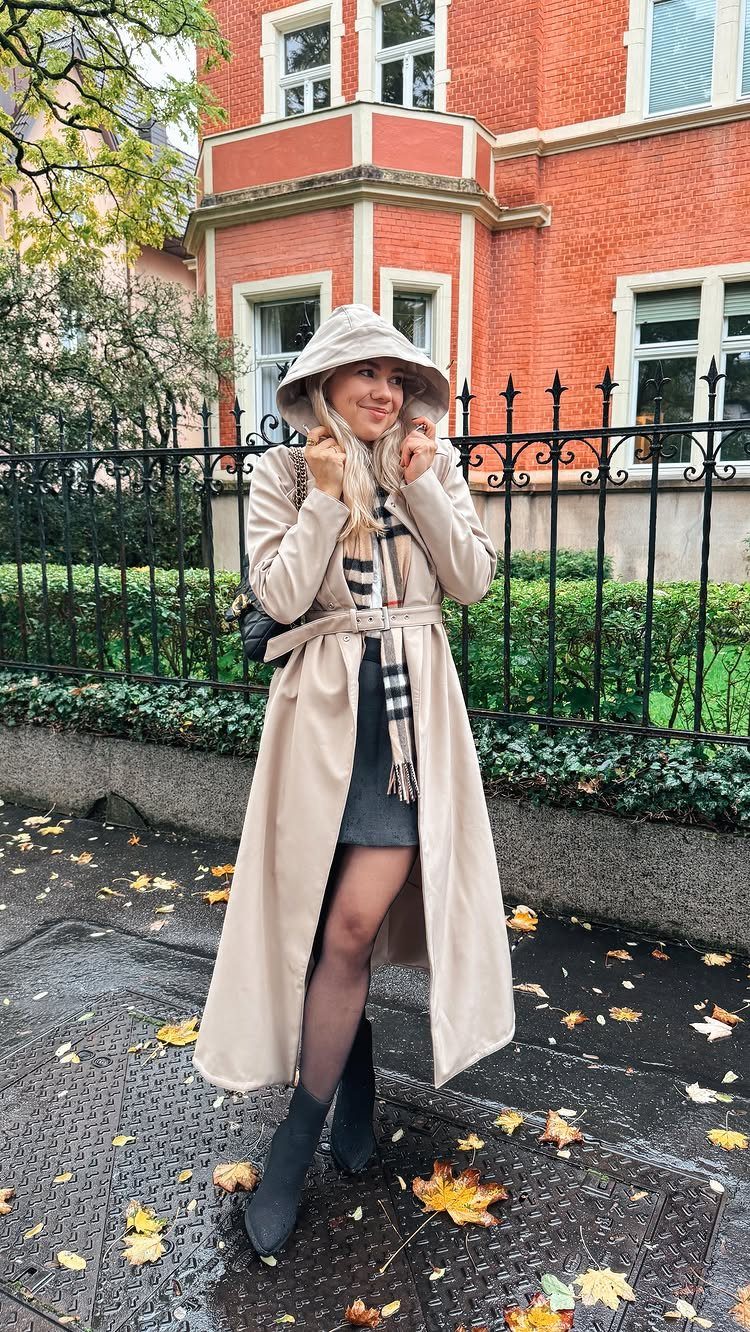
A hooded trench in camel or navy turns a casual skirt-and-tights base into something that reads intentional, not just dry. Belt it loose for walking room, tight if you want the line.
Patent knee-high boots underneath swap the farmer-rain-boot look for something sharper, though they ask more of your budget and your balance on slick pavement.
This works best when your day mixes indoors and out; the trench comes off, the outfit holds up on its own. Skip it if you need real warmth; the knit layer underneath is thin by design.
2. Sweater Dresses
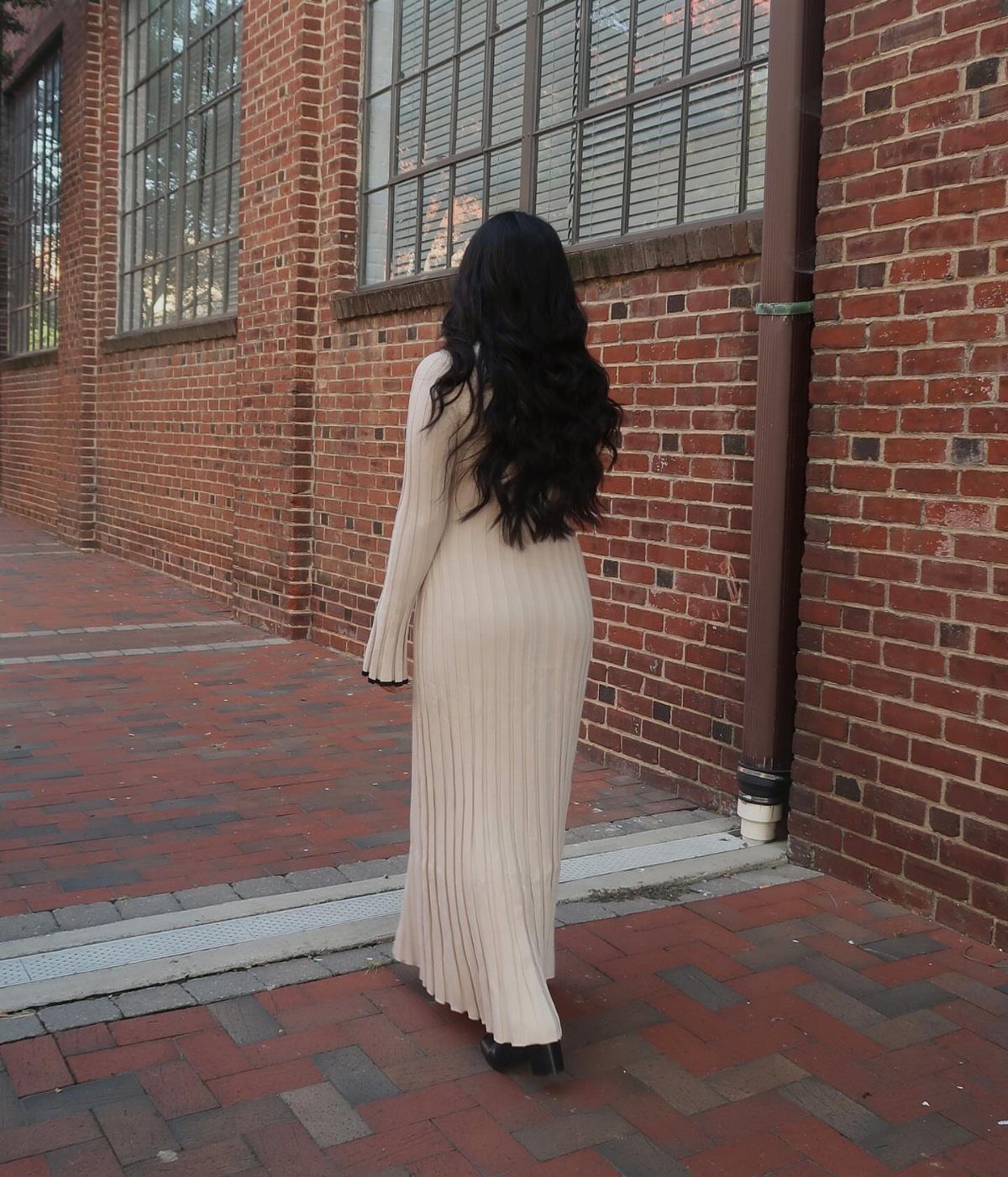
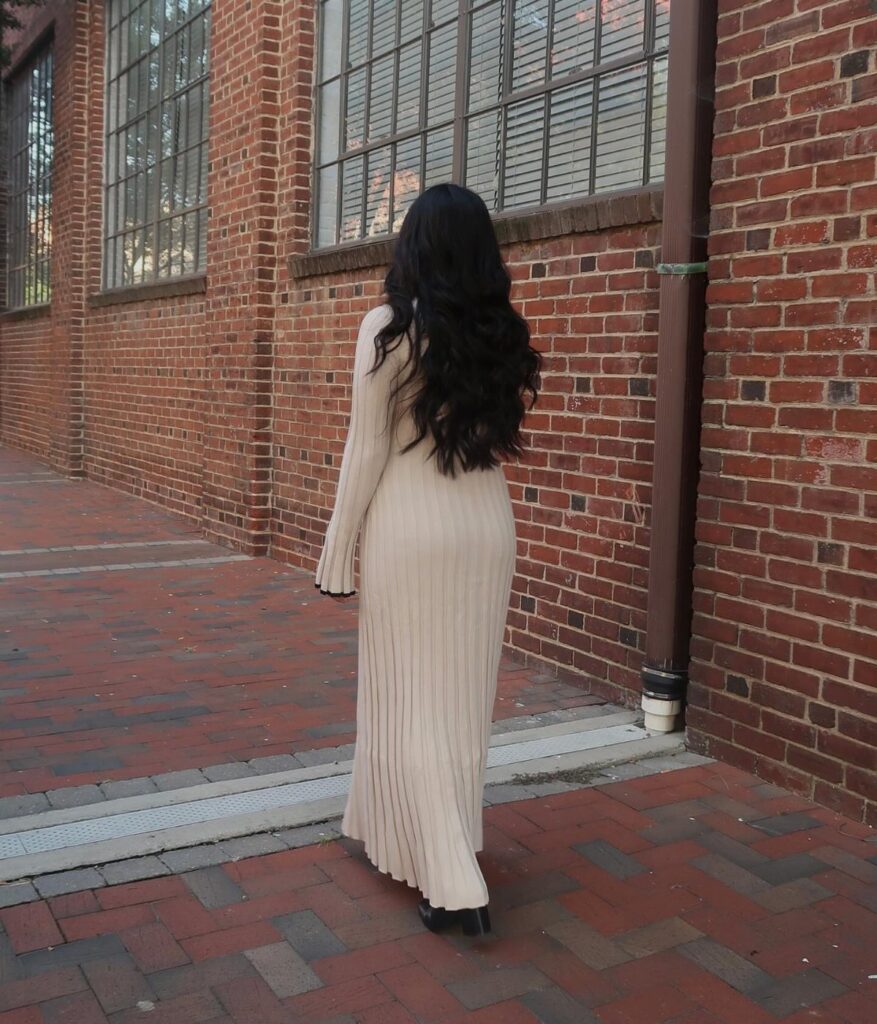
A ribbed sweater dress in cream does the work of two pieces and still looks pulled-together if you drip on it.
Waterproof Chelsea boots ground a sweater dress for brunch or errands; a belted coat and scarf add structure, though on a warm rain day the dress alone often carries enough weight.
The knit soaks water faster than woven fabric, so this is for drizzle, not downpour. Leather or faux-leather accents, a vest or a bag, nod to the trend without the full commitment of a raincoat in hide.
3. Layer with Scarves
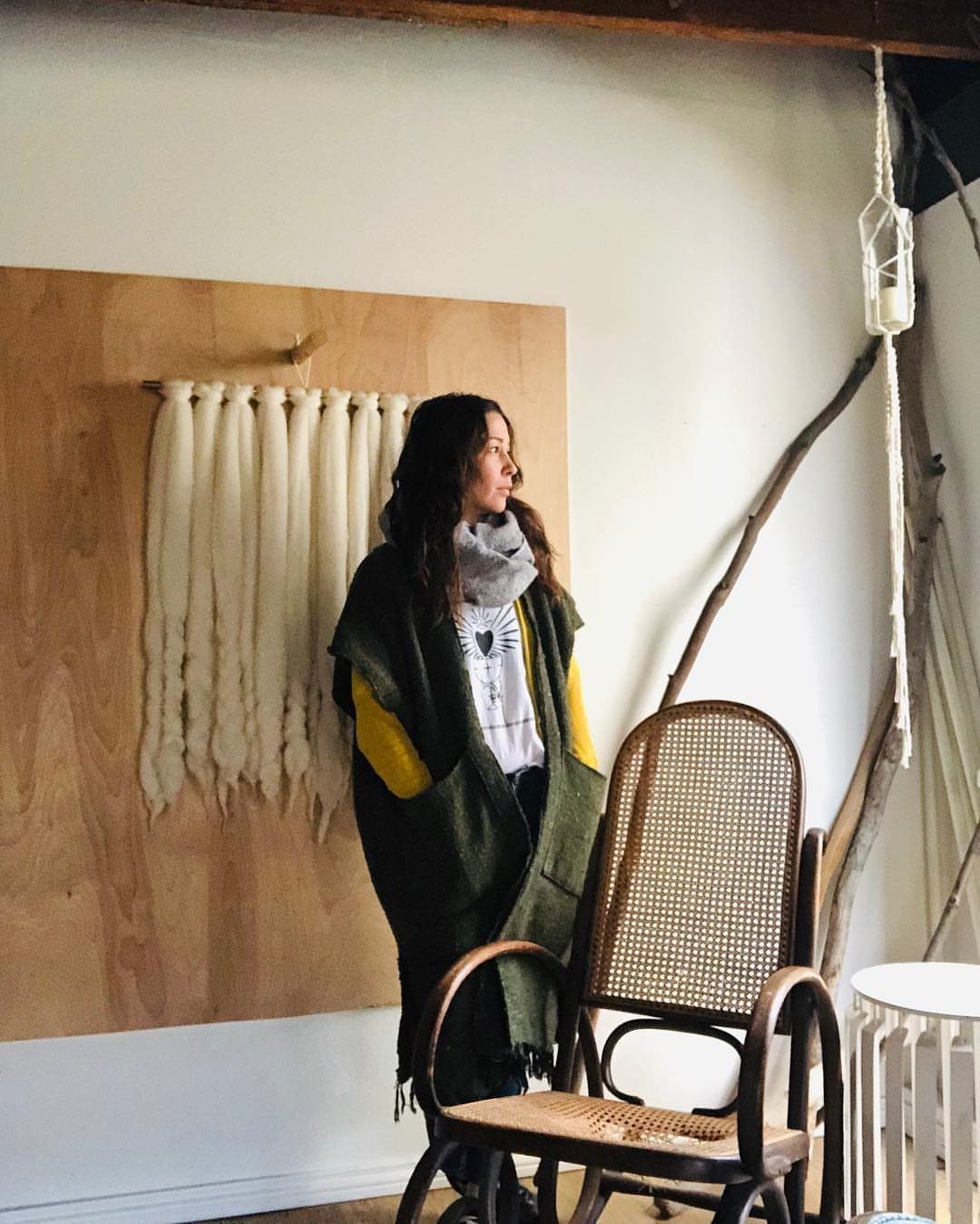
A thick grey cowl over a bright coat breaks up blocks of color and gives you something to fiddle with while you wait for the bus. Wool warms; silk sits lighter and works the same trick against a neutral trench.
Tie it loose, knot it Parisian-style at the side, or drape it shawl-wise if the temperature drops after the rain passes.
The retro head-wrap option, Grace Kelly-style, saves hair from humidity but reads costume on some faces. Test it in a mirror before you commit to a full day.
4. Chic Raincoat
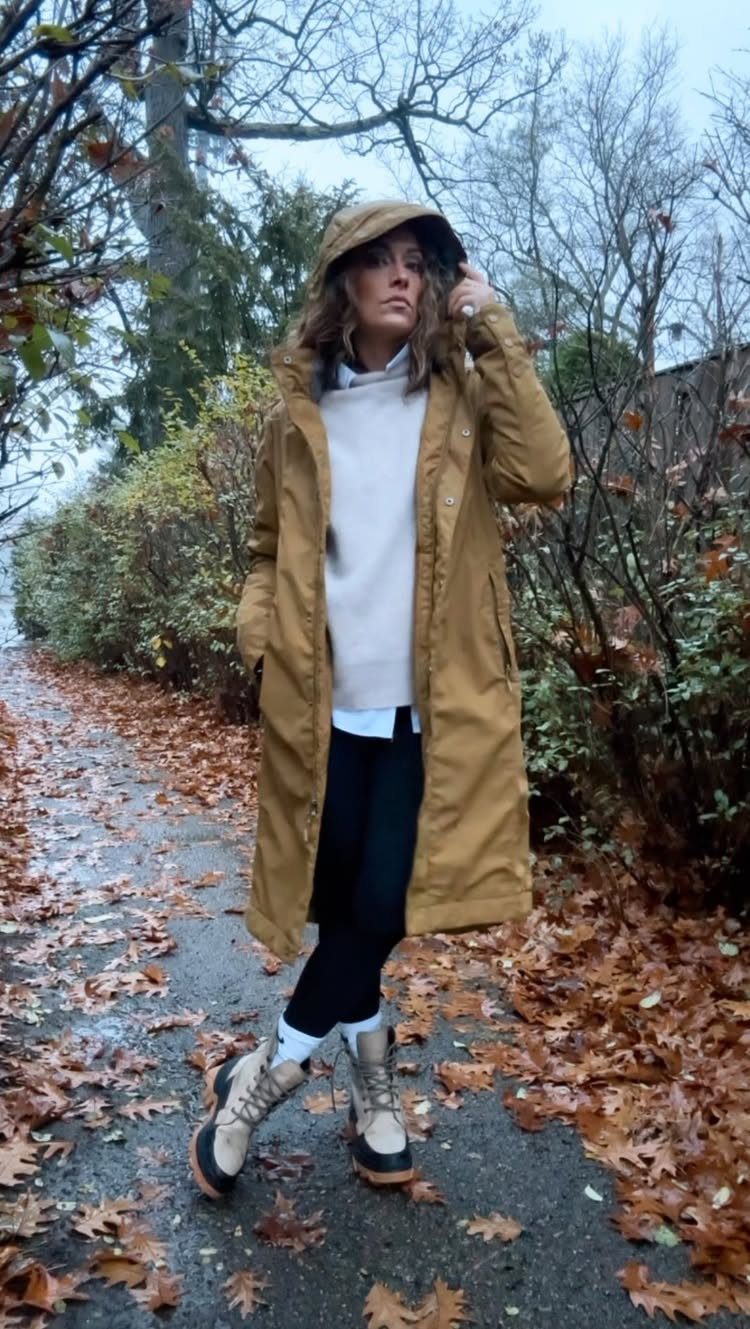
Mustard or tan beats black here; a raincoat in a warm color reads as choice, not afterthought.
A hooded raincoat cut long over leggings and a sweater is practical for warmth but needs the right proportion; shorter frames might try the same color in a hip-length version.
Playful prints work too, though they limit what else you can wear with them. One bold piece, quiet everything else.
This trades the trench coat‘s office passability for weekend personality.
5. Casual Dresses

A yellow floral midi in foggy weather looks like you planned for the mood, not like you got caught. Puff sleeves hold their shape even when the air weighs damp; knee-high boots underneath keep the hem out of puddles.
Above-the-knee cuts work with shorter rain boots for a more casual stride.
The matching-dress photo suggests this is friend-outing territory. Solo, one print dress, solid boots, done.
Add a trench if you need to; the dress stays visible enough underneath.
6. Comfortable Footwear
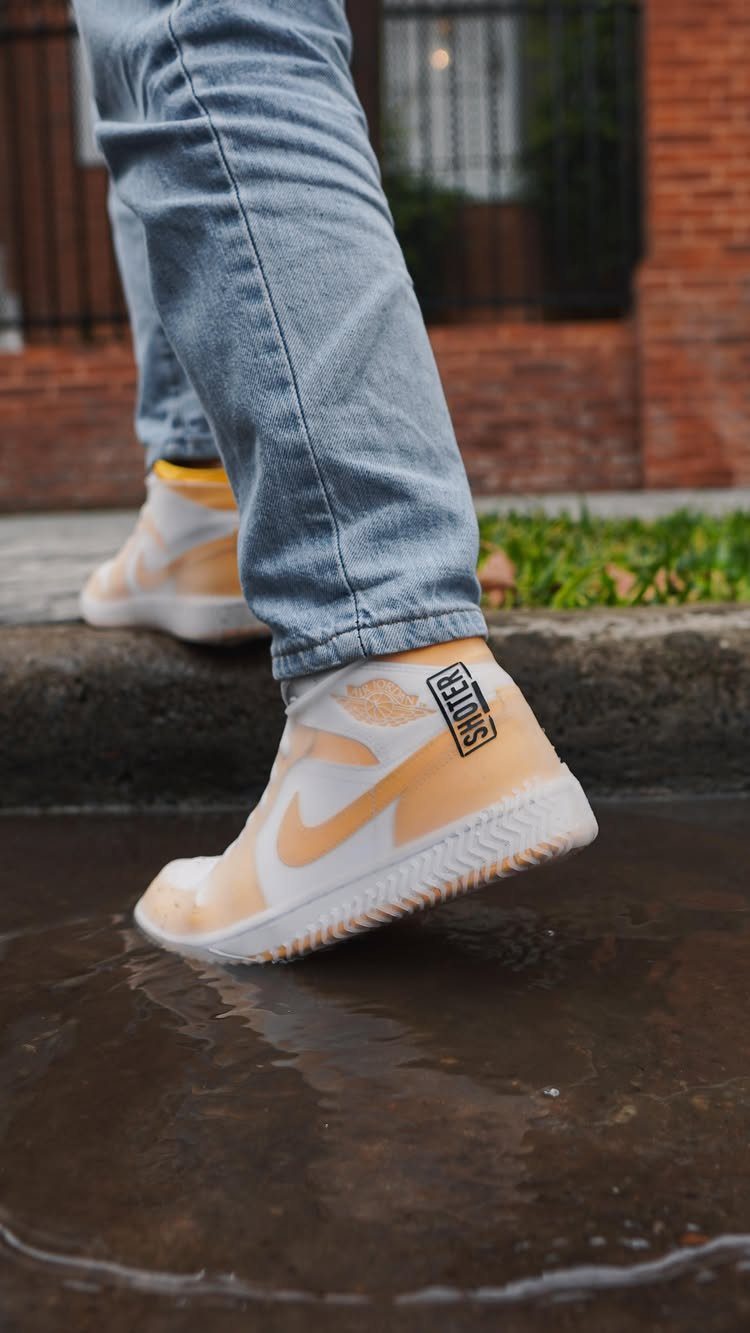
Closed-toe, waterproof, and actually walkable; the three criteria narrow the field fast. A silicone cover stretches over your own sneakers, which keeps the cost down and your arch support intact.
High-top waterproof styles, white with orange trim, skip the cover step but need their own break-in.
Jeans and a rain shoe of some kind is the warm-rain uniform for a reason. Open toes risk more than wet socks; city grit and warm puddles are not a combination worth testing.
7. Waterproof Rain Suit with Boots
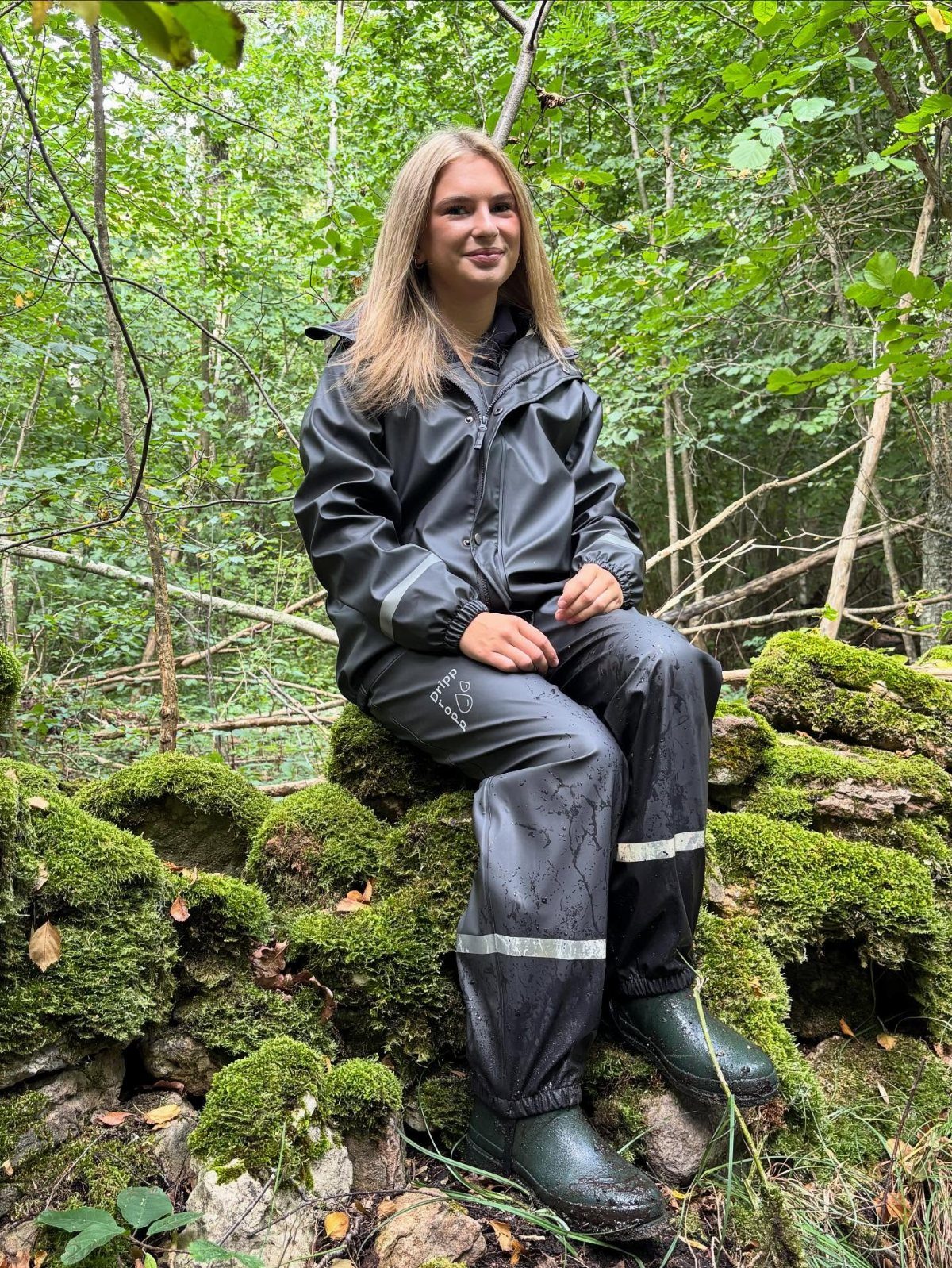
A full rain suit takes the question out of whether your pants will survive the hike.
A matching black jacket and trousers with a small printed thigh detail, paired with dark green rubber boots that hit mid-calf, keeps the whole look clean and functional.
This is the outfit for a day when you know you’ll be sitting on wet rocks or walking through tall grass.
The boots need to be tall enough to keep water from entering at the ankle, and the suit needs to fit loose enough to layer a thin fleece underneath.
I’d wear this for trail walks or outdoor work, not for city errands where changing in and out becomes awkward.
If your rain activity is more commuting than exploring, a separate raincoat and regular pants you don’t mind getting damp will serve you better.
8. Tan Utility Jacket and Jeans
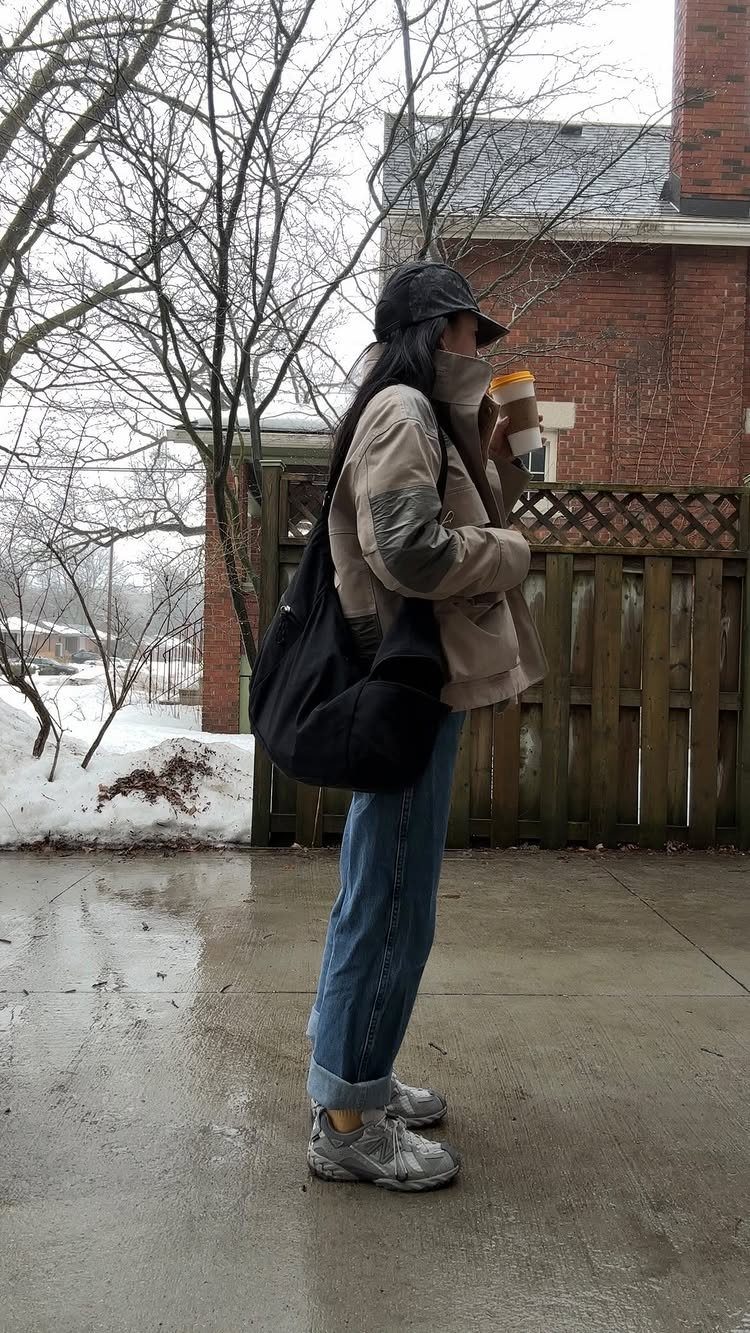
Wet pavement calls for something that dries fast and still looks pulled together. A tan utility jacket with reinforced sleeve patches signals workwear roots without going full construction site.
Cuffed blue jeans and grey sneakers keep the line casual; the cap is doing the actual rain-blocking work here.
A utility jacket in cotton canvas or a waxed blend holds up to drizzle better than standard denim, and the tan color shows water spots less than black or navy. The sneakers are the weak point in this setup.
I’d swap for water-resistant leather or accept that canvas will need a day to dry.
This look suits someone who needs to grab coffee, run a few errands, and not look like they’re dressed for a storm they’ll be inside for most of.
9. Pink Knitwear and Rain Boots
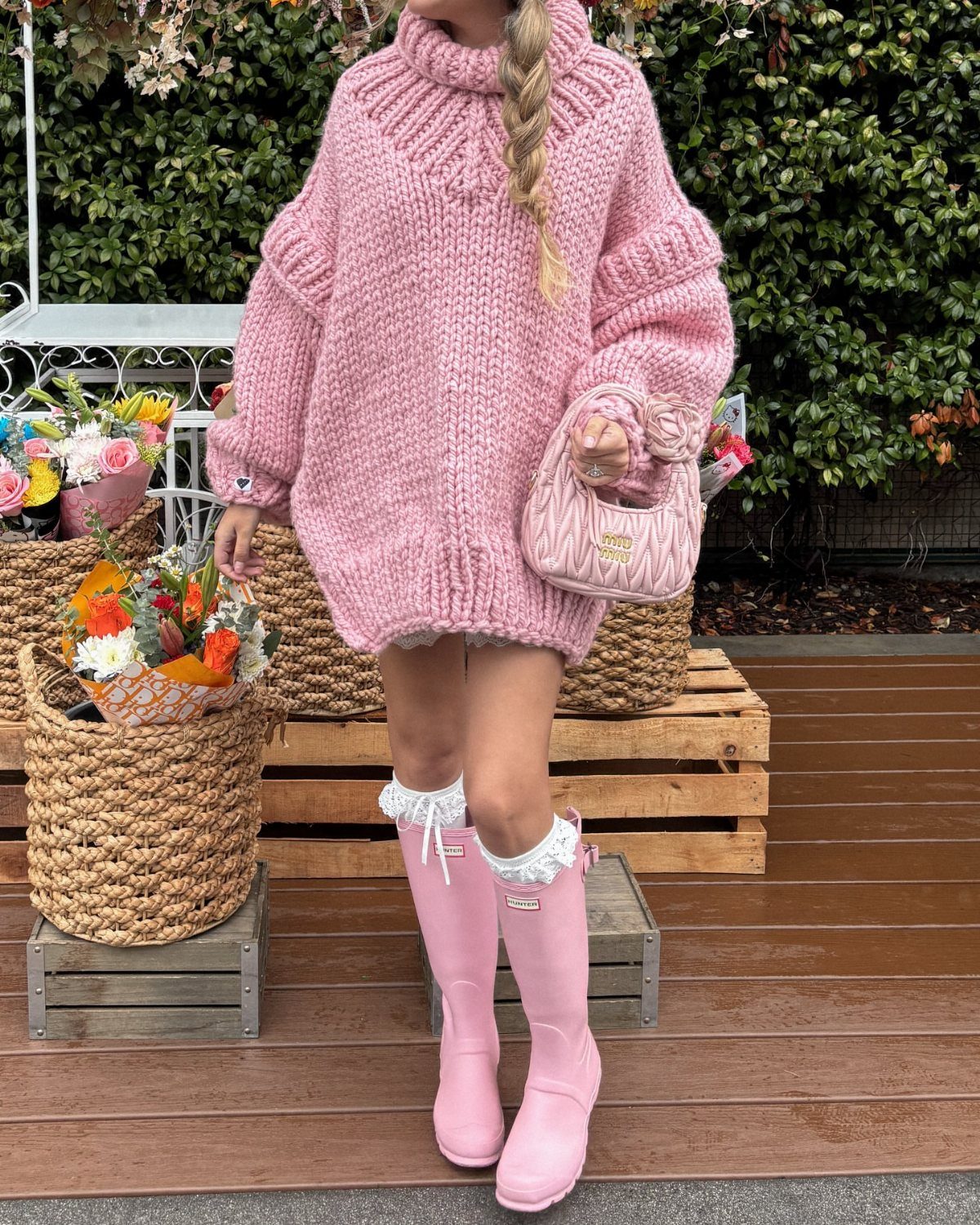
Chunky pink knitwear with matching rain boots turns the problem of dressing for warm rain into a color story.
The sweater is oversized enough to read as intentional, not just the first thing grabbed, and the white lace-trimmed socks add a texture contrast that keeps the pink from going flat.
Hunter boots last years if you rinse and dry them properly after wet days. The skirt isn’t visible here, but a mid-length cut in a similar weight to the sweater balances the volume on top.
I’d keep the palette to two colors maximum, pink plus white or cream, so the lace detail reads as deliberate.
This works for a reader who wants to look dressed up on a day when most people will be in performance gear. The limit is mobility: a bulky knit and a skirt is not the outfit for chasing a bus.
10. Gothic Layers with Umbrella
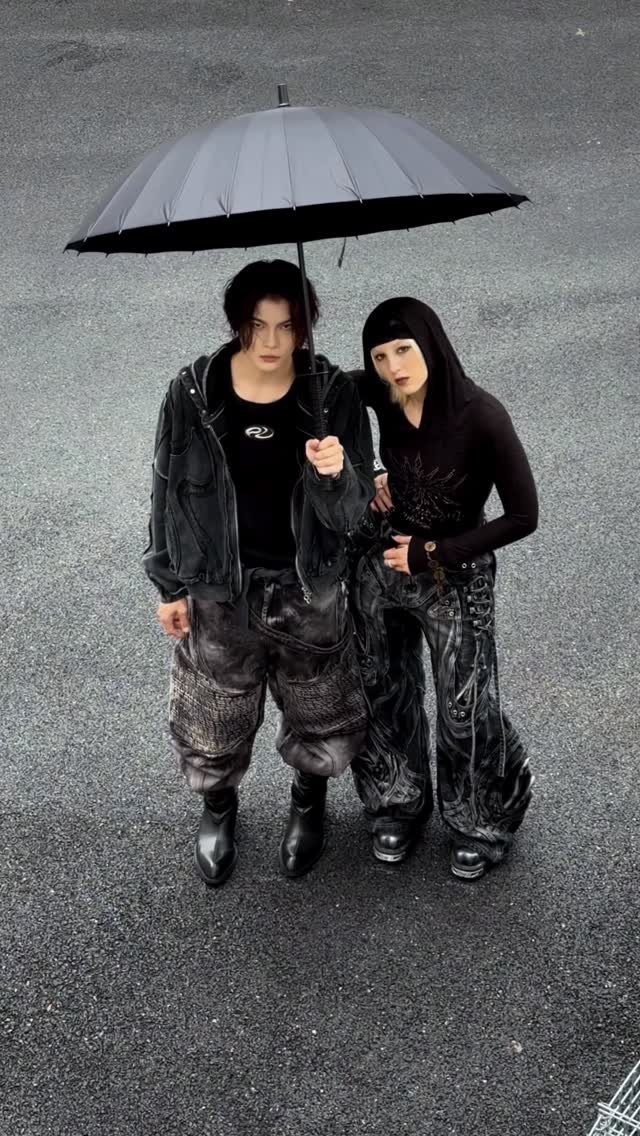
Two people sharing an umbrella in all-black layers make rain look like a setting rather than a problem. Heavy boots and intricate trousers do most of the visual work; simple, dark jackets let the pants carry the detail.
An umbrella large enough for two is worth the extra bulk if you’re walking with someone regularly.
The gothic lean here comes from the stacked textures, denim or canvas over a longer base layer, and the choice of black in every piece.
I’d add a water-resistant coating to any cotton layer, or accept that true black denim will fade where rain hits repeatedly. This suits readers who already own the boots and the layers and just need permission to wear them together.
If your wardrobe runs to color, this mood will feel like a costume.
11. Raincoat with Plaid Bucket Hat

A plaid bucket hat with a chin strap turns a basic brown raincoat into something with personality.
A green-based plaid bucket hat, worn with a strap that keeps it from lifting in wind, works as well indoors as a style piece as it does outside.
Bucket hats in waterproof waxed cotton or treated nylon span a wide price range depending on whether you’re buying from a heritage brand or a fashion label.
The raincoat here is hooded, which raises a practical question: the hat goes under or over the hood, and under wins for visibility.
I’d wear this for days with scattered showers where the hat alone handles most of the water and the coat stays in a bag. The limit is temperature.
A bucket hat traps less heat than a hood, which is good for warm rain, but the chin strap can chafe if you’re moving fast. For readers who overheat easily, this trade is worth it.
Choosing the Right Fabrics
Treated cotton or wool outerwear buys you time without the crinkle of full synthetic; a tailored cut in either keeps the line office-appropriate.
Cashmere and merino wool work underneath for warmth that stays thin.
I would not reach for raw denim or thick wool coats unless the umbrella never leaves your hand; both hold water like a sponge and dry slow enough to chill you through.
Waffle-knit or ribbed cotton layers add texture without competing with what goes over them.
Footwear Considerations
Closed toe is the line I draw in warm rain.
Styling Notes: When it’s warm and wet outside, the two things you don’t want to wear are tight dresses and open-toe shoes.
Layering Strategies
Lightweight layering starts with the right order: breathable base, thin insulating middle, water-resistant shell.
Merino or cashmere against skin wicks without the bulk of cotton; a ribbed cotton thermal over that adds texture you can show if the coat comes off indoors.
A bright chunky knit beanie, a crossbody in treated leather, fingerless gloves in cable knit or leather trim: each adds color and function without another full layer.
The gloves let you handle a phone; the bag keeps hands free and essentials dry.
A structured hat in felt or treated wool does the same job of saving hair from humidity with less costume risk.
Frequently Asked Questions
What to wear when it’s warm but raining?
Lightweight knits and breathable layers work best. Light layers work better than anything padded; you want pieces that hold up once the rain stops and the air turns thick.
Are jeans or leggings better for rain?
Leggings win for warm rainy days. They dry faster than denim, slide easily into knee-high boots without bunching, and a long raincoat or trench skims right over them.
If you do choose jeans, the silicone sneaker cover or a high-top waterproof style saves you from the soaked-hem walk.