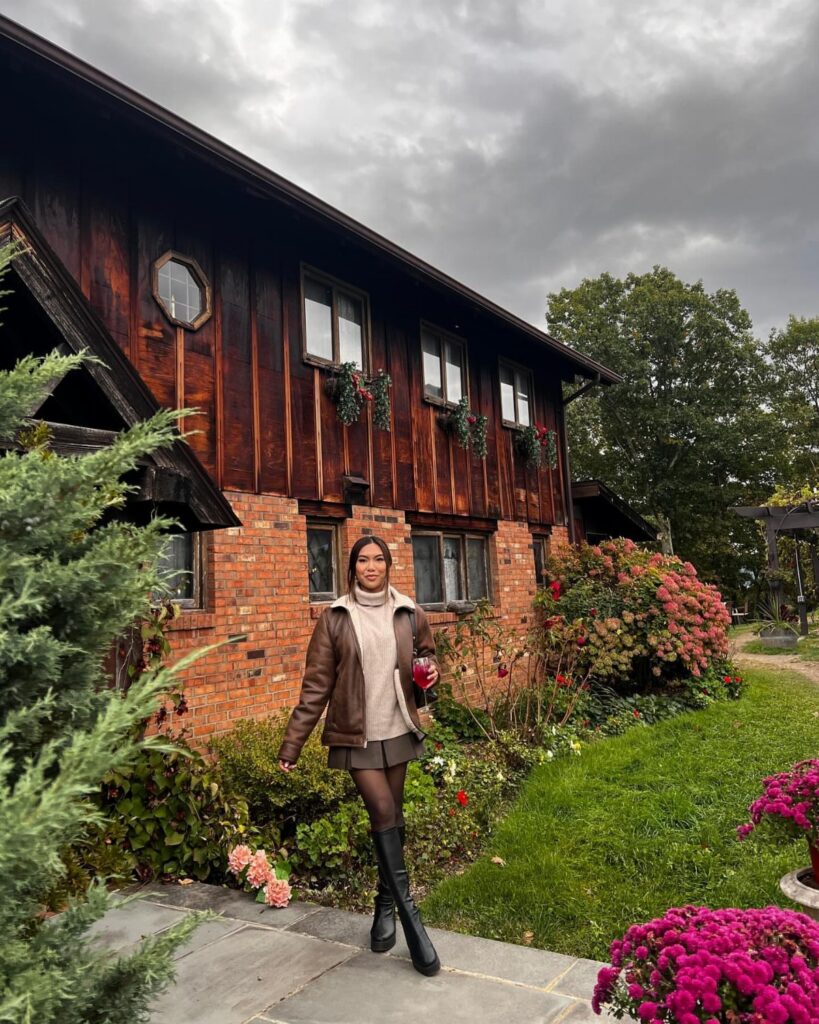
The eleven ideas below range from a single-piece romper to a full layered look, and the deciding factor is what your day actually involves: gravel paths, cellar tastings, or dinner after.
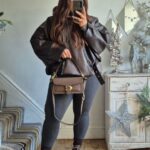
A shearling-lined jacket over a knit turtleneck handles the temperature swings that ruin most winery days, and I keep a light layer in my bag even when the forecast looks steady.
1. Layering for Weather
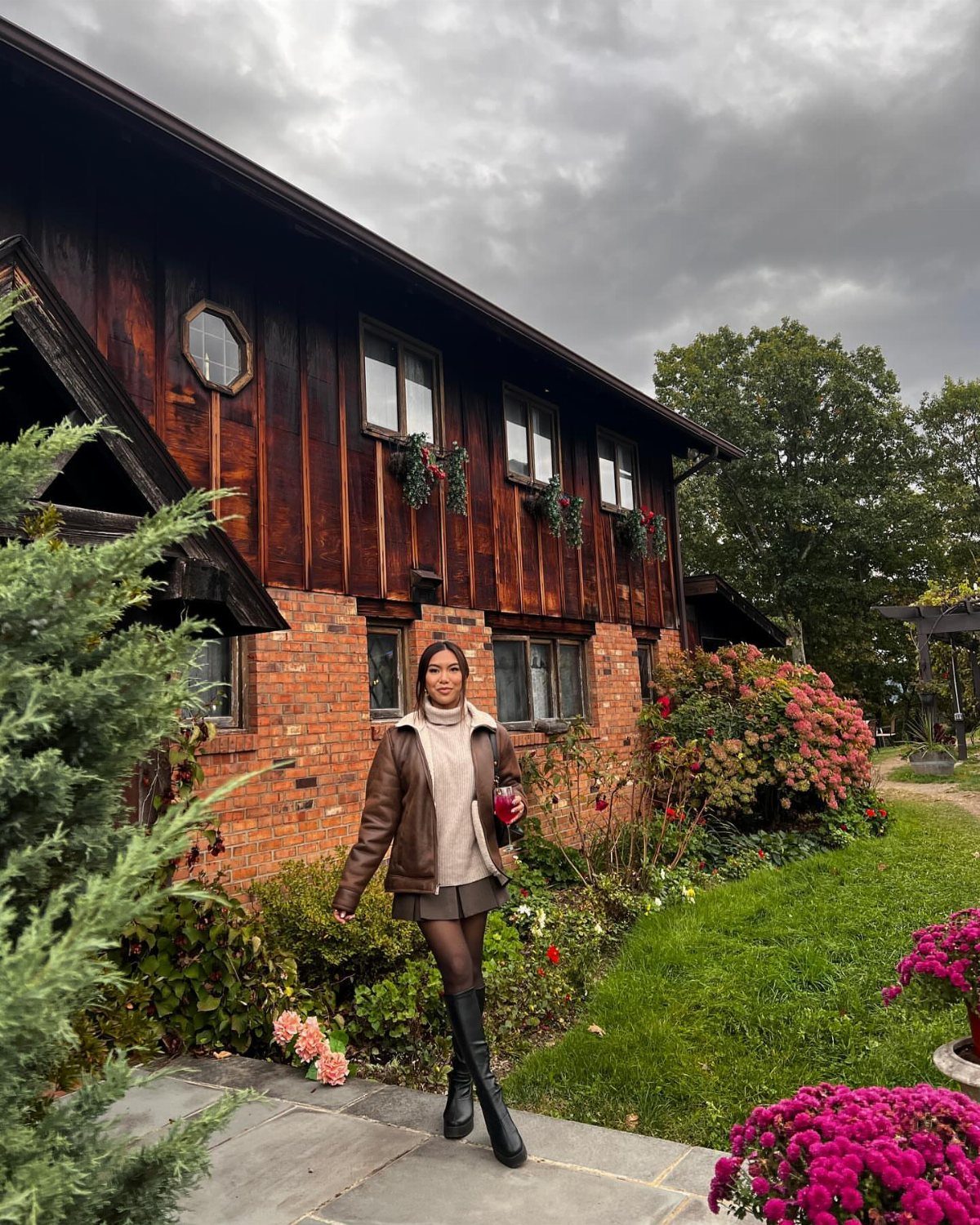
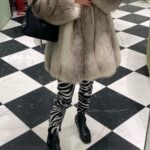
A shearling-lined jacket over a knit turtleneck handles the temperature swings that ruin most winery days. I keep a light layer in my bag even when the forecast looks steady; cellars run cold and patios heat up fast.
Dark tights and knee-high boots keep the look grounded without competing with a rustic backdrop.
This outfit trades some breeziness for coverage. If you run hot, swap the shearling for a denim jacket or unstructured blazer you can tie around your waist by noon.
2. Floral Prints
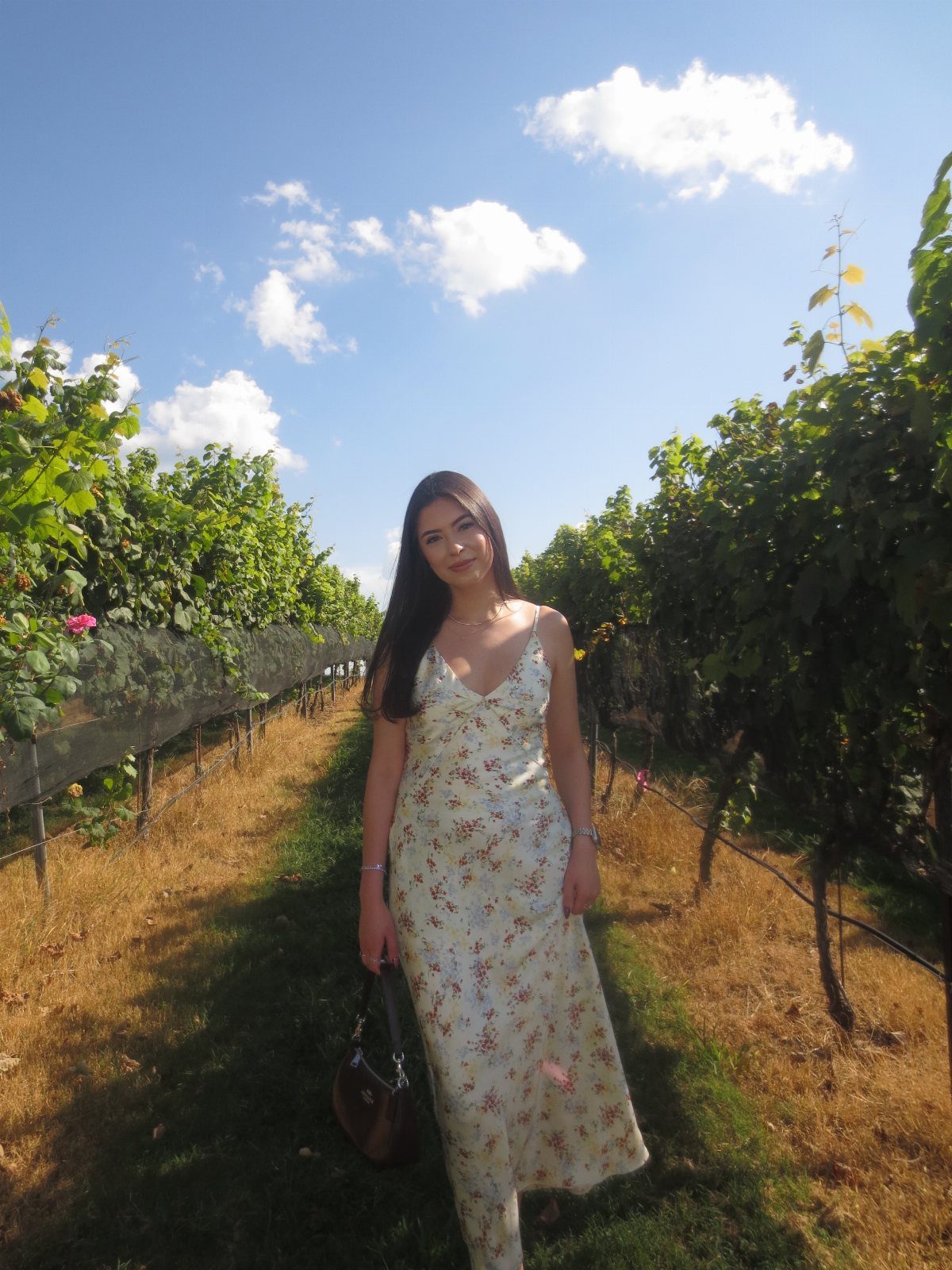
Vineyards photograph well against a light floral print, and the print itself does the styling work so you don’t have to overthink accessories.
A sleeveless maxi in a small-scale pattern reads intentional rather than touristy; pair it with flat sandals if the grounds are gravel or grass.
I reach for a structured handbag rather than a crossbody here, since the dress line stays cleaner without a strap cutting across. A wide-brim hat works if the brim is stiff enough to survive the car ride.
3. Sweater Dresses
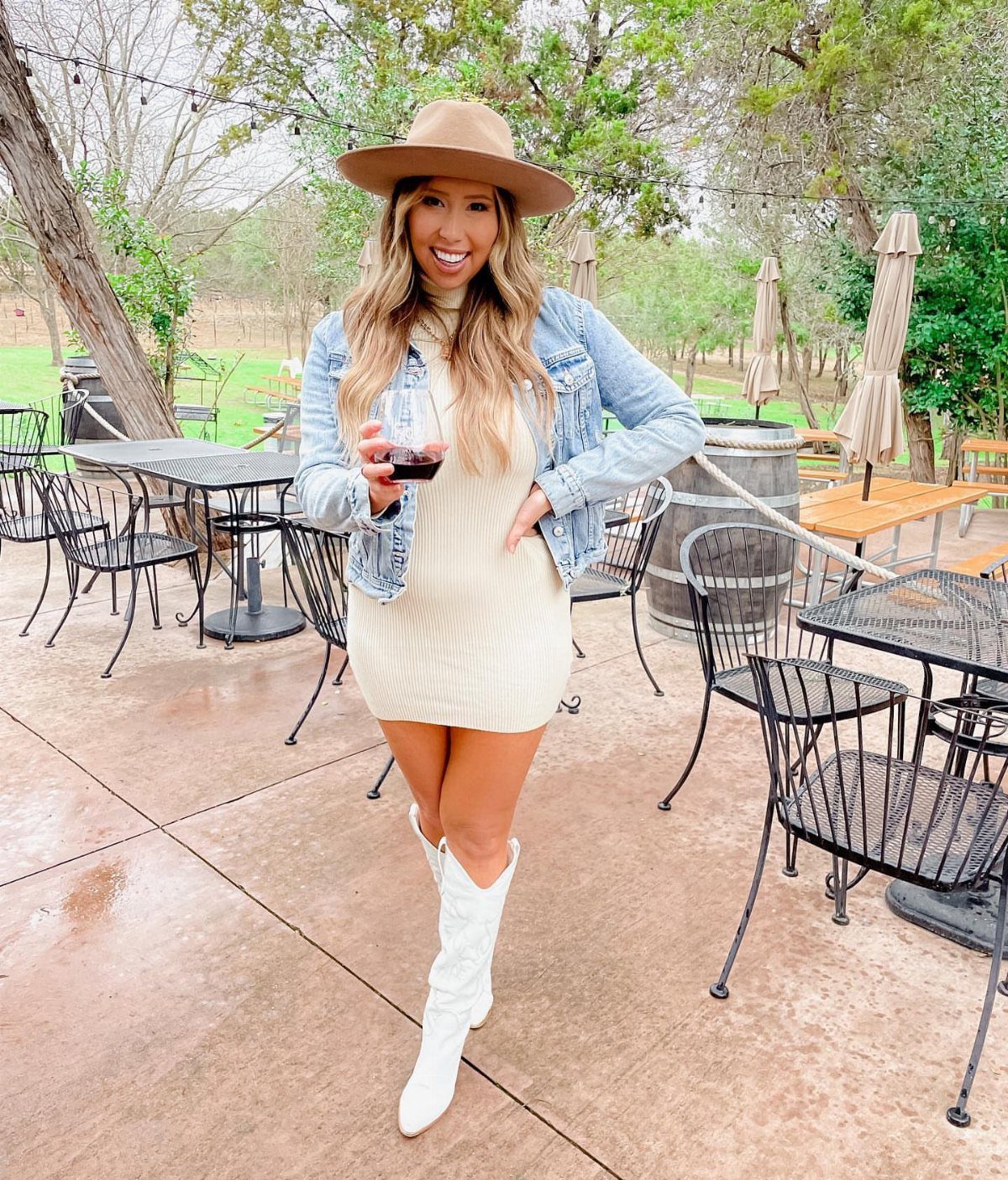
Ribbed knit holds its shape through a day of sitting, standing, and leaning against tasting bars, which is why a sweater dress outperforms thinner fabrics for fall visits.
Cream or camel pairs with whatever boots you already own; I like tall white boots for the contrast against autumn leaves, though brown knee-highs are the safer bet for muddy grounds.
Layer a denim jacket on top rather than under; the stiff collar frames the knit nicely and comes off if the tasting room overheats. The wide-brim hat is optional but useful for glare on east-facing patios.
4. Maxi Dress Winery Outfits
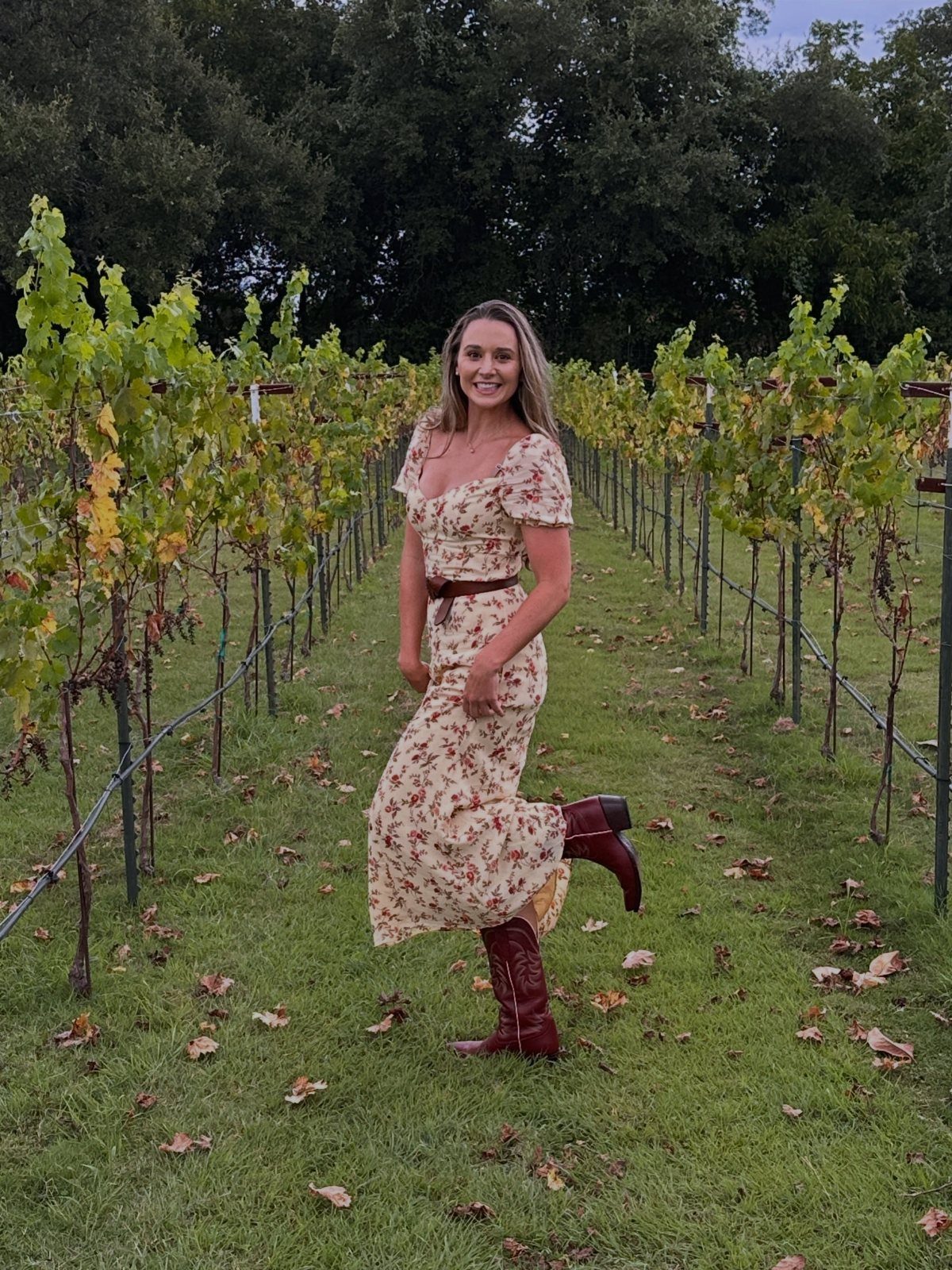
A maxi dress solves the what-do-I-wear problem in one piece, which matters when you’re driving an hour to get there and the morning light is already harsh.
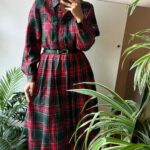
Puff sleeves and a brown belt add structure to a cream floral print; maroon cowboy boots finish it without tipping into costume territory.
Check the hem length against your own boots before you commit. A maxi that skims the ground works with heels or wedges; one that breaks at the ankle needs a boot shaft tall enough to avoid a visual stump.
For cooler evenings, a light jacket layered over works better than under, since the belt defines the waist on its own.
5. Denim Outfits
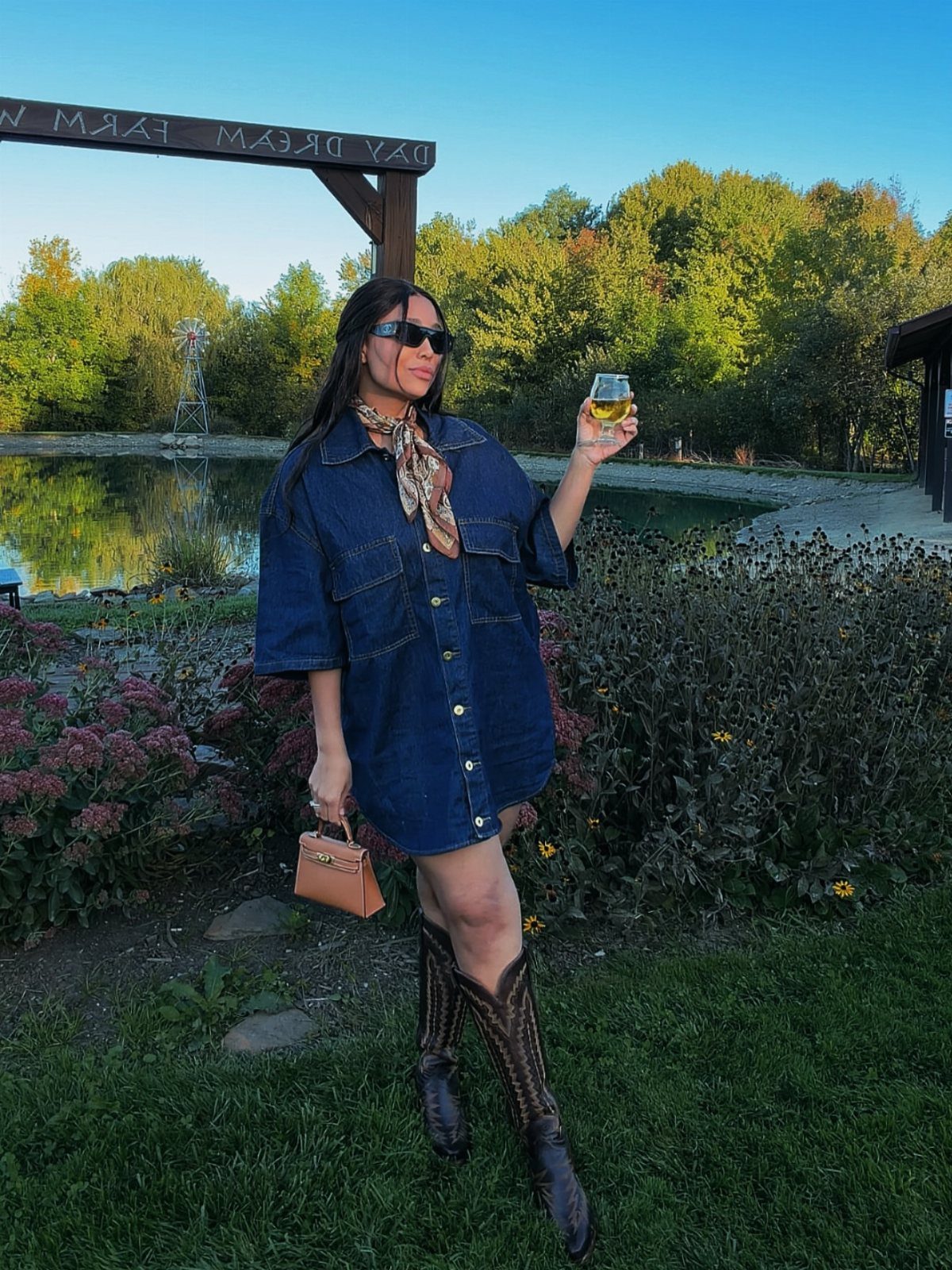
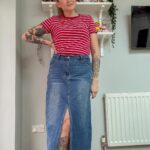
A denim shirt dress hits the right note between dressed-up and practical, especially in a dark wash that doesn’t read too casual.
The neck scarf and sunglasses do the heavy lifting on style; without them, you’d look like you came straight from errands.
I stick to one piece of denim rather than full Canadian tuxedo territory. If you prefer separates, dark jeans with a tucked-in sweater or structured top give the same effect with more mixing room.
Watch the red wine around white or light denim; the stain risk is real and the lighting at most wineries is too dim to catch drips early.
6. Rompers and Jumpsuits
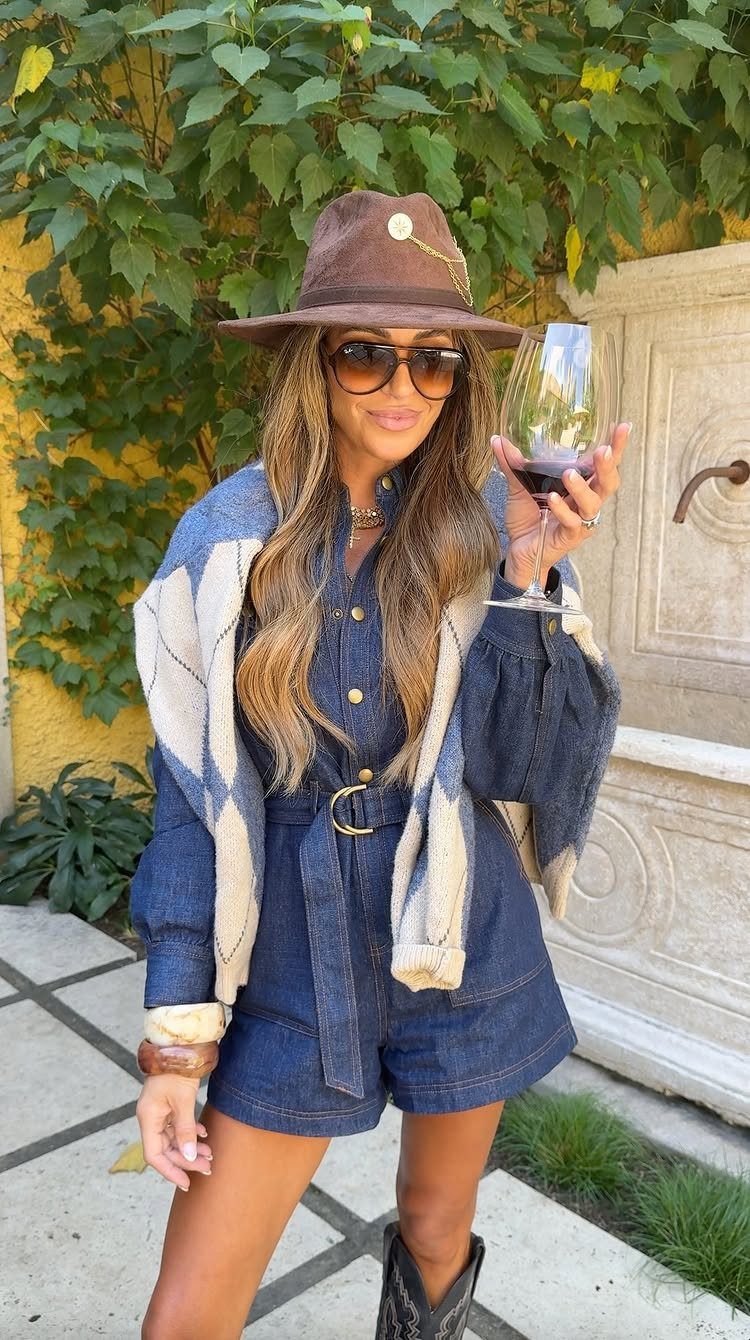
A shorts romper in dark denim with a belted waist gives you the ease of a dress plus the coverage of shorts for climbing into tour vehicles or picnic seating.
The patterned cardigan adds warmth for morning arrivals and comes off when the afternoon sun hits.
The practical cost is the bathroom situation. After a few tastings, maneuvering in a small stall gets less graceful.
A jumpsuit with a full button or zip front solves this; so does choosing your romper for shorter visits rather than all-day crawls. Gingham or floral prints read more winery-appropriate than solid brights.
7. Skirts and Tops
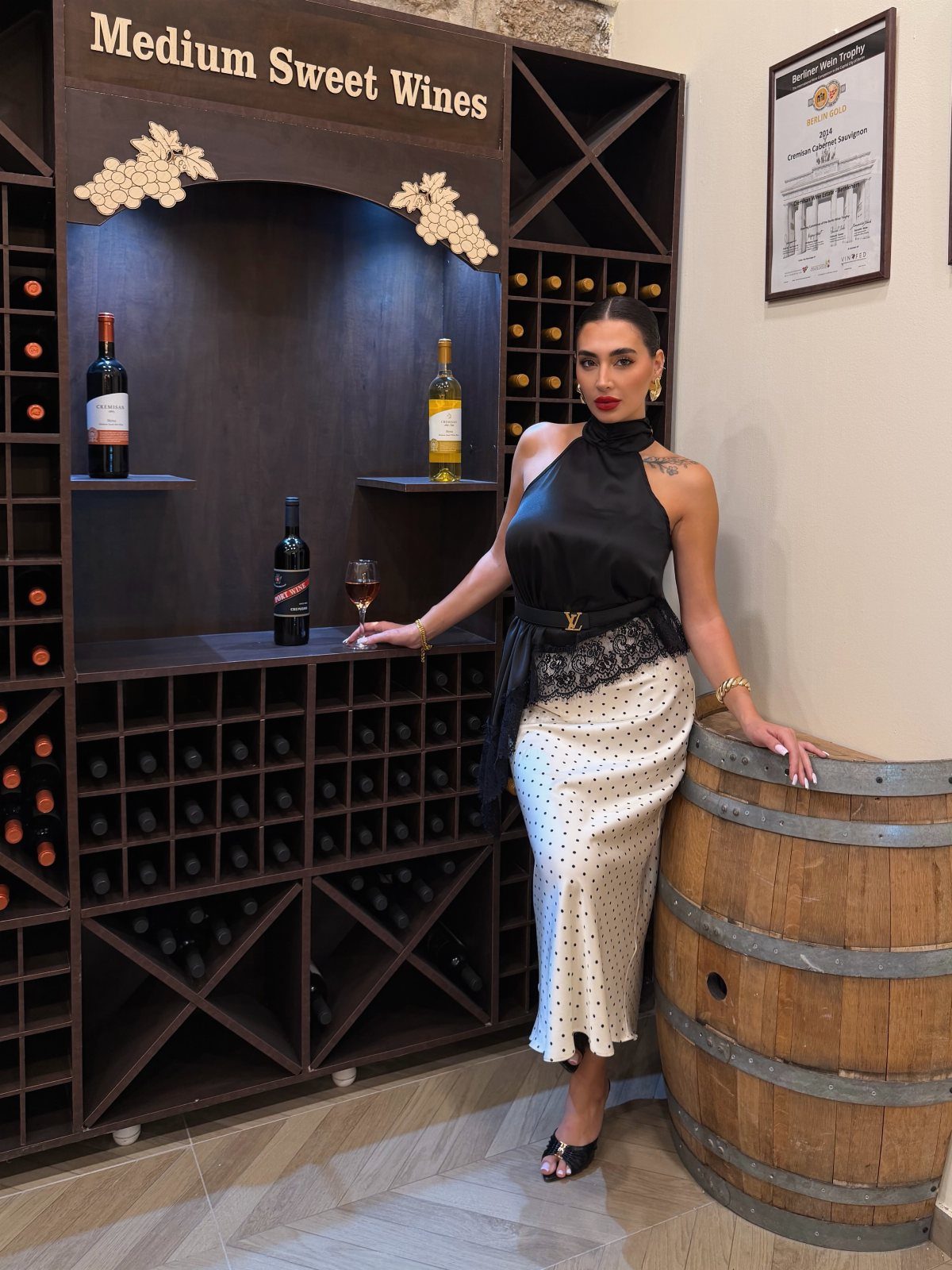
The midi length keeps you comfortable sitting at tasting bars or walking between vineyard rows, and the separate pieces let you adjust if the afternoon warms up.
I reach for a flowy skirt over fitted pants on days when I’ll be standing for hours; the fabric moves without clinging.
Pair it with a top that has some structure, like this halter cut, so the outfit still feels intentional. A lightweight layer, a cropped cardigan or denim jacket, tucks into a tote if the cellar runs cool.
This pairing suits anyone who wants one look that works for both casual tastings and dinner after. You will carry that extra layer, though most winery days demand it anyway.
8. Slip Dress Layered Over Shirt
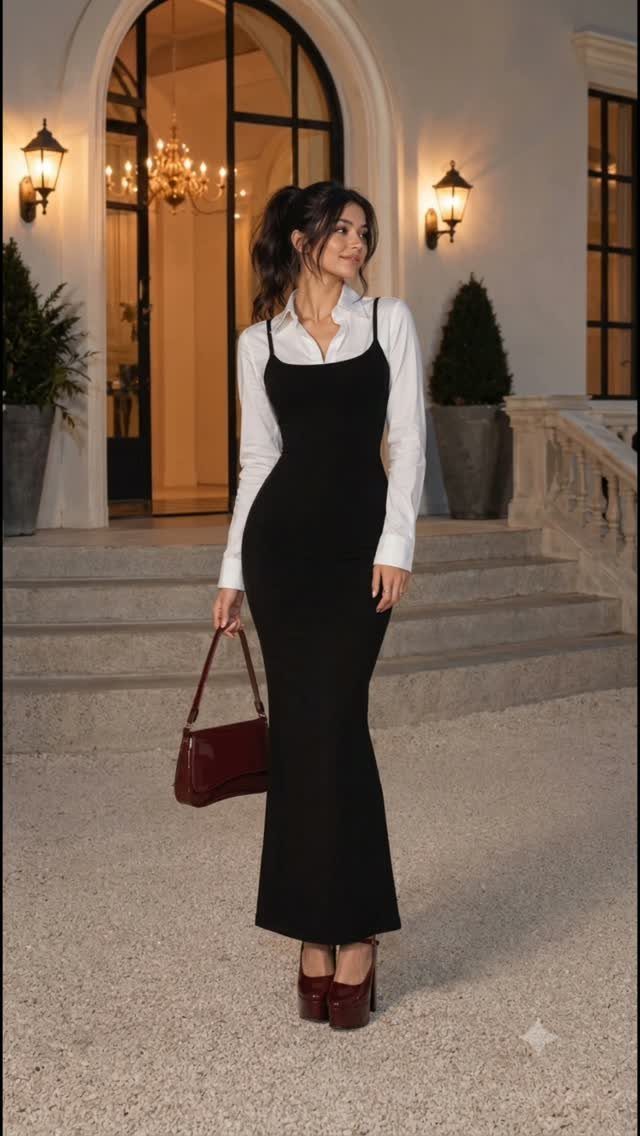
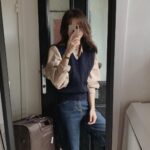
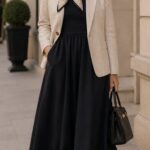
A slip dress over a crisp white shirt reads intentional rather than thrown-together, and the contrast between the two fabrics does most of the work.
The visible version pairs a long black slip with burgundy heels and a matching bag, which gives the outfit its wine-country anchor without needing a literal grape print.
The shirt underneath should be fitted enough that it does not bunch at the waist; a standard button-down with the collar left open works better than anything too stiff or too oversized.
For warmth, this layers easily under a cropped cardigan or a light trench, and the dress itself still works alone on hotter days.
This suits someone who wants one piece that carries beyond the winery. The slip dress is doing double duty here, and that only pays off if you will actually wear it both ways.
Importance of Comfort
Comfortable footwear comes first. Flats, loafers, stylish sandals, or boots that can handle uneven ground will outlast any outfit built on heels you end up carrying.
A crossbody bag leaves your hands open for a glass or your phone; the small ones with a zip or flap you can work one-handed beat anything that needs two hands and a search party.
I stick to smudge-free lipstick for a day of sipping. A simple outfit that feels slightly special works better than something that fights you all afternoon.
Seasonal Considerations
Layering matters most during seasonal transitions when mornings start cool and patios heat up by afternoon. A light layer you can knot at your waist or stuff in your bag covers the temperature drop without throwing off the whole look.
Breathable fabrics win in summer; in cooler months, ribbed knits and shearling-lined jackets carry the weight. I plan for the cellar temperature, not just the forecast, since underground rooms stay cold even when the terrace is warm.
Color Coordination
Cream, camel, and soft floral prints photograph well against autumn leaves and green vineyard rows without competing. Maroon and brown tie into the natural palette of most winery settings; they also hide the occasional drip better than stark white.
I avoid neon brights or heavy patterns that read city rather than countryside.
Avoiding Strong Scents
Skip perfume entirely before a tasting. Scent interferes with your own sense of taste and affects everyone near you at the bar.
I apply nothing scented that morning and keep a travel-size bottle in the car for afterward if dinner plans follow.
This matters more than most guests realize. What you smell directly changes what you taste, so the wines register differently on your palate than they should.
The same rule applies to heavily scented lotions or hair products; keep them all light or absent until the tasting ends.