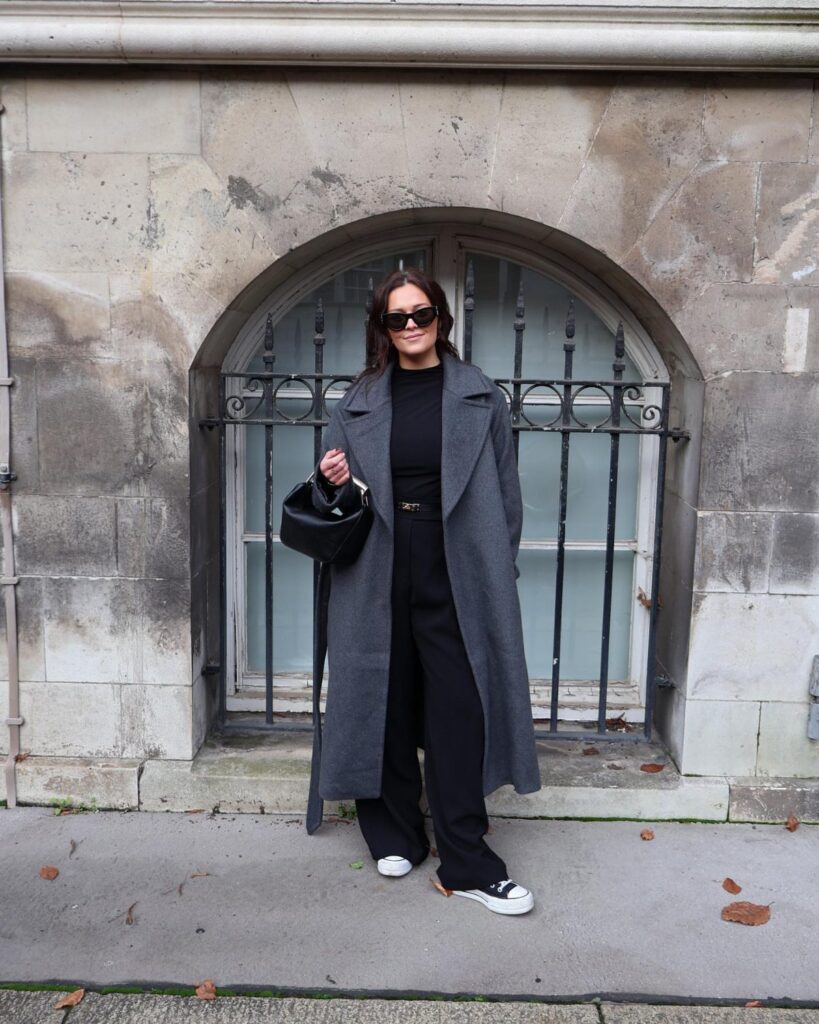
The seven ideas below move from dinner-ready polish to travel-day ease, and the right one depends on whether you need the coat to add shape, absorb color, or simply get you through a cold morning without looking like you gave up.
1. Pair with Jeans and Heels

A grey coat turns jeans and heels into something that looks considered rather than thrown on.
The oversized cut does the work: it drapes over the black top and blue denim like a deliberate frame, and the heel keeps the line from going sloppy.
What changes the result is proportion. If the coat hits mid-thigh or below, the heel matters more; a shorter coat can handle a lower shoe.
Petite frames lose shape under too much length, so check where the hem falls against your hip.
I’d reach for this when I need to look pulled together for dinner after a day of errands. The coat does the elevation; the jeans keep me comfortable.
2. Casual with Wide-leg Trousers

Wide-leg trousers under a long grey coat give movement without looking like you’re trying too hard.
The black trousers and coat read as one continuous shape, and the white sneakers keep the whole thing grounded enough for a Saturday of walking.
The beret is optional but worth considering if the coat collar sits low; it draws the eye up and balances the width below. Without it, the look still holds, just quieter.
This suits days when you want to feel dressed but not restricted. The trainers mean you can actually cover ground, and the coat length protects the trouser hem from winter slush.
Check that the trouser break doesn’t pool over the shoe; a single clean fold looks intentional, a puddle looks like you haven’t hemmed.
3. Contrast with Bright Colors

Grey absorbs color instead of fighting it, which makes it the right base for pieces you’d never wear head-to-toe.
A purple knit and heel against a bright background pushes the contrast hard; the grey coat steps in as the neutral anchor so the look stays intentional rather than theatrical.
Commit to one bright per outfit: the coat handles the neutral ground, the knit or the shoe carries the color, and everything else stays quiet.
I’d use this when my mood needs lifting and the weather doesn’t cooperate. A grey coat with a bright sweater underneath turns the walk from the car into the only color anyone sees all day.
At face value, you’d be forgiven for regarding the grey coat humble, but don’t be fooled-—it’s actually one of the most versatile, and expensive-looking, options out there.
4. Layer with Oversized Sweater
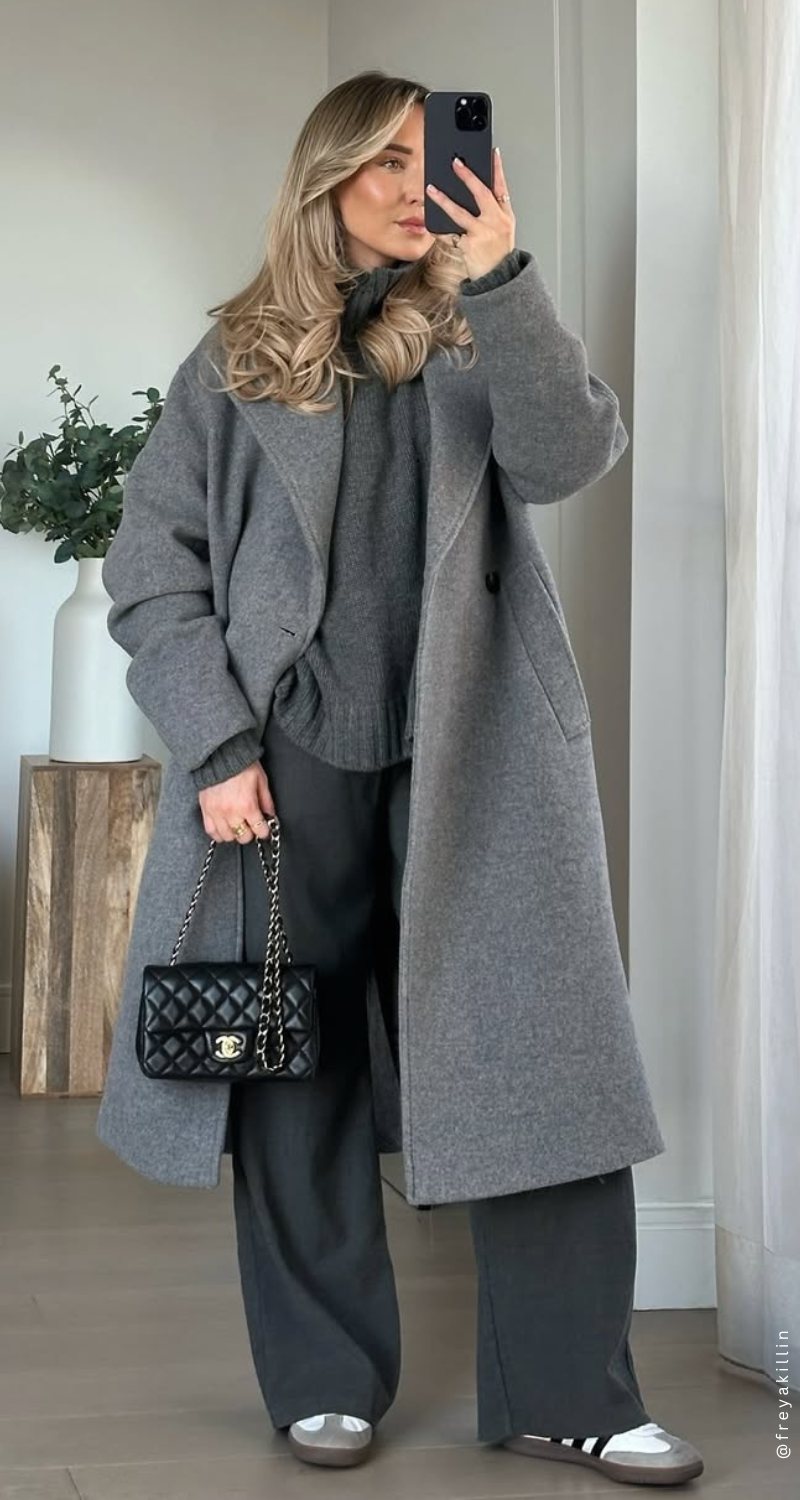
Winter layering fails when everything competes for room; this works because the sweater and coat share a color family and let the trousers handle the contrast.
The chunky grey turtleneck fills the coat’s frame without spilling out, and the wide-leg charcoal pants keep the silhouette from going top-heavy.
Fit matters more than fabric. The sweater needs enough ease that the coat slides over it without pulling at the shoulders; if you feel resistance when you reach forward, size up the coat or size down the knit.
I’d wear this on the coldest days when I still need to look like I planned the outfit. The double grey reads as intentional monochrome, not as matching sweats.
5. Casual with Denim

Light-wash denim with a charcoal coat is the combination I reach for when I want to look dressed without having thought about it. The black top and shoes tie together, and the grey sits between them like a neutral buffer.
The denim wash changes the mood. Light blue keeps it daytime and a little French; darker denim would push the same coat toward evening.
Wide legs need a coat long enough to follow the line; cropped coats cut the silhouette in half and make the legs look stubby.
This is my default for travel or any day with multiple stops. The coat elevates whatever’s underneath, so the actual effort happens at the coat hook, not in the morning.
6. Belted for Shape
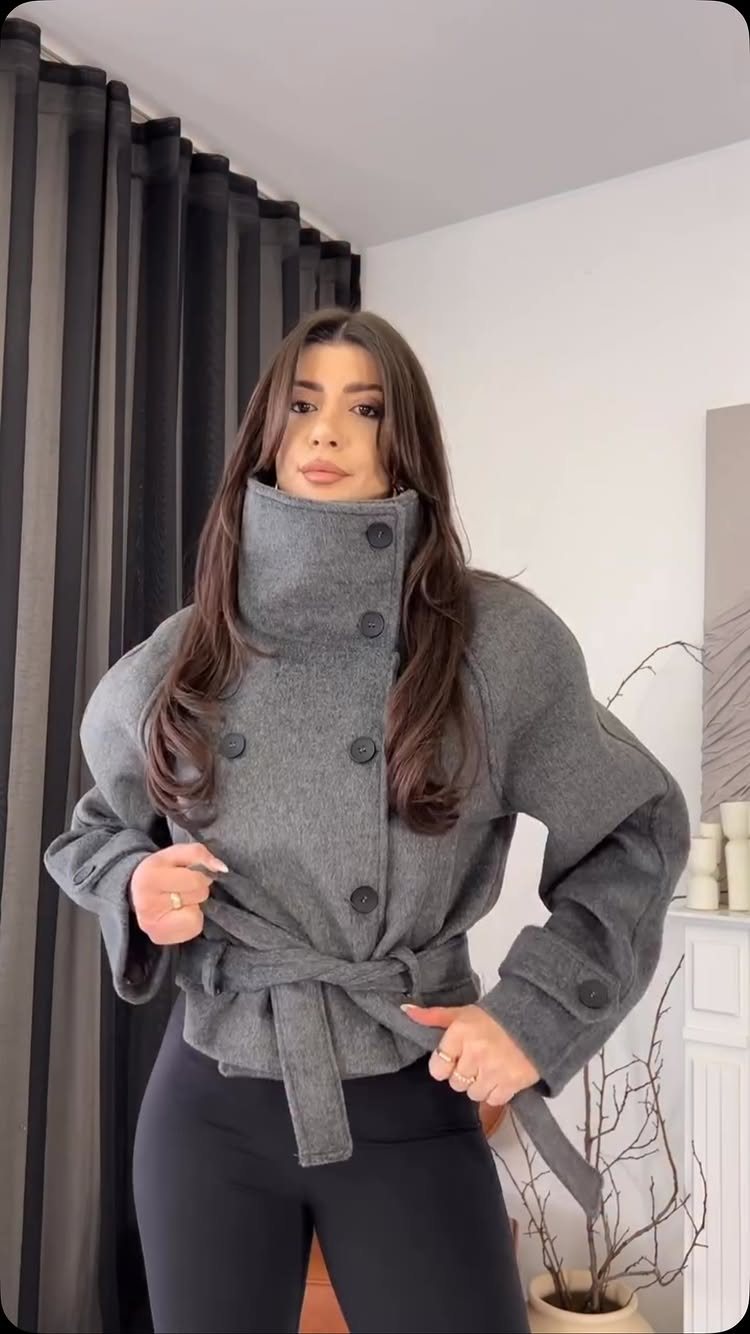
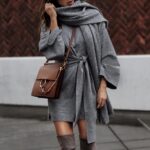
A belted grey coat does what an unbelted one won’t: it gives shape back to a body buried under winter layers.
A fabric belt at the natural waist, paired with a high collar, draws the eye up so the belt reads as part of the coat’s design rather than an add-on.
This shape works best over something with a defined waistline or over pieces slim enough that the belt can find it.
A skirt or leather pants underneath keeps the line smooth; bulky sweaters fight the cinch and bunch where the belt lands.
If the coat has no belt of its own, a narrow leather one in a tone that matches the coat buttons works, but avoid anything that contrasts sharply; the goal is a continuous shape, not a cinched sack.
I’d choose this for evenings when I want the warmth of a coat but the silhouette of a dress. The hourglass it creates reads as feminine without reading as fragile.
7. Monochrome with Different Shades

A charcoal coat over mid-grey trousers only works if the sweater or shirt between them sits at a third value, lighter or darker than both.
A white top peeking at the collar and a black bag at the hip keep the tonal stack from turning muddy.
Texture does the same job as contrast when color alone won’t carry it. Leather gloves, a ribbed knit, or a patterned scarf can separate two shades that sit too close together.
Pure tonal dressing in grey is harder than it looks; most people need that break.
I’d save this for days when you want to look pulled together without deciding on more than one color family.
It suits someone with a slim wardrobe who’d rather buy one good grey piece at a time than chase new palettes each season.
Best Colors to Pair
Camel feels too classic and black too severe, so grey lands in the middle ground that works for most days.
Blue denim, black leather, navy knitwear, and white shirting all work equally well underneath. Warm tan boots against grey can look like a mistake, not a choice, unless something else in the outfit bridges the two.
Footwear Options
Black leather ankle boots, black pumps, or clean-lined white sneakers are the three that almost always work.
Bulky running sneakers fight the coat’s structure; save them for outfits that are sporty all the way through.
Care for Grey Coats
A home steamer takes wrinkles out without the wear of pressing.