The stylish down coats below run from $140 on sale to $475 full price, and the right choice depends on whether you need a trim you can zip off after the morning commute or a belt that pulls in at the natural waist for dinner.
A 550-fill goose down jacket from The North Face handles the first; a knit-inset belted coat with faux fur trim handles the second.
1. Stylish Down Coats

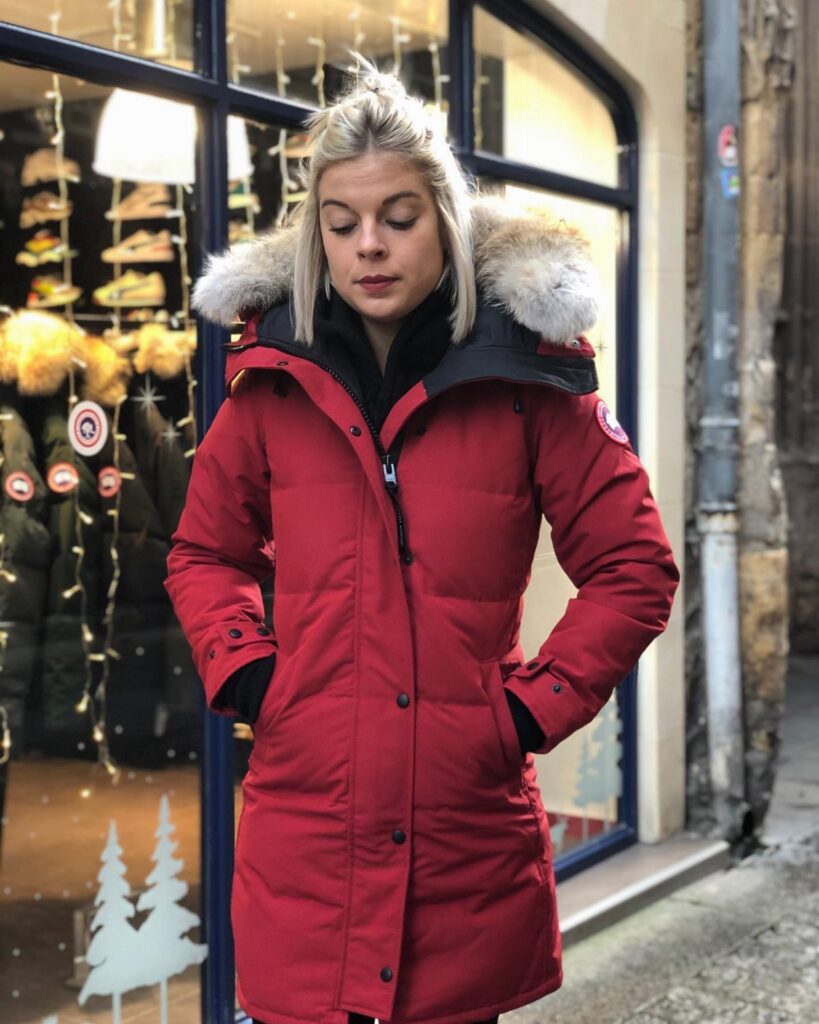
A fur-trimmed hood turns a practical purchase into something you actually want to be seen in.
The best stylish down coats borrow details from tailored outerwear: asymmetrical zippers that read as intentional, not industrial; belted waists that keep the silhouette from swallowing you whole; or a textured shell that catches light differently than basic nylon.
The shift from quantity to quality means one coat that handles commuting, weekend errands, and dinner out without looking like it belongs to someone else entirely. Check the fill power and the cut before you check the color.
A 600-fill rating keeps you warm; the seam placement and length determine whether you reach for it daily or let it hang.
I’d steer pear-shaped frames toward A-line cuts that release below the hip, and rectangular frames toward belts or quilting that creates shape where the coat won’t.
Yes, they are warm, and light, and all that, and they repel rain and snow—but they also repel admiring glances!
— Vogue
2. The North Face

The North Face built its name on mountain gear, but the crossover to city wear happened because the insulation actually works. PrimaLoft Black holds heat when compressed, and the DryVent shell sheds rain without the crinkly sound of cheaper waterproofing.
The New Dealio short jacket runs $250 with 550-fill goose down, an asymmetrical hem that lifts in front for movement, and a water-repellent finish that handles slush.
For colder climates, the parka line hits 600-fill with thumbhole sleeves and a seam-sealed storm flap; that one starts around $350 but drops to $210 at Backcountry during seasonal sales.
You trade some polish for function here. The cut is athletic, not sculpted, and the branding reads sporty to anyone looking.
If your days involve actual outdoor time, the trade is worth it. These coats skew casual; for client dinners, a sleek wool wrap or tailored puffer in matte black reads more deliberate.
3. Faux Fur Trim

Faux fur trim on a hood or collar does two jobs: it breaks up the utilitarian lines of a puffer, and it creates a frame around your face that reads as intentional styling rather than survival gear.
Beige, tan, and black coats with matching fur tones keep the look cohesive rather than costume.
A removable collar matters more than you’d think. Dry-clean the fur separately, wear the shell as a simpler coat in milder weather, and avoid the matted look that happens when synthetic fur gets soaked repeatedly.
The Nelly maxi-length version hits at the calf, adds a drawstring waist, and runs $140 on sale from $350.
For the cost-conscious, this is where to spend if you own one dressy coat and one practical one. The fur trim elevates the practical piece enough to cover both roles.
4. Belted Coats

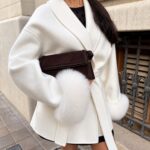
A belted puffer solves the main complaint about down coats: the sleeping-bag silhouette. A cream quilted coat that ties at the waist with matching fabric keeps the line cleaner than a contrasting leather or chain belt would.
The technique is simple but specific. Tie it at the natural waist, not the hips, or you exaggerate the width you’re trying to contain.
If the belt is removable, check that the coat still hangs well without it; some belted styles deflate into shapeless tubes once the cinch disappears.
A knit-inset version at $475 uses the belt as part of the construction rather than an afterthought. For a lower spend, look for internal drawstrings or partial belts that gather rather than wrap fully.
Petite frames should watch overall length; a belt that hits too low chops the figure in the wrong place.
5. Color-Blocking

Color-blocking refreshes winter wear the way a bright scarf used to, but without the daily decision. An orange velvet body with a black leather-like shoulder panel creates a deliberate two-tone that reads as design rather than leftover stock sewn together.
Gray on black is the conservative entry point if orange feels like too much commitment.
The Gap version at $198 uses that pairing for something that still coordinates with everything you own while looking less like every other coat on the subway.
For this reader rebuilding a wardrobe around pieces that work together, color-blocked outerwear demands more planning than a neutral. The coat becomes the statement, which means the rest of the outfit quiets down.
If your closet runs to patterned sweaters or bold bags, a single-color coat gives you more flexibility. If you wear a lot of black and want one piece that does the work, this is it.
Choosing the Right Coat
Your climate decides the shell before your style decides the cut. Wet winters need water-resistant fabric more than any feature in the list; dry cold lets you prioritize weight and drape.
Down fill runs warmer ounce for ounce than vegan insulation, but synthetic holds heat when compressed or damp.
A fixed hood saves the gap that lets wind in; a detachable one lets the coat shift from commuting to dinner without looking like you came from the trail.
Longer coats run sleeker because the vertical line elongates what puffer quilting tries to widen. Black and neutrals coordinate without thought; a bold color works if your closet already centers on pieces that step back.
The silhouette you like matters more than any trend ranking. Try the coat seated, with a bag strap over one shoulder, and reaching upward; restriction you notice in a store becomes misery by February.
Layering Under Coats
The Nelly maxi-length coat at $140 handles waterproofing and coverage so your layers can stay light. A slim merino base layer traps heat without the bulk that makes a puffer feel like armor.
Under a belted or A-line cut, a thin down vest adds core warmth without fighting the coat’s own shape.
The removable fur collar on that same coat means you can drop the drama and wear a fine-gauge turtleneck visible at the neck.
The Steve Madden chevron puffer has a fleece lining that does some of the work; a breathable mid-layer underneath keeps you from overheating on the train. Snap closures over zippers matter here.
They seal the gap where wind cuts through, so you need fewer layers to stay warm.
Care Instructions
Down loses loft when compressed too long. Store the coat hanging in a breathable bag, not stuffed into a vacuum seal for summer.
Spot-clean the shell with mild soap; full washing needs a front-loading machine on gentle with down-specific detergent. Tennis balls in the dryer restore clumping fill, but low heat only, and patience.
High heat scorches the down and melts synthetic shell treatments.
Water resistance wears off. A spray-on DWR renewal every season or two keeps slush from soaking through.
Check seams after heavy wear; the first failure point is usually where the arm meets the body. Repair tape on the inside holds longer than you expect.
Dry-clean the faux fur trim separately if it is removable. Synthetic fur mats when saturated repeatedly, and no amount of brushing fully recovers it.
Budget Considerations
The Steve Madden chevron maxi puffer at $65 proves that entry-level price does not have to mean entry-level function. Fleece lining, water resistance, and a removable hood with pillow collar cover the same ground as coats costing five times as much.
The five color options and chevron quilting that keeps insulation even are details usually found higher up the price ladder.
The Nelly coat with its removable faux fur collar bridges the gap between one practical coat and one dressy one. Spending here replaces two purchases.
The question is not which costs more but which cost you will actually wear daily. A coat that hangs by the door beats one you save for special occasions that never come.
Frequently Asked Questions
What women’s coats are in style right now?
Stylish down coats and puffer jackets are the dominant winter trend, especially versions that borrow from tailored outerwear like belted waists, asymmetrical zippers, and textured shells.
Long winter coats with sleek silhouettes are also popular, particularly water-resistant styles that handle slush and rain. The shift is toward one quality coat that works for commuting, errands, and evenings out rather than accumulating multiple cheaper options.
Who makes the best down coats for women?
The North Face uses 550-fill to 600-fill goose down and DryVent shells that block rain without the crinkly noise you get from cheaper waterproofing.
Canada Goose and Moncler rank highly for extreme cold and sleek design respectively, while Mackage and Orolay have strong followings for luxury and value.
I’d pick The North Face for anyone whose days involve real outdoor time; the athletic cut trades some polish for function that holds up.
What are the trendy women’s winter jackets for 2026?
Quilted jackets and down coats are still the practical core for 2026, but now they come with details that make the basic puffer look intentional rather than last-resort.
Belted waists, faux fur trim, color-blocking, and textured shells are the updates that separate current styles from utilitarian basics. The oversized, maximalist puffer still appears on runways, but most everyday versions have refined the silhouette to avoid the sleeping-bag effect.
What are the coat trends for 2026?
Belted puffers that solve the sleeping-bag silhouette problem lead the functional trend, along with faux fur trim that frames the face and breaks up utilitarian lines.
Color-blocking in deliberate two-tone combinations, like gray on black or orange with dark panels, refreshes winter wear without requiring a new scarf every morning.
The underlying movement is from quantity to quality: one coat with 600-fill power, proper seam placement, and a cut that flatters your frame rather than multiple cheaper alternatives.