Winter wedding guest outfits run from a silk wrap that folds to clutch size up to a full velvet gown that carries candlelight across a dark ballroom, with layering, color, and fabric choices that make the cold season easier to dress for.
The right choice depends on whether the ceremony stays indoors or sends guests between a heated hotel ballroom and a drafty barn entrance, with layering and fabric weight doing most of the work between those two extremes.
A blend with a small percentage of elastane keeps its shape through hours of sitting and dancing, while silk velvet shows every crease from the car ride over and asks for more attention.
1. Layering for Warmth

A long coat gets you to the door; the real question is what stays on once you are inside.
Shawls and cropped jackets work over maxi dresses because they add warmth without bulk where portraits happen, around your shoulders and neckline.
Small wraps travel better than structured coats. They fold into a clutch-sized space and layer back on for the walk to the car.
Match the wrap weight to the room: overheated hotel ballrooms need silk or fine wool, while drafty converted barns call for something closer to a blanket scarf.
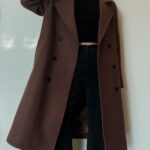
I would skip the floor-length coat unless the ceremony is outdoors. It photographs as costume, and someone has to hold it all night.
2. Velvet as a Winter Fabric

Velvet catches light differently than any other winter fabric, so the real thing always outperforms the thumbnail.
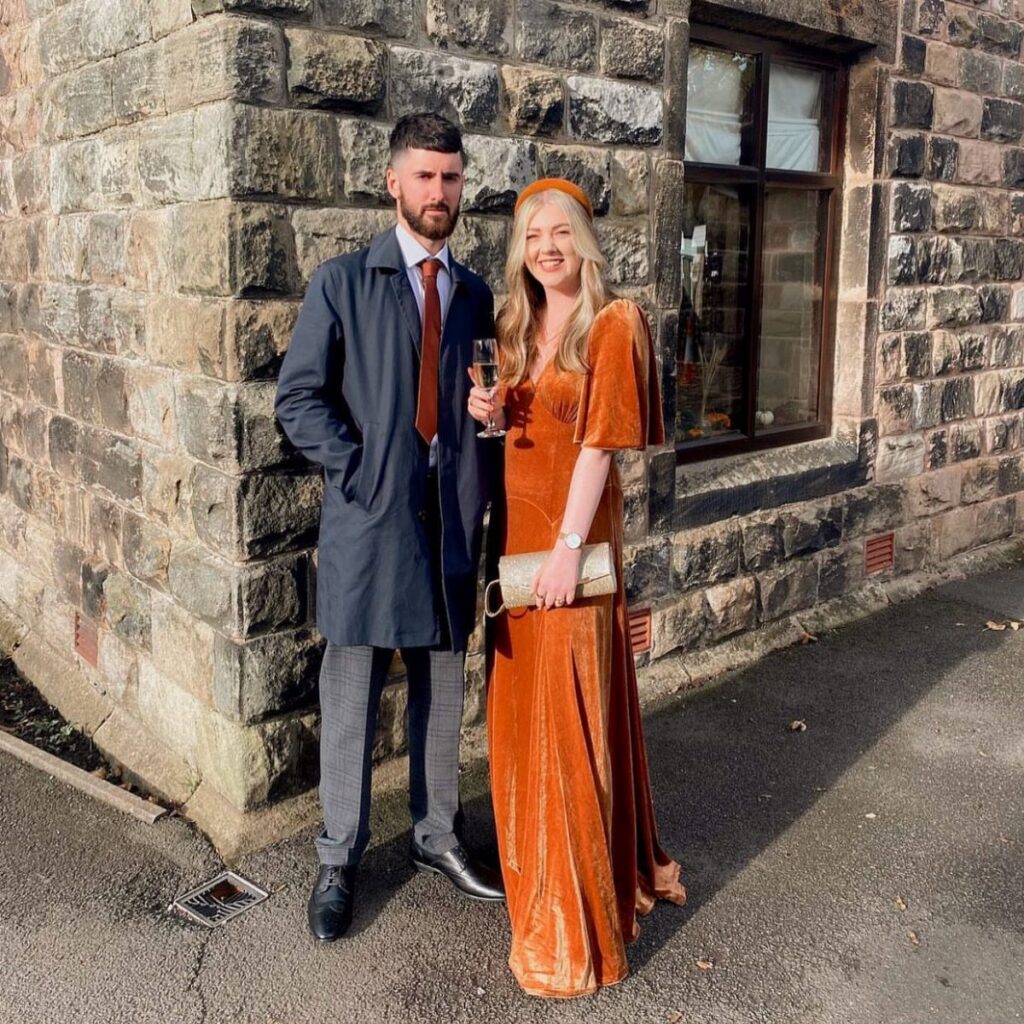
The pile catches candlelight and flash in different ways, so the same dress reads formal across a dark room and shows depth when someone leans in to say hello.
The weight matters more than the fiber content. A 95 percent polyester velvet with five percent elastane hangs well and stretches where you need it, through sitting, eating, and dancing.
Pure silk velvet is warmer but creases from a car seat; the blend forgives the long night.
Burgundy and forest green photograph with dimension black cannot match. Save black velvet for a gala, where no one is competing with bridesmaids.
3. Deep Saturated Colors

Black flattens under reception lighting and merges with every groomsman’s rental tux. Deep saturated colors do the work instead: blackish green reads formal from across the room, then shows its depth in photos and conversation.
Burgundy, aubergine, and midnight blue carry the same trick. They keep the seriousness of black without the flattening effect, and they separate you from the wedding party in every group shot.
White, ivory, cream, and champagne stay off the table unless the couple specifically asked for them. Pale blush and ice blue disappear against snow in outdoor portraits, so check the photo plan before committing.
4. Pockets in Dresses

Side pockets in a satin midi dress let you carry a phone, lipstick, and a tissue without the clutch juggle.
On a full or tiered skirt, the pocket seams vanish into the folds; the silhouette stays clean even with your hand slipped in.
The placement matters. Pockets set into the skirt front add volume where most women do not want it; side seams or hidden hip entries keep the line vertical.
I look for pockets deep enough that a phone does not ride above the hemline when I walk.
This trades away the minimalism of a sheath or slip dress. If you are someone who sets a clutch down and forgets it, the trade is worth it.
Otherwise, a slim crossbody under the coat solves the same problem without the seam lines.
5. Sparkling Black Evening Gown

A black gown with sparkle built in reads formal without demanding extra jewelry. The ruffled neckline and peplum waist add structure that flatters a straight or rectangular body shape; curves get enough definition from the silhouette itself.
I’d keep accessories minimal: small gold hoops, a thin bracelet, and a clutch that doesn’t compete with the peplum. Nude or black heels lengthen the line.
The sparkle catches candlelight beautifully, but test it in daylight too; some sequins turn dull under fluorescent venue lighting.
This works for evening ceremonies and black-tie receptions where you want to look dressed without appearing to have tried harder than the couple.
6. Embellished Icy Blue Gown

Heavier embellishment on a cool-toned gown carries winter formality without defaulting to holiday red or green. The fitted shape needs accurate tailoring; budget for alterations at the waist and hem, since heavy beading limits what you can take in yourself.
The matching headwrap is optional but smart for outdoor arrivals. Without it, I’d add a faux-fur stole in cream or silver to keep the palette icy rather than summery.
Nude heels work; metallic risks competing with the beadwork.
This suits hourglass and pear shapes where the defined waist shows off the embellishment’s placement. Apple shapes might find the horizontal beading at the midsection less forgiving.
7. Mustard Cape-sleeve Satin Gown

Cape sleeves replace a separate wrap, which means one less thing to misplace during cocktail hour. The mustard reads warm against winter skin; it flatters medium to deep undertones better than very fair complexions, where it can pull sallow.
Satin shows every water spot, so steam rather than iron, and travel with a small stain pen. The volume at the sleeves needs a streamlined clutch; anything oversized fights the drama.
Gold hoops echo the yellow without adding another color.
I’d wear this to a formal church wedding or an evening hotel reception. The cape drags in snow or mud, so check the venue path from car to door.
8. Long-sleeved Pale Pink Maxi

Pale pink in winter works when the fabric has weight and the cut has coverage.
The long sleeves and high neck solve the "what coat goes with this" problem; a cropped faux fur or structured wool short jacket layers cleanly without bunching at the waist.
The thigh-high slit needs a shoe worth showing: strappy sandals in nude or soft metallic, with a block heel for grass or gravel paths between venue and photo spot.
I’d add sheer tights in a shade slightly deeper than the dress, not lighter, to avoid a clinical leg line.
This shape suits taller frames best; the high neck and long skirt can overwhelm under 5’4" unless the slit is raised or the waist taken up.
9. Embroidered Tunic and Palazzo Set

A tunic and palazzo set moves like a gown but separates for reuse; the tunic works later with fitted trousers, the pants with a tucked silk blouse.
The wide leg demands a heel, even a low one, to keep the hem from sweeping the floor.
The maker notes rich fabrics and intricate embroidery as their standard; look for that weight in whatever version you choose, since lightweight cotton or rayon reads casual and summer-bound.
Bright yellow carries daytime ceremonies beautifully but can look lit from within under evening flash photography, which either delights or alarms depending on your comfort.
I’d pick this for a South Asian fusion wedding, a garden tent reception with heaters, or any event where you expect to sit on the floor at some point. The palazzo gives full coverage without the skirt-adjustment problem.
Choosing the Right Dress
Velvet in a deep color does most of the heavy lifting for a winter wedding, and a long dress cuts the rest of the problem off at the knees.
It is warm enough for the walk from the car, formal enough for any dress code short of white tie, and flattering when the only light is votive candles and a photographer’s flash.
The shirred waist tiered style in a blackish green carries well through an entire evening because the velvet pile does not show the creases that satin or silk would.
Sizes 1X to 4X are available, and the cut gives room through the hips where a straighter sheath might pull.
Free shipping and a 14-day return window mean you can try the dress on at home with the shoes and underlayers you already own, rather than guessing in a store mirror.
Check the fit sitting down; a maxi hem that pools on the floor when you stand will tangle in chair legs later.
Comfort During the Event
The dress that looks perfect in a 30-second mirror check may dig at the waist or ride up when you sit through a ceremony, a meal, and speeches.
You can sit through dinner, stand for the first dance, and move without the fabric fighting you. The shirred waist on a tiered skirt hides any gathering that happens when you bend.
Test the dress in the shoes you plan to wear, not bare feet. A hem that clears the floor by half an inch at home may drag once the heels go on.
Walk on carpet if you can; the nap of velvet catches differently than it does on hardwood.
Layering Techniques
The coat gets you to the venue; what you can slip off in a crowded coatroom without a production is what actually matters.
A wrap or cropped jacket that layers over the dress shoulders lets you shed warmth in the coat check line without blocking traffic.
Match the weight to the room, not the weather outside. A hotel ballroom runs hot; a barn with original windows does not.
Color Choices for Winter
Two rules stay constant. A pale shade that washes out against snow will ruin every outdoor photo the couple treasures.
Frequently Asked Questions
What should I wear as a guest to a winter wedding?
A full-length coat gets you through the parking lot and into the lobby, then it lives on a hanger for the night.
What stays on inside should be small: a fine knit wrap, faux fur stole, or cropped jacket that layers without bulk at the shoulders.
What are the trendy winter wedding trends for 2026?
Deep saturated colors are the move for winter 2026. Blackish green, burgundy, aubergine, and midnight blue read formal from across a room, then show their depth in photos where black would flatten.
What is the taboo color for wedding guests?
White, ivory, cream, and champagne stay off the table unless the couple specifically asked for them.