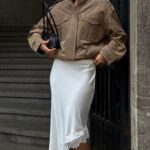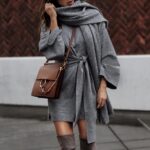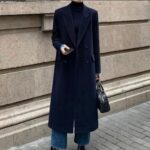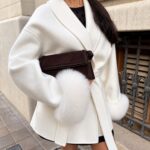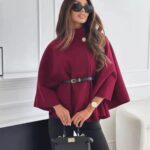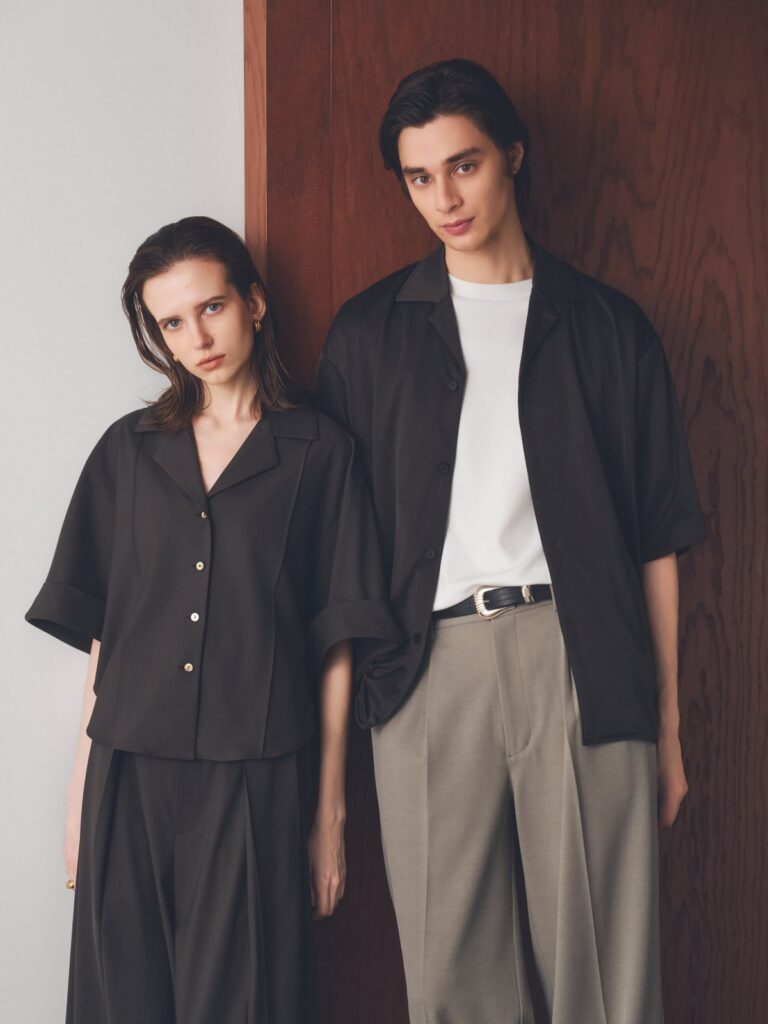
These nine ideas run from a single dress you pull on in the morning to a full blazer-and-denim formula that takes thirty seconds longer, and the one you pick depends on how your office actually defines casual: what passes on your floor versus what HR wrote in the handbook.
The cotton button-front midi with its belted waist is the simplest starting point if you are still gauging where that line falls.
1. The Dresses
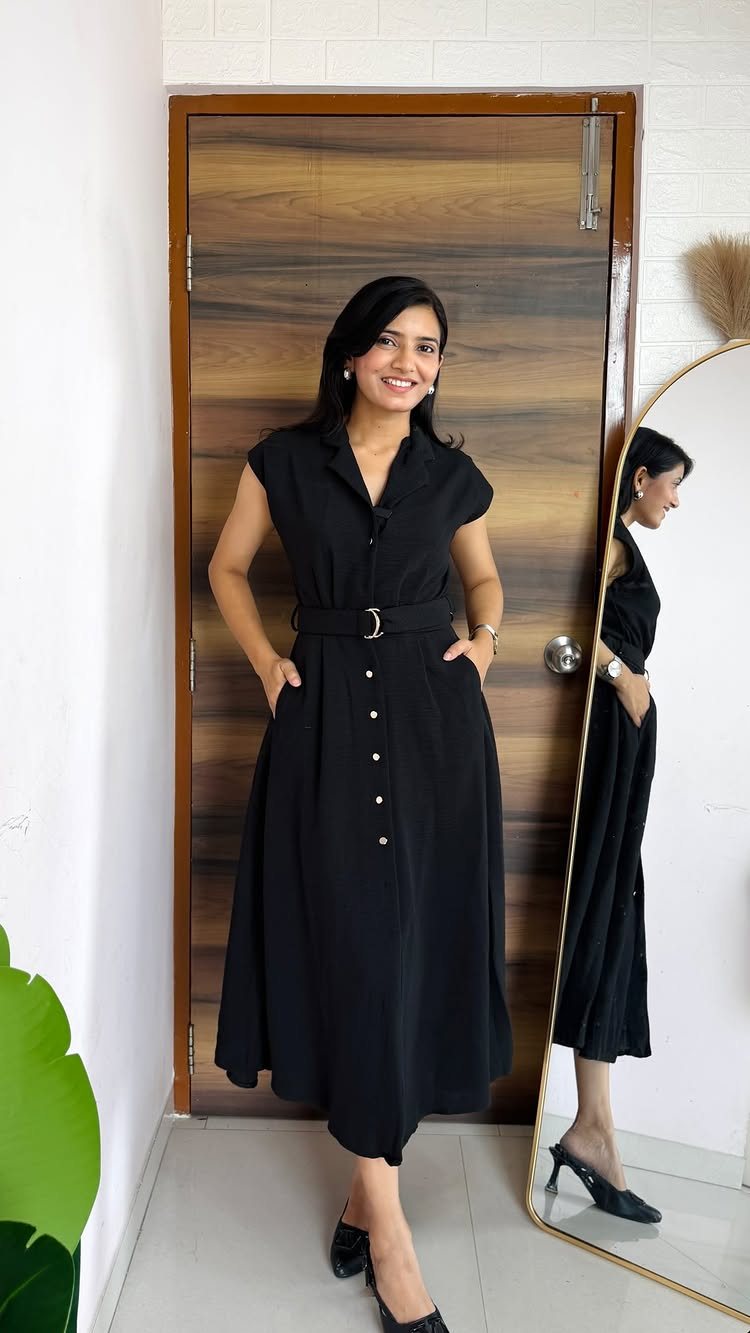
A midi-length button-front dress in cotton or silk does the whole job with one piece. The belted waist keeps it from reading too relaxed, and the length hits that sweet spot between desk and dinner.
For a more casual office, I’d throw a denim jacket over it; for stricter dress codes, swap in a loafer or low block heel. The puff-sleeve linen versions work the same way, just with more air and less structure.
Best for anyone who’d rather own three dresses that actually get worn than a dozen separates that never quite match.
2. Business Casual Outfits

Black turtlenecks with wide-leg white trousers read intentional, not thrown-together. The long coat on top isn’t required, but it does buy you warmth without breaking the line.
Dark wash or black jeans substitute fine if your office leans casual; ecru works too, since it reads closer to a cream trouser. Light washes only if the place is truly relaxed, and never with fading or rips.
I’d pick this for the woman who needs one outfit to cover three meetings and a lunch that runs long.
3. Casual Work Tops
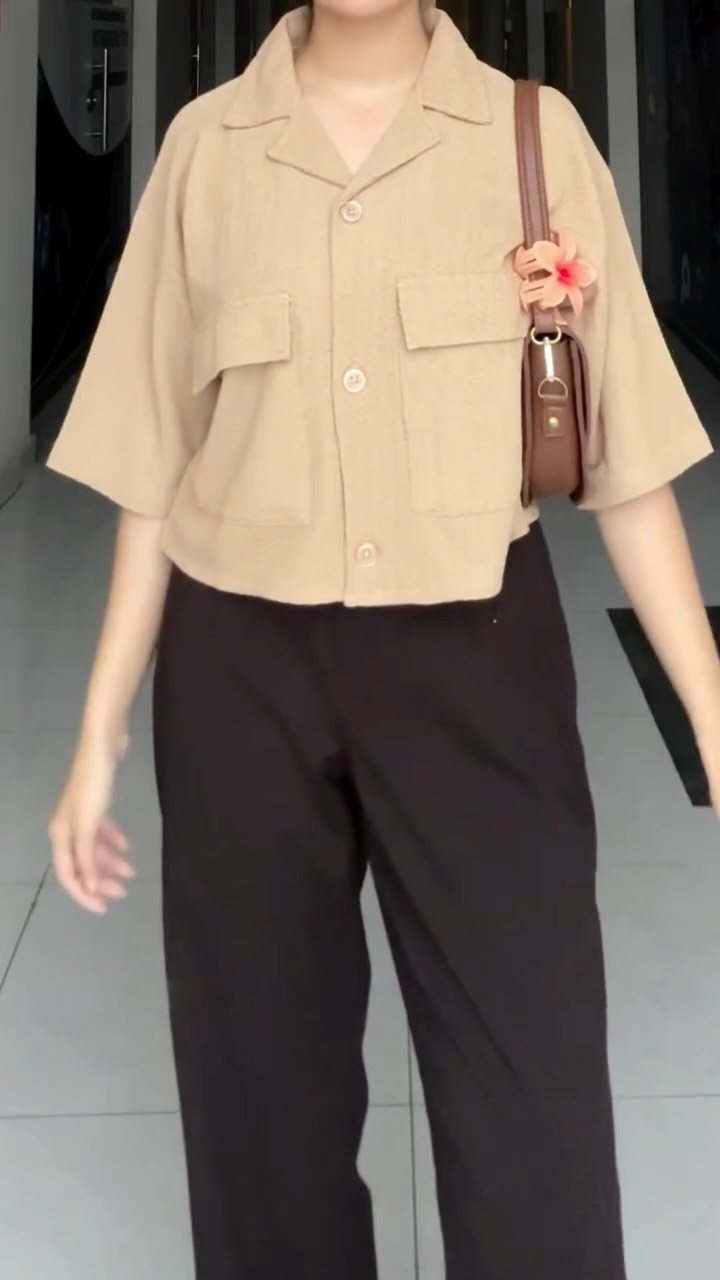
A short-sleeved button-up in a heavier cotton, something with actual pockets and structure, sits differently than the thin tee you sleep in. The weight is what makes it office-ready; the collar and pockets do the rest.
Blouses, knits, and sweaters fill the same role. A structured top against relaxed pants, or a polished tee with a sweater draped over the shoulders paired with clean-lined trousers, keeps the look intentional rather than sloppy.
No graphic tees, obviously. Check your fabric weight in natural light before you buy; a heavier cotton holds its shape through a full day of sitting and standing.
4. Casual Work Bottoms
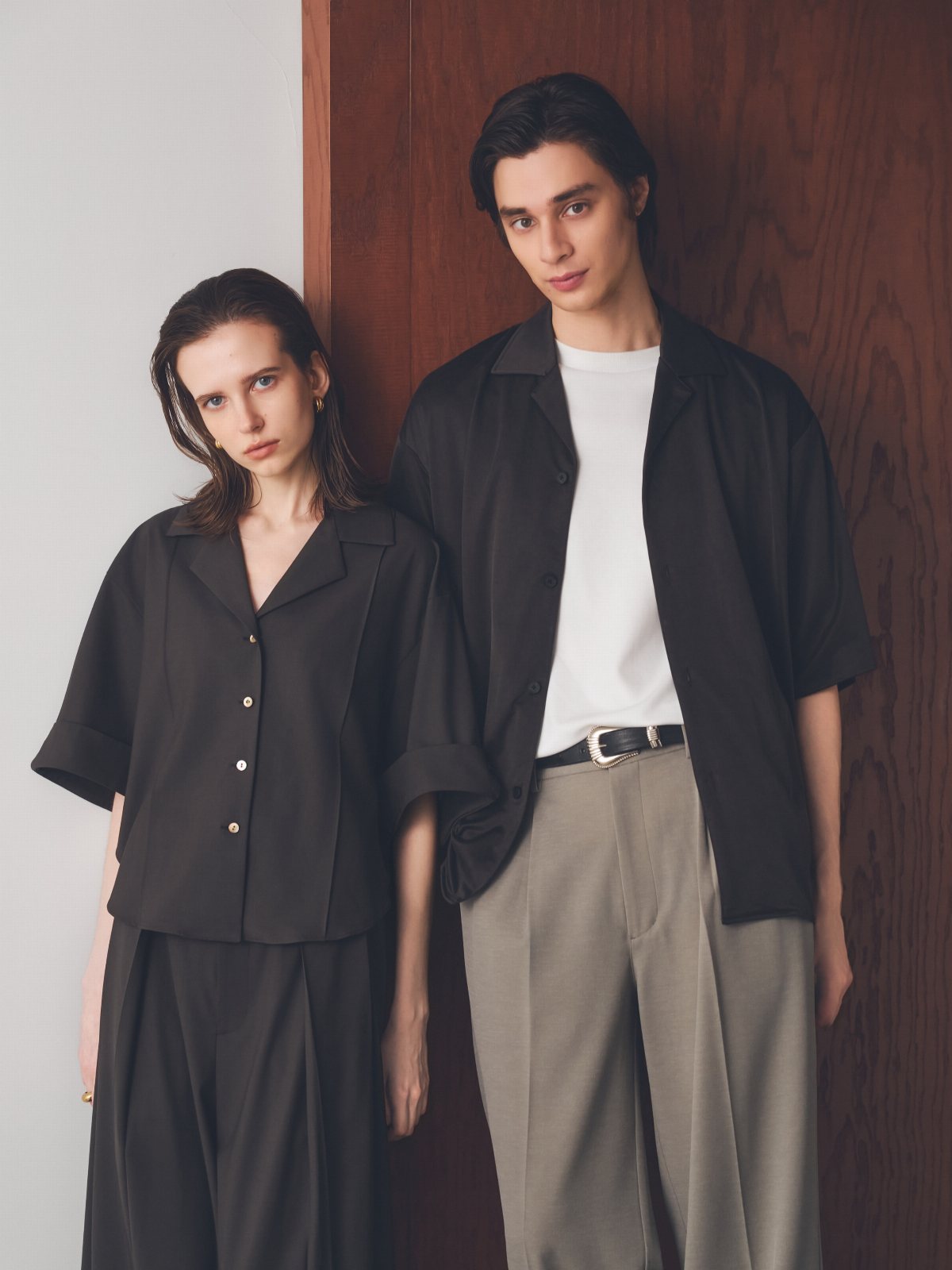
Dark wash jeans in a straight leg or wide-leg trouser cut stay office-appropriate when the wash is uniform and the lines are clean. Rips and heavy fading are what push denim into weekend territory.
Cotton chinos or proper trousers in black, grey, or navy do the same job with less risk. I’d pair them with that structured tee or a sweater draped over the shoulders.
What flies at your office is what matters here. If jeans are allowed, check whether "casual Friday" means the same thing to your manager as it does to you.
5. Blazer with Jeans

A navy blazer over an open light-blue shirt with jeans is the oldest trick in the book because it still works. The blazer supplies the authority; the open collar and denim keep you from looking like you’re selling something.
If jeans are off-limits entirely, trousers step in and the same logic applies. Chinos work too, though I’d stick to olive or navy rather than khaki, which can read too suburban golf course.
Best for men or women who own one good blazer and want to wear it more than twice a year.
Company Culture Impact
Company culture is the filter everything else runs through.
A nice sweater or blouse that reads polished on camera might be your entire Zoom uniform, while the same office building houses teams where jeans are standard and others where "casual" only means no full suits.
The gap between your manager’s definition and yours is where people get caught. If your workplace allows denim, notice whether that means dark, unripped pairs or if the standard slides further on certain days.
For remote workers, the test is simpler: would you answer the door in this, and would you turn the camera on without changing?
Your closet probably already holds the pieces; the culture tells you which ones to pull.
Mix and Match
A single pair of trousers can split its week between formal and casual if you swap what travels with them.
Trade the pump for a clean fashion sneaker or sandal, and the outfit drops several degrees of formality without losing shape.
The same logic works on top. One piece changes, and the whole equation shifts.
I’d use this for weeks where I need three versions of the same base: Monday’s meeting, Thursday’s lighter schedule, and the dinner that follows. The trousers stay constant; everything else rotates.
Comfort and Style Balance
Summer offices are where this balance gets tested most. A friend in a creative field, not bound by blazers and slacks, still spent months hunting for pieces that read modest without trapping heat.
The solution usually sits in fabric weight and coverage, not in choosing one or the other.
Structured cotton, linen with actual body, and knits that hold their shape through humidity do the work.
The heavier tee that looks right in natural light will still look right at 4 p.m., which is more than I can say for the thin jersey that bags out by lunch.
Comfort doesn’t mean loungewear. It means sitting through a full day without adjusting, tugging, or wishing you’d chosen differently.
Dress Code Awareness
"Casual" in a dress code is not one universal setting. It might mean no suits, period.
Suiting pieces worn as separates can still read as professional. Jeans might be fair game, or they might be reserved for Fridays, and even then only in certain washes.
The categories worth knowing: what your code explicitly allows, what it silently permits, and what crosses into territory where someone else decides. Dark, uniform washes stay in the second.
If you’re new to a workplace, I’d watch how people actually dress before trusting the handbook. What people actually wear on Tuesdays in March matters more than what HR described in orientation.
Ask if you need to; guessing wrong costs more than a brief conversation.
Frequently Asked Questions
What is workplace casual?
Workplace casual means comfortable clothes that still look intentional, not whatever you’d wear to run errands. In most offices, that translates to dark jeans without rips, structured tops with some weight to them, and clean lines throughout.
What actually passes depends on your specific workplace, so I’d check whether your manager’s idea of casual Friday matches yours before leaning too relaxed.
What is the 3-3-3 rule for clothes?
The 3-3-3 rule keeps getting asked about, and I still haven’t found a version that holds up across different closets and lifestyles, so I leave it alone.