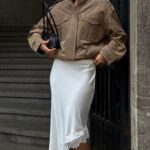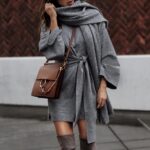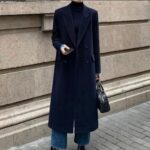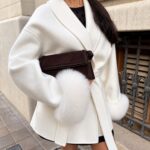
The seven ideas below run from a single bold ring to a full camel wool coat, and the right pick depends on what your office already accepts from senior women on days without external meetings.
1. Business Casual Blazer

A blazer turns a Saturday-morning t-shirt into something you can wear to a client lunch without changing. A light blue cut sits softer than navy, which reads corporate even with jeans underneath.
I reach for mine most often with dark wide-leg trousers and a white button-down, but the real value is how it rescues pieces that feel too casual on their own.
A printed scarf, a silk camisole, even clean dark denim: the blazer supplies the structure your office needs. Side-zip crepe trousers from Ann Taylor give the same polish without the dry-cleaning bill of full suiting.
The tradeoff is maintenance. Linen wrinkles, wool pills, and cheap polyester shines under office lights.
Spend enough to get construction that holds its shape through twice-weekly wear.
2. Wardrobe Essentials

The women who look most put-together in early morning meetings are not the ones with the most clothes. They own a small set of pieces that all speak to each other.
Start with one pair of slacks in a color that is not black, navy, or gray. Chocolate brown pairs back to every neutral and reads warmer than standard office fare.
Add a button-down in a shade that flatters your skin tone, not just white. One blazer.
One skirt that hits where you are comfortable sitting and standing. From there, mixing becomes automatic: the formal piece plus the relaxed piece, every time.
The cost front-loads. A single good trouser costs more upfront than fast fashion, but you will wear it often enough to bring the cost-per-wear below anything disposable.
Fast-fashion blouses that pill after a few washes cost more per wear.
3. Business Casual Dresses

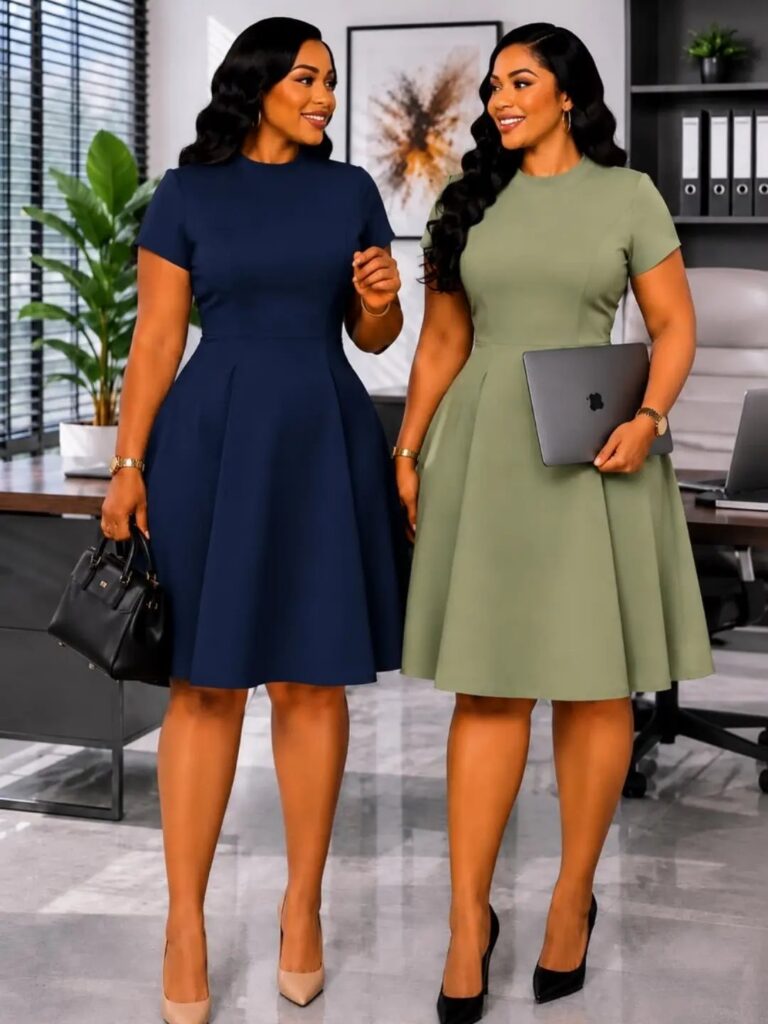
One-piece dressing saves the decision-making for work that actually pays. A-line dresses that sit just above the knee, short-sleeved, in solid colors, do not compete with the wearer.
Your office determines the hem. A law firm or financial services setting wants coverage to the knee; a creative studio or tech environment allows more latitude.
Fabric matters more than print: structured cotton, ponte, or lined crepe holds shape through a day of sitting and standing. Jersey and thin knits sag by afternoon and read as weekend wear.
Check your own office by what senior women wear on days without external meetings, not by the handbook.
Heels are not required. Loafers or pointed flats keep the same clean line.
4. Business Casual Shirts

A shirt with an overlapping collar detail does something a standard button-down cannot. That collar detail draws the eye upward, which helps if you are small-chested or want presence in a room of suits.
For most offices, the hierarchy runs: structured button-down, then silk blouse, then fitted knit. The button-down is safest for external meetings; the knit reads relaxed even under a blazer.
Silk stains and wrinkles, so I save mine for days without lunch appointments. Prints and micro-patterns work if your bottom is plain; reverse the equation and you look like you are trying too hard.
Fit is the non-negotiable. Gap at the collar, pulling at the bust, or sleeves that cover your hands undo whatever you spent.
Tailoring an inexpensive shirt costs less than buying premium and outperforms a pricier piece that does not fit.
5. Business Casual Slacks
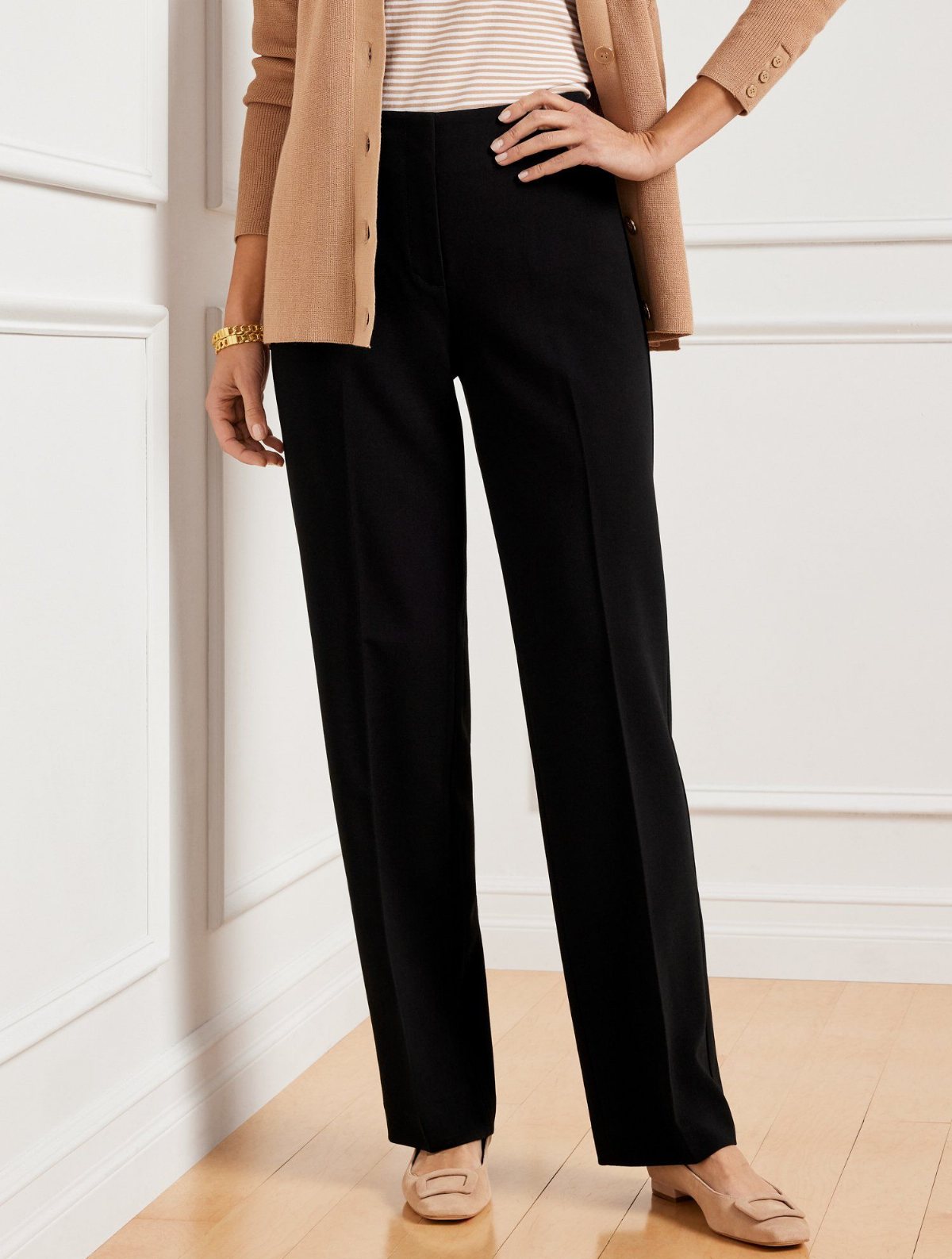
Wide-leg black trousers with a tan cardigan and striped top work because the pant carries the structure and everything else relaxes around it.
Chinos, straight-leg, and high-waisted cuts each serve a different body. High-waisted elongates if you are short-waisted; straight-leg balances hips without the volume of wide-leg.
Cigarette pants need a heel or a very sleek flat, or the ankle cut stumps you. For comfort, nothing beats a wide-leg in a textured crepe with a side zip, no waistband digging in after lunch.
A pair that sits at the natural waist with a clean front flatters most body types. That construction, not the color, is what lets you tuck a striped top without bulk.
6. Business Casual Outerwear

Your coat is the first and last thing anyone sees. A camel wool coat, belted with gold hardware, reads intentional in a way a puffer or parka never will.
Trench coats handle the in-between months, wool coats the real cold. The choice depends on your commute: a long walk through a cold winter demands insulation, not just style.
For milder climates, a trench in beige or navy layers over blazers without crowding the shoulders. Wool needs room for a jacket underneath, so size up or buy the coat cut to accommodate it.
The cost stings once and pays out over years. One wool coat worn across multiple seasons annually costs less per wear than several cheaper coats that look tired by year two.
7. Business Casual Accessories

A neck scarf held with a single bold ring turns a basic blazer into something deliberate without trying hard. Business casual accessories finish the outfit instead of starting it.
Small gold hoops and a slim watch do the same work with less drama.
The reader who already owns a blazer and two solid tops gets more mileage from one good ring or a leather belt that actually fits than from another layer she will not wear.
Stacked rings on a scarf work best in offices where personal style shows up in details, not statements. For stricter dress codes, a single pearl stud or a thin chain at the collarbone reads as careful without drawing a glance.
Check the metal against what you already wear. Mixed finishes look accidental unless every piece is intentionally mismatched, which takes more time than most mornings allow.
Business Casual Guidelines
Business casual shifts meaning depending on who signs your paycheck. Tech and startups usually allow dark jeans under a blazer; finance and corporate offices expect pressed slacks and structured blouses even on days without client contact.
Marketing and creative fields fall somewhere between, with more room for print and color. Education demands practicality above all, since you are on your feet for hours.
When in doubt during your first weeks, match the formality of the person one level above you and adjust once you have seen how dress code enforcement actually works.
Styling Tips
The simplest formula I have found is one formal piece paired with one relaxed piece. A blazer over a knit top, or structured trousers with a simple shell, reads intentional without trying too hard.
A sheath dress with flats keeps the line clean while your feet stay comfortable through a long day.
A pencil skirt with a fine-gauge knit gives the same balance in reverse: the skirt supplies the structure, the sweater relaxes it.
The mistake is pairing two formal pieces, which crosses into full business dress, or two casual pieces, which looks like you stopped halfway. One and one, every time.
Fit and Comfort
A garment that fits properly should let you raise your arms, sit for an hour, and walk to the parking garage without adjusting.
If you are tugging at a waistband or conscious of pulling across the shoulders, the fit is wrong regardless of the size on the tag.
Wrinkle-resistant fabrics matter more than most people account for. A blouse that looks pressed at 8:00 AM and creased by 10:30 undermines whatever you paid for it.
For travel or back-to-back meeting days, I choose pieces that recover from a folded suitcase or a car seat without looking like it.
The same holds for after-work events: a change of shoes and maybe a single accessory should be all the transition your outfit needs.
Seasonal Considerations
Fabric weight and layering separate seasonal business casual from a costume change. Summer calls for structured cotton, breathable crepe, and open-weave knits that hold shape without lining.
Color shifts too, though less dramatically than weekend dressing. A chocolate brown or camel reads warmer in cold months than black; navy works year-round.
The real adjustment is in your outermost layer, since that is what colleagues see arriving and leaving.
One wool coat in a neutral, cut large enough for a jacket underneath, covers more ground than multiple thin layers that bunch at the sleeves.
Frequently Asked Questions
What is the 3-3-3 rule for business casual fashion?
I haven’t found a 3-3-3 rule that holds up across offices, so I stick to a simpler test: can I wear this piece three different ways with what I already own?
The piece focuses instead on building from a small set of interchangeable pieces: one blazer, one pair of slacks in a non-standard color like chocolate brown, one button-down, one skirt, and mixing formal with relaxed from there.
What is not appropriate for business casual?
Jeans and sneakers read too casual for most business casual settings.
What is the female equivalent of business casual?
For women, business casual swaps the full suit for separates that still hold a line: trousers with a crease but no matching jacket, shirts that button but don’t starve for air under the collar, shoes you can walk in without wincing.
It sits a step below corporate attire and a step above weekend wear, with blazers, structured dresses, and clean-lined accessories supplying the polish.