
The pieces below range from a basic fleece to a technical shell built for full waterproofing, and the right one depends on whether your day ends at a resort lodge or with you hauling a sled back uphill.
What separates gear that lasts from gear that quits is usually one spec you have to check deliberately: wet down loses its warmth fast, and water-resistant is not the same as waterproof.
1. Puffer Jackets

A puffer jacket is the piece that lets you step outside in snow without the immediate urge to sprint back in.
What separates the useful ones from the decorative is fill power and whether the hood actually seals around your face.
For snow tubing or any activity where you sit on snow, length matters more than it does for city walking. A cropped cut looks clean with leggings, but cold air sneaks in when you bend or sit.
I’d go longer for actual snow sports, cropped only for short walks or when the car is close.
Check that the shell is water-resistant, not just water-repellent. Wet down loses its warmth fast.
2. Snow Pants
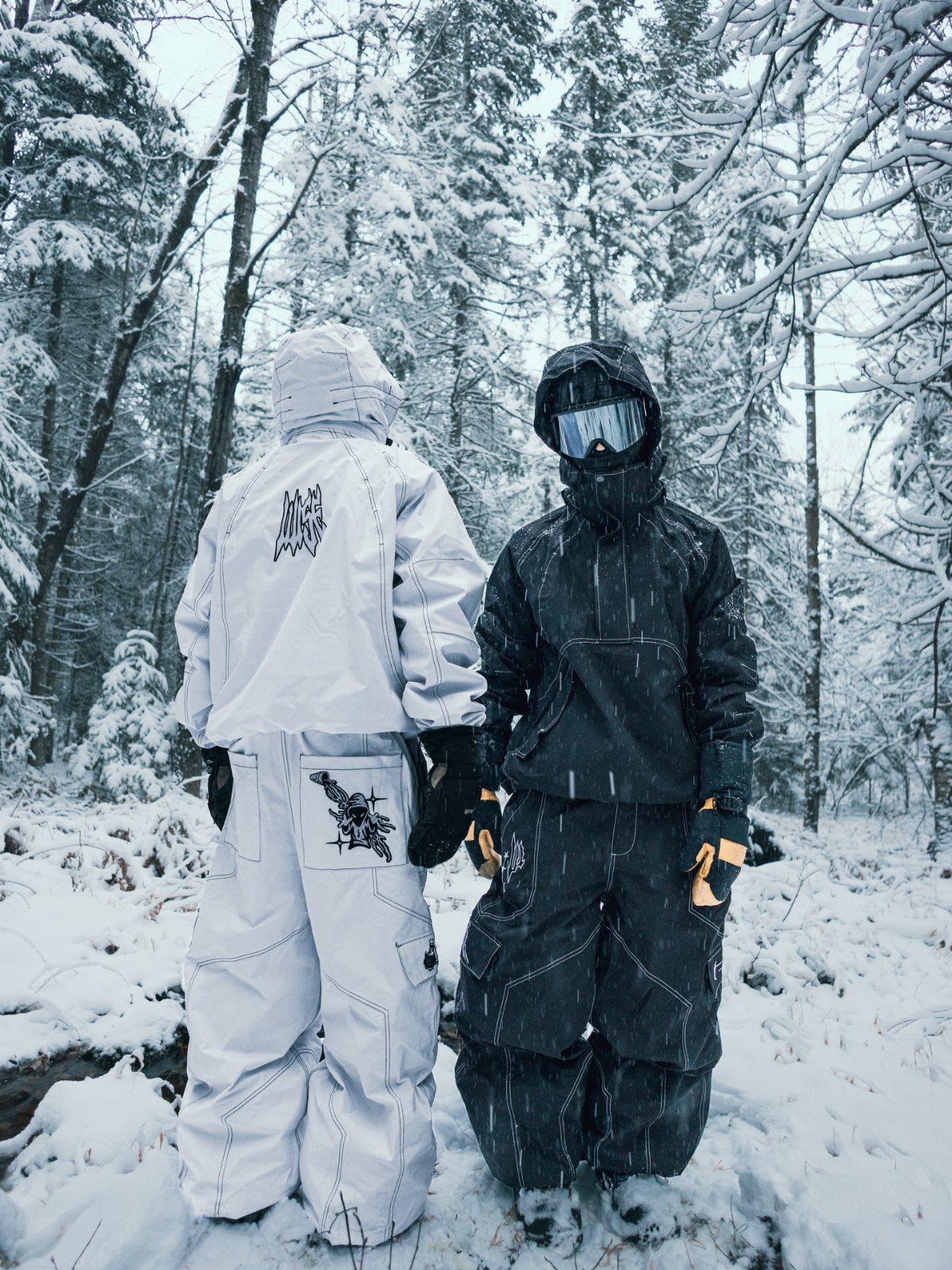
Snow pants are the item most people borrow from a cousin and regret it. Waterproofing is the non-negotiable; anything that soaks through in an hour turns a good day into a shivering retreat.
The straight-leg fit most common now layers cleanly over boots without the bulk of old ski bibs. Multiple pockets matter more than you’d think: keeping phone and keys dry and reachable saves constant glove removal.
For snow tubing specifically, reinforced seat and knee panels add seasons of life.
White reads crisp in photos but shows every scuff by day two. Black or cream hides the wear better.
3. Winter Boots
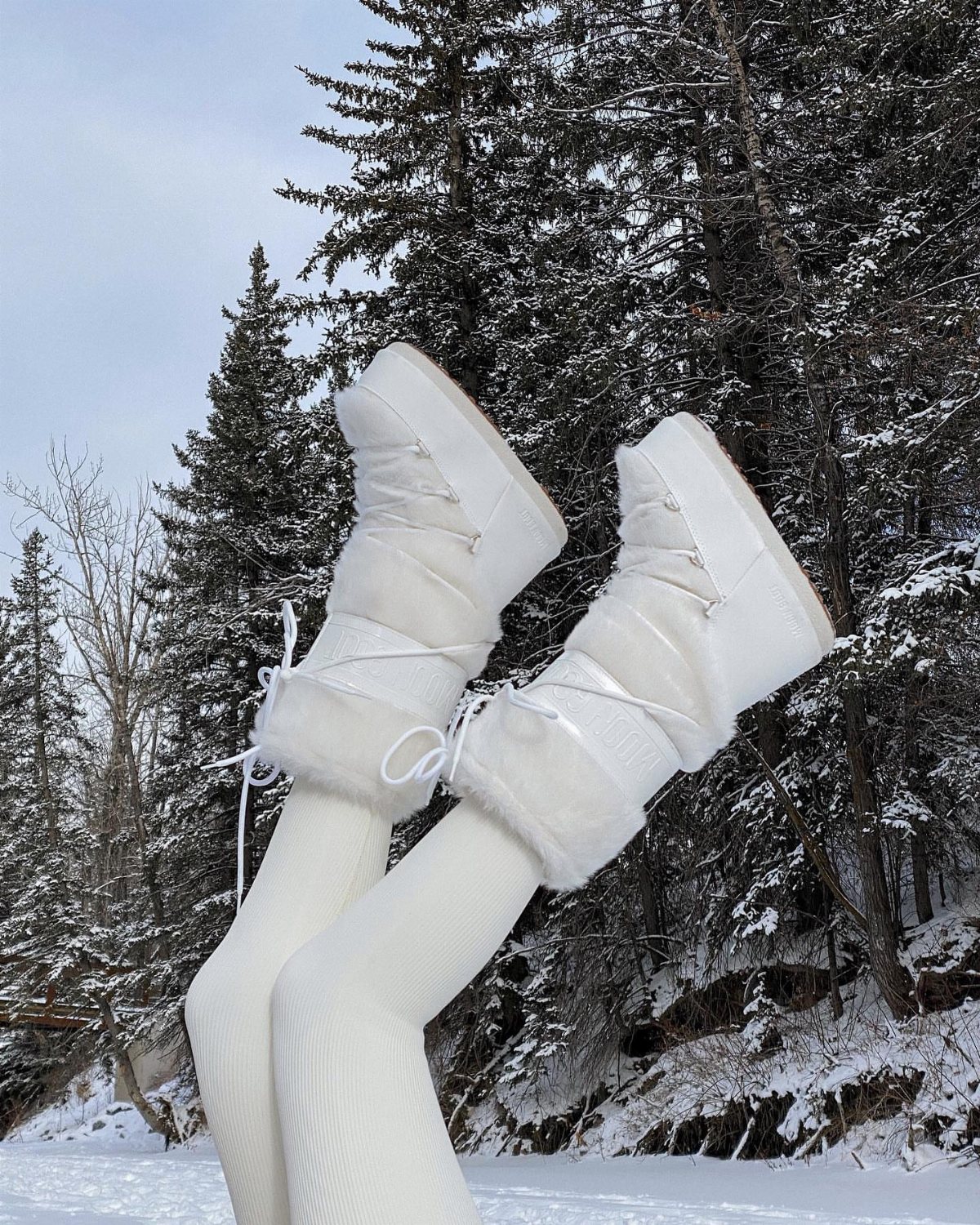
Moon Boots and their imitators have circled back from irony to actual function.
The foam shell and faux-fur lining trap heat even when laced loose, which matters if your feet swell in cold or you pull them on over thick socks.
For real snow work, though, I’d still check the sole. Deep lugs grip packed snow and ice; a flat sole looks sleek and slides.
Shearling-lined leather boots work for dry cold and short walks, but soaked leather stays wet for days.
Match the boot to the day: fashion-forward foam for resort apres, lug-sole waterproofing for anything involving actual labor in snow.
4. Fleece and Sweaters

Fleece and sweaters fill the gap between your base layer and your shell, and this is where most people overdress.
A thick fleece under a puffer in active snow is a sweat trap; the same fleece under a technical shell with pit zips might be perfect.
Wool handles odor and keeps warmth when damp better than synthetic fleece. For a full day out, I’d pack one of each and swap at lunch.
The bow-patterned or textured fleeces trending now work as standalone pieces for coffee runs, but under a jacket they add unnecessary bulk.
Check sleeve length with your arms raised; gaps at the wrist pull heat out fast.
5. Technical Jackets
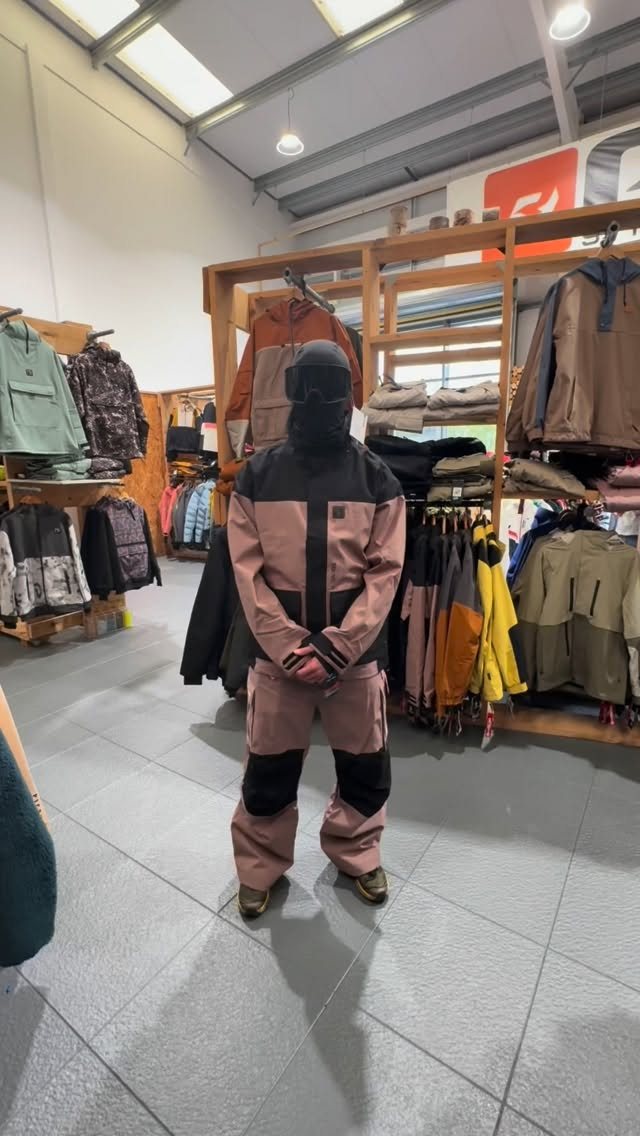
Technical jackets are what you buy when you’ve been cold and wet enough times to prioritize function.
A full system like this, color-blocked in pink and black, gives you a waterproof and windproof shell with sealed seams and reflective strips for when light gets low.
The 20,000 mm hydrostatic head rating on high-end shells means standing water won’t push through; for most resort skiing or tubing, you don’t need that extreme.
What you do need is a fit that accommodates your mid-layers without compressing them, and a hood that turns with your head.
These jackets run large to layer; size down if you run warm or plan light underlayers.
6. Thermal Base Layers
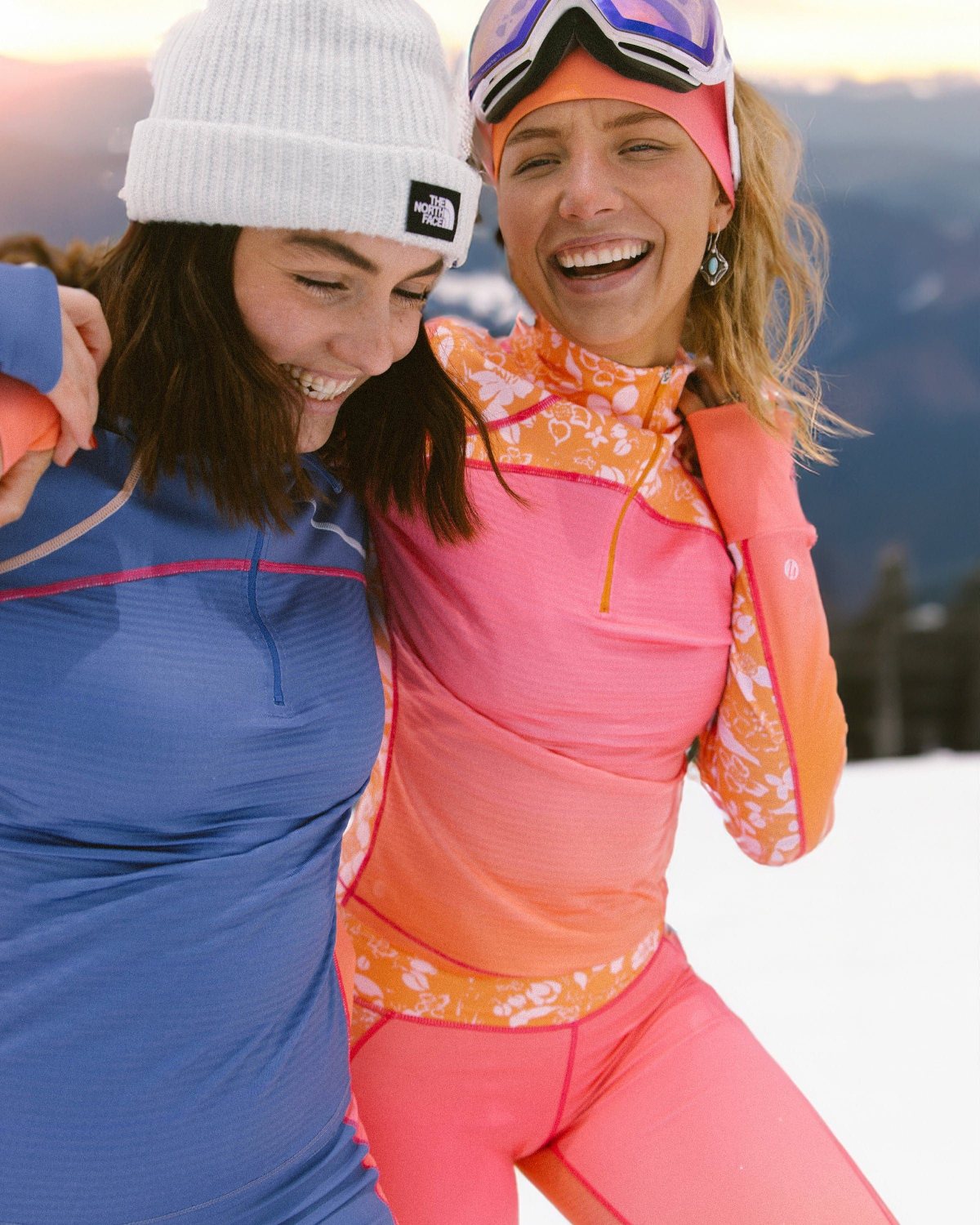
Thermal base layers sit against skin and do two jobs: wick sweat outward and hold warmth close. Synthetic blends like these colorful fitted tops dry fast; merino wool costs more and smells less after a full day.
Fit should be snug, not tight. Any bunching under knees or elbows turns to chafing by hour three.
For snow tubing, where you sit on cold plastic and then hike back up, I’d want the leggings full-length and the top tucked in.
The matching sets in bright colors photograph well; for everyday use, neutral tones layer under anything without showing through.
7. Accessories for Warmth
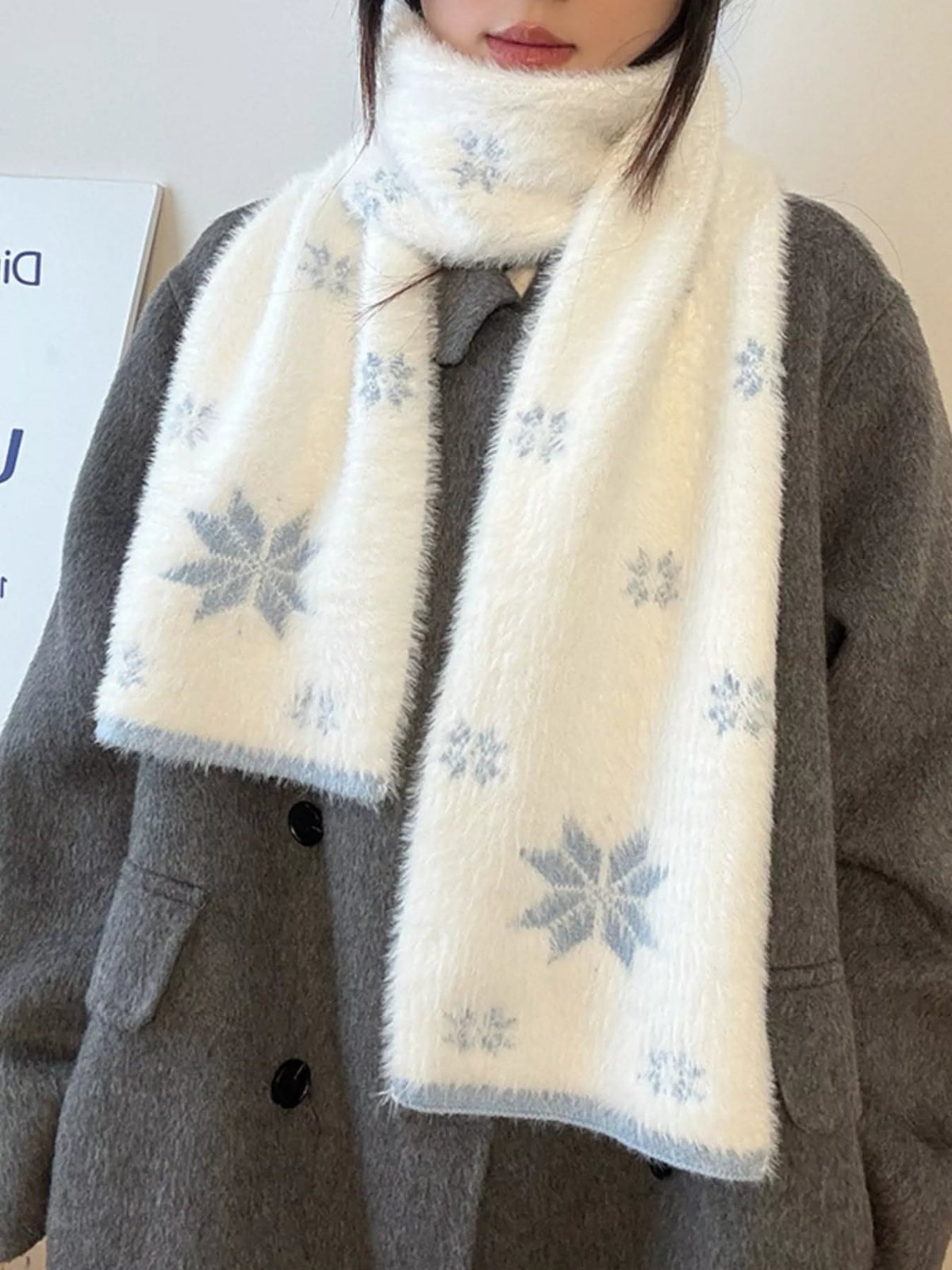
A knit scarf in wool or acrylic blend does the actual work of sealing the gap where your jacket opens at the neck, which is where body heat climbs out fastest.
A scarf long enough to loop twice and still leave tails to tuck does more to seal out cold than any pattern ever could.
Earmuffs suit anyone whose beanie rides up or who needs to hear traffic.
Thin wool socks inside thick ones is the old trick, but the outer pair should be the one with loft, not the inner one, or the sweat stays put.
I would skip the touchscreen gloves unless you already know your brand works; most fail in real cold, and pulling a liner off to answer a text is faster than standing there jabbing at a frozen screen.
Choosing Snow Clothing
The three-layer system sounds more technical than it is. Each piece needs to do its own job; a thick base layer trying to replace a mid-layer leaves you damp and bulky.
Neutrals layer without clashing, which matters more in snow clothing than in regular wardrobes because you are literally wearing everything at once. Cream, black, and beige mix with whatever jacket or pants you already own.
Waterproof ratings are where people overspend. A 10,000 mm rating handles steady snow; 20,000 mm is for sitting in slush or heavy rain.
For most tubing days or resort walks, the lower number saves money without costing comfort.
Check that your shell’s hood fits over a beanie, not instead of one. A hood that replaces your hat leaves ears exposed when you turn your head.
Snow Activity Considerations
Skiing and snowboarding demand movement, which means venting. Pit zips on your shell let you dump heat without stripping layers on the lift.
Snow tubing is the opposite: you sit, you slide, you wait in line. No body heat from exertion, so insulation matters more than airflow.
For tubing specifically, I’d want a longer cut in both jacket and pants. The contact points are your seat and your back, and short layers shift when you climb out of the tube.
Knee and seat reinforcement extends the life of pants against the plastic surface.
Boot choice shifts too. A resort skier walks on packed paths and clips into bindings; a tuber trudges through loose snow to the hill and stands in melt.
Fashion Vs. Function
The oversized foam shape that once read as ironic now solves a real problem: heat retention without tight lacing. The look is part of the package, but the package works.
Color-blocked technical shells in pink and black show how the split has narrowed. Those reflective strips serve a purpose after 4 PM in December, and the bright panels show up in photos without the dirt-magnet problem of white snow pants.
I’d still separate the two in my own buying. Fashion pieces for the apres scene, where you are visible and barely outside.
Function pieces for the activity, where nobody sees the label and everybody feels the cold.
One jacket rarely does both well; the fashion puffer with no hood vent becomes a sauna, and the technical shell at dinner reads like you got lost on the way to the lodge.
Spend on function first, add fashion where it does not compromise.
Frequently Asked Questions
What kind of clothes should I wear in the snow?
Wear layers that start with a snug thermal base layer to wick sweat and hold warmth, add a fleece or wool mid-layer, and finish with a water-resistant puffer or technical shell.
Snow pants with actual waterproofing, not just water resistance, keep you dry when you sit or fall. Finish with lug-sole boots, a scarf that loops twice at the neck, and gloves you have already tested in cold.
Can I wear jeans to snow?
Jeans are cotton, and cotton holds water against your skin instead of wicking it away, so wet jeans freeze and stay wet.
If jeans are your only option, a full-length thermal layer underneath helps, and a long waterproof jacket or rain shell over the top buys you time.
For anything beyond a quick photo or a short walk, I’d borrow or buy snow pants instead.