These snow day outfits run from a single puffer jacket you already own to a full ski suit, and the right one depends on whether your day is spent moving between heated cars and buildings or actually standing in snow.
1. Faux Fur Coat

A faux fur coat reads expensive even when it isn’t, which matters when you want one piece that dresses up whatever else you own.
A cream faux fur coat keeps its shape simple; busy patterns fight the texture and date fast.
Pair it with jeans you already have, light wash or dark. Wide-leg balances the bulk up top, skinny keeps the line sleek.
Snow boots with a slim shaft work better than chunky soles here; the coat is doing the statement work.
This one suits someone who needs to look pulled together for a holiday market or dinner out without buying a whole new outfit. It trades some mobility for that polish.
If you’re actually building a snowman, swap for the ski suit entry.
2. The Oversize
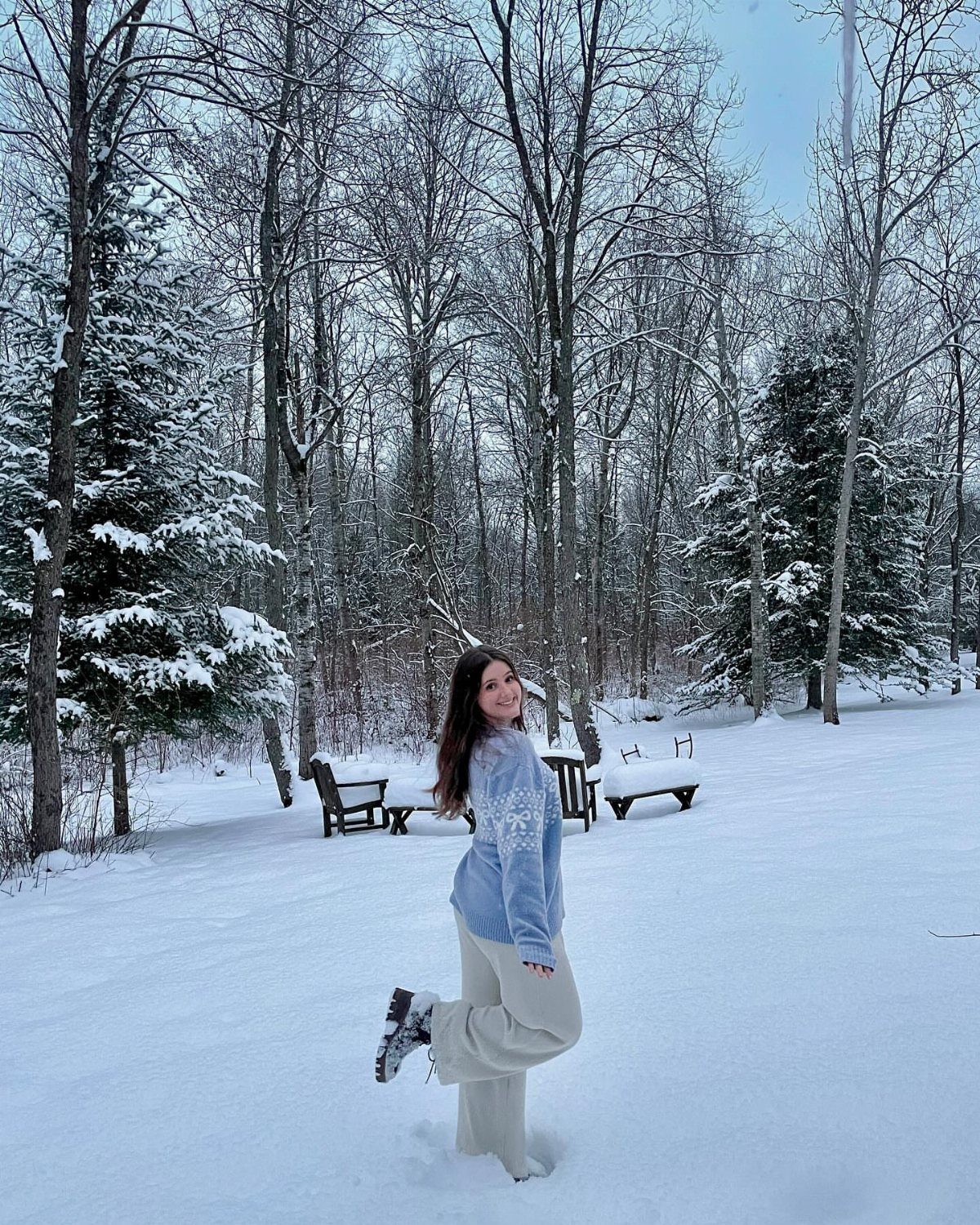
The move is the proportions: something huge on top, something structured below. NavyGrey makes wool jumpers that hold their shape even at oversize scale, worth checking if you want this to last past two winters.
Chunky knit plus wide-leg trousers, not pajama pants. Insulated snow pants work too if you’re heading out to actually play; the sweater makes even technical gear look like you planned it.
This is the most forgiving shape in the list. It suits anyone who wants to hide a midlayer or just wants to breathe.
The trade is silhouette; you will look shaped like a rectangle, which is fine if you commit to it.
3. Ski Suit
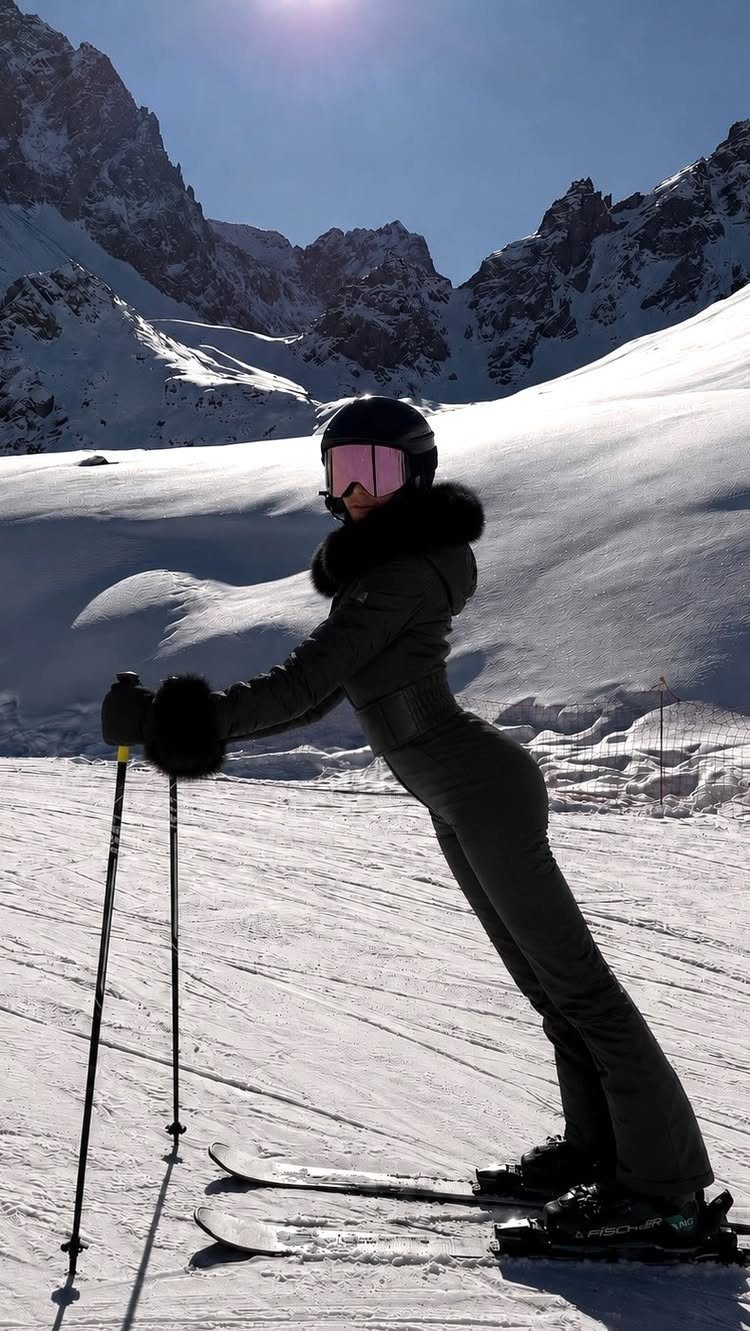
One-piece suits solve the gap problem: no snow down your back, no belt bunching under a jacket. A black fitted cut reads more city than slope, but the function is the same.
Color is where you make the call; a bright suit photographs better and shows up against white, but black goes straight to dinner afterward.
Skiing is not required. Walk the dog in this, run errands, let the kids drag you sledding.
The suit itself is the outfit; helmet and goggles are doing their job.
Best for someone who runs cold and moves around outside. It trades bathroom convenience for coverage; practice the zipper.
If you sit indoors for hours, the puffer entry below breathes better.
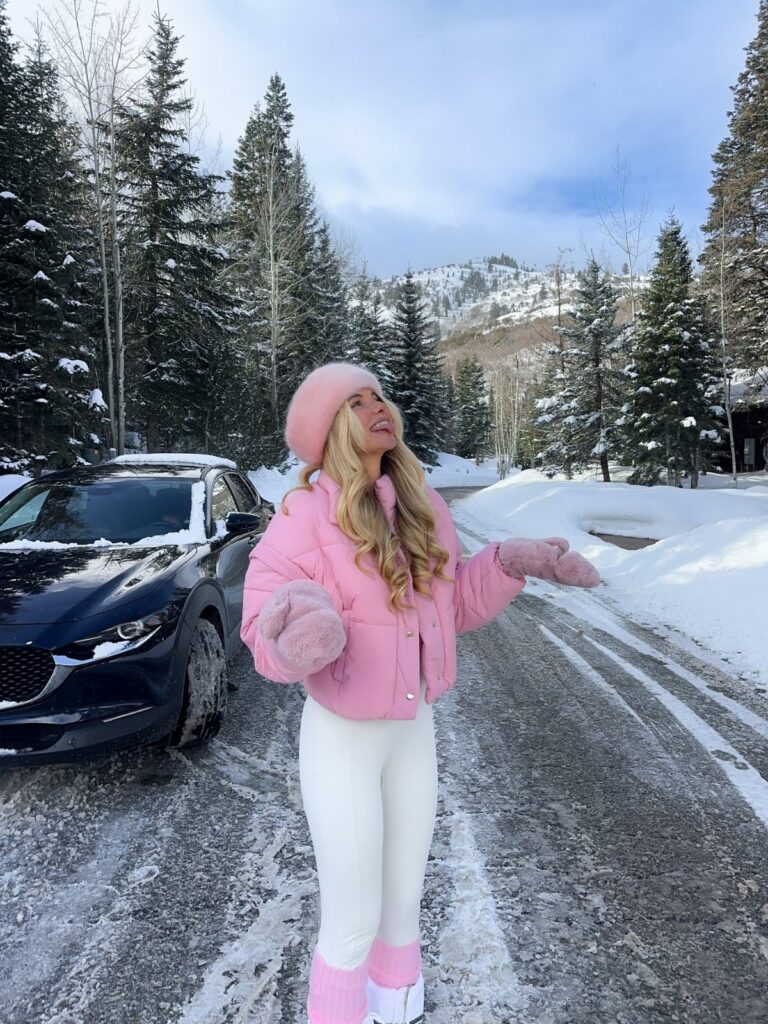
4. Puffer Jacket and Leggings
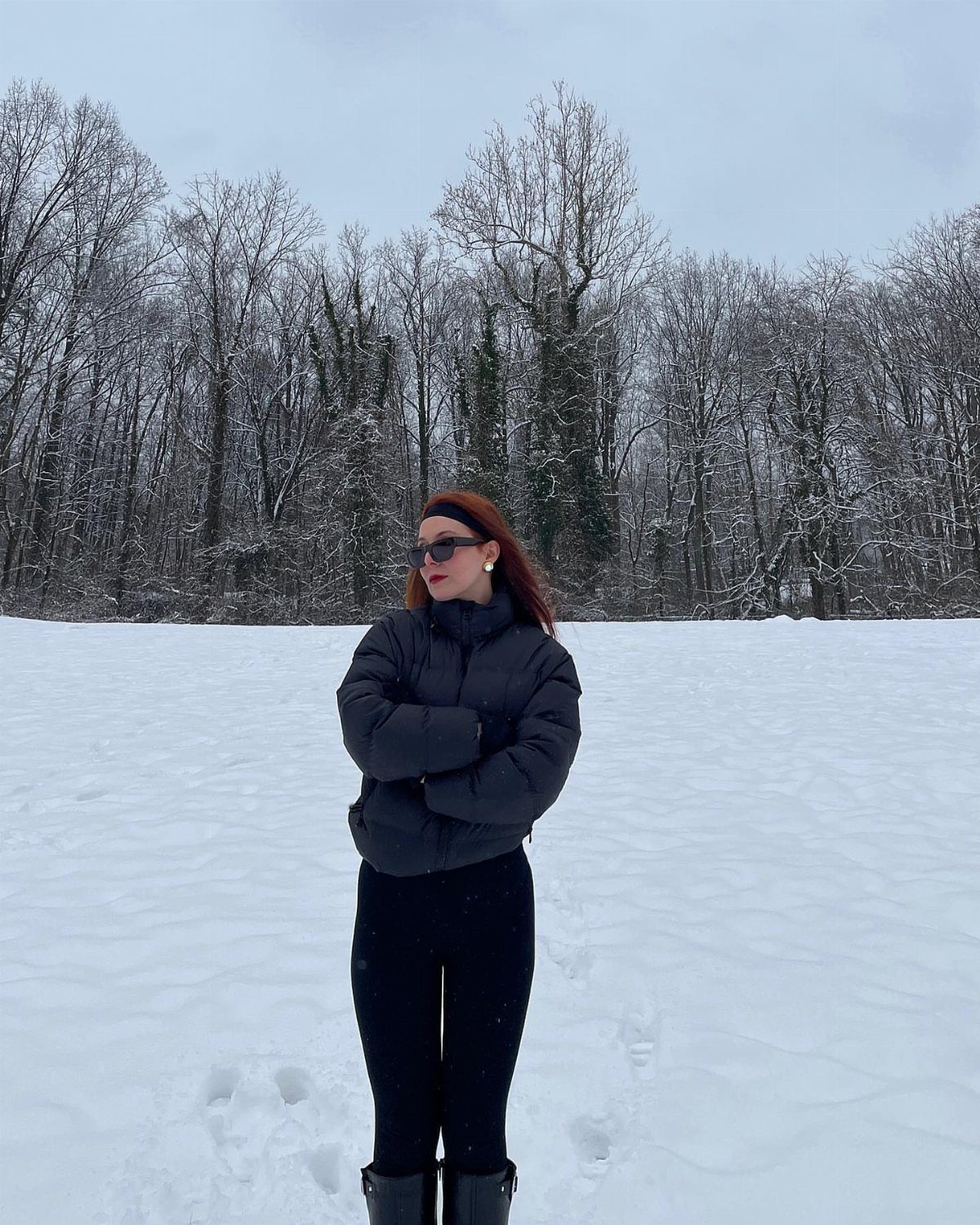
Fleece-lined leggings are the difference; regular cotton ones go see-through and cold fast.
Chunky snow boots finish it. Anything slimmer and you look like you’re going to the gym, which is fine if you are, but this is a snow day outfit.
This combination suits anyone who needs to walk a dog, commute, or chase kids across a yard. It trades drama for reliability.
The fitted puffer matters; boxy cuts swallow the leggings and make the silhouette odd.
5. Sherpa Jacket
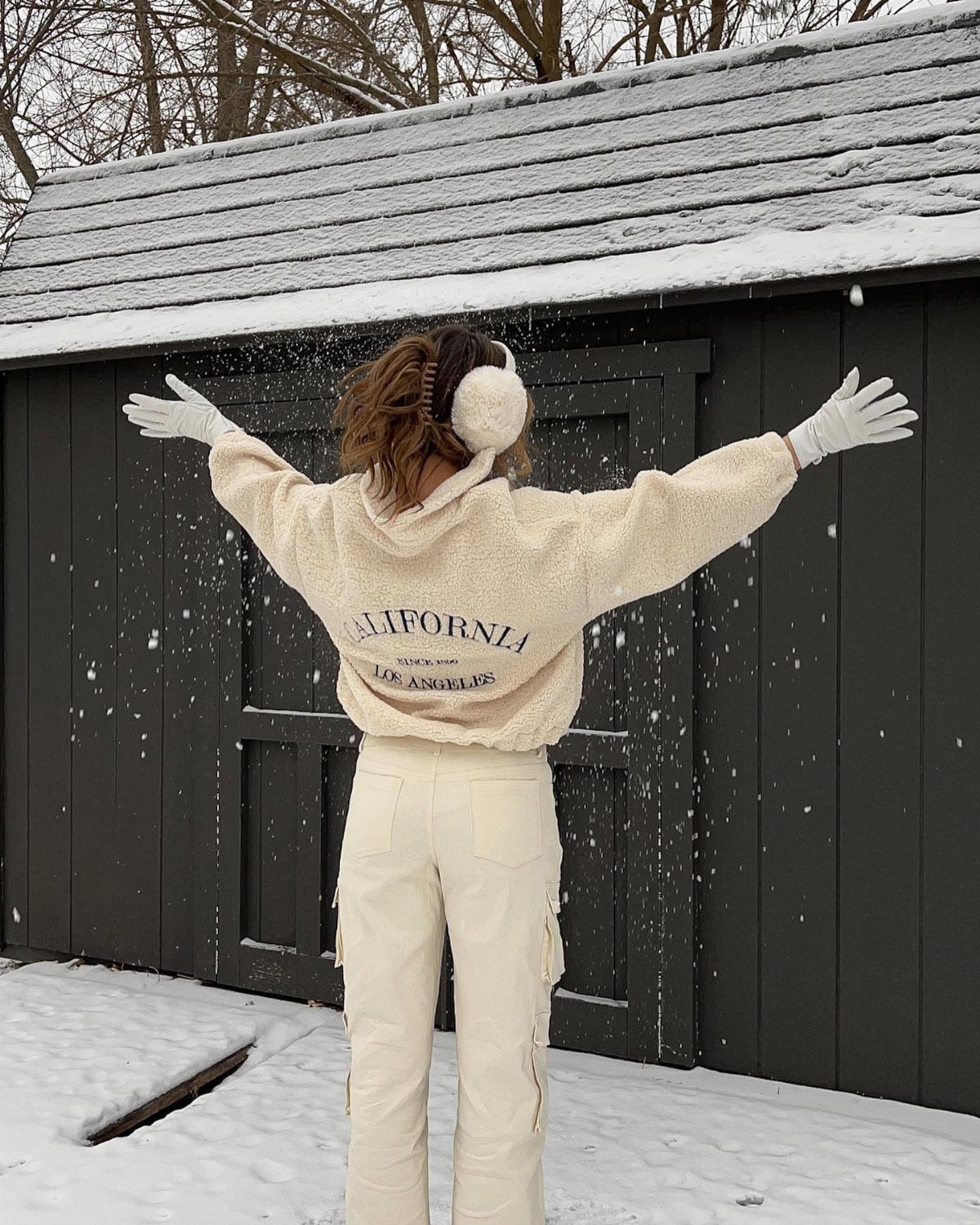
The texture is doing the work, not any print or logo. Sherpa reads casual in a way faux fur does not; you can wear it to the grocery store without feeling dressed up.
Cargo pants or activewear bottoms keep the same relaxed register. Earmuffs and gloves in matching cream, like the photo, pull it together without much thought.
The hood is functional here, not decorative; use it when the wind picks up.
This one suits the person whose snow day is errands and maybe a walk, nothing formal. If you need to look put-together for others, the teddy coat entry reads more intentional.
6. Teddy Coat with Skinny Jeans
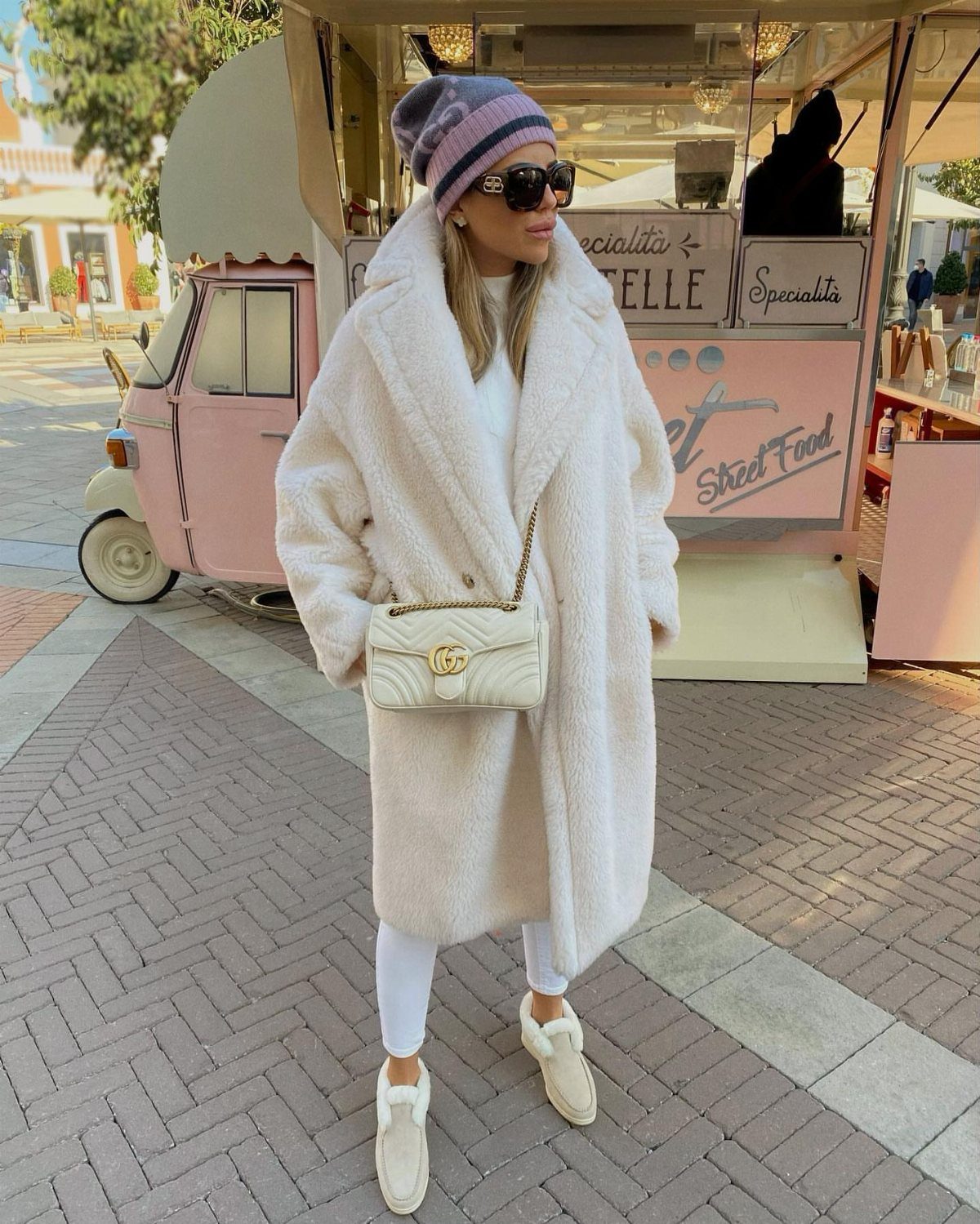
A long cream teddy coat is the statement; everything else stays quiet so it can be. White or dark skinny jeans both work, though cream on white is harder to keep clean and worth thinking about.
Lace-up boots ground the fluff. Loafers work for dry pavement only; swap in boots with tread if you’re stepping off cleared paths.
This outfit suits someone with a lean silhouette who wants the coat to be the volume. The trade is mobility; the length and the skinnies both restrict stride.
If you need to climb over snowbanks, the puffer and leggings entry moves better.
7. Warm Winter Outfits
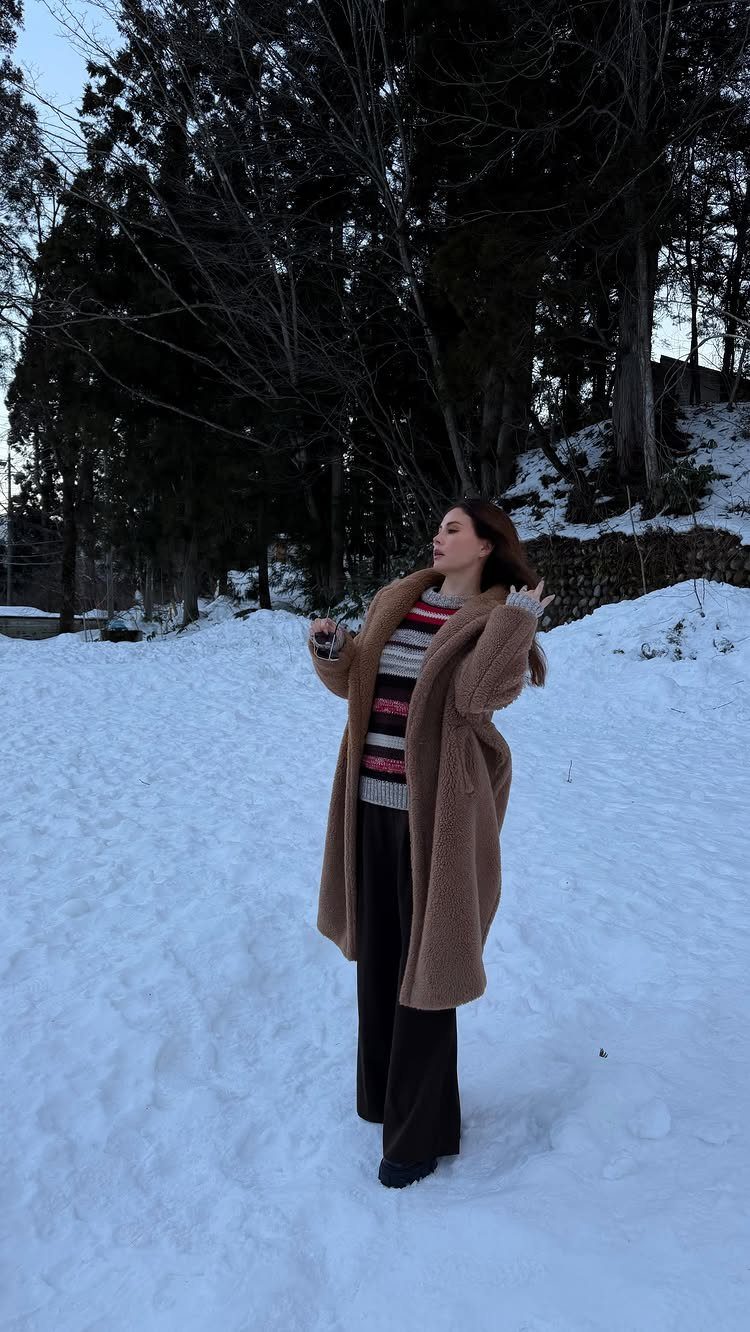
Layering is where snow-day dressing stops being a guessing game and starts working for your actual life.
A long teddy coat over a sweater with enough room to move, wide-leg trousers that do not cling, and nothing so tight that adding a base layer underneath becomes impossible.
Start with fleece-lined leggings or thermal tights if the day involves real time outside. A long sweater that covers your hip line keeps the gap between top and bottom from turning into a cold strip.
Winter boots with actual tread complete it; fashion soles slide on packed snow.
This approach suits anyone who needs one outfit to carry from errands through an unexpected stop at a friend’s house. Bulk is the price you pay.
You will not look streamlined. You will look like someone who planned ahead and stayed warm doing it.
There’s no sugar-coating it: it’s officially freezing. After a winter that’s felt comparatively mild, temperatures have taken a sharp turn, and with snow finally on the forecast, dressing for the cold is essential.
8. Tan Wool Coat with Leggings
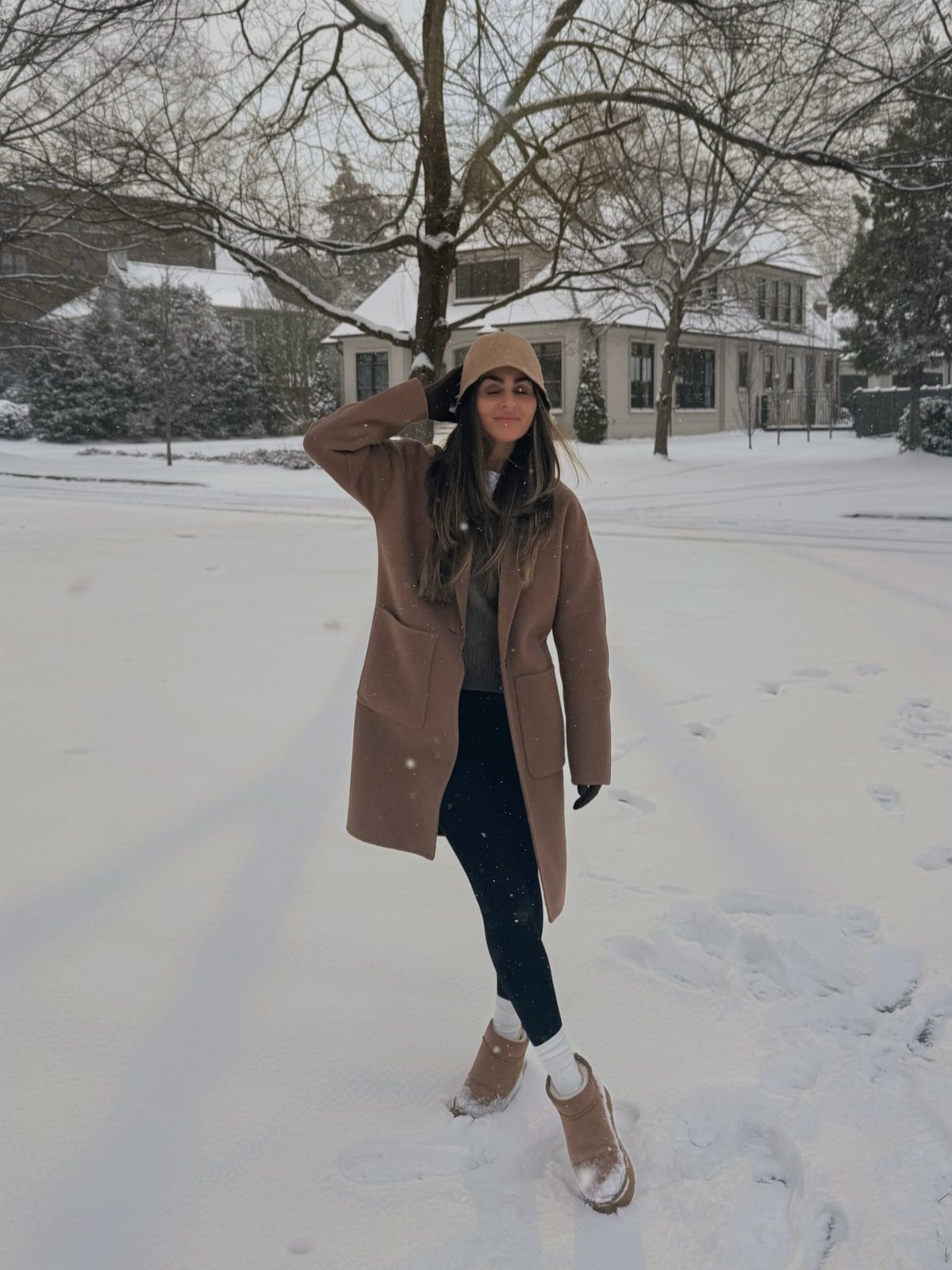
A tan wool coat warms up a snow day without the heaviness of a puffer.
The color reads softer against white streets than black or navy, and it pairs with the leggings and boots most of us already pull on for errands.
Mid-length works for daily wear; full length adds drama if you are walking somewhere visible. Layer climawool tights underneath on the coldest afternoons, or wear the coat open over a knitted dress if the day ends somewhere indoors.
Reserve this for dry snow. Wool coats soak through in sleet, and the belted versions that look sharpest rarely come with hoods.
A matching tan hat fills that gap without breaking the line.
9. Belted Black Wool Coat
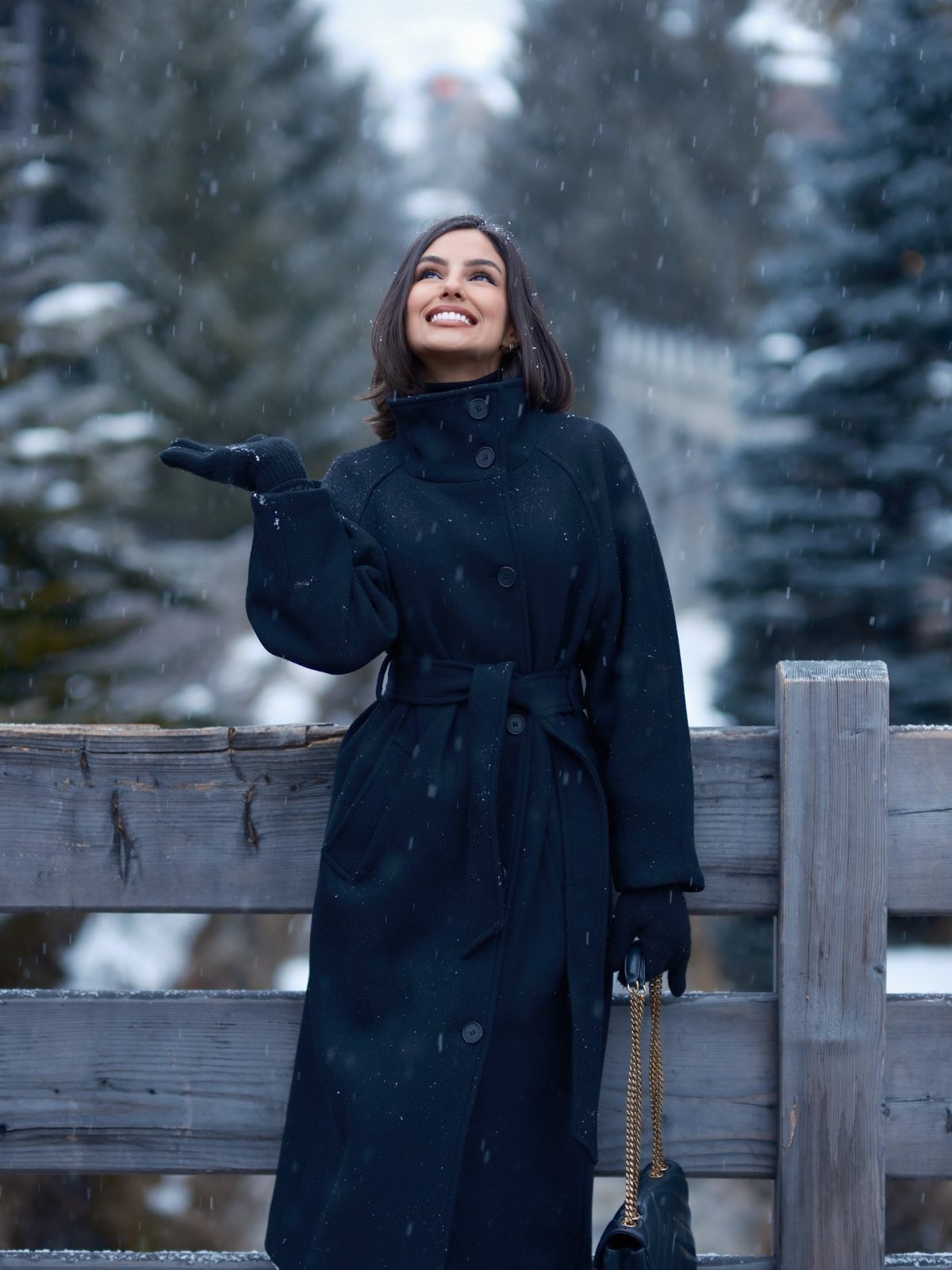
The belted black wool coat is the one I’d pick for a small group, a date, or any snow day where you need to look like you planned this.
The belt defines the waist that boxy winter gear usually hides, and the all-black column underneath, gloves included, keeps the silhouette long rather than layered-lumpy.
Falke’s climawool tights layer well here if you need extra warmth under trousers; leather riding boots work over leggings for a similar effect.
A belted black wool coat earns its keep by cinching at the waist instead of hanging like a tent, which matters more than the label inside. Massimo Dutti and & Other Stories both cut belted versions with enough length to matter.
Wet snow is still the enemy. This outfit trades absolute weatherproofing for polish, so check the forecast before you commit.
Layering for Warmth
Thermal base layers are the foundation that makes the rest of your outfit possible. A fitted turtleneck sits cleanly under a sweater without adding bulk at the sleeves, and a long parka over both traps heat where you need it.
The gap between top and bottom is where cold air sneaks in. Black leggings under a khaki parka keep the silhouette simple; the color contrast does the work so the layers do not have to.
Fur-lined boots ground the look, though I reach for a chunky scarf just as often, and it does more of the warming than the boots get credit for.
Wool or cashmere against your neck changes how warm the whole outfit feels, even before you wrap it.
Accessorizing Winter Outfits
A chunky scarf in a shade that matches your coat pulls the eye upward and keeps heat from escaping at your collar. Leather gloves read more intentional than knit, and they last longer against wet snow.
Sunglasses in winter are not a affectation. Snow reflects light upward; without them, you squint through every errand.
Oversized frames suit the scale of a faux fur coat or a teddy coat, balancing the volume.
A pom-pom beanie reads playful against technical snow gear, which is the point. The texture of the pom does the same work a print would, without competing with a patterned sweater underneath.
Choosing the Right Footwear
Insulated boots with a slim shaft work under wide-leg trousers or a faux fur coat, where the line needs to stay clean.
Chunky soles belong with chunkier proportions, the oversized knit and snow pants combination, where they do not look like an afterthought.
Fashion soles, even on a boot that looks right, slide when you need them to grip. I would keep a pair with tread by the door and swap at the threshold if the day includes both indoors and out.
Duck boots handle slush better than leather; the rubber base sheds water where a seam would let it in. They suit the layered, practical register of a vest over a tissue-thin turtleneck, nothing too polished to risk.
Color Coordination
Monochrome works in snow because the background is already white; a single color from head to toe creates a shape that reads deliberate against it.
Cream on cream, or black head to toe, keeps the focus on texture, the difference between matte leggings and a sheen puffer, or the nap of faux fur against smooth wool.
A bright ski suit photographs against white snow the way black does not. If you are buying for function and expect to be in pictures, the color is worth the thought.
Black goes to dinner afterward without looking like you came from the mountain; the trade is visibility in the moment.
The look is striking when it stays pristine; it loses the effect at the first slush mark.
Frequently Asked Questions
What do you wear on a snow day?
Layers that start with fleece-lined leggings or thermal tights if you’ll be outside for real time, plus a long sweater that covers your hip line so no cold strip forms between top and bottom.
Add a puffer, teddy coat, or ski suit depending on whether your day is errands, dinner, or actual sledding.
Are jeans ok for snow?
Jeans work with a faux fur coat or teddy coat for a holiday market or dinner out, though wide-leg balances bulk better than skinny if you’re layering underneath.
For real snow play, swap to ski pants or insulated snow gear; cotton denim goes cold and damp fast when it matters.
What are some trendy winter outfits for 2026?
Faux fur coats, activewear-inspired one-piece ski suits, and smart layering with chunky knits over wide-leg trousers or insulated snow pants.
A bright ski suit reads as intentional against white snow in photos; black works better if you are heading straight to dinner afterward.
Playing with scale is what makes it feel current: an oversized piece on top paired with something fitted or structured below.