The coat-over-dress ideas below range from a denim jacket you can find on sale to a statement faux fur, and the right one depends on whether your dress needs grounding, edge, coverage, warmth, or a fix for fit problems.
A cropped bomber keeps legs looking long over longer hemlines, while a cape eliminates the sleeve-bunching that stops most people from layering at all.
1. Denim Jacket

A denim jacket is the piece I reach for when a dress needs grounding without going formal.
The wash matters more than most people think: lighter denim reads casual over cotton or floral dresses, while a darker rinse can stand in for a blazer at a small-group dinner.
I prefer an oversized cut over something fitted because it leaves room for the dress to move, though a cropped version works better with full skirts where you want to keep a waistline visible.
For spring travel, this is the one layer that covers temperature swings and still looks intentional at brunch.
Tuck just the front hem into your waistband or belt if the silhouette starts feeling boxy; that small adjustment defines your waist without adding bulk.
2. Bomber Jacket

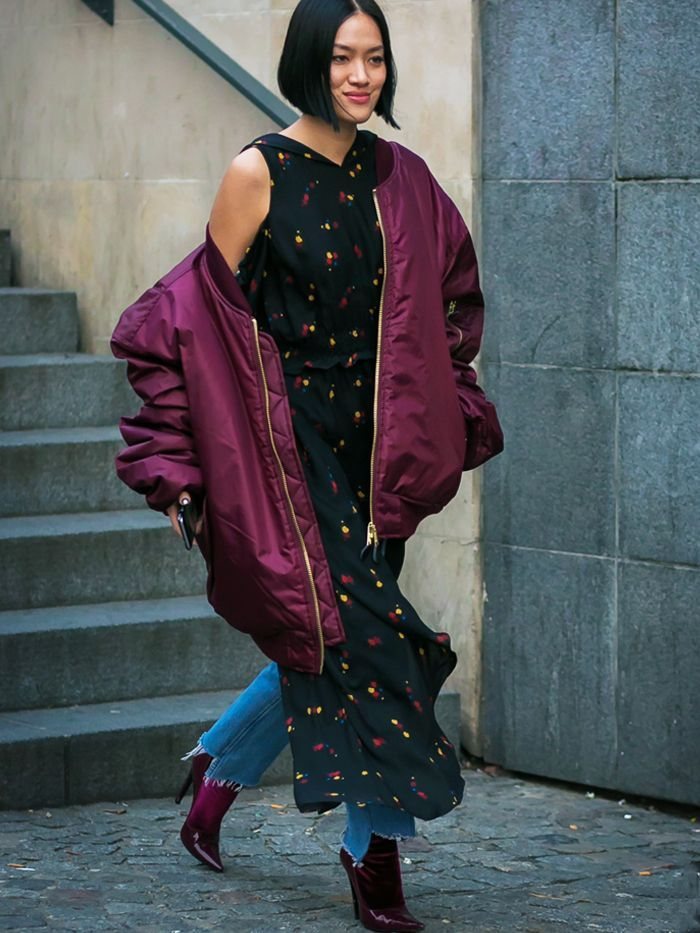
Satin bombers have taken over from the nylon versions I used to wear, and the fabric change makes them wearable over dresses that used to feel too delicate for this shape.
A burgundy or black bomber thrown over a lace-paneled or floral dress creates tension between feminine and street that reads as styled rather than thrown-on.
I look for neutral colors, black, khaki, ivory, so the jacket earns its closet space across multiple dresses.
The cropped length is deliberate with longer hemlines. It keeps your legs looking long and shows enough of the dress that the outfit still registers as a dress moment.
This is the option for someone who wants edge without the heaviness of leather or the formality of a tailored coat.
3. Lightweight Duster

A longline duster in an open weave is the layer I pack first for spring trips because it folds to nearly nothing and pulls together outfits I planned poorly.
The gold or metallic versions add enough interest that a simple black dress underneath feels complete; a camel duster with silk and ankle booties reads as casual but never sloppy.
What the duster offers is coverage without structure, which suits dresses that already have their own shape.
A printed or embroidered duster can carry the whole look. Pair it with a plain slip dress and skip the necklace; the outer layer supplies enough visual weight.
Wind is the problem here; a duster catches it, so skip this choice on gusty days.
4. Faux Fur

Faux fur over a sweater dress is the combination I default to when temperatures drop and I still want to look like I made an effort.
In 2026 the quality has improved enough that the texture reads expensive from across a room, not just in a close-up photo.
The length you choose changes the effect. A longer coat over a shorter dress creates proportion problems unless you are tall; I stick to a midi faux fur over a midi dress, or go short over long.
This is not a practical choice for rain or slush, so check the forecast before you commit.
5. Cape

A cape solves the fit problem that stops people from layering over dresses in the first place. There are no sleeves to bunch, no shoulders to strain, and the silhouette stays clean from any angle.
The ivory version with a neck bow visible here reads formal, but the same shape in wool or tweed works for daytime; the fabric shifts the occasion more than the cut does.
What you give up is arm coverage and the ability to easily carry a shoulder bag.
I plan for a crossbody or clutch when I wear mine, and I choose a cape that falls past the elbow so I am not constantly adjusting.
This suits anyone whose dress has a sleeve detail worth showing, or whose coat size never quite matches their dress size.
6. Oversized Leather Jacket

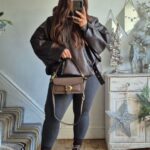
Brown leather in a room-filling cut reads expensive even when it isn’t. Proportion keeps the look clean: the jacket should clear your hips by a few inches so the dress underneath stays visible, not swallowed.
I reach for this pairing when a short black dress feels too bare for the occasion but I still want the leg line.
Faux works as well as real at this scale, and the weight hangs better than you’d expect. Moto zippers or a clean front both do the job; the shoulder needs to hit past your natural line.
Best for: hourglass and rectangle shapes where the structure creates shape, or anyone who wants to look deliberate fast.
7. Shearling-Lined Denim Coat

Long denim with shearling trim is the coat you grab when the night turned cold and you still have three stops to make.
The cream lining against a black slip dress creates that high-low mix that looks considered rather than accidental.
Length matters more than color here. At mid-calf or longer, the coat becomes the outfit’s architecture and the dress becomes a detail; at hip length, the balance reverses.
I wore a rented version through a Barcelona November and ended up keeping it, which tells you how often it reached for me.
Ankle boots finish it cleanly; anything higher fights the hem.
Best for: early winter travel when you need one coat to carry four dress changes.
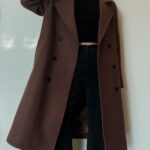
8. Long Tailored Wool Coat

A bright red tailored coat over a fitted black turtleneck dress is doing two jobs at once: the color carries the room, and the cut carries your posture.
The dress underneath needs to be thin enough to layer without bunching, which usually means a fine rib or a knit dress with some compression to it.
The coat’s the investment here. In wool or a wool-cashmere mix, the drape stays sharp through years of dry-cleaning.
I look for a vent that lets me walk normally and pockets that don’t gap.
This pairing lives or dies on fit. Too loose and you lose the column effect; too tight and the dress ridges show through.
Best for: occasions where you need to look like you planned this this morning, because you did.
9. Oversized Blazer

A beige oversized blazer over a long black slip dress solves the problem of looking dressed without looking dressed-up. The blazer adds the structure the dress lacks; the dress adds the ease the blazer usually doesn’t allow.
I keep a white linen version at my office for exactly this rescue, but the beige reads softer against black satin.
The magic is in the sleeve: pushed to the forearm, it says you meant to be here; covering the wrist, it says you might have come from somewhere else.
Belt it and the whole look shifts to intentional hourglass. Wear it open and the vertical line does the work.
Best for: the invitation that says "smart casual" and means "figure it out yourself."
10. Belted Utility Jacket

An olive belted utility jacket over a white dress gives you waist definition without the formality of a trench or the bulk of a wool coat.
The belt is the feature, not an afterthought: sewn-in or removable, it needs to sit at your actual waist to do the job.
The utility details, pockets, epaulets, they keep the look from going too sweet against a light dress. I treat the scarf as separate warmth, not part of the silhouette; tied loose, it fills the neckline without competing.
Cropped length keeps the proportions modern. Longer utility cuts start reading costume.
Best for: the transition days in fall when you need real warmth in the morning and real ventilation by afternoon.
Choosing the Right Outerwear
A formal dress needs outerwear that respects the occasion. Denim and nylon bombers belong at daytime events; save them for cotton florals and casual knits.
For a wedding guest dress or anything satin-lined, a tailored wool coat or the structured cape keeps the tone consistent from door to table.
The mistake I see most is treating outerwear as an afterthought. Your coat is the first thing people see when you arrive and the last when you leave.
If the dress code reads "cocktail" or above, casual layers undermine the effort underneath. Faux fur works here because its texture signals intention, even in a shorter cut.
Layering for Warmth
Temperature drops fast in restaurant entryways and theater lines. A wrap or open duster solves this without the commitment of a closed coat; you can shed it once the heating kicks in and your outfit still reads complete.
I plan my indoor layer first: if the dress is sleeveless, the outer piece needs enough coverage that I am not clutching a wrap through dinner. A cape leaves arms exposed, so a long-sleeve dress underneath becomes necessary in winter.
Versatility of Coats
The coats that earn their hangers handle more than one kind of evening. A dark-rinse denim jacket works for brunch and a small-group dinner; a metallic duster carries spring travel and a low-key birthday.
I look for pieces that cross at least two occasion types before they make it home with me.
Neutral bombers in black, khaki, or ivory pull this off best. The same jacket over a lace dress reads styled; over a plain tee and trousers it reads casual.
Faux fur limits itself to dressier moments, so I weigh its closet space against how often those occur. One versatile layer beats three single-use ones.
Styling Tips
Proportion matters more with dresses than with pants. An oversized jacket over a fitted midi works; oversized over a full skirt swallows your shape.
A cropped bomber or denim jacket with a long hemline keeps legs looking long. I belt oversized shapes when the dress underneath is simple; when the dress has its own waist detail, the jacket stays open and shorter.
Frequently Asked Questions
What is the coat that goes over a dress called?
There is no single name; the right outer layer depends on the dress and the occasion.
A wool dress coat handles formal events, a denim jacket grounds casual cotton dresses, a bomber adds street edge to lace or florals, and a cape solves fit problems when sleeves bunch or shoulders strain.
What is a cute jacket to wear over a dress?
A denim jacket is the most reliable choice for cute without trying too hard. An oversized cut gives the dress room to move, while a cropped jacket keeps a waistline visible under full skirts.
What to wear over a dress when it gets cold?
Faux fur over a sweater dress is my default when temperatures drop and I still want to look like I made an effort.
A wool dress coat needs matching length: a long coat over a short dress throws off proportions unless you are tall.
Can I wear a coat with a dress?
Yes, and the combination works when the coat complements the dress shape rather than fighting it. Fabric moves the occasion more than cut does: ivory with a neck bow reads formal, while wool or tweed belongs to daytime.