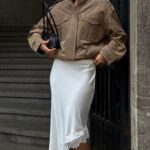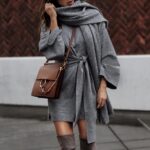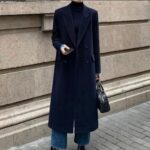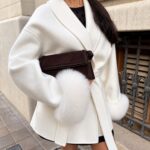
The ideas below run from a layering tee to wool coats that cost enough to justify wearing all week, and the right pick depends on whether your winter day is spent walking to transit or sitting in a car.
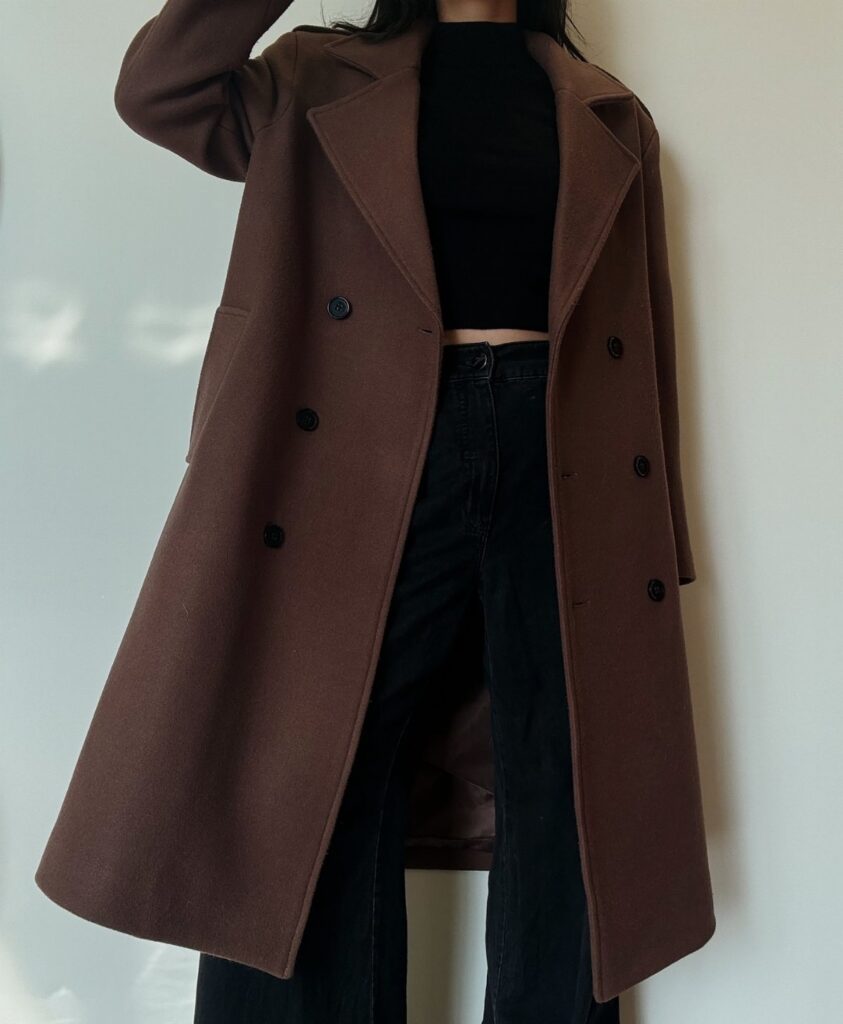
A double-breasted brown wool coat with a structured collar reads finished on a platform; a cropped matte puffer with a hood replaces the scramble for a hat when the forecast starts with a minus sign.
1. Long Wool Coat

A long wool coat in a warm brown does more than keep heat in; it pulls together an outfit that would otherwise read as separate pieces.
I look for double-breasted shaping with a structured collar that sits up, not floppy, because that architecture is what makes the coat read as finished rather than thrown on.
H&M runs lower if you are replacing a coat every few years.
Aritzia or Mango cost more but the fabric weight and seam finishing hold up to daily wear through multiple winters, which is where I would put my money if I wore one coat most days.
This piece works best for someone who walks to work or waits on transit platforms and wants to look deliberate before the coat comes off.
Bulk in a car or crowded office is the cost; a puffer vest handles those days instead.
2. Chunky Knit Sweater

Chunky knit sweaters read casual by default, which is exactly why I like them for days when I want to look like I made an effort without actually making one.
The beige crewneck sits heavy enough to wear as a top layer over a thin tee, and the ribbed cuffs keep the shape from ballooning.
Abercrombie’s Easy Tee works underneath if you need a base layer; the fit runs neither tight nor loose, so it does not fight the sweater’s volume.
White sneakers underneath keep the whole thing from sliding into lumberjack territory, and a slim black tote finishes it rather than a backpack that would compete.
This formula suits anyone whose winter days split between coffee runs and low-stakes meetings.
The sweater’s weight is the real limit: it does not layer cleanly under a fitted coat, so I plan the outerwear around it, not the other way around.
3. Tailored Trousers

Wide-leg trousers with a sharp pleat and a proper waistband do something jeans cannot: they hold their shape through a full day of sitting and standing without looking like you slept in them.
The brown pair sits high on the waist, which lengthens the line even with a cropped sweater on top.
I would wear these with a dark brown wool coat and a simple knit underneath, then let pointed boots extend the leg line where the trouser breaks.
A suede bag picks up the coat’s tone without introducing another color to manage.
These work for an office that runs cold and casual, or for dinner when you want to look dressed without the formality of a dress.
The pleat adds volume, so I skip this cut if I am already broad through the hips; a straight-leg trouser from the same fabric reads leaner.
4. Layering Basics

Layering basics are the pieces no one compliments you on that make every compliment possible.
A white tank under a black waffle-knit cardigan gives you two temperatures at once: peel the cardigan for a heated room, add it back for a drafty hallway.
The Abercrombie Easy Tee at $25 is the right weight for this, or a Skims crew if you want something thinner that disappears under a tighter sweater; size up so the shoulder seam does not pull.
Anine Bing makes a sweatshirt that survives years of washing if you live in sweats and want one that does not pill at the cuffs.
This approach suits anyone whose thermostat and calendar disagree daily. The limit is bulk: three thin layers beat two thick ones for warmth, but they take longer to assemble in the morning.
I lay mine out the night before when I know the day will shift.
5. Faux Leather Pants

Faux leather in a relaxed cut gives you the polish of leather without the maintenance or the guilt.
The black wide-leg pair sits high at the waist and falls straight, which reads as trouser rather than legging and works with a tucked-in ribbed top or a cropped sweater.
Abercrombie’s Relaxed Fit is the version I would point you toward if you are trying this shape for the first time.
A black leather jacket on top risks too much shine, so I would soften it with a gray cardigan and let brown ankle boots pick up warmth from the bottom half.
These trade away the stretch of denim, so I would not wear them for a day that involves a lot of bending or sitting on the floor.
For a dinner or a gallery opening, though, they do more than jeans ever could.
6. Knit Dress

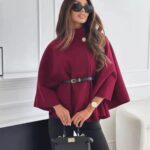
A cable-knit dress in a deep burgundy is the fastest way I know to look dressed without deciding on separates.
The mini length keeps it from reading as a blanket, and the long sleeves mean you are not solving for a coat and a wrap simultaneously.
I would wear this with knee-high boots and a long black coat, then add a burgundy bag if I wanted one color note that did not require a scarf decision.
The maker of this one layered it against snow, which tells you the knit is dense enough for real cold, not just office cold.
This shape suits anyone who is tired of jeans but does not want the fuss of a skirt and top. Movement is the cost: a knit this thick does not stride, it walks.
For a day with a lot of stairs or a long car ride, I would pick a knit skirt and sweater instead.
7. Wide-Leg Trousers

Wide-leg trousers give the lower half room to breathe without looking like you gave up. A slim belt at the high waist keeps the volume from swallowing the frame.
I reach for corduroy in winter because it reads as texture, not slouch, and the rib catches light enough that solid brown never goes flat.
A fitted turtleneck or tucked-in knit up top is the move; anything boxy turns the shape into a tent. For petites, a heel or platform helps the leg line.
Taller frames can go flat and still keep the proportion.
Check the rise before buying. Too low and the wide leg starts from the hip, not the waist, which shortens everything.
8. Puffer Jacket

A puffer jacket is what you grab when the forecast starts with a minus sign. A cropped, matte black finish keeps it from reading like ski gear on city streets.
A hip-length cut over a monochrome base, white on white, holds heat where it matters and moves easier in a car or crowded store. The hood is non-negotiable for me; it replaces the scramble for a hat.
Look for a baffle pattern that doesn’t balloon at the sides, and check whether the fill is down or synthetic if you run warm or need to wash it often.
For dry cold, a thinner layer underneath suffices. Wet cold demands a tighter weave or a treated shell.
Mixing and Matching
A winter wardrobe that earns its keep is one where each piece works with at least two others you already own.
I start by laying out the coat, the sweater, and the trouser I plan to wear most; if a third piece does not pair with two of them, it does not make the cut.
Color repetition does more than matching ever could. A brown coat, brown boots, and a brown belt let you move between black and cream tops without deciding each morning.
A phone list of which pieces share a tone keeps me from buying a fourth shade of tan that talks to nothing.
The real test is whether an outfit comes together before the coffee finishes brewing. If I cannot build a complete look in that time, the mix is too narrow.
Three bottoms, four tops, two coats, and two pairs of shoes gives me twenty-four combinations; that is enough to get through a month without repetition.
Everything you need to know about winter fashion, all in one place. Read on for the latest trend reports, outfit ideas, and editor-curated shopping guides.
Color Coordination
A capsule palette for winter needs a base that does not fight the season’s darkness. I work from two neutrals and one color, never three colors at once.
Brown and black together read as intentional if the textures differ; brown and black and burgundy read as a mistake.
White and cream are not interchangeable here. Cream warms under indoor light and pairs with camel and chocolate; white goes flat against winter skin and works better as a single accent, a tee or a sneaker, not a full layer.
Shades that actually appeared in outfits from year to year are the ones worth adding again. Last season’s entries showed brown dominated, black served as structure, and burgundy came in only as that cable-knit dress.
I am not adding a forest green sweater this year; the color is fine, but it would sit unused.
Investment Pieces
The pieces that justify their price are the ones that face the weather directly. A wool coat worn daily through the season needs fabric weight that does not pill at the collar and seams that hold after dry cleaning.
The fiber content tag matters more than the price; a coat with mostly wool holds its shape, while blends tend to look tired by February.
Boots follow the same math. Waterproof Chelsea boots sized up half a size, as the waterproof pair demands, last through slush seasons that destroy standard leather.
Sneakers get replaced once they lose structure regardless of brand; they are not investment material.
Black boots for most days and Chelsea boots for rain handle the winter rotation without overflow. One sleek black boot for dry days and office floors, one weatherproof pair for rain and snow.
Adding a third or fourth pair does not extend the wardrobe; it just spreads the wear thinner across pairs that all age slower but none age well.