Warm clothes for winter range from a beanie you grab on the way out the door to a coat you will wear season after season, and the right pick depends on whether your coldest regular walk is quick or drawn-out.
A two-way zipper matters more than down fill if you commute by train; seam sealing matters more than style if you walk the dog on ice.
1. Warm Accessories
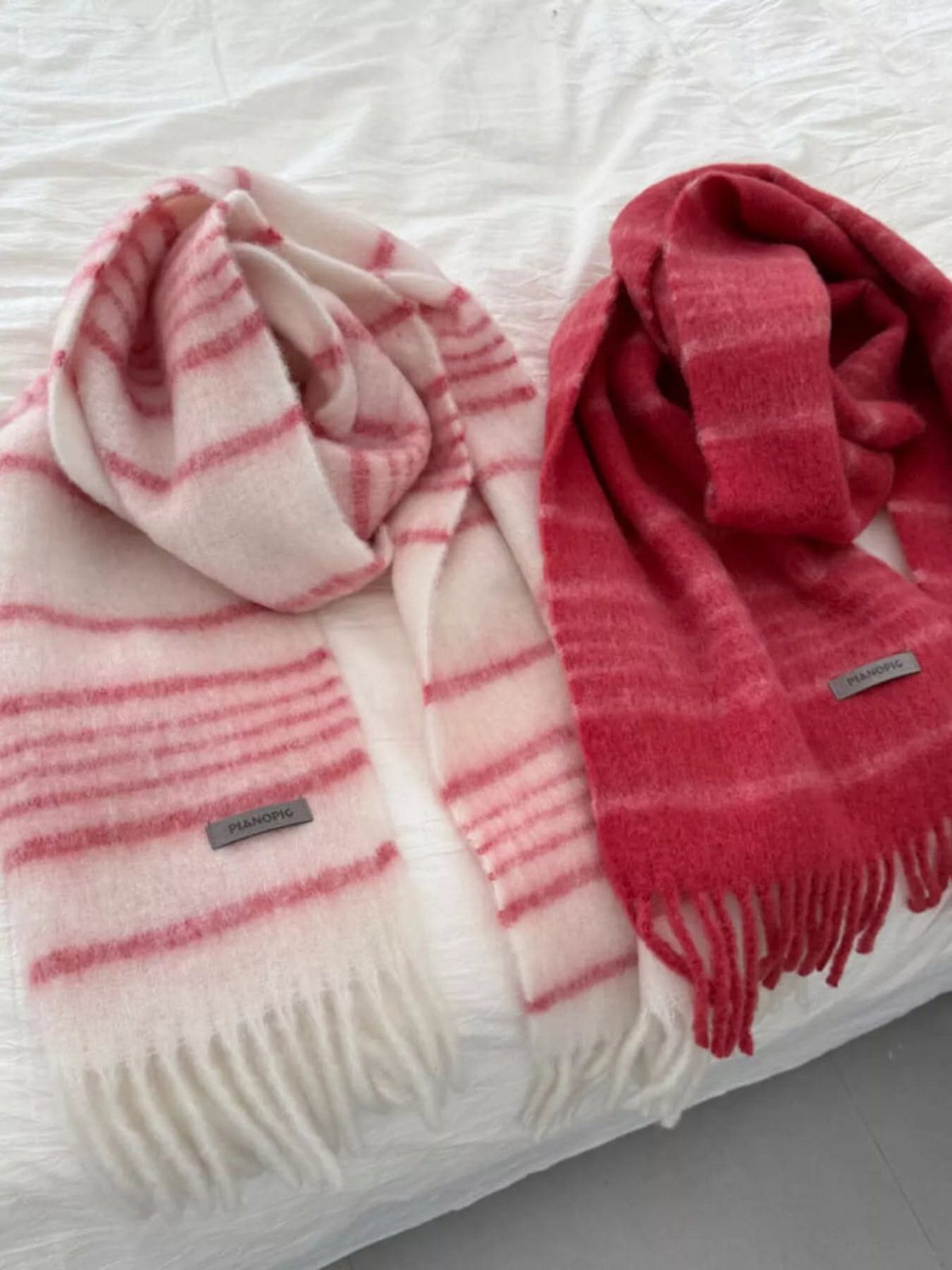
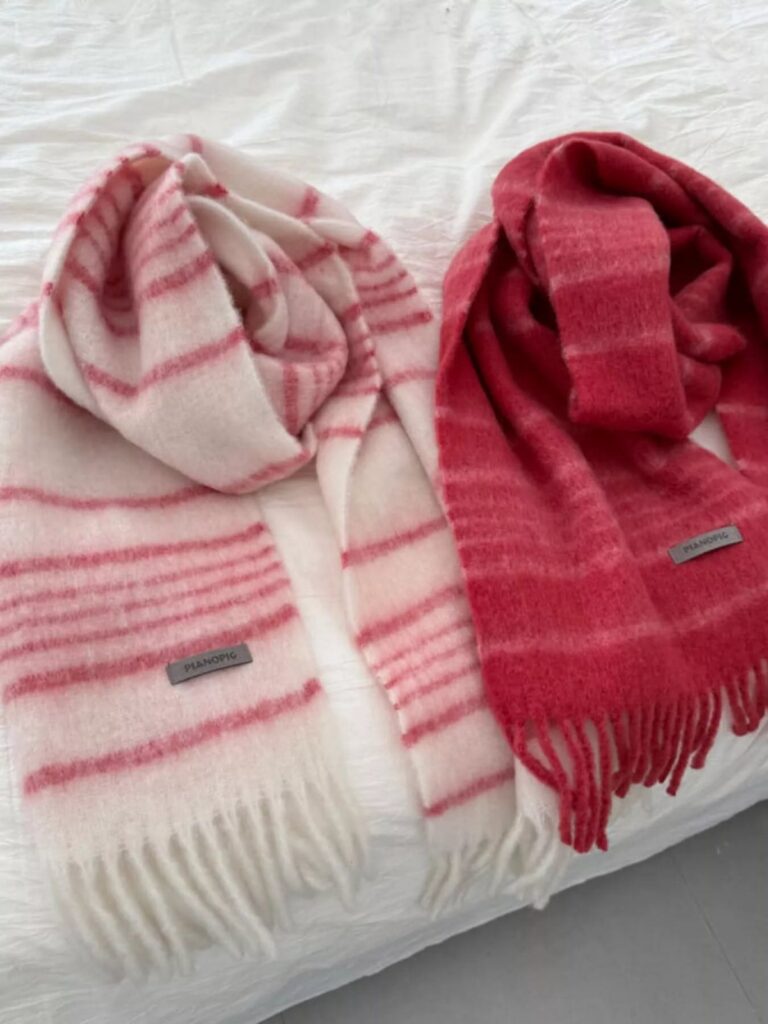
A wool scarf in a weight you actually want to wear makes the difference between looking winter-ready and feeling it.
A thick fringed scarf loops twice and still has length to tuck; that density is what makes it worth carrying when the forecast turns serious.
Beanies and gloves matter more than people think. Ears and fingertips are where you lose heat fastest, and a beanie that covers the full ear beats a cute brimmed hat on a dog-walk morning.
Choose wool or a wool blend; acrylic gets wet and stays wet.
If you run hot, a lighter scarf lets you adjust without stripping down entirely. If you run cold, double up: thin glove inside, mitten outside.
In Ottawa, special constable Suzanne Kelly collects winter coats, hats, mitts, and boots for those who would otherwise be released from the courthouse in inadequate clothing.
2. Footwear
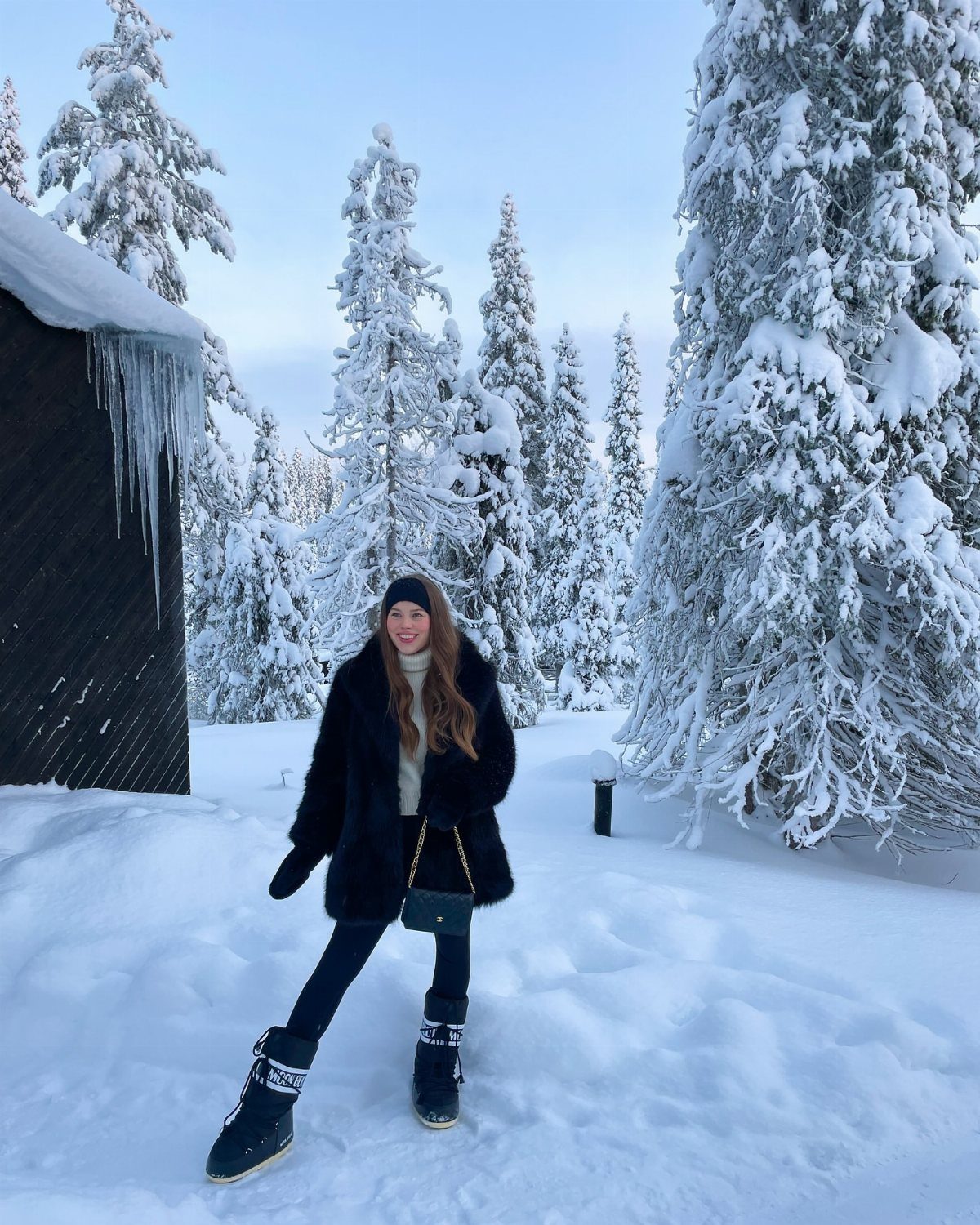
Frozen feet ruin a day faster than frozen anything else.
Waterproofing plus thermal lining is the function that matters in winter boots; without both, slush soaks through and your body pumps blood to your feet at the expense of everywhere else.
Anti-slip soles are nonnegotiable if you live where ice forms. I slipped on a salted sidewalk two winters ago and now check the tread before I buy.
Flat, smooth bottoms belong inside.
For style without the bulk, a slim waterproof boot with a shearling liner works under trousers or a midi skirt.
Less insulation buys more versatility; the warmth you give up shows up in how far the boots will stretch across temperatures. Pick based on your coldest regular walk, not your coldest single day.
3. Mid Layer
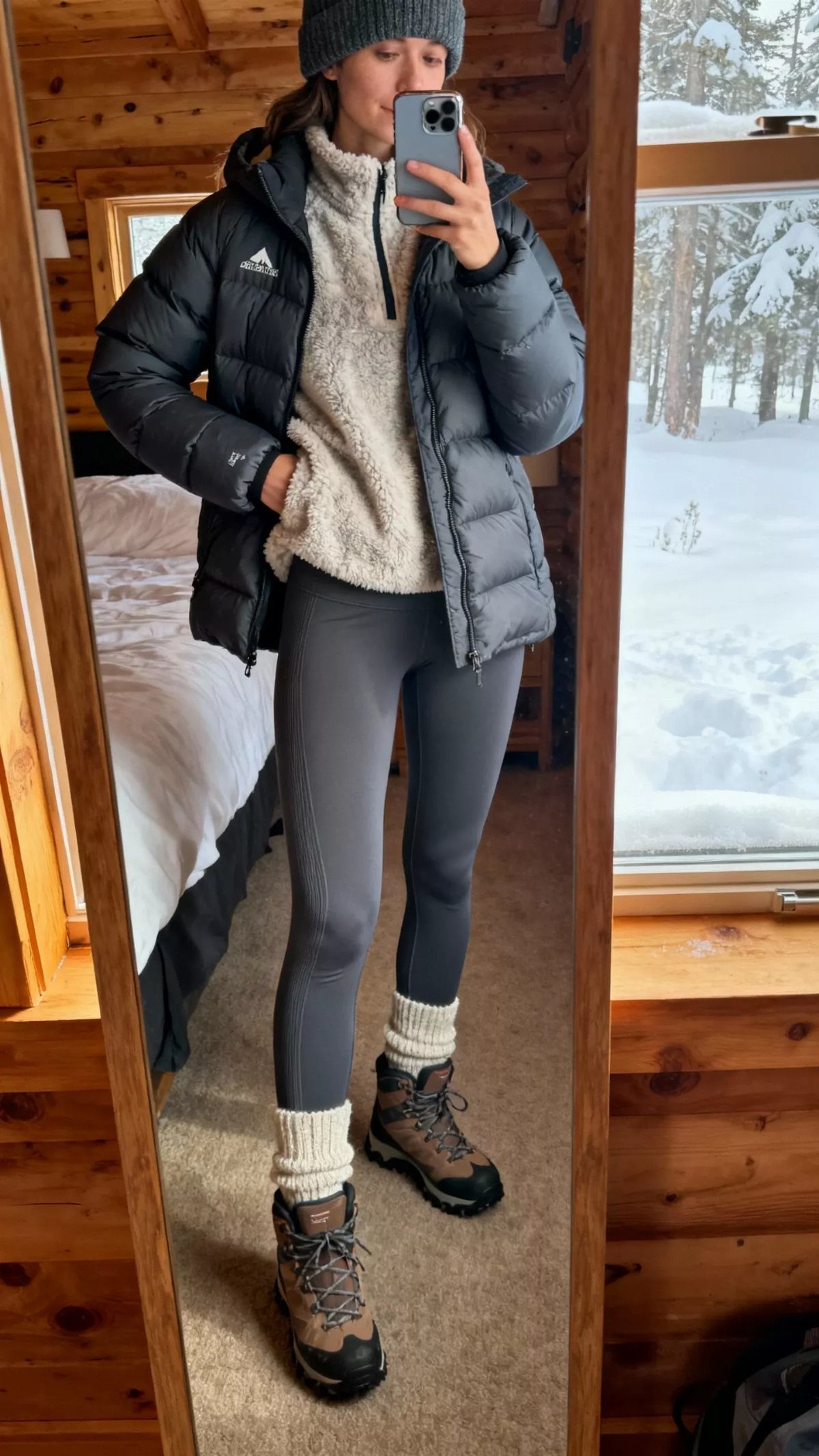
The fleece pullover does the real work of this outfit, even though the puffer gets the attention.
Mid layers are the part you shed and add as rooms heat up or the sun drops; they need to be light enough to carry and warm enough to stand alone while you fumble for keys or wait for the train.
Merino or fine fleece both work. Merino resists odor if you are wearing it multiple days traveling; fleece dries faster if you get caught in wet snow.
Breathability matters more than cashmere softness here, since this layer traps sweat if it cannot move it.
I size mine close to the body without being tight. Too loose and the outer layer balloons; too tight and you cannot slide a base layer comfortably underneath.
4. Outer Layer
Look for a shell that lists both waterproofing and breathability ratings, not just one or the other. A fully waterproof rubberized jacket traps sweat; a breathable woven one lets sleet through eventually.
Some treatment on the outer face, seam sealing inside, and a vent somewhere for when you hurry.
Adjustability is practical detail that shows in the cuffs, the hem, and whether the hood detaches. One coat that fits over your thickest mid layer saves you buying a second.
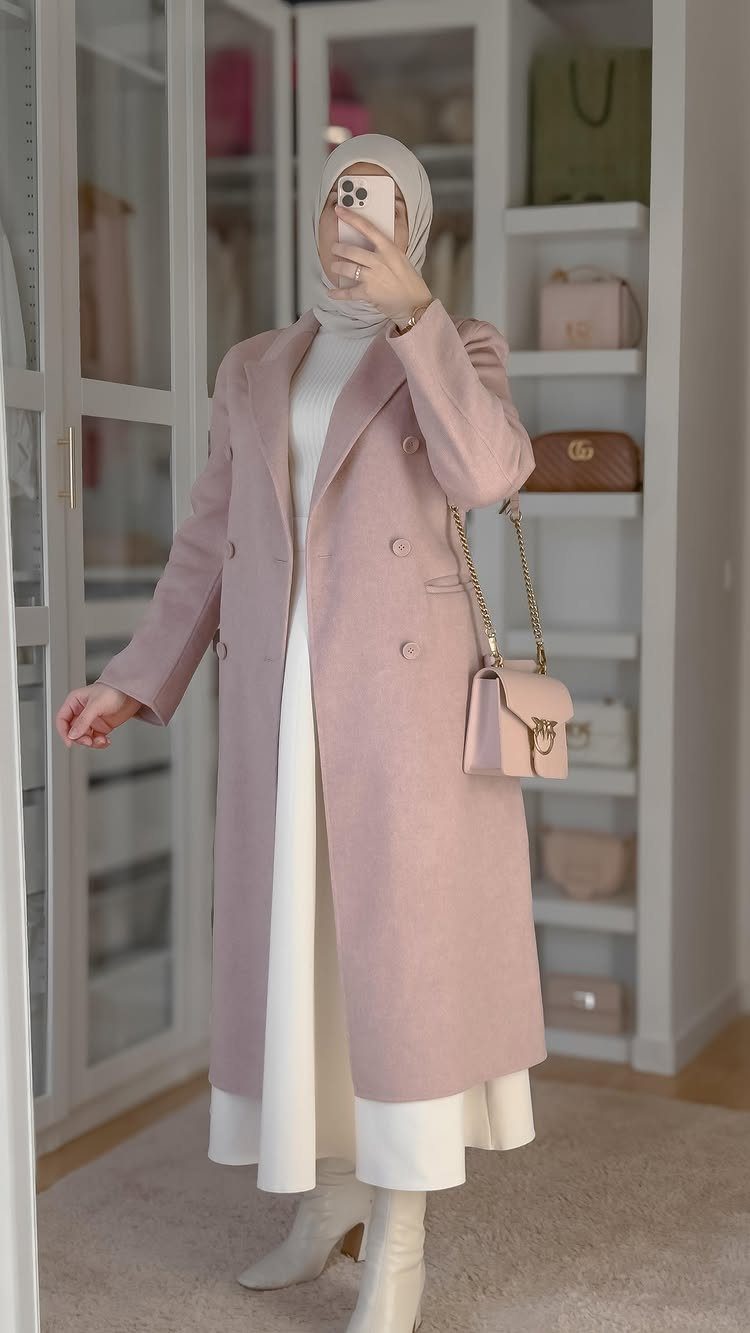
Double-breasted styling like the dusty pink version works for someone whose winter events run more toward dinners than dog parks. For daily commuting, single-breasted with a two-way zipper lets you sit in the car or on the train without bunching.
5. Cozy Matching Lounge Sets
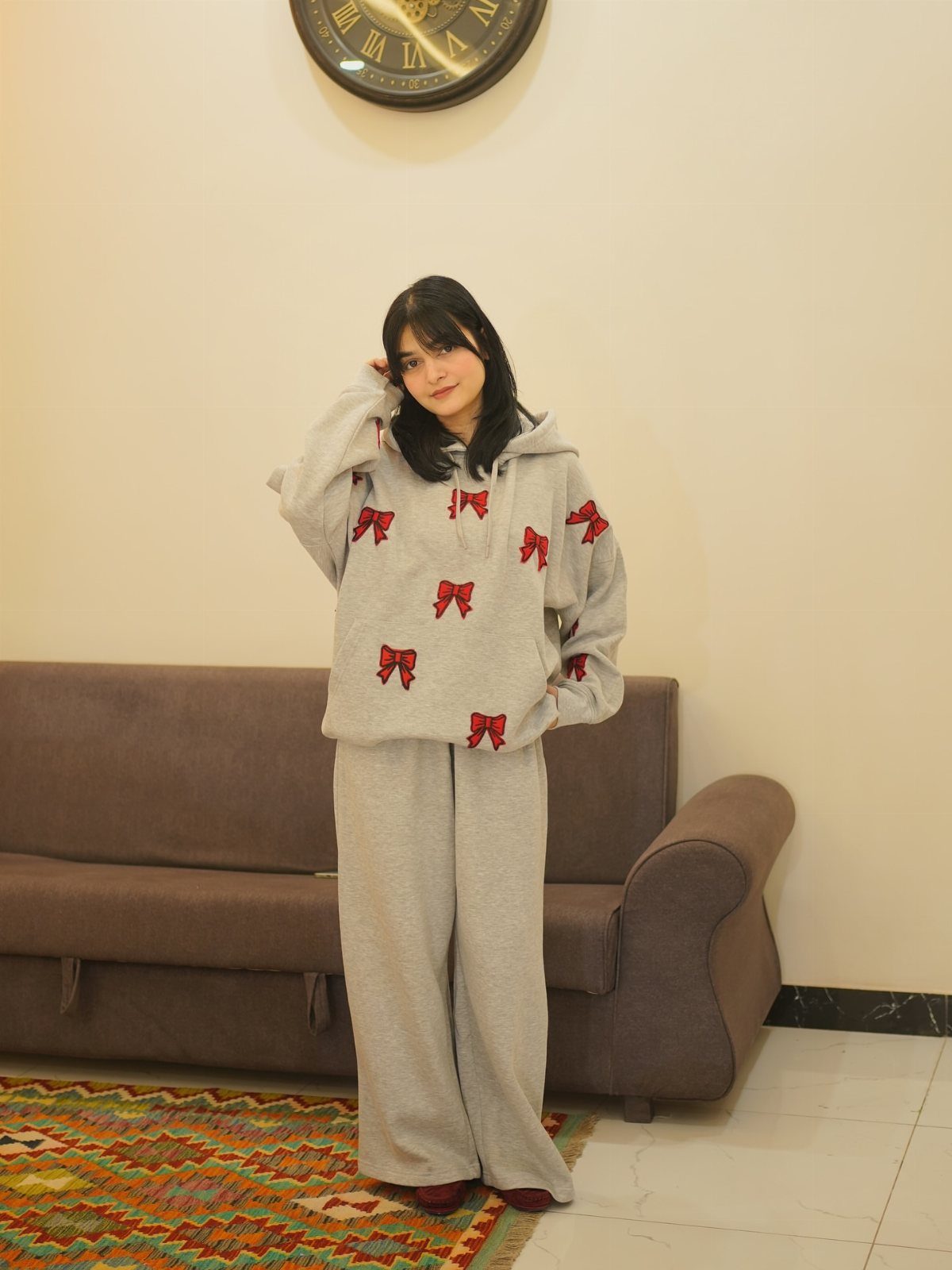
A matching lounge set in fleece or brushed cotton turns the hours you spend indoors into something that looks intentional rather than leftover.
The wide-leg cut visible here keeps the silhouette current, and the hoodie length matters more than most people check: it should hit mid-hip or lower to avoid the awkward bunch that happens when you sit.
For warmth, the fabric weight counts more than the pattern. I look for heavyweight fleece, the kind with real heft and some loft to it, or a cotton-poly blend that holds its shape through a whole season of washing.
Pure cotton breathes better but chills faster when the heat cycles off.
The matching element is what sells it for video calls or opening the door for delivery. A solid grey or oatmeal pair reads as pulled-together; a softer, more playful print works if your taste runs that way.
Sizing tip: size up one if you plan to layer a long-sleeve tee underneath, or the set loses its drape and starts to look like gym clothes.
Machine wash cold, hang dry, and the fleece keeps its surface for two winters minimum.
This suits the person whose at-home hours outnumber their out-of-home ones from December through February, and who wants the mental shift that comes from changing into something designated rather than staying in yesterday’s jeans.
Choosing Fabrics
Warmth comes from trapped air, not thickness. Brushed wool or a fine gauge works as a mid layer, holding heat close without adding distance between you and your coat.
Down packs the most warmth per ounce for an outer layer or vest, compressing to almost nothing in your bag and weighing less than you’d guess for the heat it delivers.
Fleece is the practical mid-layer choice: warm, light, and easy to slip under a coat without fighting the sleeves.
Managing Proportions
Each layer adds bulk, and bulk needs balancing or the eye reads width everywhere at once. Keep one half lean.
Define a waistline.
Layering Tips
The base layer sits against skin and manages warmth and sweat: a fitted merino tee, thin thermal, or slim turtleneck, close to the body and never bulky.
The mid layer insulates: fine-gauge wool sweater, fleece, quilted vest, or cardigan, the piece you add or remove as the day changes. The outer layer blocks wind and wet: wool overcoat, parka, down jacket, or trench with liner.
The system’s power is adjustability. Step into a heated office, shed the mid layer, and the outfit still holds together.
Step back out, pull it on again.
Winter Color Palette
Go tonal.
Add one warm accent.
Let texture do the work.
Frequently Asked Questions
What kind of clothing should I wear to stay warm in winter?
Three layers do the work: a base layer next to your skin to pull moisture away, a mid layer to hold heat, and an outer layer to shut out wind and water.
Skip the mid layer when the temperature barely dips; pile on thickness there when it drops hard. Being able to peel off or add back beats a single heavy coat that only knows on or off.
What’s warmer, fleece or thermal?
Thermal base layers are warmer against the skin because their job is to trap heat right where you lose it first. Fleece works harder as the mid layer, doing the real insulation work between your base and your shell.
Merino or a fine fleece belongs in that middle slot, where letting sweat escape counts more than raw warmth.
What do you call warm clothes?
Think of them by job: base layers, mid layers, outer layers, accessories, and footwear. Each name describes what the piece does rather than a seasonal category.
A fleece pullover is a mid layer; a wool scarf is an accessory; a waterproof shell is an outer layer.
What to wear for extremely cold weather?
Start with a fitted merino base that traps heat with almost no volume, add a slim mid layer for insulation, and let the outer coat carry the bulk.
For real cold, thicken the mid layer or slip a vest underneath instead of blowing up one coat to sleeping-bag size.
Keep at least one half of your outline narrow so you still look like a person, not a puffed-up shape.